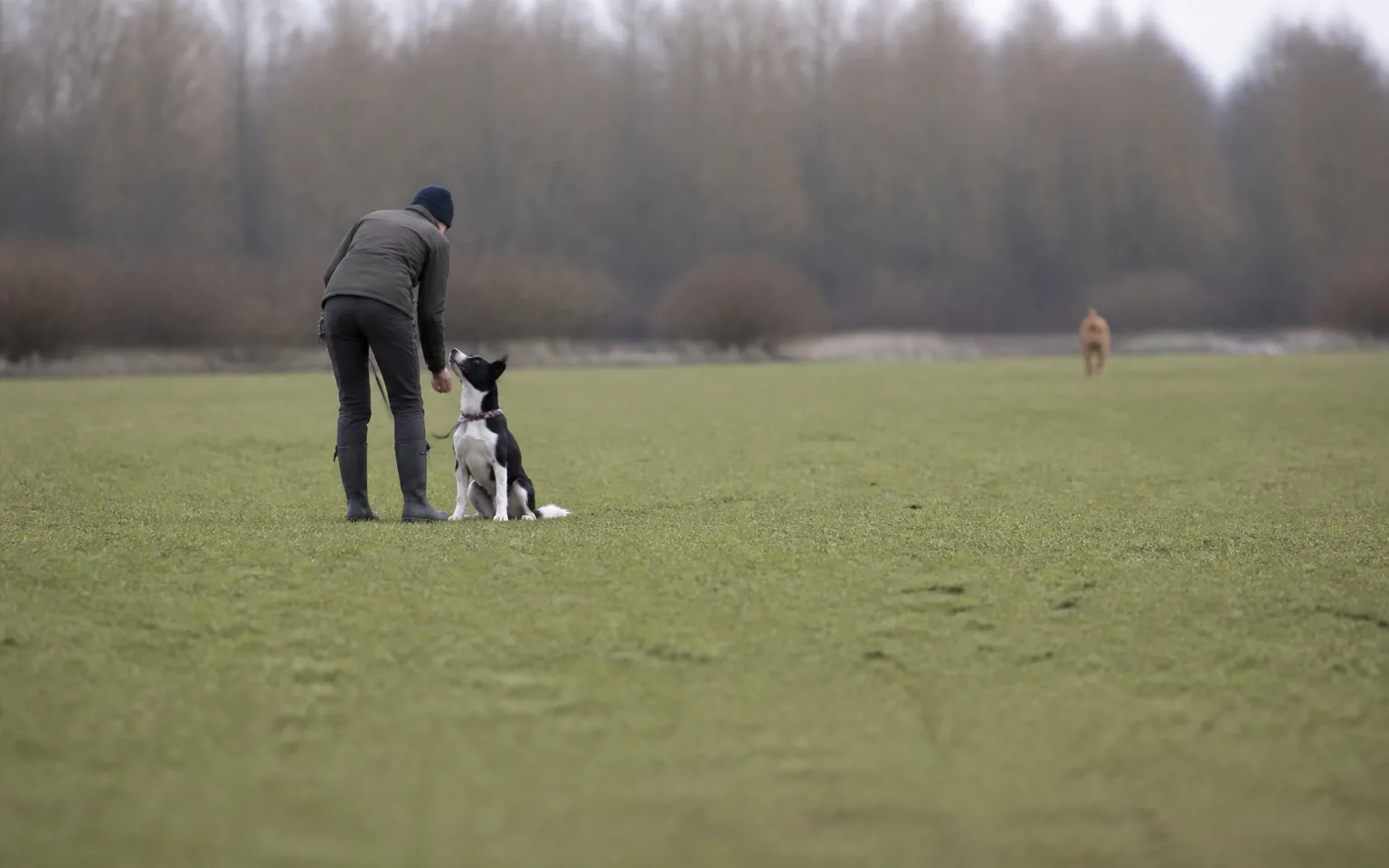
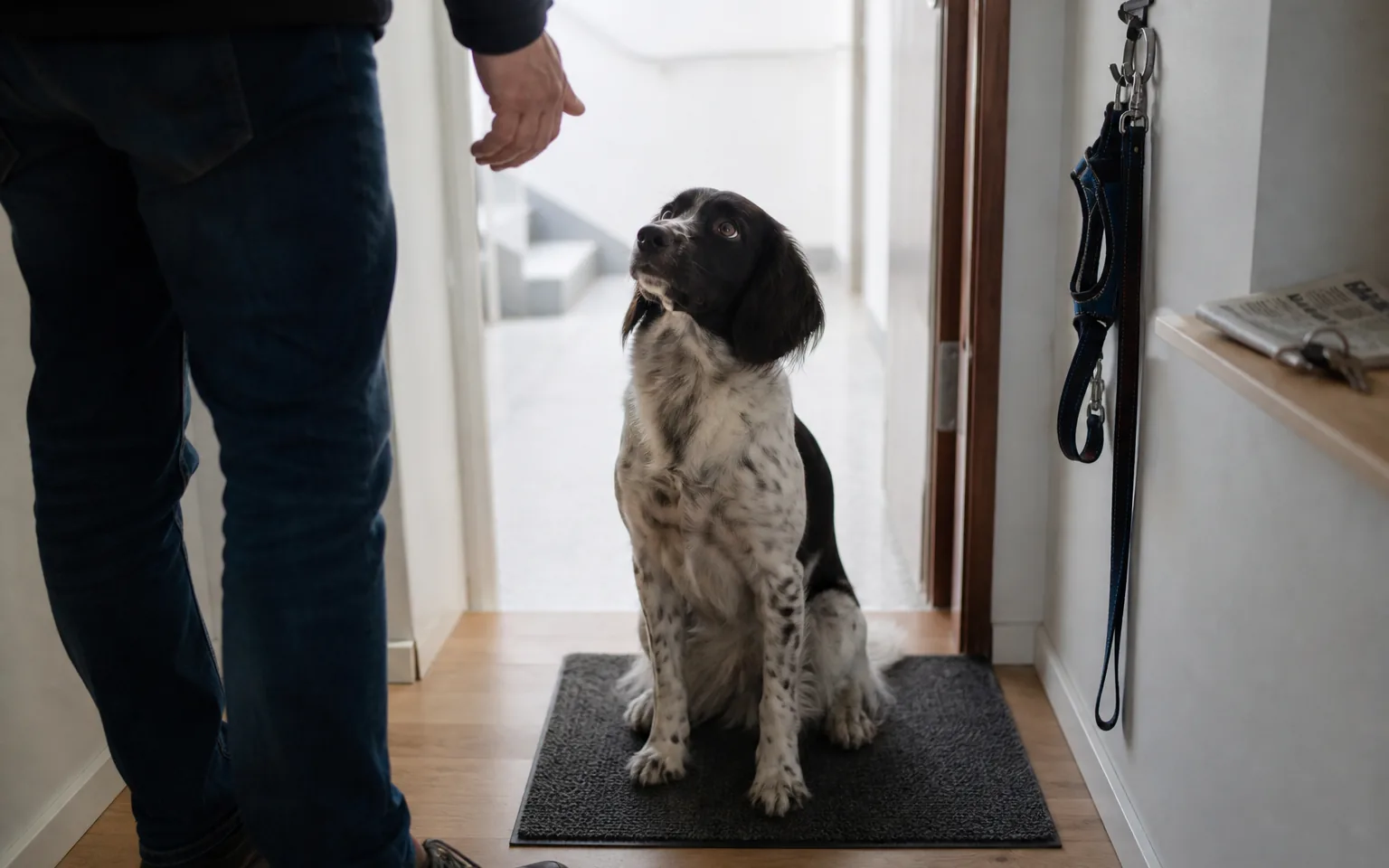
Reactivity, fear, anxiety, aggression, barking or resource guarding.
We do not stop the behaviour in the moment - we look for what sets it off and build a better response.
Behaviour correction is for dogs that show behaviours which are hard to live with
day to day: reactivity, fear, anxiety, aggression, excessive barking, resource guarding or
difficulties adapting.
We are not after stopping a behaviour for the moment, but after identifying the
causes that set it off and building more suitable responses.
Every dog is different. Its behaviour can be shaped by previous experiences, by
genetics, by its health, by the environment it lives in, by its stress level, by a lack of
socialisation or by the way certain situations have been handled.
That is why the programme is tailored to the needs of the dog and of
the family. The methods are based on cooperation, rewarding the behaviours we want, managing the
environment, desensitisation and counter-conditioning.
Before the first session
Who it is for and how it works
The programme may be right if you see
reactivity towards dogs
reactivity towards people
fear and insecurity
excessive barking
jumping up at people
hard pulling on the leash
resource guarding
defensive aggression
difficulties with handling
fear of the vet
fear of noises
separation-related anxiety
destructive behaviour
difficulties adapting
a lack of self-control
conflicts with other animals in the household
How the programme is organised
Sessions are, as a rule, one-to-one. Depending on the case, they can take place:
at the training centre
at the family's home
in the environment where the problem appears
in public spaces
at a controlled distance from other dogs
as online analysis and advice sessions, where that is possible
The number and frequency of sessions depend on how complex the case is, on the
dog's history, on how often you train and on how involved the family is.
How the programme is built
Three stages, in the order things actually get solved
We do not start with exercises. We start with the question of why the dog does what
it does - because without that answer, every exercise is a guess.
Stage 1 · Modules 1-2
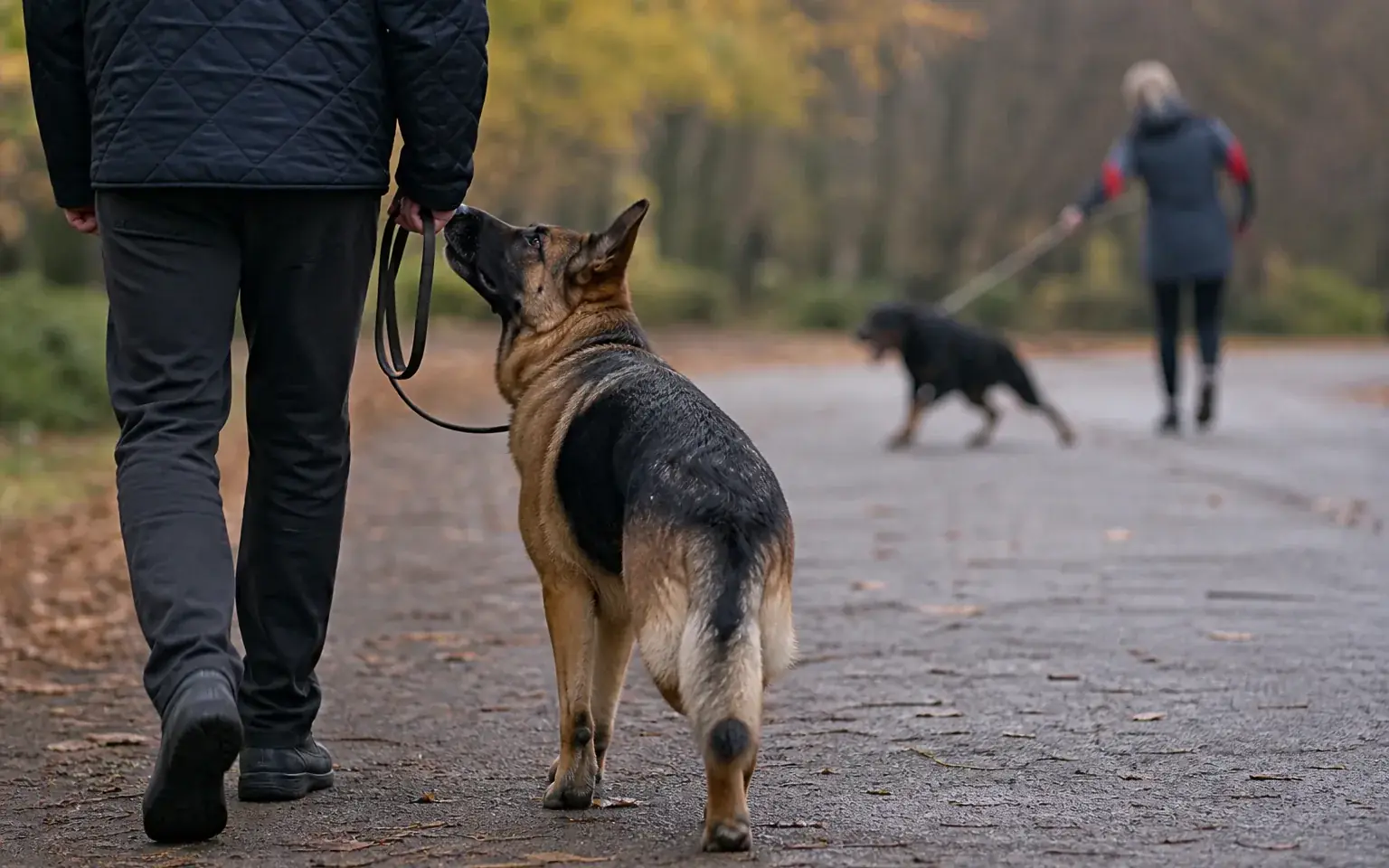
We work out what is going on
We look at the history, the environment, the routine and the concrete situations in which the behaviour appears. Then we look for the cause - because the same barking can come from fear, boredom or frustration.
Stage 2 · Modules 3-9
We make things safe
We cut down the situations in which the behaviour is repeated, you learn to read your dog's signals, and we start working on reactivity, fear and alternative behaviours.
Stage 3 · Modules 10-20
We work on your specific problem
Aggression, resource guarding, separation anxiety, barking, jumping up, pulling on the leash or behaviour indoors - plus the plan you take home with you.
What the programme covers
Step by step, from the assessment to the plan for home
The 20 stages cover 222 topics. We do not go through all of them with every dog -
we pick what is relevant to your case. Open a stage to see what is in it.
01
The initial assessment
13 topics
Before we set the plan of work, we look at the dog's behaviour and at the concrete situations in which the problems appear.
the dog's history
age and breed
the environment it lives in
the daily routine
the level of physical and mental activity
the relationship between the dog and the members of the family
previous experiences
the situations that trigger the behaviour
the intensity and frequency of the reactions
the distance at which the dog starts to react
the body signals seen before the reaction
the methods tried before
possible medical or pain-related causes
In certain situations we also recommend a veterinary assessment, so we can rule out health problems that may be influencing the behaviour.
02
Identifying the cause of the behaviour
15 topics
The same behaviour can have completely different causes. Among the most common:
fear
anxiety
frustration
a lack of socialisation
negative experiences
over-stimulation
difficulty managing emotions
resource guarding
pain or physical discomfort
the lack of a predictable routine
unmet physical or mental needs
learning a behaviour by accident
the use of unsuitable training methods
a lack of sleep and rest
being exposed to difficult situations too quickly
Understanding the cause helps us choose the right method and, above all, avoid making the problem worse.
03
Managing the environment
12 topics
In the first stage we cut down the situations in which the dog repeats the unwanted behaviour. Management alone does not solve the problem, but it provides safety and creates the conditions in which learning can happen.
keeping a safe distance from the triggers
choosing quieter walking routes
temporarily avoiding crowded spaces
using barriers and safety gates
separating dogs at feeding time
controlling access to resources
arranging meetings in controlled environments
using a suitable leash and equipment
introducing a safe area
avoiding forced interactions
preventing situations in which the dog could bite or injure
using a muzzle, introduced gradually and positively, when that is needed
The purpose of management is to prevent incidents and to bring down the general level of stress.
04
Communication and the relationship with the handler
12 topics
A good part of the programme is about you learning to read the dog before it reacts.
recognising signals of stress
recognising signals of fear and discomfort
understanding the dog's safe distance
using rewards correctly
choosing the right moment to step in
clear and consistent communication
avoiding conflict and direct confrontation
developing attention towards the handler
voluntary orientation towards the handler
building trust
creating a predictable routine
preventing situations in which the dog feels trapped or forced
05
Reactivity towards other dogs
12 topics
Reactivity can mean barking, pulling on the leash, growling, lunging or trying to get to the other dog. It can come from fear, frustration, excitement or previous experiences.
finding the distance at which the dog can watch without reacting
rewarding calm behaviour
orientation towards the handler
changing direction in a controlled way
leaving the situation without tension and without punishment
passing other dogs at a distance
reducing the distance gradually
watching another dog without having to interact
managing the frustration caused by the leash
building alternative behaviours
avoiding head-on meetings
introducing parallel walks, once the dogs are ready
The aim is not to make the dog play with other dogs, but to be able to see them and walk calmly past them.
06
Reactivity towards people
10 topics
Some dogs react to strangers, to men, to children, to uniforms or to people who approach too quickly.
keeping a comfortable distance
preventing forced touching
associating the presence of people with positive experiences
rewarding calm observation
letting the dog move away
approaching gradually and under control
interaction without direct contact
avoiding staring and leaning over the dog
briefing the people who come into contact with it
building safe routines for greeting visitors
07
Fear and insecurity
11 topics
Fear can show up as running away, hiding, trembling, barking, growling, freezing or defensive reactions.
identifying the stimuli that cause fear
gradual exposure, at low intensity
letting the dog choose whether to approach
rewarding voluntary exploration
building confidence in new environments
exercises on different surfaces and near different objects
creating a safe area
reducing social pressure
increasing predictability
activities that build independence
never forcing the dog to face the stimulus
08
Desensitisation and counter-conditioning
7 topics
Desensitisation means exposure to a stimulus at an intensity at which the dog stays calm and can learn. Counter-conditioning changes the emotion attached to that stimulus. A few examples:
another dog appearing is followed by a high-value reward
the sound of the doorbell is paired with going to the mat
touching a paw is followed by food
the sight of the muzzle announces something enjoyable
a person approaching is paired with rewards
loud sounds are introduced gradually, at low volume
unfamiliar objects are explored without pressure
Exposure is built up step by step. If the dog's reaction becomes too intense, we lower the difficulty.
09
Building alternative behaviours
13 topics
Instead of only telling the dog what it may not do, we teach it what it can do in that situation.
orientation towards the handler
eye contact
turning back along the route
walking beside the handler
being sent to the mat
holding a calm position
touching the hand with the nose
searching for rewards on the ground
a controlled retreat from the situation
waiting
giving up objects
calm behaviour in the presence of the stimuli
choosing a greater distance from the trigger
10
Aggression and defensive behaviour
12 topics
Growling, showing teeth or attempting to bite should be neither ignored nor punished. They are signals the dog uses to communicate discomfort or the need for distance.
identifying the context in which the behaviour appears
preventing incidents
removing forced interactions
reducing stress
respecting the warning signals
introducing a muzzle through positive methods, if that is needed
setting clear safety rules
changing the emotional response gradually
briefing the members of the family
never punishing the growl
developing alternative behaviours
working with the vet or a behaviour specialist in complex cases
The safety of people, of the dog and of the other animals always comes first.
11
Resource guarding
11 topics
Resource guarding can show up around food, toys, objects, resting places or even around a person.
preventing confrontation
never taking objects away by force
swapping the object for a higher-value reward
approaching the resource gradually
building a positive association with people being nearby
feeding in a safe space
separating dogs at mealtimes
the “drop it" cue
the “leave it" cue
managing access to valuable objects
preventing situations in which children approach the dog while it is eating
12
Separation-related anxiety
10 topics
Dogs that struggle on their own may bark, vocalise, destroy things, try to escape or refuse food.
watching the behaviour with the help of a camera
identifying the moment when the stress starts
practising very short departures
increasing the duration gradually
reducing dependence on someone always being there
building a safe area
pairing time alone with calm activities
changing the leaving routines
avoiding absences longer than the dog can cope with during the training period
recommending a veterinary assessment in severe cases
Separation anxiety is not treated by leaving the dog to cry until it “gets used to it".
13
Excessive barking
12 topics
Barking has different functions: warning, fear, asking for attention, boredom, frustration or anxiety. First we work out which one it is.
the reason for the barking
the moment and context in which it appears
the stimuli that set it off
the daily routine
the level of activity and rest
visual access to the outside
the owner's reaction
the behaviours that can replace barking
rewarding quiet periods
being sent to the mat
gradually reducing sensitivity to sounds
managing the doorbell and visitors
14
Jumping up at people
9 topics
Jumping up is, most of the time, rewarded without us meaning to: through attention, touch or talking.
preventing the behaviour from being repeated
controlled greetings
rewarding all four paws on the ground
the “sit" cue before greeting
withdrawing attention when the dog jumps
using the leash in the early stages
briefing visitors
building calm before the interaction
generalising the exercise with different people
15
Pulling on the leash and difficulties on walks
10 topics
First we work out why the dog pulls, then we adapt the exercises to the reason.
choosing suitable equipment
rewarding a loose leash
changing direction
stopping before the leash goes fully tight
attention exercises
allowing controlled exploration
walks at a pace that suits the dog
keeping a greater distance from stimuli
separating structured walking from exploration time
reducing frustration during the walk
16
Play biting and chewing on objects
10 topics
In puppies these behaviours are normal. They do, however, need to be directed towards suitable activities.
redirecting onto toys
choosing suitable items to chew
ending the interaction calmly
avoiding games that raise arousal too much
rewarding appropriate play
alternating activity with periods of rest
controlling access to objects around the house
spotting the moments when the puppy is tired or over-stimulated
teaching the “drop it" cue
never using physical punishment
17
Behaviour indoors
11 topics
We can also work on the difficulties at home, the ones that wear the family down day after day:
destroying objects
stealing food
getting up on the furniture
begging at the table
getting worked up at the door
barking at the window
a lack of calm
following the owner everywhere
difficulties when guests are present
conflicts between dogs in the same household
difficulties with house training
We organise the environment and build routines that help the dog make suitable choices.
18
Managing emotions and self-control
10 topics
Self-control is not achieved by holding the dog back all the time, but through progressive exercises.
waiting before being given food
going calmly through the door
getting out of the car under control
waiting before a greeting
staying calm around toys
coming back to calm after play
tolerating short periods of frustration
giving up objects voluntarily
alternating activity with rest
watching stimuli without reacting straight away
19
Mental stimulation and reducing stress
11 topics
The right activities bring the tension down and improve the ability to concentrate.
scent games
searching for rewards
exploration walks
simple nose work exercises
interactive toys
safe items to chew
target exercises
licking and chewing activities
exploration routes
short cooperation exercises
enough sleep and rest
Mental stimulation is adapted to the dog. If it becomes one more source of frustration, it is not doing its job.
20
The work plan for home
11 topics
Results come from what happens between sessions. That is why the family's involvement is not optional.
an individual training plan
exercises adapted to the problem
recommendations about the daily routine
management rules
instructions on how to use rewards
short and medium-term goals
recommendations for walks
a monitoring diary
criteria for increasing the difficulty
recommendations about the situations to avoid for now
video recordings for reviewing progress
Methods we use
What we actually work with
Ten tools that we combine according to the cause of the behaviour and to what the
dog can cope with at that moment.
01
Rewarding the behaviours we want
The dog is rewarded when it offers a suitable behaviour: turning towards the handler, staying calm or moving away from a situation.
02
Redirecting
The unwanted behaviour is interrupted or prevented, and the dog is given a clear alternative.
03
Gradual desensitisation
The dog is exposed to the stimulus at an intensity it can handle, without being overwhelmed.
04
Counter-conditioning
The negative emotional association is changed through rewards and positive experiences.
05
Preventive management
The environment is organised so that incidents and the repetition of unwanted behaviours become less frequent.
06
Progressive shaping
The final behaviour is built out of small steps, each one rewarded separately.
07
Capturing natural behaviours
We reward the good things the dog offers on its own: calmness, looking at the handler, moving away.
08
Training incompatible behaviours
The dog learns a behaviour that cannot be performed at the same time as the unwanted one. For example, going to the mat instead of jumping up at guests.
09
Controlled choice
When it is safe, the dog can decide whether to approach, stop or move away. Making the choice itself builds confidence and cooperation.
10
Working below threshold
We work at a distance and an intensity at which the dog can watch, can respond to the handler and can take the reward.
What we do not use
The programme is not based on:
hitting or intimidating the dog
harsh physical corrections
deliberately provoking the reaction
forcing the dog to face what it is afraid of
punishing the growl
repeated jerking of the leash
overwhelming exposure
keeping the dog in a situation it cannot leave
reading the behaviour as the animal trying to dominate the family
Removing the warning signals through punishment makes the behaviour harder to
anticipate and increases the risk of an incident.
Results and expectations
What we can and cannot promise
Behaviour modification is a process, not an instant fix. The aim is fewer and less
intense reactions, better handling of difficult situations and a better life for the dog and for
the family.
We cannot guarantee that any behaviour will
disappear completely. What we can do is build clear, safe and realistic strategies for
managing and changing it.
Progress depends on
the cause of the behaviour
how long it has been repeated
the intensity of the reactions
previous experiences
the dog's health
how consistent the family is
how far the environment can be controlled
how often you practise
respecting the dog's own pace
Frequently asked questions
What owners ask us most often
What kind of behaviour problems do you work with?
The programme is for dogs with reactivity towards dogs or people, fear and insecurity, excessive barking, jumping up at people, hard pulling on the leash, resource guarding, defensive aggression, difficulties with handling, fear of the vet or of noises, separation-related anxiety, destructive behaviour, difficulties adapting, a lack of self-control and conflicts with other animals in the household.
Are the sessions one-to-one or in a group?
As a rule they are one-to-one. Depending on the case, they can take place at the training centre, at the family's home, in the very environment where the problem appears, in public spaces or at a controlled distance from other dogs. Where possible, we can also run online analysis and advice sessions.
How long does it take to see results?
Behaviour modification is a process, not an instant fix. How long it takes depends on the cause of the behaviour, how long it has been repeated, the intensity of the reactions, previous experiences, the dog's health, how consistent the family is, how far the environment can be controlled and whether the dog's own pace is respected.
Can you guarantee the problem will disappear completely?
No. We cannot guarantee that any behaviour will be removed completely. What we can do is build clear, safe and realistic strategies for managing and changing it, so that the reactions become less intense and life gets easier for both the dog and the family.
My dog growls. Should I punish it?
No. Growling is a signal the dog uses to communicate discomfort or the need for distance. If we punish the growl, we risk removing the warning rather than the emotion behind it. The behaviour then becomes harder to anticipate and the risk of an incident goes up.
Is a visit to the vet also needed?
Sometimes, yes. Pain and health problems can directly influence behaviour, so in certain situations we recommend a veterinary assessment before starting the work. In complex or severe cases we work together with the vet or with a behaviour specialist.
Guides on common problems
One page for each problem: why it happens, what does not work and the step-by-step plan you can start at home.
He howls from the first minute and only goes quiet when you walk back in. That is panic, and panic is worked in seconds at first, not in hours of 'getting used to it'.
Needle teeth, torn sleeves, crying children. Play biting is normal in a puppy and it passes, but not by itself: you teach him how hard he is allowed to bite.
Arm at full stretch, aching shoulder, dog panting with his tongue out. Pulling on the lead is the most practised habit of all, because it works for him every single time.
A growl by the bed, a hand grabbed "out of nowhere". The dog tells you something every time before he bites, and the cause can nearly always be found if you know where to look.
One dog grazes calmly in the park, another gulps long blades and is sick on the carpet. Those are two different behaviours, and each one gets a different answer.
His own poo, other dogs' in the park, or the cat's litter tray. It embarrasses you, it is normal to him, and it is fixed more by organisation than by training.
He hides under the table at every doorbell or trembles at lorries. Exposed "to get used to it", he got worse. Confidence comes from distance and his own choice.
He sees a dog 50 metres away and explodes: barking, lunging, deaf to you. Off lead in the park he's a different dog. Reactivity is worked on from a distance, over weeks.
A chewed door frame, a gutted cushion, the third charger this month. He isn't getting back at you. Film the first hour and you'll see if it's boredom or panic.
Shaking under the desk, panting, refusing food. On the night you help him through it; the fear itself you work on during the rest of the year, and it does improve.
He freezes over the bowl, eats faster as you approach, growls over his bone. Resource guarding is natural behaviour that has become a problem, and you fix it by trading.
He howls after every ambulance or whines from morning to night. The causes differ, but the plan starts the same way: find out what he's trying to tell you.
Out in the road five minutes after you go inside. Running off is a safety problem first and a behaviour problem second, and you deal with them in that order.
Bulbs dug up one by one, a hole by the fence, a hole in the shade. Each has a different cause, and the hole tells you which if you look at it properly.
Drooling in the car park, sick at the third bend, refusing to get in. Car sickness lives partly in the inner ear and partly in the head, and you work on both.
They got on for a year and now they kick off at the door or on the sofa. People call it jealousy; we see a squabble over what they value, and often that is you.
A visitor's leg, a sofa cushion, a puppy in the park. It is rarely sexual and almost never dominance; nearly always it is excitement looking for a way out.
Shaking in the waiting room, growling at the nail clippers, hiding from the brush. Fear of handling can be learned from a single experience and unlearned in small steps.
In a puppy it is a few seconds of play. In an adult who spins until he falls over or chews his tail raw it is something else, and it starts with a vet visit.
Chewing, barking, racing round the house at ten at night and still not tired. A dog like that tires through his head, and you see the change within days.
The wound gets 15 minutes under running water with soap, and the doctor decides the rest. Then you turn to the dog: why he bit and what changes at home.
Your face when you get home, your feet after a shower, visitors and children. Licking nearly always has a simple reason, and you are the one who sets the rule.
He stops, sniffs, drops a shoulder and rolls over in bliss. Rolling has a few possible explanations, and the plan starts in the seconds before it happens.
At home he is the gentlest dog, on the pavement he lunges at anyone in a hood. The barking has a reason, and the plan starts from the distance at which he stays calm.
Bones under benches, napkins, socks, stones. Scavenging comes naturally to a dog and it is dangerous for him; the habit changes with patience and good treats.
The bowl is empty in five seconds and sometimes the kibble comes back up. There is a reason for the speed, and you can slow meals down without taking food away.
To the kitchen, the bathroom, the bedroom and back. A dog who follows you is usually a perfectly normal dog. What matters is how he feels when he cannot.
Barking at every oncoming car, or only in the last two kilometres before the park. Barking in the car always has a reason, and it takes your mind off the road.
He braces at the first step, freezes at the top on the way down, or has stopped climbing after years. Each version has a different cause and needs a different plan.
He vanishes under the bed when visitors arrive, or flattens himself at the sight of a man in a hood. Fear of people is worked on from a distance, at his pace.
He presses against the wall at every bus, turns for home after two steps or sits down on the pavement. Fear of traffic improves with work, from a distance, at his pace.
He stops on the doorstep once it gets dark and will not walk down the dark hallway. Dogs see well at night, so the fear nearly always has another cause.
One dog vanishes under the bed, another lunges at the brush barking. To a dog, the vacuum is a loud thing that moves by itself and heads for his favourite spots.
Under the bed, behind the washing machine, behind the sofa. A hiding dog is saying either I'm scared or it hurts, and from outside the two look the same.
Three dogs come out barking from behind the garages. You stop, turn sideways, keep your bag between you and back slowly out of their patch the way you came.
You hug and within three seconds the dog is between you. What we call jealousy is usually excitement, unease or guarding, and each is worked differently.
A better relationship starts with understanding the behaviour
A dog's behaviour is a form of communication. Instead of punishing it for what it
is expressing, we try to understand what makes it react - and we help it find safer answers. Write to us
and we will arrange an assessment.
We use essential cookies necessary for the proper functioning of the website. These cookies cannot be disabled. By clicking “Accept all", you agree that the Drumeții Montane Association, acting as the data controller, may store cookies on your device in order to improve website navigation, analyse website usage, and support its marketing efforts. For more details, please visit the “Cookie Settings" section available alongside.

 Stage 1 · Modules 1-2