
Why Choose Mantrailing?
Discover why mantrailing is one of the most engaging and rewarding canine sports.
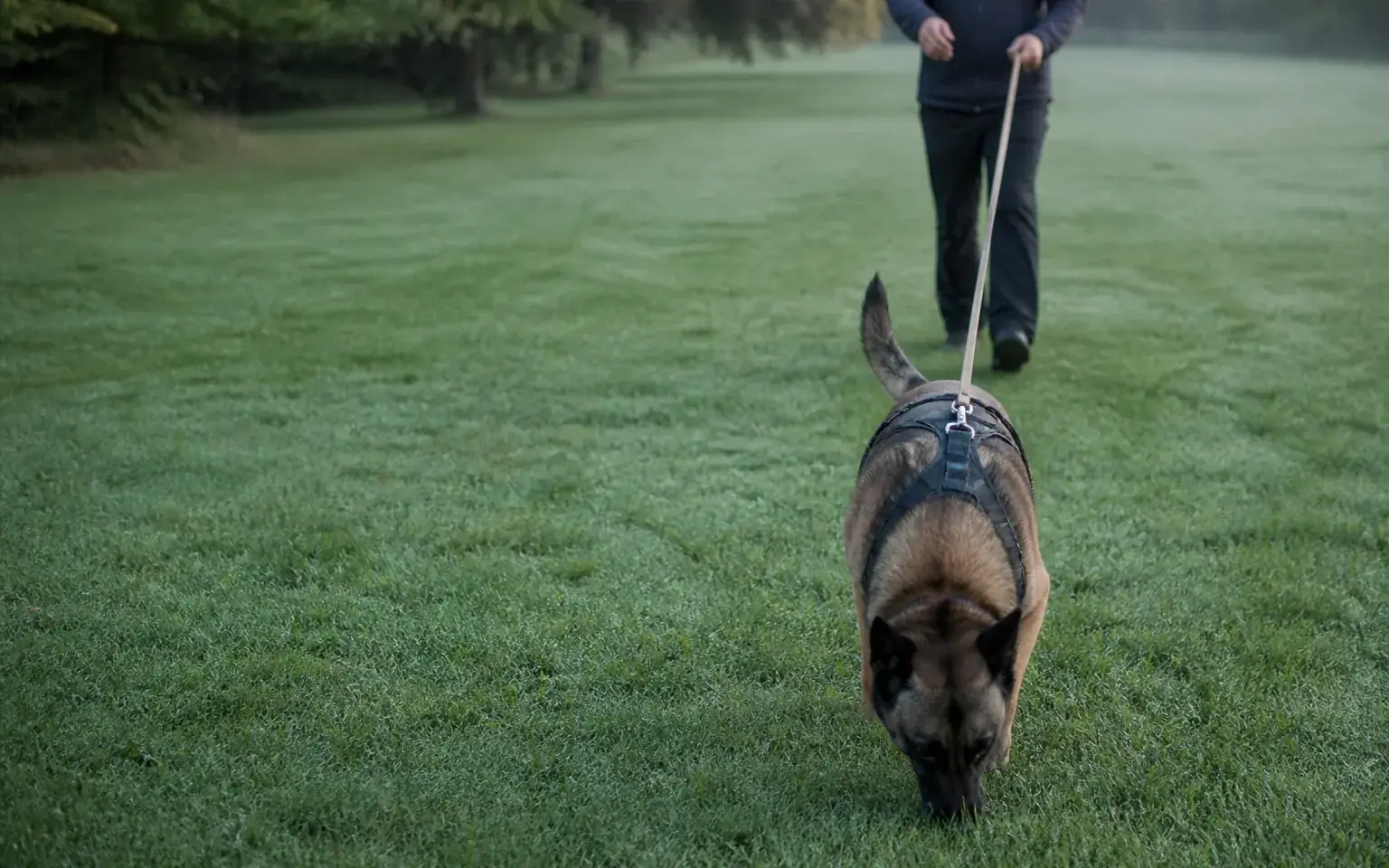
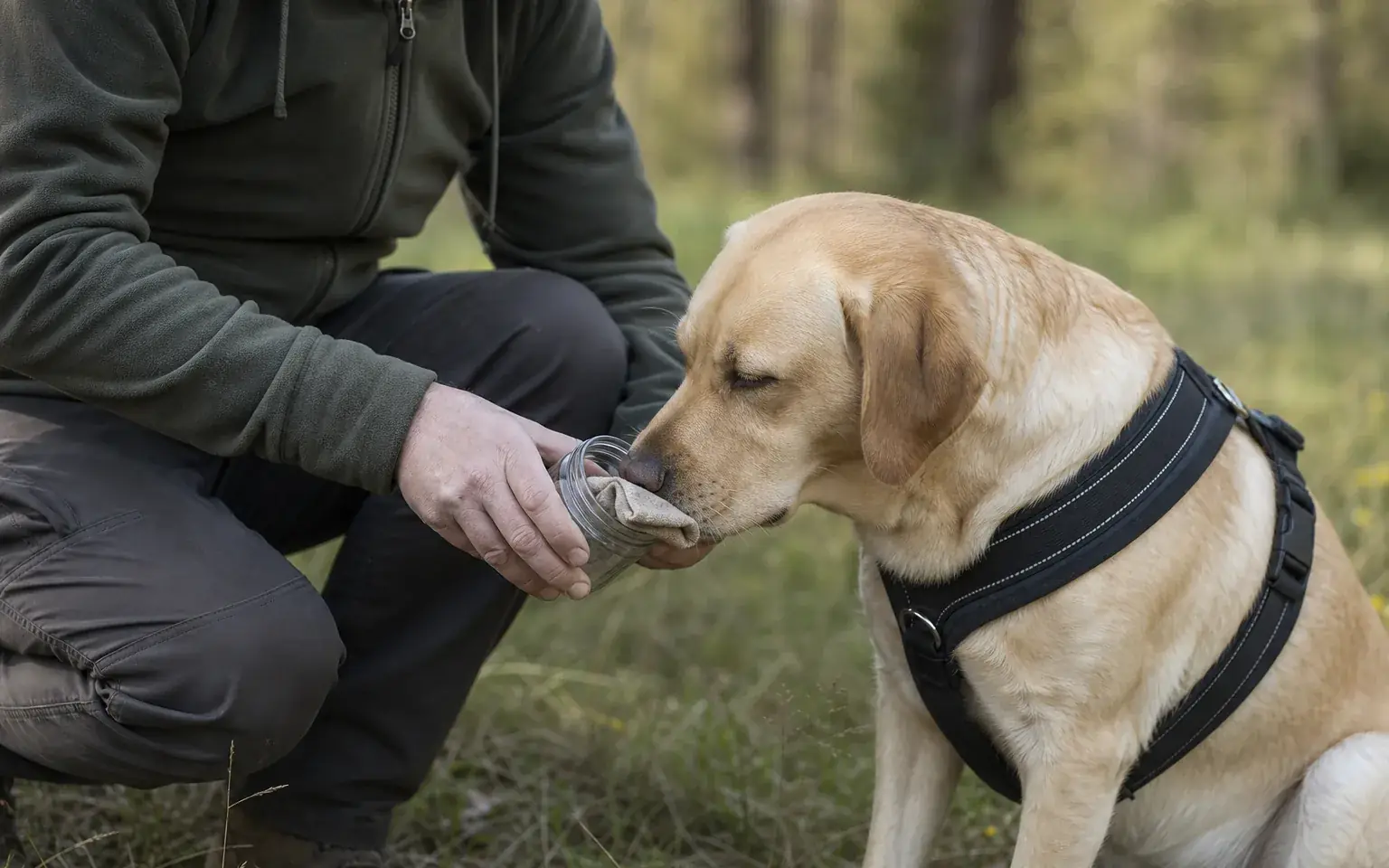
Discover why mantrailingStart with simple exercises: in a quiet area, allow the "subject" to hide in plain sight, present the dog with a scent article, use a single command such as “Search!", and reward success.
These exercises form the foundation of all mantrailing training sessions and help the dog correctly understand the concept of the trail.
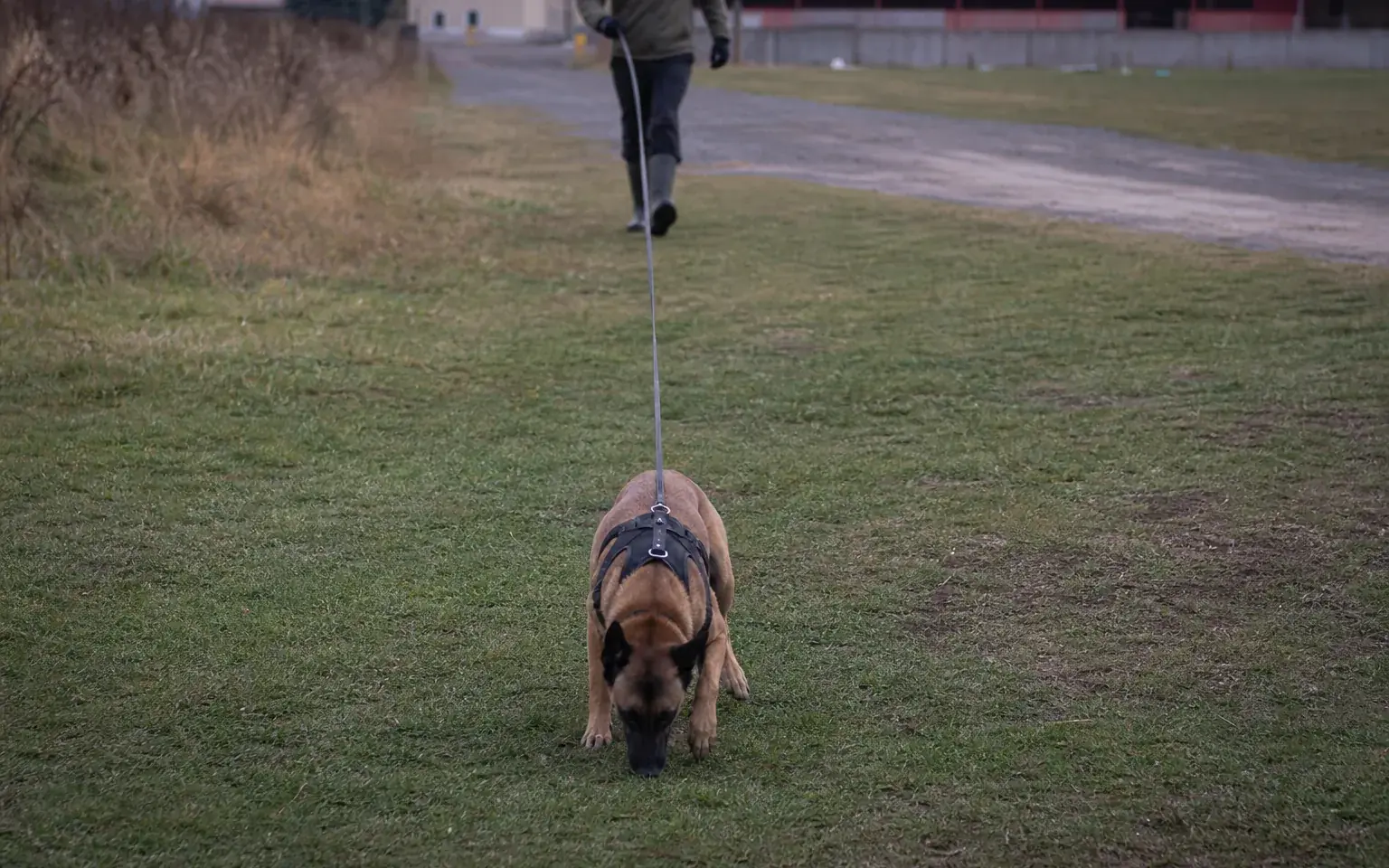
Increase the difficulty gradually: hide the “subject" out of sight, change training environments, extend the trails, and introduce mild distractions to ensure steady progress.
Increasing the level of difficulty must be adapted to the team's skill level in order to avoid frustration and loss of motivation.
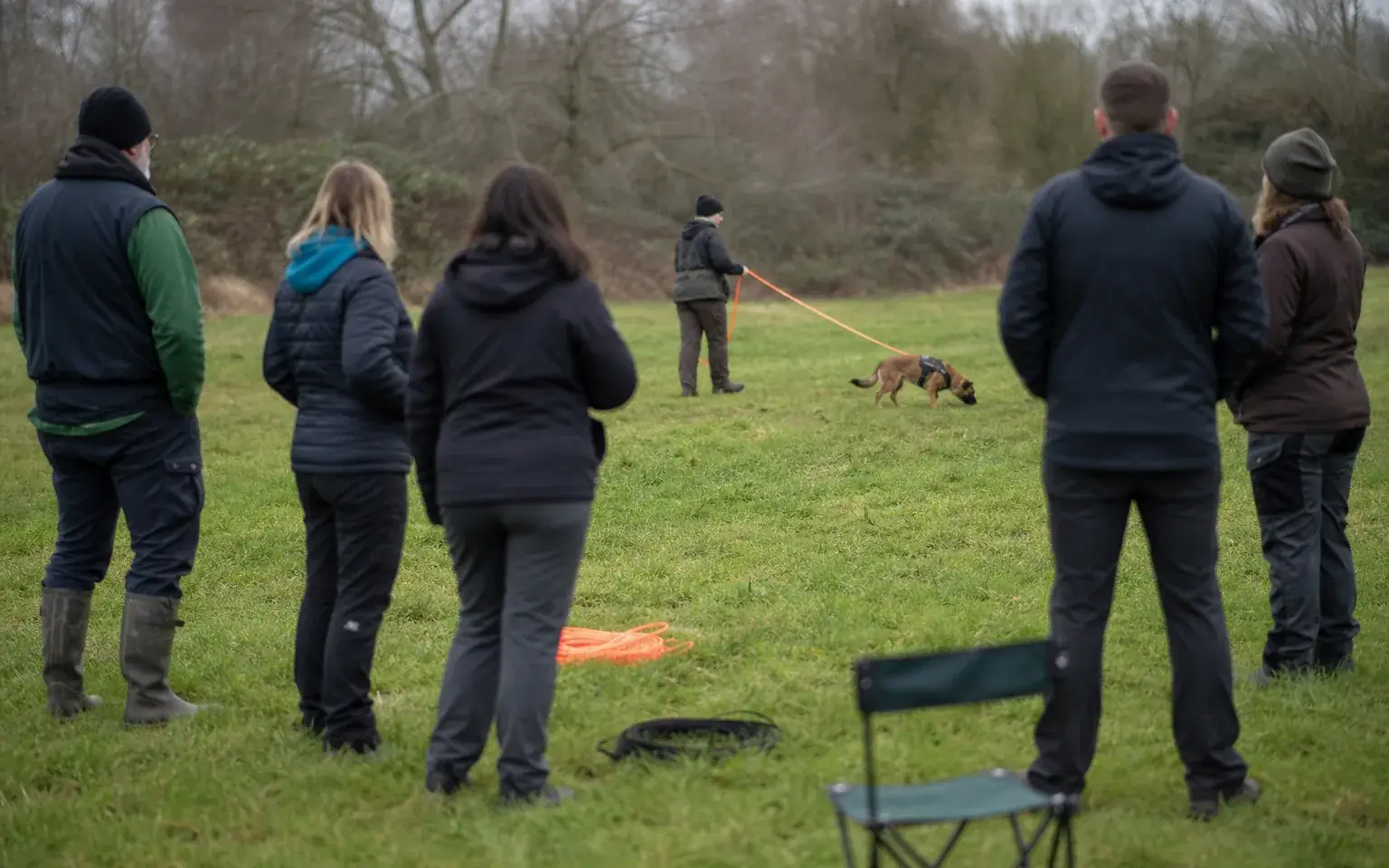
Train with a mantrailing group to avoid common mistakes, progress correctly, and practice a variety of scenarios alongside other participants.
Group training is recommended both for safety and for the diversity of working scenarios.
The general recommendation is 1-2 sessions per week for teams just starting out, increasing to 2-3 sessions for those preparing for certifications. Consistency matters more than frequency: a short 10-15 minute session, repeated regularly, brings more steady progress than long, infrequent ones. The ideal frequency depends on the dog's age and physical condition, the team's current level, and the goal being pursued - occasional hobby or exam preparation.
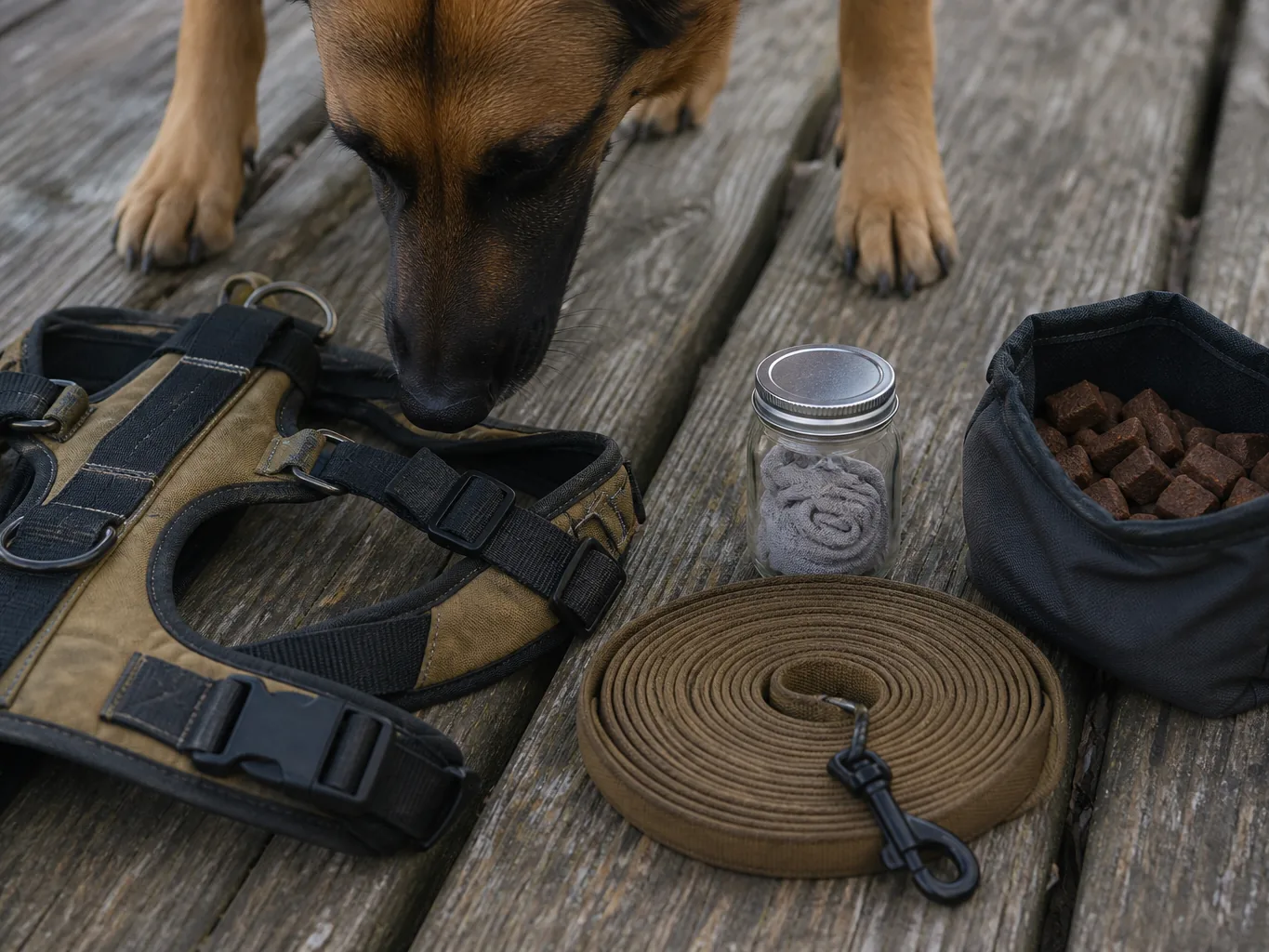
Mantrailing training requires minimal but specific equipment: a working harness (not a collar, for the dog's tracheal safety), a long line of 5-10 metres, a scent article, and high-value rewards. See the complete equipment guide for details on each piece and how to choose it correctly.
Typically, a handler-dog team sees visible progress after 4-6 weeks of consistent training (1-2 sessions/week): longer trails, better focus, and fewer distractions. Progress to certification level, however, takes months or years, depending on the discipline and the team's pace.
Yes. Mantrailing has no breed requirements, minimum age (it can start from 8-10 weeks, with very short sessions), or special physical condition - it adapts to any dog, including anxious, reactive, or senior ones, because it relies on motivation rather than strength or agility.
A first session is always simple and short: the "subject" hides in plain sight, a few metres away, the dog is given the scent article, and encouraged with a single command to find it. The goal is to understand the game, not to complete a complex trail.
A group provides real variety (more people, terrains, and scenarios than a single handler could offer), safety (someone present who can assist or intervene), and objective feedback on handling technique - things that are hard to get training alone.
Discover why mantrailing is one of the most engaging and rewarding canine sports.
Discover why mantrailing