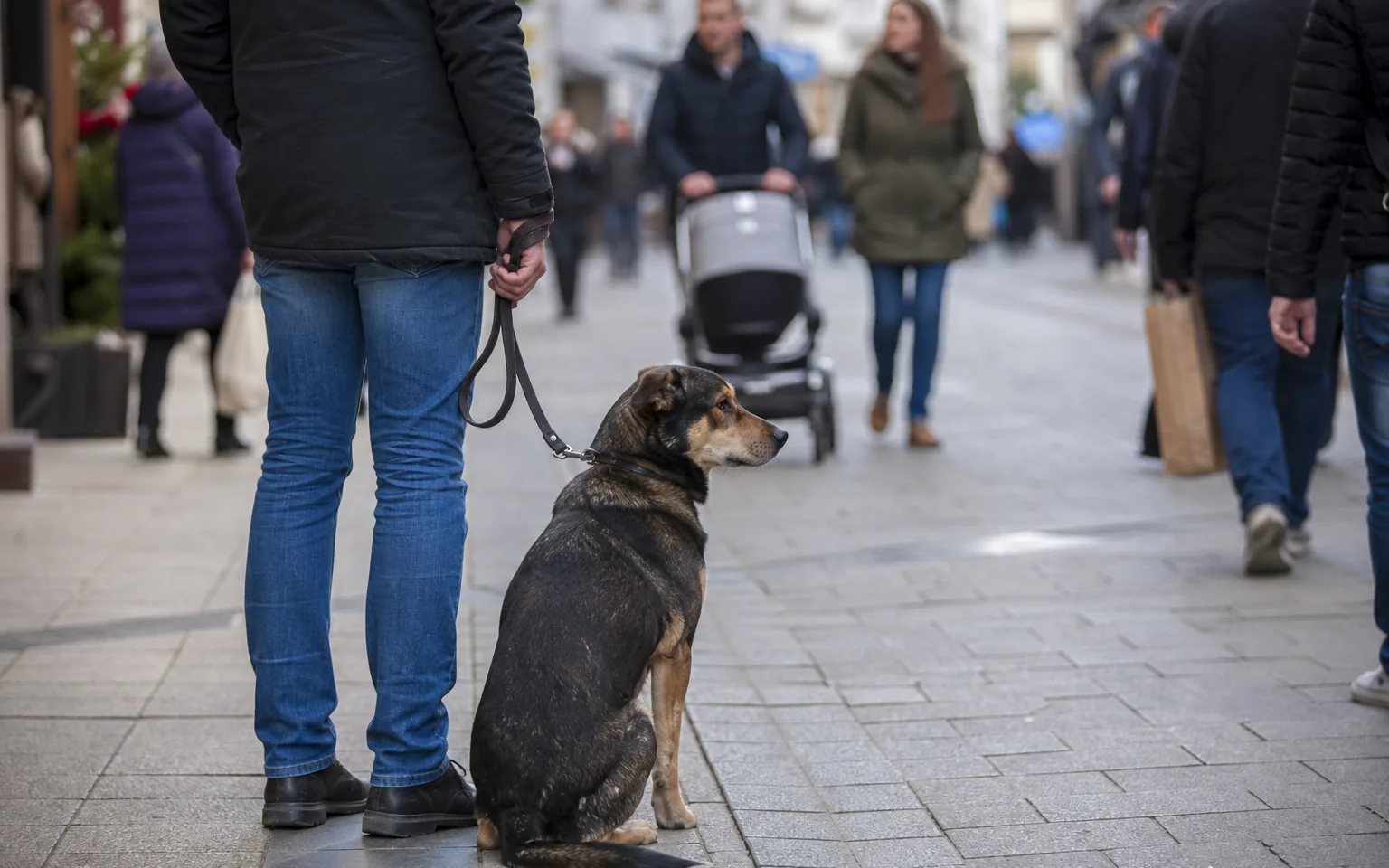
TSAC (Sociability and Canine Aptitude Test) checks how the dog behaves in ordinary situations: around people, other dogs, noise, a moving crowd. No club membership is needed to enter, and the dog must be at least 12 months old on the day.

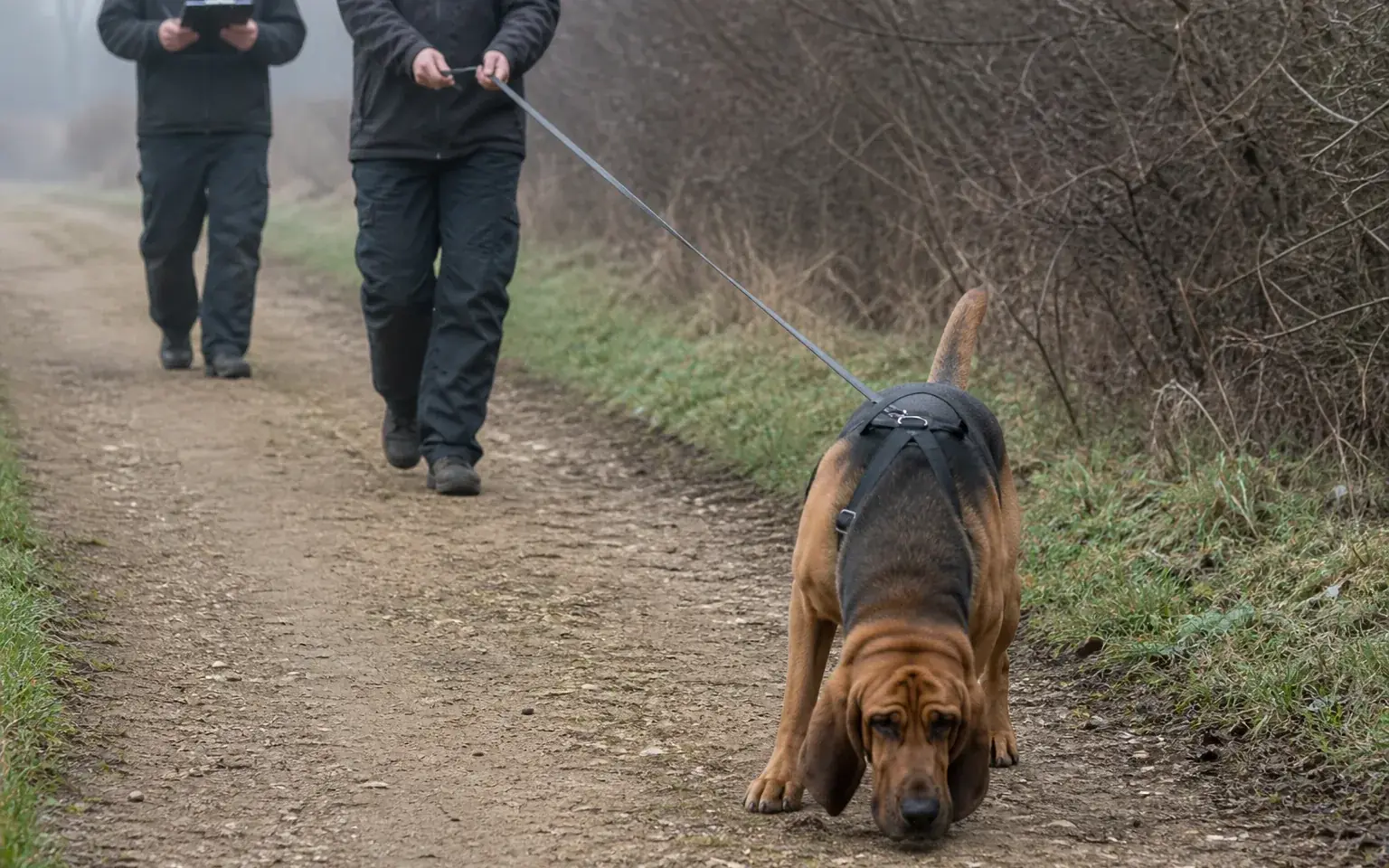
Mantrailing and obedience exams validate the real level of preparation of the dog-handler team and provide an objective framework for evaluation, progress, and official recognition.
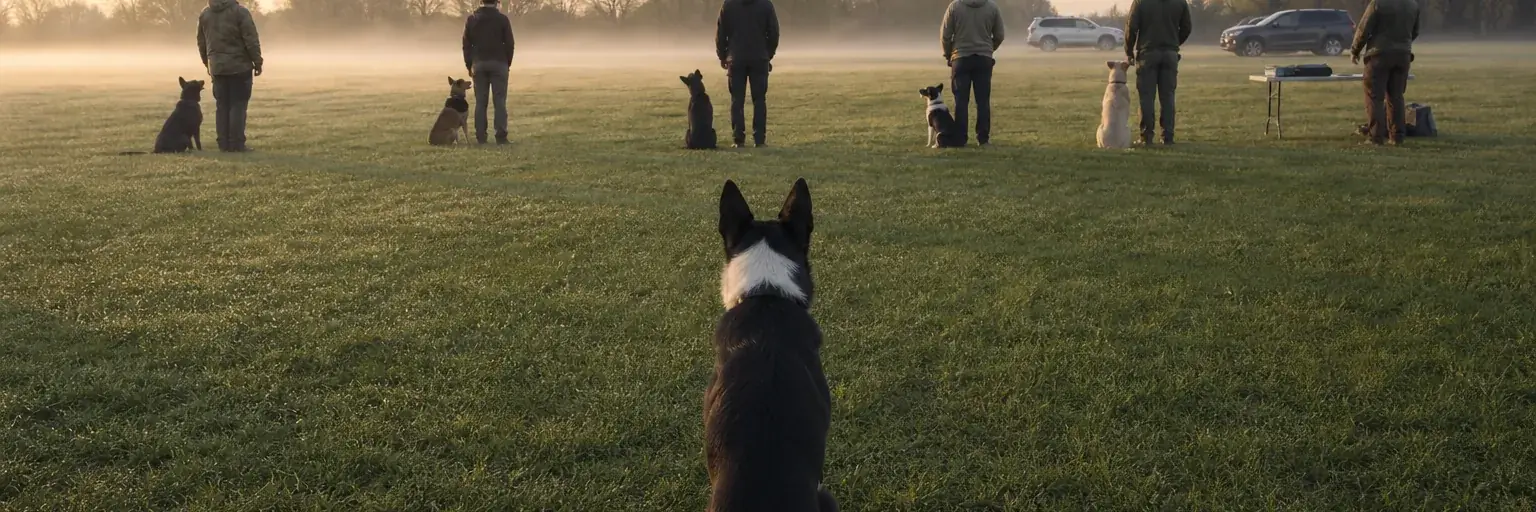
Mantrailing is a discipline, not just a weekend hobby with your dog. An exam is where the training gets tested for real. Can your dog handle a live search, stay level-headed around strangers, work through distractions it's never seen on a training field? A pass confirms the work is holding up. A fail tells you exactly what to fix.
We recommend that every team eventually takes an exam, mantrailing or obedience, because a judge's feedback is more reliable than your own read of a training session. It gives you a clear result instead of a guess.
Before attempting a mantrailing exam, it pays to get the basics right first. Obedience and behaviour around people and other dogs matter more than most handlers expect, especially once you're working on real streets or open terrain instead of a familiar field.
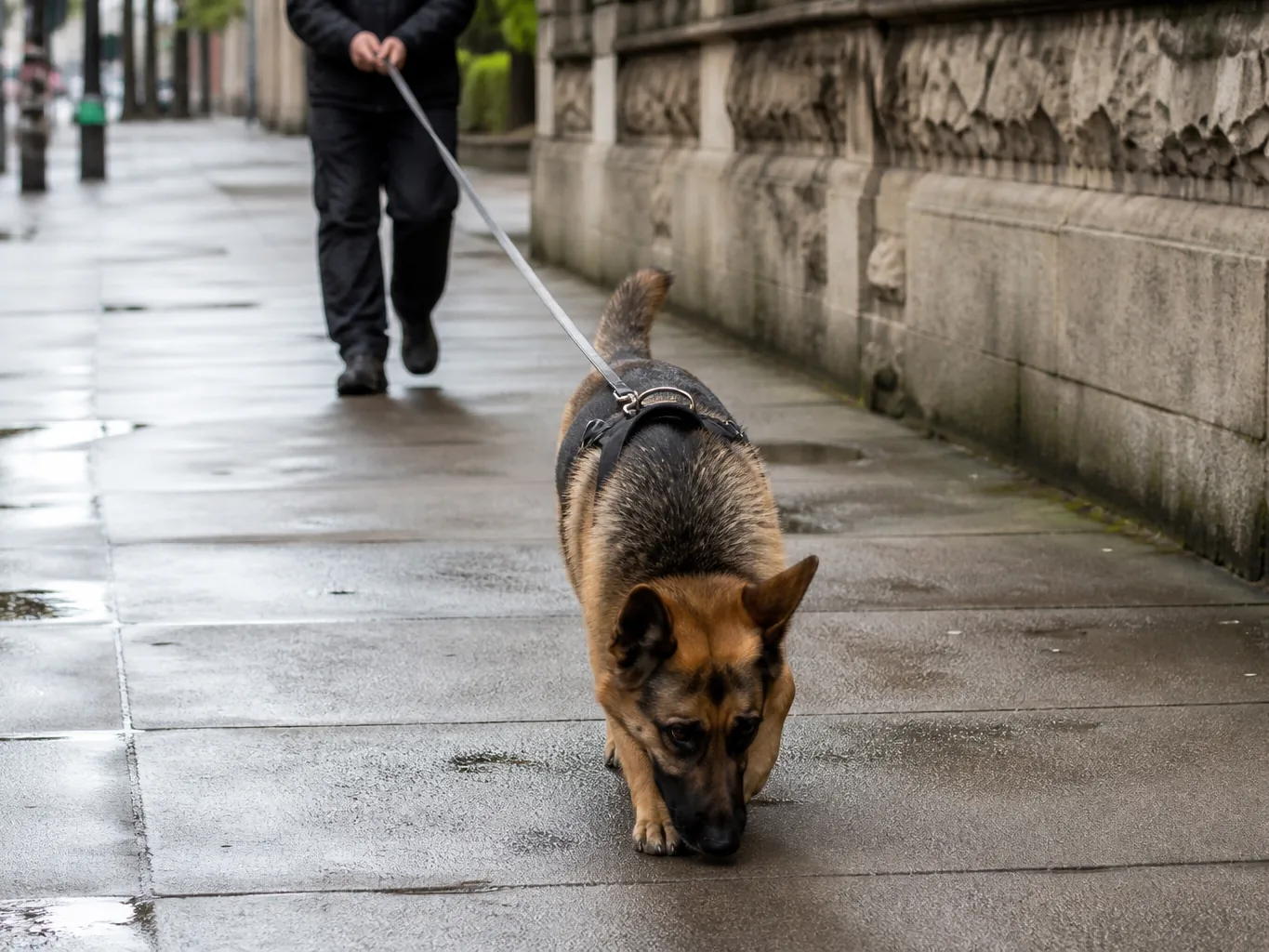
TSAC (Sociability and Canine Aptitude Test) checks how the dog behaves in ordinary situations: around people, other dogs, noise, a moving crowd. No club membership is needed to enter, and the dog must be at least 12 months old on the day.

BH (Begleithund) tests basic obedience and how the dog copes in public: on leash, near cyclists, in a group of strangers. Same minimum age of 12 months, and passing BH is required before most higher-level working exams will let you register.
For exact dates and locations, check the national events list. TSAC and BH sessions run across Romania, organised by clubs and associations authorized by A.Ch.R.
Once obedience is solid, two paths lead into mantrailing itself: IRO Mantrailing, run internationally across three levels (V, A, B) and geared toward search-and-rescue style work. The other option is Mantrailing Hungary K9, a seven-level system (MT1 to MT7) with published fees and cross-recognition against IRO, ROKK and MAA results.
FCI · A.Ch.R.
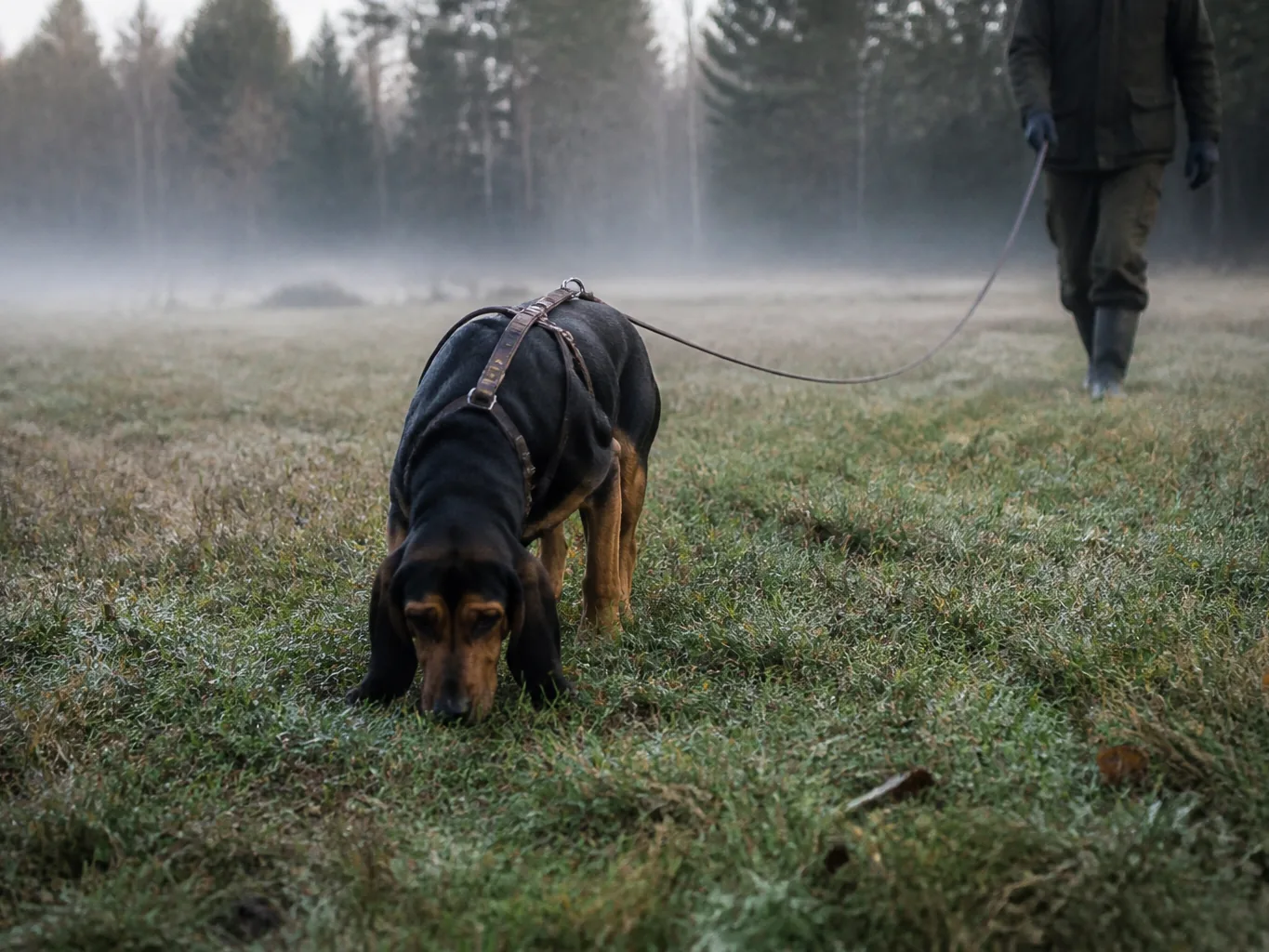
FCI exams are the working trials recognised in every member country of the Fédération Cynologique Internationale, run under one common rulebook, the FCI-IGP (edition valid from 1 January 2025). In Romania they are organised by the Romanian Kennel Club (A.Ch.R.), the FCI member, through its affiliated clubs, with FCI working judges.
They all start from the BH, the companion dog test with a traffic part (from 12 months): without a passed BH no other FCI-IGP trial can be entered, and with us the BH is also the prerequisite before the IRO test. From there the road branches: IBgH 1-3 for pure obedience, IGP 1-3 for the full trial (tracking, obedience, protection), IFH 1-3 and IGP-FH for tracking dogs, plus the single-phase FPr/UPr/SPr/GPr, the article search and the endurance test.
We have written a page for every FCI exam, with ages, prerequisites, exercises, scoring and a link to the official regulations:
Europe
Beyond IRO Mantrailing and Mantrailing Hungary K9, several other European federations and schools run their own mantrailing exam regulations. We document them one by one, with exact figures and a link to the official regulations - including whether teams from outside the country of origin can take part.
At a glance
| Exam | What it tests | Levels | Min. age | Pass criteria | Organiser |
|---|---|---|---|---|---|
| TSAC | Sociability & everyday behaviour | Single test | 12 months | Qualitative grade | A.Ch.R. |
| BH | Basic obedience + public behaviour | Single test | 12 months | ≥70% points (obedience) + "sufficient" (socialisation) | A.Ch.R. |
| IRO Mantrailing | Obedience/agility + odour discrimination + mantrailing | V → A → B | 15 mo (V) · 18 mo (A) · 20 mo (B) | ≥70% points per phase | IRO (international) |
| Mantrailing Hungary K9 | Progressive trailing/search | MT1 → MT7 | Not published | Level-specific fail criteria | Mantrailing Hungary K9; cross-recognised with IRO, ROKK, MAA |
| DVG Mantrailing | Taking up, following and finding on a trail (sport exam, not operational) | MT-I → MT-II → MT-III | 15 months | Rating band, out of 100 points | DVG (Germany) |
| GAK9 Sportrailing | Following an individual trail (not area-search work) | 4 terrain classes x Handler → Specialist → Expert → Master | Not published | Evaluator's final decision, within the time limit | GAK9; network in the US and Europe |
| CCM Mantrailing | Trail following; SII also tests theoretical knowledge | E → A → L → M → SI → SII | 12 mo (E-L) · 18 mo (M) · 24 mo (SI-SII) | Correct indication of the target person | CCM (Germany) |
| DRK Mantrailing | Theory (25 questions) + a 1.5 km operational search | Single test, a specialisation on top of the base certification | 18 years (handler) · 16 months (dog) | At least BKZ 4 in every sub-task | DRK - German Red Cross (operational) |
| BRH Mantrailing | Finding on a trail + recognising the absence of a trail | Basistest → MT Suche → MT Negativ | 15 mo (Basistest) · 18 mo (Suche/Negativ) | Finding + correct indication, within the time limit | BRH (Germany, operational) |
| Mantrailing Schweiz | Finding on a trail, progressively harder terrain | Entry test + MPK-1 → MPK-8 | 18 years (handler) · 18 months (dog) | Examiners' decision, per trail | Mantrailing Schweiz; open internationally |
| PL MT | Finding on a trail + an NSI test (absence of a trail) | PL MT 1 → PL MT 6 | No limit | The judging panel's decision, per task | tropienieuzytkowe.pl (Poland); recognises GAK9 |
| United Kingdom | Varies - no single national standard | NSARDA (operational) + private schools (3-5 levels, varies) | Varies by organisation | Varies by organisation | NSARDA (charity) + Mantrailing Global, TCSOT and others |
First step
Start with a foundation exam: TSAC for a lower-pressure first assessment, or BH if you're already aiming at working-dog exams later, since BH tends to be the one they require anyway. Once that's done, pick a mantrailing path based on where you want to end up: IRO if you want a recognised search-and-rescue style progression. Mantrailing Hungary K9 is the better fit if you'd rather have a longer, more granular level structure with clear pricing and results that carry over to other systems.
Frequently asked
Working trials with a single international rulebook (FCI-IGP 2025), recognised in every FCI member country and organised in Romania by the A.Ch.R. through its affiliated clubs: BH, IBgH 1-3, IGP 1-3, IFH and IGP-FH, the single-phase trials FPr/UPr/SPr/GPr, article search and the endurance test. The first step is the BH, mandatory before any other exam. Each one is explained in our guide to FCI exams.
Start with a foundation exam: TSAC for a lower-pressure first assessment, or BH if you're already aiming at working-dog exams later, since BH tends to be the one they require anyway. Once that's done, pick a mantrailing path based on where you want to end up.
For both TSAC and BH, the dog must be at least 12 months old on the day of the exam.
No, you don't need club membership to enter TSAC. The dog just needs to be at least 12 months old.
IRO Mantrailing is run internationally across three levels (V, A, B) and geared toward search-and-rescue style work. Mantrailing Hungary K9 is a seven-level system (MT1 to MT7) with published fees and cross-recognition against IRO, ROKK and MAA results.
Check the events calendar for the next session near you.