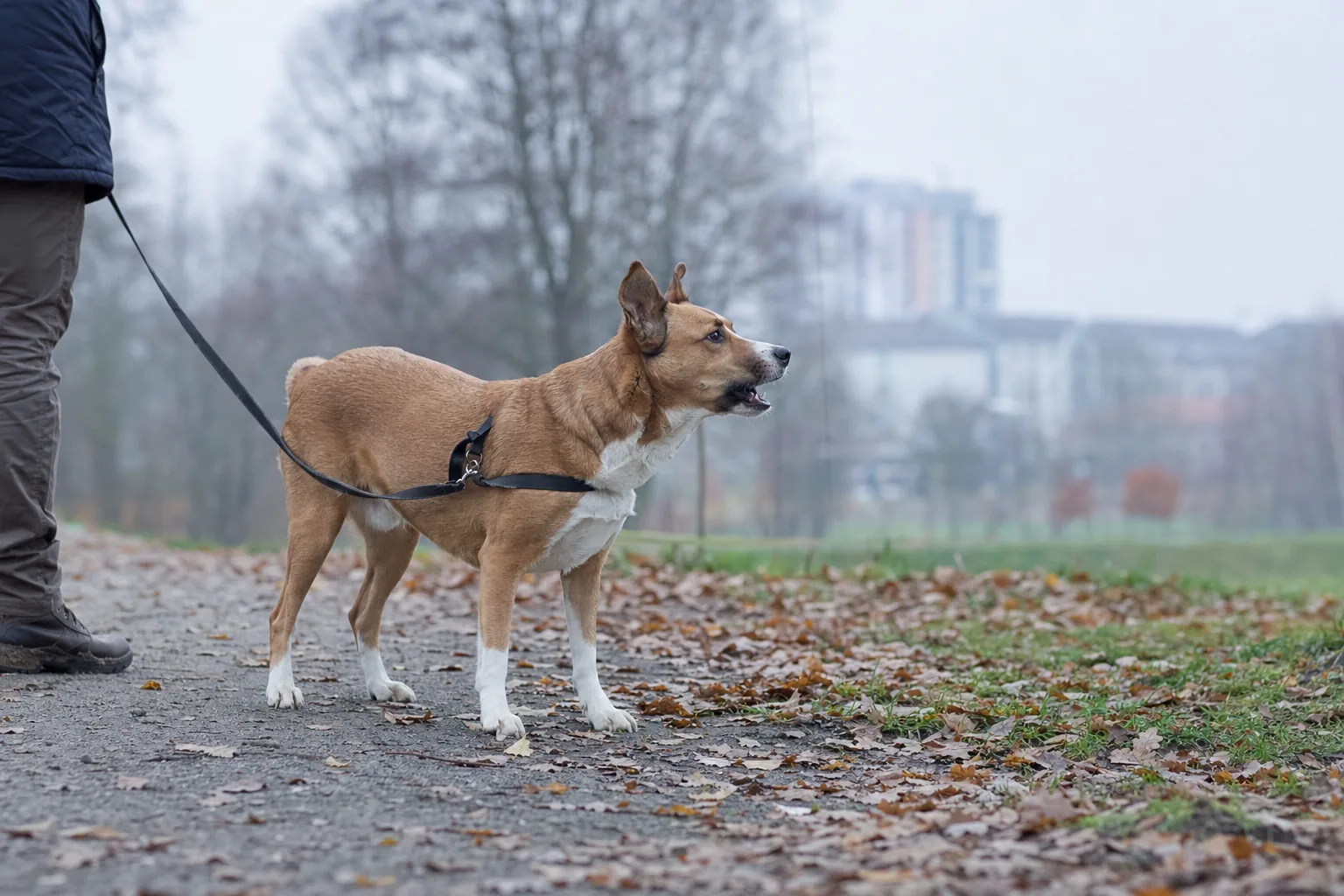
First walk of the morning, and at the first patch of grass he stops and starts grazing. He goes for the long blades, tugs them up, chews for ages, sometimes swallows them roots and all. Fifteen minutes after you get home it all comes back up on the carpet in a yellowish froth. Another dog never brings anything up, he just grazes, and his owner wonders what is missing from the bowl. If you searched "why does my dog eat grass" after cleaning the carpet for the third time, this page tells you when it is normal and when to ring the vet.
Why does my dog eat grass?
Most likely, because dogs do. The biggest survey on the subject, run at the University of California, Davis, with close to 1,500 owners, found that nearly 8 in 10 dogs with access to plants had eaten grass. Fewer than 1 in 10 had seemed unwell beforehand, and about 1 in 5 were sick afterwards. Younger dogs grazed more often and were sick less often. The explanation most people in the field accept is that grazing is inherited: in the dog's ancestors, the fibre passed through the gut and swept intestinal worms out with it. Your dog has no need of that now. The habit has stayed with him anyway.
What tells you most is how he eats it, far more than how much.
He likes it. Especially in spring, when the grass is young and sweet. Dogs are fussy about it: they walk straight past the mown lawn and stop at the couch grass, the long broad blades along the edge of a path, or one particular clump in the park. He chews unhurriedly, stops, looks around. He is not sick. This is what you will see most often, and it is the least worrying.
He feels queasy. This looks different. He suddenly makes a dash for the grass, gulps down long blades with barely a chew, and within minutes he is sick. Afterwards he is fine. Some dogs do it when their stomach has been empty too long, and the vomit is yellow bile, early in the morning. Others do it after eating something off the day before. Once every few weeks is fine. Every week is not, and that is when you go to the vet with the diary described below.
He is bored and the walk is too short. Ten minutes on a short lead along the same pavement, and grass is the only interesting thing on offer. A dog with nothing to sniff grazes. At our training sessions, dogs whose owners say they "graze like sheep" at home do not give the grass a second look while they are working. Their nose has a job to do.
He wants your attention. Every time, you pull him off the grass, say "leave it", bend down to him. For a dog who spends a lot of time alone, that counts as a conversation. He soon works out that grass gets you moving.
He is hungry. Fed once a day in the evening, he goes 20 hours on an empty stomach. He grazes in the morning. A small Australian study found that grass was eaten more before meals than after. The idea that "his food is missing fibre" has not held up: in the dogs studied, changing the diet did not stop the grazing.
Pica. If on top of grass he eats soil, stones, plaster, socks or paper, you are dealing with something else. Pica means eating things that are not food, and there is often a medical cause behind it: anaemia, parasites, a problem absorbing nutrients, hunger caused by a medication. That is for the vet to investigate. Training will not fix it.
What does not work, even when it seems to
Yanking the lead at every blade. It stops him there and then. Two weeks later you have a dog who grazes faster with one eye on you, or one who has turned grass into a game starring you. And every jerk on a collar puts pressure on his neck several times a walk, for nothing.
A muzzle for grass. A basket muzzle has its uses elsewhere. For grass it is a sledgehammer to crack a nut: he keeps trying, gets frustrated, and you still have no idea why he grazes. The only time it makes sense is for a few weeks if you live next to chemically treated lawns and have no other route.
A new food every fortnight. "Maybe he is missing something" ends with three brands in a month. Every sudden change upsets his gut, he is sick more often, and the grass gets the blame. If you do want to change his food, do it once, gradually, over 7 to 10 days.
Lettuce and fibre supplements off your own bat. You start from a theory that has not held up and end up feeding him vegetables he cannot digest. If the vet thinks he needs more fibre, the vet will tell you how.
Telling him off after he has been sick. He cannot control vomiting. Tell him off and all he learns is to be sick somewhere out of sight.
Ignoring treated grass. This is the one real danger in grazing, and it is the one people overlook. The grass itself does no harm. A lawn freshly sprayed with weedkiller, scattered with fertiliser granules or with blue slug pellets does.
The plan, step by step
1. Keep a diary for two weeks
Before you change anything, write things down. A few lines a day on your phone:
- when he grazes: before or after meals, and what time;
- where: the park, a roadside, your own garden, one particular spot;
- how: calmly and choosily, or suddenly and greedily, swallowing whole blades;
- whether he is sick, how long afterwards and what it looks like;
- what his poo was like that day and how he ate.
After two weeks you will know which dog you have: one who grazes because he enjoys it, one who grazes because he feels sick, or one who is bored. Each gets a different plan.
2. Deal with the dangers around the grass
Grazing itself does not need stopping. What surrounds it does need dealing with.
- Treated lawns. Keep off lawns for at least 48 hours if they smell of chemicals, have granules at the base of the blades or have been sprayed. Many councils put up notices after treatment; if you cannot see one, ask the parks department. Blue or green slug pellets are toxic to dogs and look like sweets.
- Roadside verges. Grass by the kerb collects exhaust fumes, road salt in winter and, all year round, the urine of every dog in the neighbourhood. If he wants to graze, let him do it in the middle of the park.
- Garden plants. Not everything green is grass. Yew, oleander, autumn crocus, foxglove, lily of the valley, azalea, tulip and daffodil bulbs, hellebore and monkshood are all toxic to dogs. Before you let him graze in someone else's garden, have a look at what is growing there.
- Summer grass seeds. From June, the dry seed heads of wild grasses, wall barley for one, the spiky kind, work their way into ears, between toes and up noses. If he shakes his head or licks a paw after grazing, there may be a seed inside.
- Worming. The grass in the park is the same grass other dogs have toileted on, and worm eggs survive in the soil for months. A dog who grazes needs worming on time, on the schedule you agreed with his vet.
3. Give the walk something else to do
For a bored dog, this step alone sorts out half the problem.
- The morning walk becomes a sniffing walk: a 5-metre long line, 20 to 30 minutes, you say nothing and he decides where to go. A dog with his nose down on a cat's trail has no time for grazing.
- A handful of kibble thrown at random over a few square metres of grass. Grazing turns into searching. And, funnily enough, that is how he gets the fibre you were worried about, without having to hunt for it himself.
- Split his food into two meals. If he brings up bile in the morning, give a small portion late in the evening and another when you get back from the walk. If he grazes greedily on an empty stomach, try giving part of his breakfast before you go out. Try each version for a week and check the diary.
- Two search games a day indoors, five minutes each: hide bits of food around a room and send him off with "find it".
4. Teach "leave it" for roadsides
The point is to be able to stop him grazing where the spot is a bad one. It takes two minutes a day.
- Indoors, hold a piece of food in a closed fist. He licks, paws, barks. You stay quiet and wait. The second his nose comes off your fist, say "yes!" cheerfully and give him a different piece from your other hand.
- After two or three days, open your fist. If he dives in, close it again. When he looks at you instead of diving in, praise him and reward him from the other hand.
- The food goes on the floor, first with your palm over it, then without. Only now do you start saying "leave it" before putting the food down.
- Outside, at a blade of grass by the kerb, say "leave it". The moment he turns his head to you, make a fuss of him and give him something tasty. Then head for the park and let him graze as much as he likes. Most people forget this bit: "leave it" only holds up if it comes with a "now you can".
5. When the grass is a symptom
If the diary shows him being sick more than once a week, grazing suddenly and greedily several times a day, or any of the signs in the medical section, the steps above take a back seat. Go to his vet with the diary on your phone.
The first week
| Day |
What you do |
| 1 |
Start the diary. Check your route: which lawns are treated, what grows in the gardens you pass. |
| 2 |
First sniffing walk, 30 minutes, long line, no commands. Food split into two meals. |
| 3–4 |
Food scattered in the grass on the morning walk. First "leave it" session indoors. |
| 5–7 |
Keep going with "leave it" indoors; two search games a day. |
| 7 |
Read the diary. Is he grazing less? Has he been sick? If he was being sick before and has been sick again this week, book a vet appointment. |
When it is a medical problem
Grazing is normal. The signs below are not, and each one is a reason for a vet visit:
- being sick after grazing more than once a week, or several times in one day;
- retching again and again with nothing coming up, a swollen belly and restlessness: that is an emergency, especially in large, deep-chested dogs, because it can be a twisted stomach;
- blood in the vomit or the poo, or black, tarry poo;
- going off his food, listlessness or weight loss, all at the same time as the grazing;
- eating soil, stones, plaster or fabric as well as grass;
- drooling heavily, trembling, wobbly on his feet or sick within minutes of grazing on a lawn that might have been treated: that is an emergency, go straight to the surgery and tell them what you suspect;
- a puppy bringing up worms.
At the appointment the vet will ask what the episodes look like (your diary makes that part much quicker), feel his belly, probably ask for a stool sample and, if he is being sick often, run blood tests or an ultrasound scan. Expect questions about his food, mealtimes, what he has picked up off the ground and when he was last wormed. Have the answers ready.
When to call a behaviour specialist
For grass, not often. It is worth it in a few cases:
- the grazing has got out of hand: you cannot interrupt it, it goes on for tens of minutes and he seems switched off;
- he eats other things that are not food, and the vet has ruled out a medical cause;
- he growls or goes stiff when you take him off the grass, as if he were guarding treasure;
- he only grazes when stressed (dogs too close, noise, new places) and grazes more as the stress goes up;
- you have followed the plan for three weeks, the diary shows no change, and the grazing bothers you enough to want help.
An assessment session starts from your diary and your dog. For this problem, more often than not you come away with a differently organised walk rather than a long training programme.
A behaviour that appears suddenly or changes for no apparent reason can have a medical cause. For full details, consult your dog's own veterinarian.