Dogs registered in a Stud Book
Attached to the TSAC report:
- a clear, complete photocopy of the pedigree
- the tattoo or identification number (microchip)
- the health and vaccination booklet
Official A.Ch.R. regulations
TSAC checks one thing, and it checks it properly: whether a dog stays settled among people, noise and other dogs, and whether the owner keeps control. It asks for no competition training and is open to any dog over 12 months.
About the test
The main purpose of this test is to verify the dog's character balance, sociability, and the handler's ability to exercise control over their animal.
The judge's attention focuses especially on these points. It is not the elegance of the execution that is scored, but how the dog copes with situations it will meet anyway: a stranger touching it, an unexpected noise, another dog passing close by, the owner disappearing for a few moments.
That is why TSAC is often the first step towards other disciplines. A dog that passes it is a dog you can go on working with, safely, in public.
The text below reproduces the official A.Ch.R. regulations, approved by the Board at Târgu Mureș on 11.09.2015, with the amendments approved at Cluj-Napoca on 24.08.2016.
General requirements
The test is open to all dog owners. It does not matter whether the animal is registered in a Stud Book, nor whether you belong to a working club, a breed club or a territorial association that is a member of A.Ch.R.
Attached to the TSAC report:
Attached to the TSAC report:
Judging. TSAC may be judged by any judge accredited by the Judges' College for working disciplines within A.Ch.R.
Content of the trials · part one
Six exercises that run one into the next, without a break. The team starts from the middle of a group of people and the trial ends in the same place.
Exercise 1
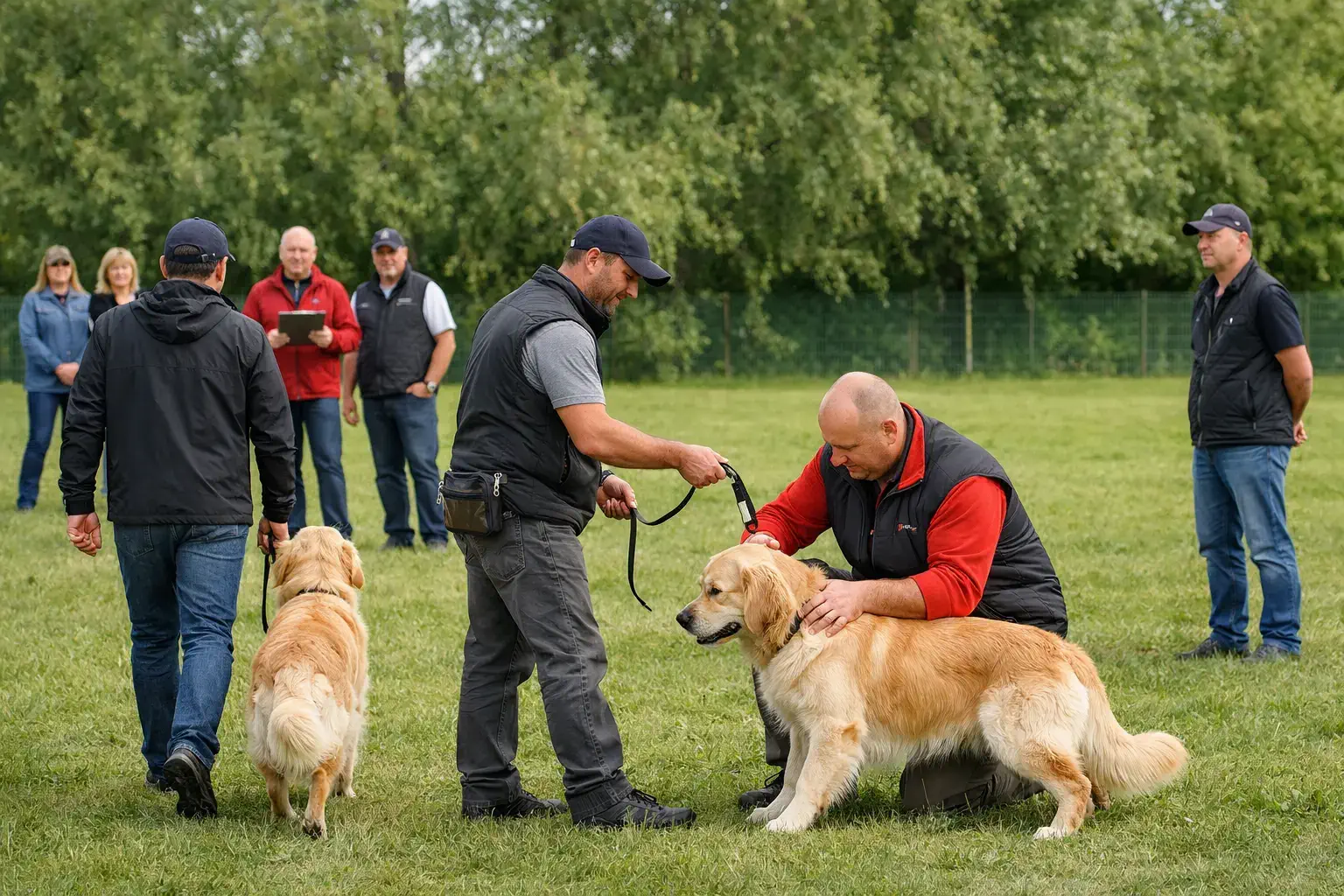
The handler, with their dog in the middle of a group of people (6–10 people), in the basic position and on leash, approaches the judge and the assistant for presentation. Heelwork over a distance of 20 metres must be demonstrated. After the presentation (handler's name, dog's name, age, breed), the handler hands the leash to the judge's assistant. The assistant, after brief contact with the dog, gently begins physical handling (stroking the head, muzzle, back, front and hind legs), after which the microchip is checked. All these operations may be carried out by the assistant or the judge in the presence of the handler, who stands at a distance of 2 metres from the dog.
Throughout this exercise, the dog's reaction within the group of people, the handler's level of control, the quality of heelwork, the reaction to the leash being handed over to a stranger, the dog's stability and sociability during physical handling, and the microchip or tattoo verification must be observed.
Exercise 2
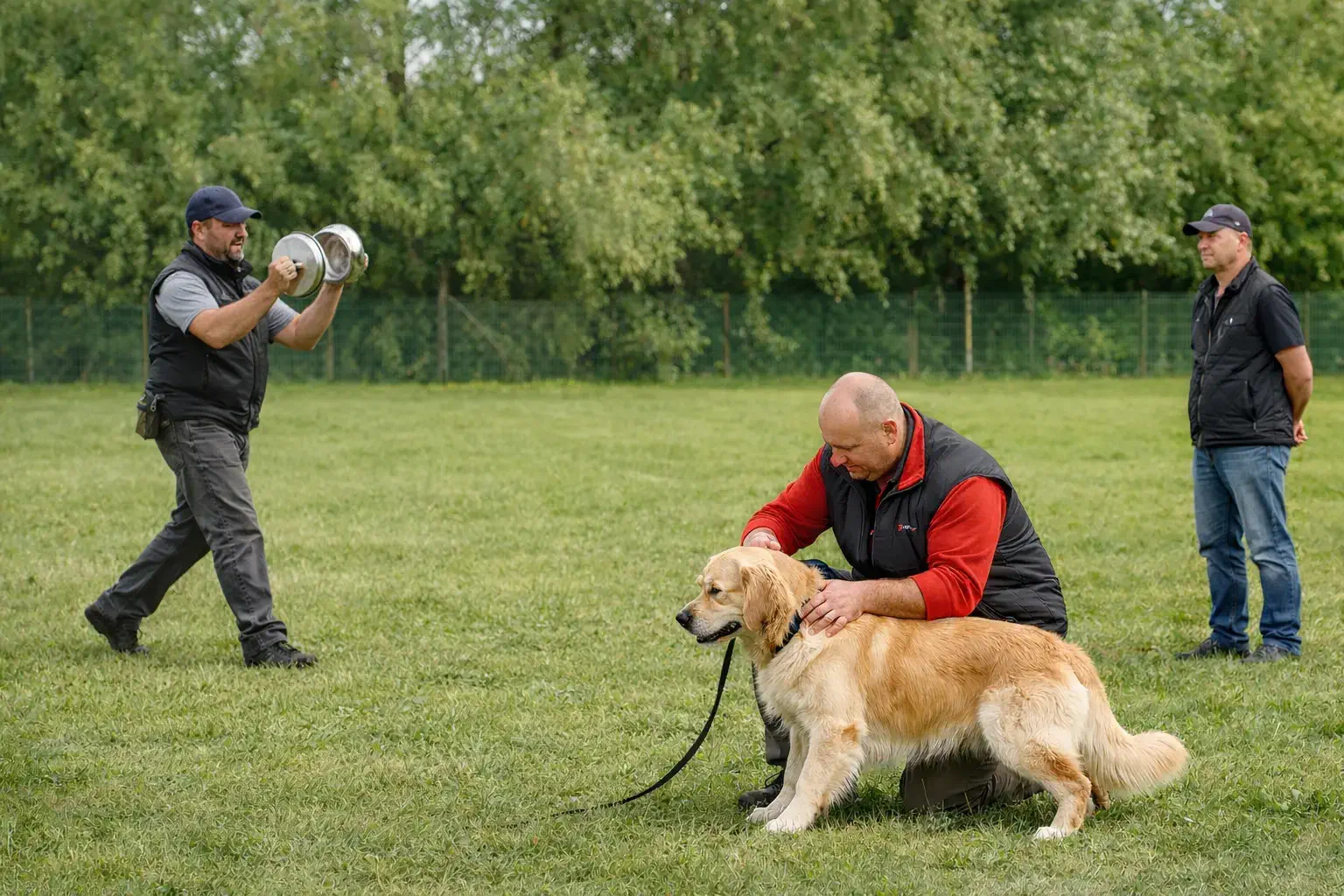
After the microchip check, at a minimum distance of at least 5 metres from the dog, a second assistant walks in a straight line in front of the dog at a normal pace. The assistant repeatedly makes noise using two metal bowls, a pinwheel, or a plastic bottle with pebbles inside. Throughout this exercise, the handler remains within the dog's visual range, and the dog is held on leash by the judge's assistant.
Exercise 3
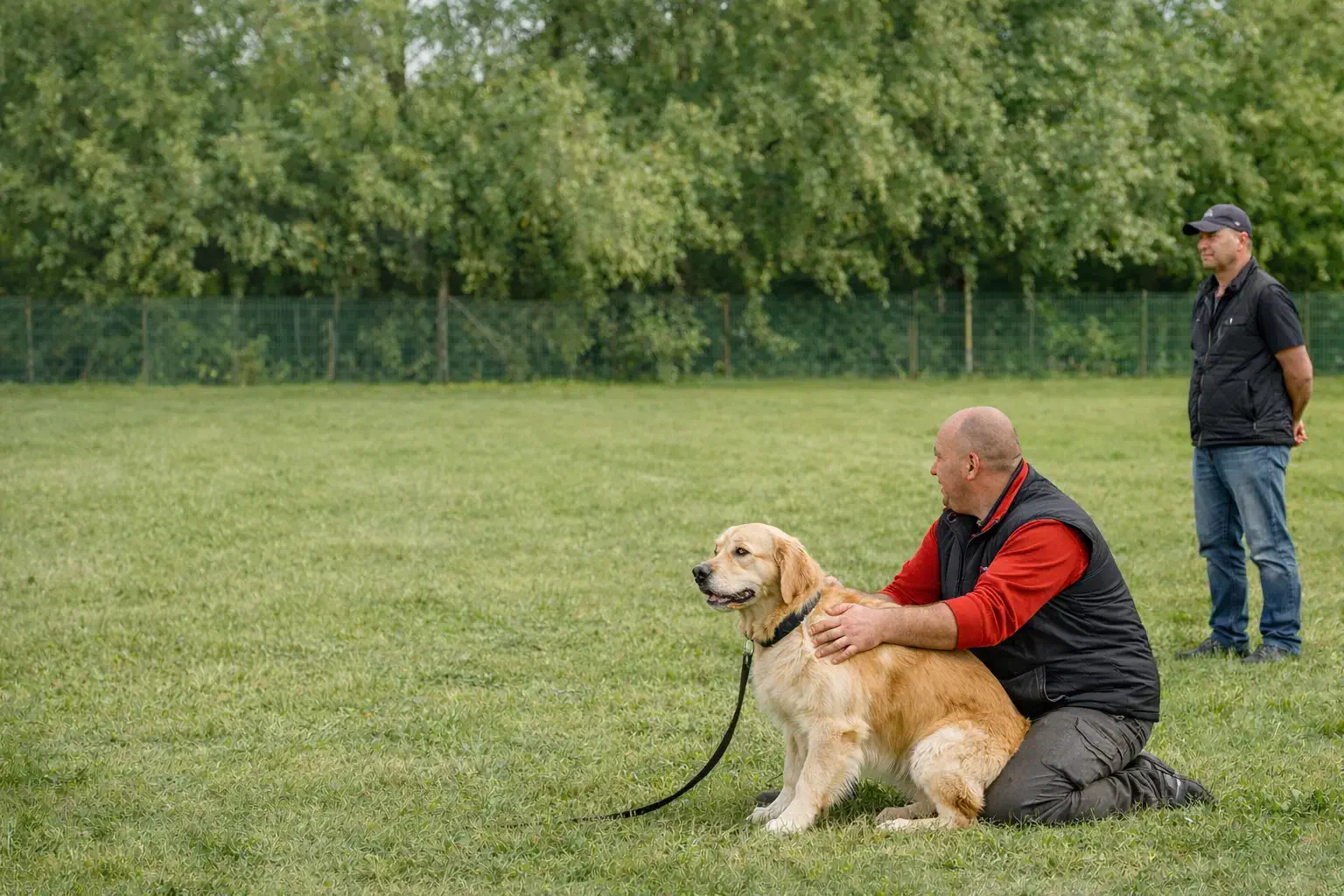
After the second assistant with the noise source moves away, the handler leaves the dog's visual range for a short period of time. The dog's reaction in the handler's absence is observed.
Exercise 4
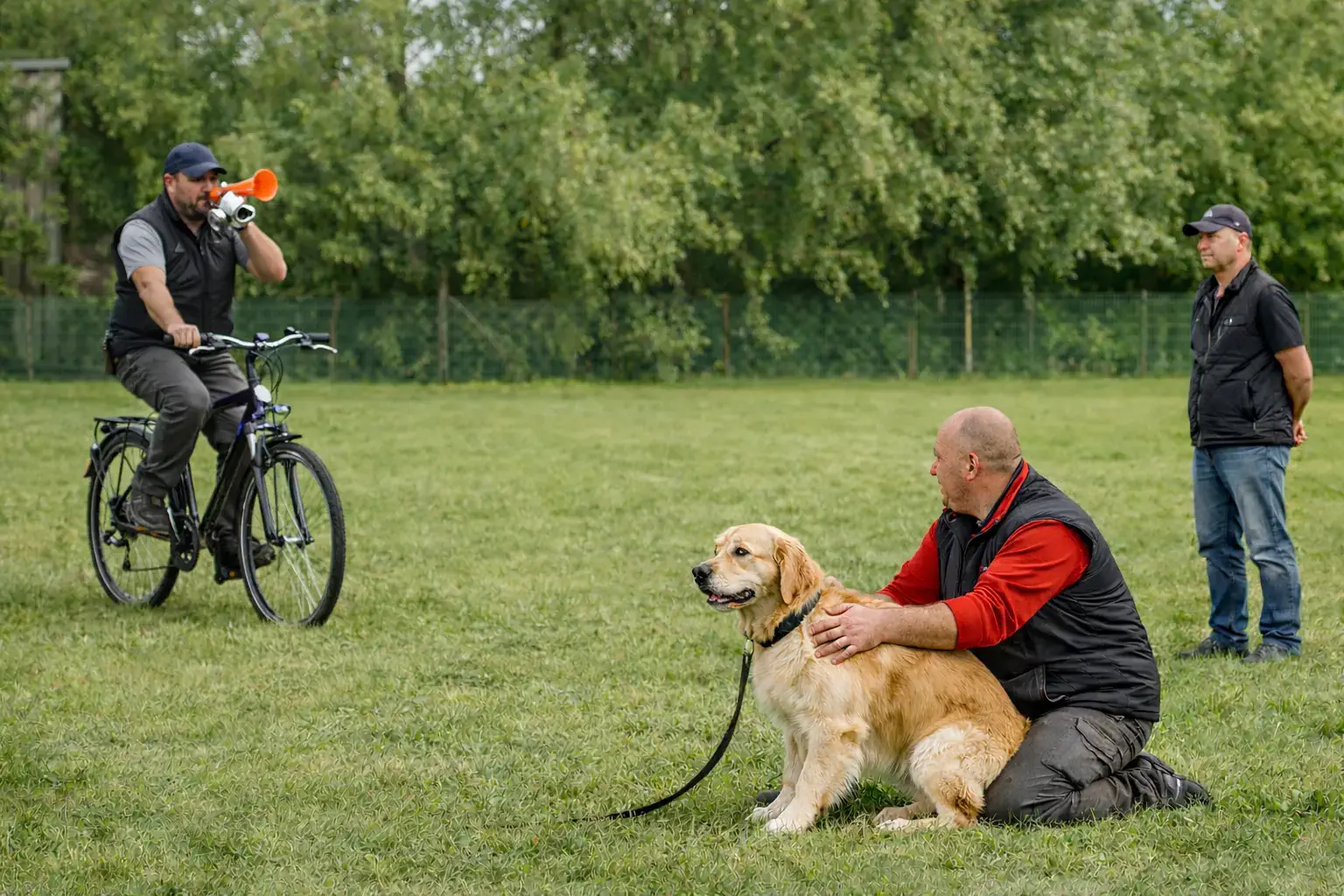
From the direction where the handler disappeared, the second assistant appears, riding a bicycle and at the same time producing medium-intensity noises (horn, bugle). These noises will be made before crossing the dog's path (at no less than 5 metres distance) and after passing the dog. Throughout this exercise, the handler remains out of the dog's visual range.
Exercise 5
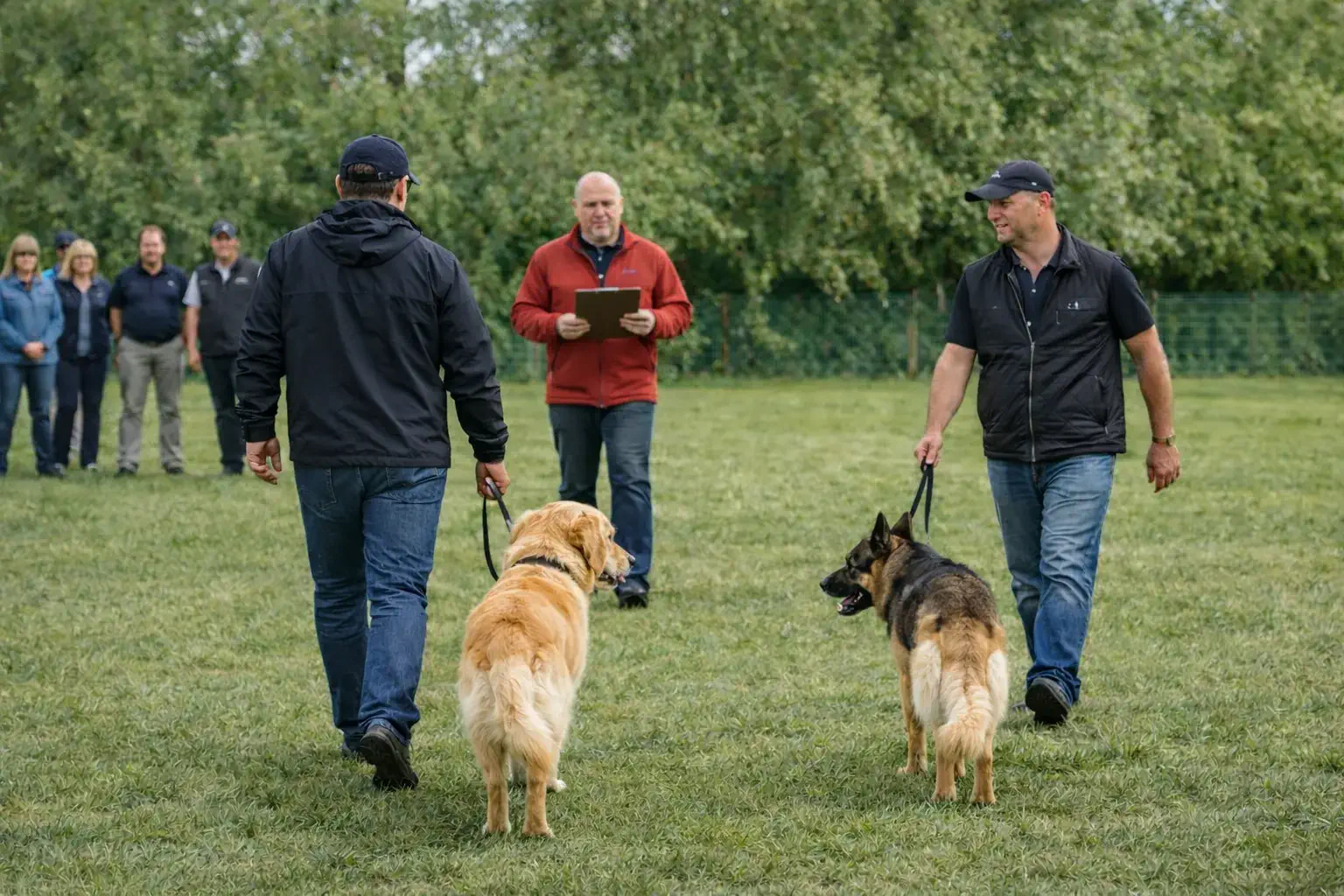
At the judge's signal, the handler returns to their dog and starts heelwork in a straight line over a distance of 20 metres toward the group of people from which they started the examination. Approximately halfway, the handler will cross paths with a second handler accompanied by their dog. Throughout this route, the judge closely accompanies the handler and their dog.
Exercise 6
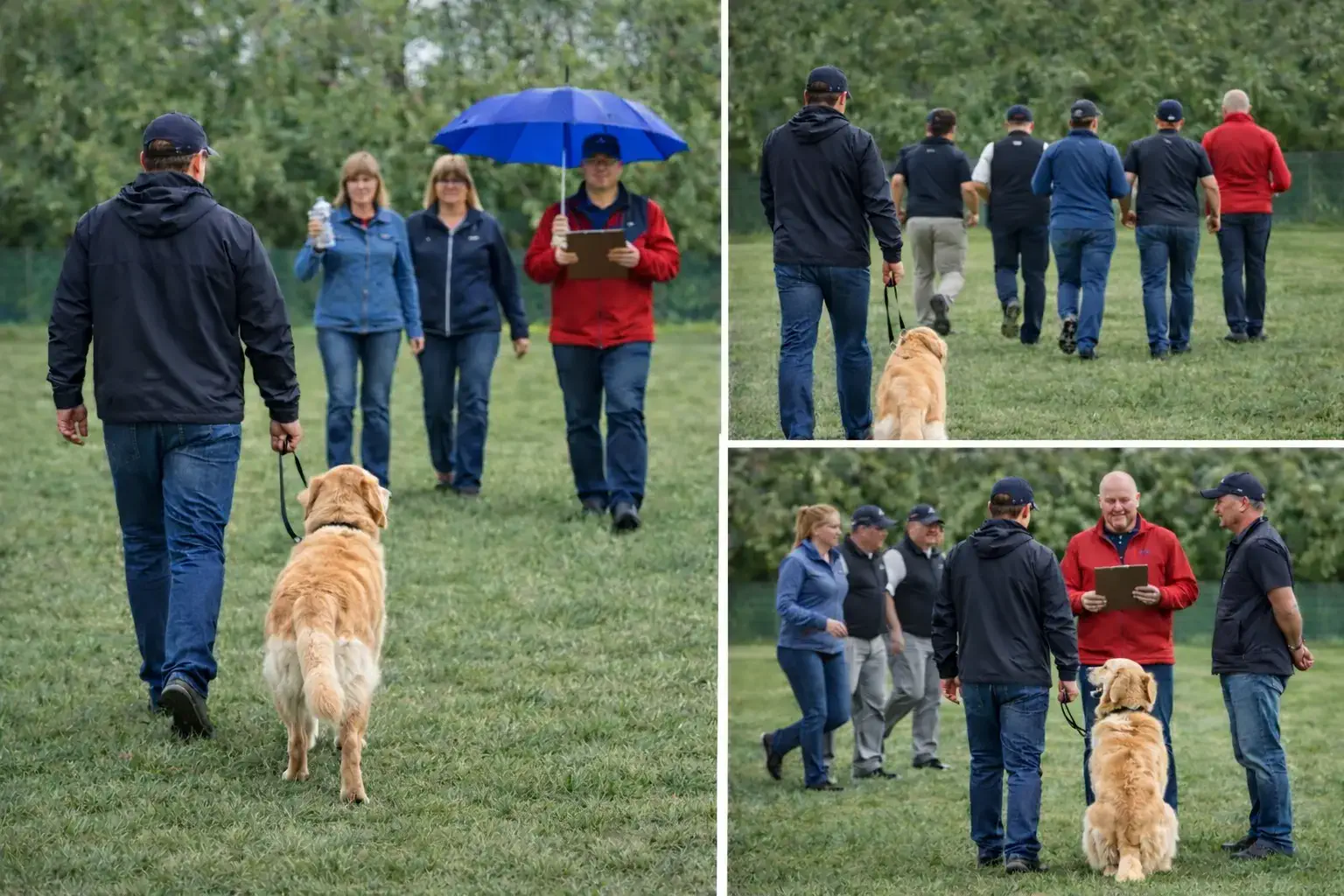
After crossing the second dog, the handler continues in a straight line and will cross a moving group of people (6–10 people). Before crossing, one person in the group will open an umbrella within the dog's visual range, without being threatening toward the dog, and another person will produce a strange medium-intensity noise using a container with pebbles inside. Observe the dog's self-confidence, nervous stability, and the level of control exercised by the handler.
After the noises are made and the moving group is crossed, at a distance of about 2 steps after passing, the group will turn 180 degrees at a brisk pace and overtake the dog from behind at a running pace, continuing to run for another 10 steps and then stopping. The handler and dog will continue walking until they reach the middle of the group, where they stop in the basic position, which also ends the sociability trial. Observe the reactions to the umbrella, the container with stones, and the people running.
Content of the trials · part two
Three exercises, held on a suitable, specially prepared field.
Exercise 1
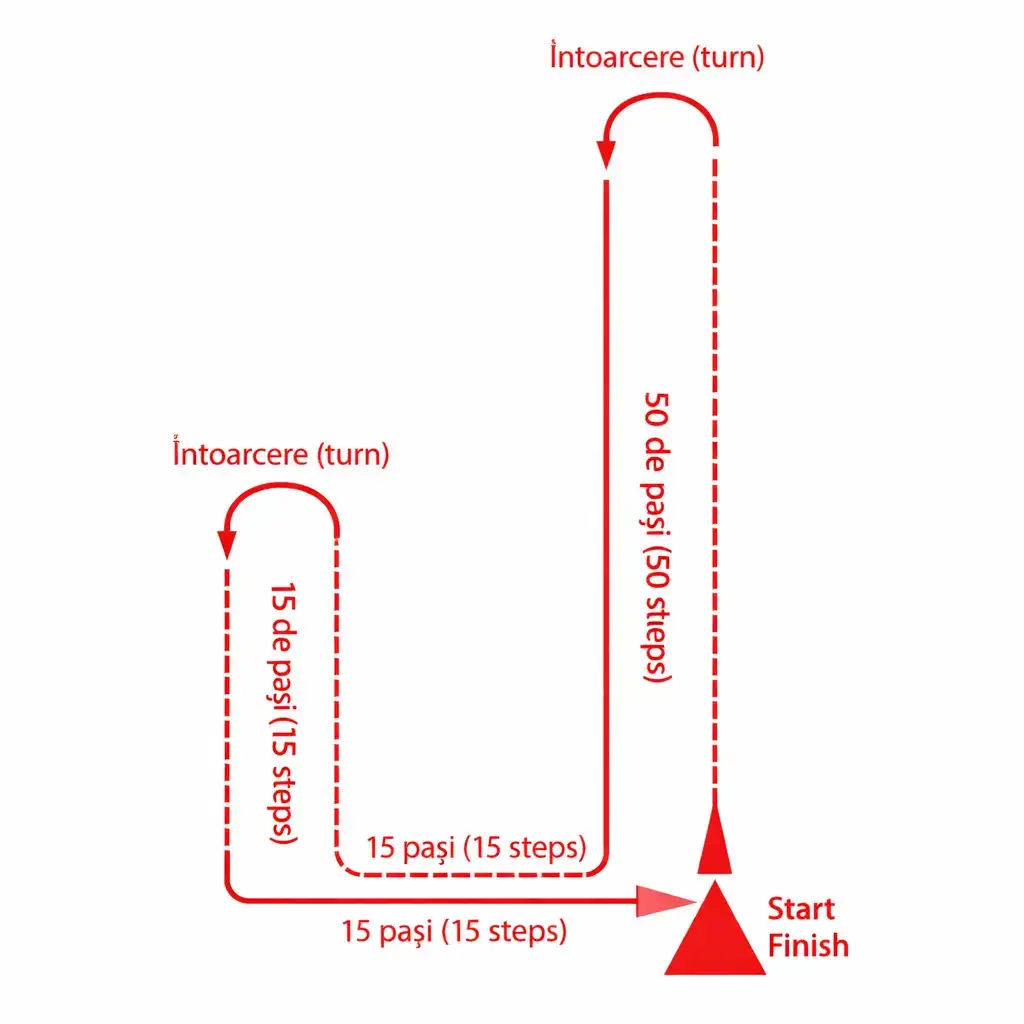
From the start point designated by the judge, proceed with the dog on leash at a walk for a distance of 50 steps forward. After covering this distance, the handler turns back at the same pace toward the start point. When passing through the start point, perform a right turn, continuing for another 15 steps. Then perform another direction change to the right for 15 steps, and return to the start point.
In this exercise, two right turns, two left turns, and two about-turns must be performed. After completing the heelwork route through the start point, the handler and dog head toward the group of people they must pass through, going around one person once on the right and once on the left.
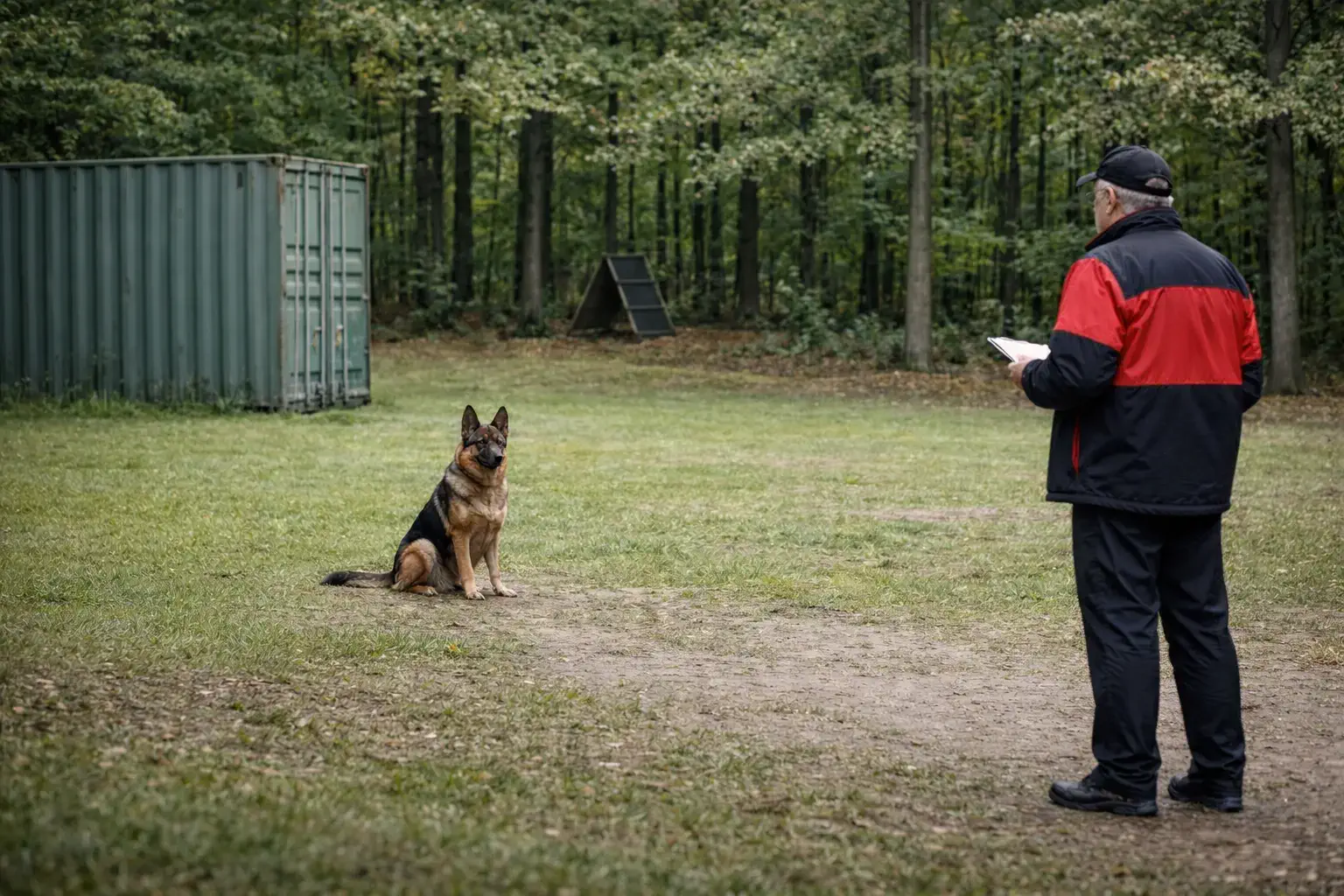
Exercise 2
At the judge's instruction, the handler and dog go to the designated place for the stay. At the judge's instruction, the handler leaves the dog in a position of their choice and hides for 3- seconds in a specially prepared place. At the judge's signal, the handler returns to their dog.
Exercise 3
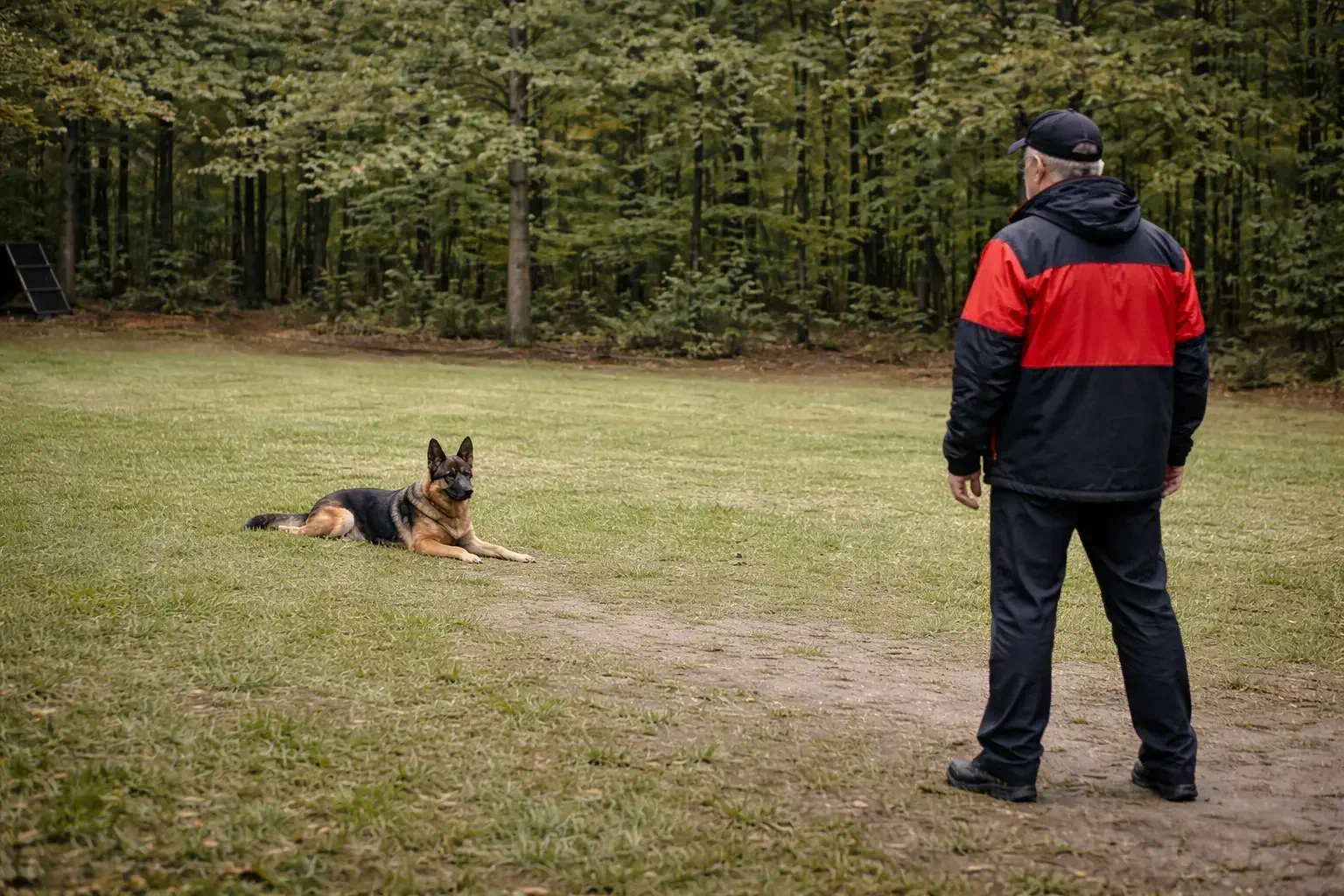
At the judge's instruction, the handler leaves the dog in a position of their choice and moves away for a distance of 20 steps. At the judge's signal, the handler calls the dog to them.
Assessment
The fitness notification or postponement must be specified by the judge, along with the grade obtained in case of success. Receiving two "insufficient" grades leads to postponement of passing until a later date.
A dog's inability to perform one or another of these obedience exercises cannot be a reason for postponement, if the dog otherwise demonstrates the desired qualities of balanced character and sociability, remaining - especially and in all circumstances - under the control of its owner.
In the case of a dog that does not correctly perform these exercises, the judge will have the possibility to influence the grade at their disposal.
Postponement of a dog at the TSAC test is not final; the dog may be presented again later, on the occasion of another examination.
For organisers
TSAC examinations may be organised under the auspices of A.Ch.R. member associations or clubs, with A.Ch.R. authorisation - either on the occasion of meetings, competitions or shows they organise or patronise, or as part of their regular activities.
The organiser ensures the proper conduct of the entire examination and creates the necessary conditions for it. To that end it compiles a file including all required authorisations from the competent authorities in whose jurisdiction the examination takes place: veterinary authority, police, emergency services and the rest.
The organiser also ensures that every dog presented for examination has a file containing the identification documents mentioned above, as well as the judging sheet.
To prevent potential falsifications, diplomas are authenticated with the stamp of the organising association or club, signed by its representative and by the examining judge, and sent to A.Ch.R. for approval. They are awarded to dogs deemed fit after the results have been verified and confirmed by A.Ch.R.
At the end of the examination, the results included in a report, together with all the documents above, are sent to A.Ch.R. Any file considered incomplete or incorrect will be rejected.
Frequently asked
From 12 months of age, completed on the day of the examination. The regulations provide no exceptions, and the judge verifies the age before the tests begin. The dog must be presented by its owner.
No. The test is open to all dog owners, whether or not the animal is registered in a Stud Book and whether or not they belong to a working club, a breed club or a territorial association. Only the documents attached to the report differ.
The regulations state explicitly that failure to perform an obedience exercise cannot in itself be a reason for postponement, provided the animal otherwise demonstrates balanced character and sociability and remains under the owner's control in all circumstances. It can, however, influence the grade the judge awards.
Four: excellent, very good, good and sufficient. Receiving two insufficient grades leads to postponement of passing until a later date.
No. The regulations state that postponement of a dog is not final, and the animal may be presented again later, at another examination.
Any judge accredited by the Judges' College for working disciplines within A.Ch.R. Examinations are organised under the auspices of A.Ch.R. member associations or clubs, with A.Ch.R. authorisation.
The description of the trials above reproduces the official regulations published by A.Ch.R. - the Romanian Kennel Club, approved by the Board at Târgu Mureș on 11.09.2015, with the amendments approved at Cluj-Napoca on 24.08.2016.
Official TSAC regulations (PDF, ach.ro)
We have kept the wording of the original regulations, including where the official text contains slips - for instance the length of the stay in trial B, exercise 2, appears in the original as "3- seconds". For any detail that matters in an examination, the A.Ch.R. document remains the reference.
This page was last edited on 23.12.2025.
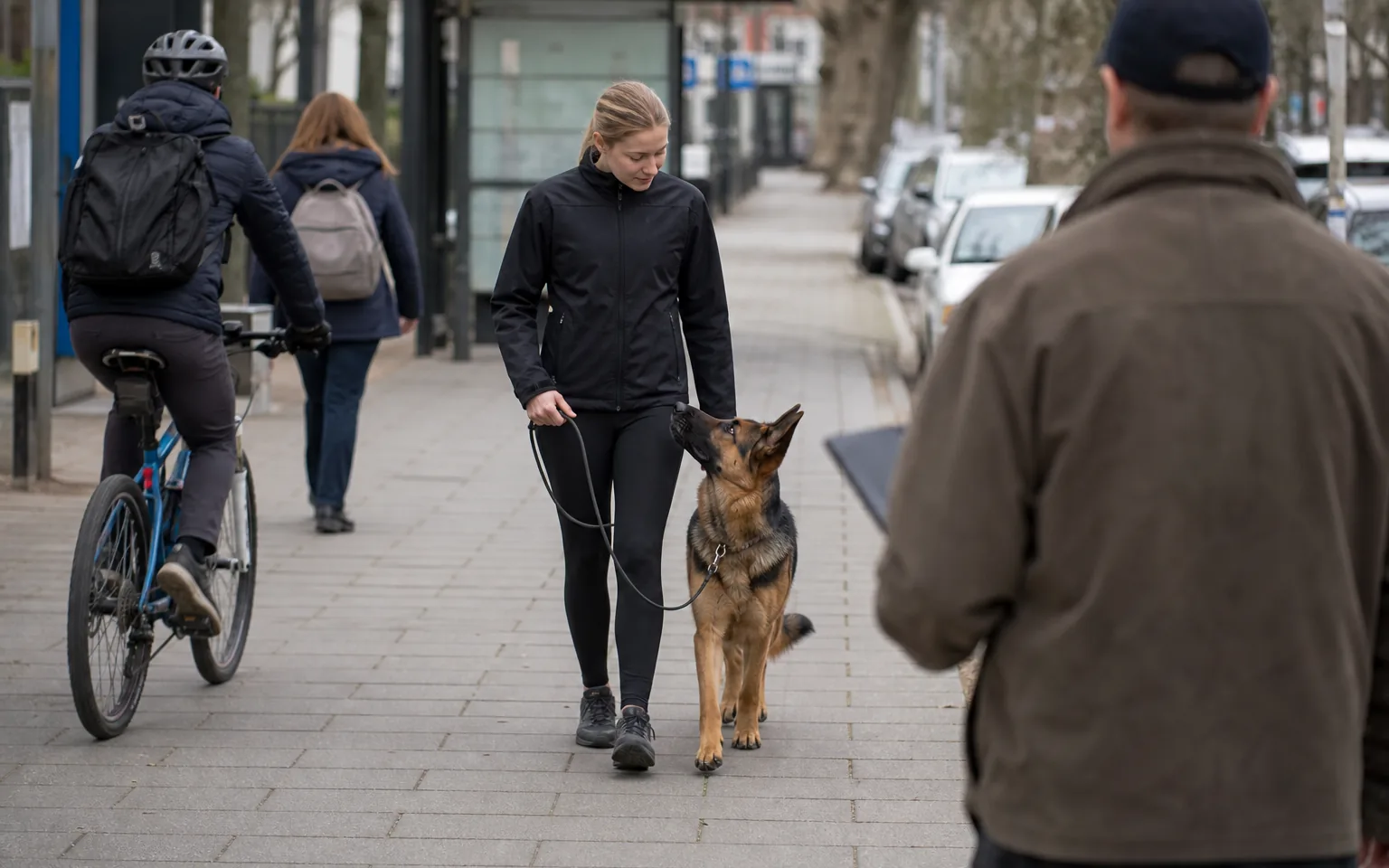
Our advanced training course covers exactly what the test asks for: steadiness among people and noise, heelwork, the stay and the recall. Write to us and we will tell you where you stand now and how much work is left.