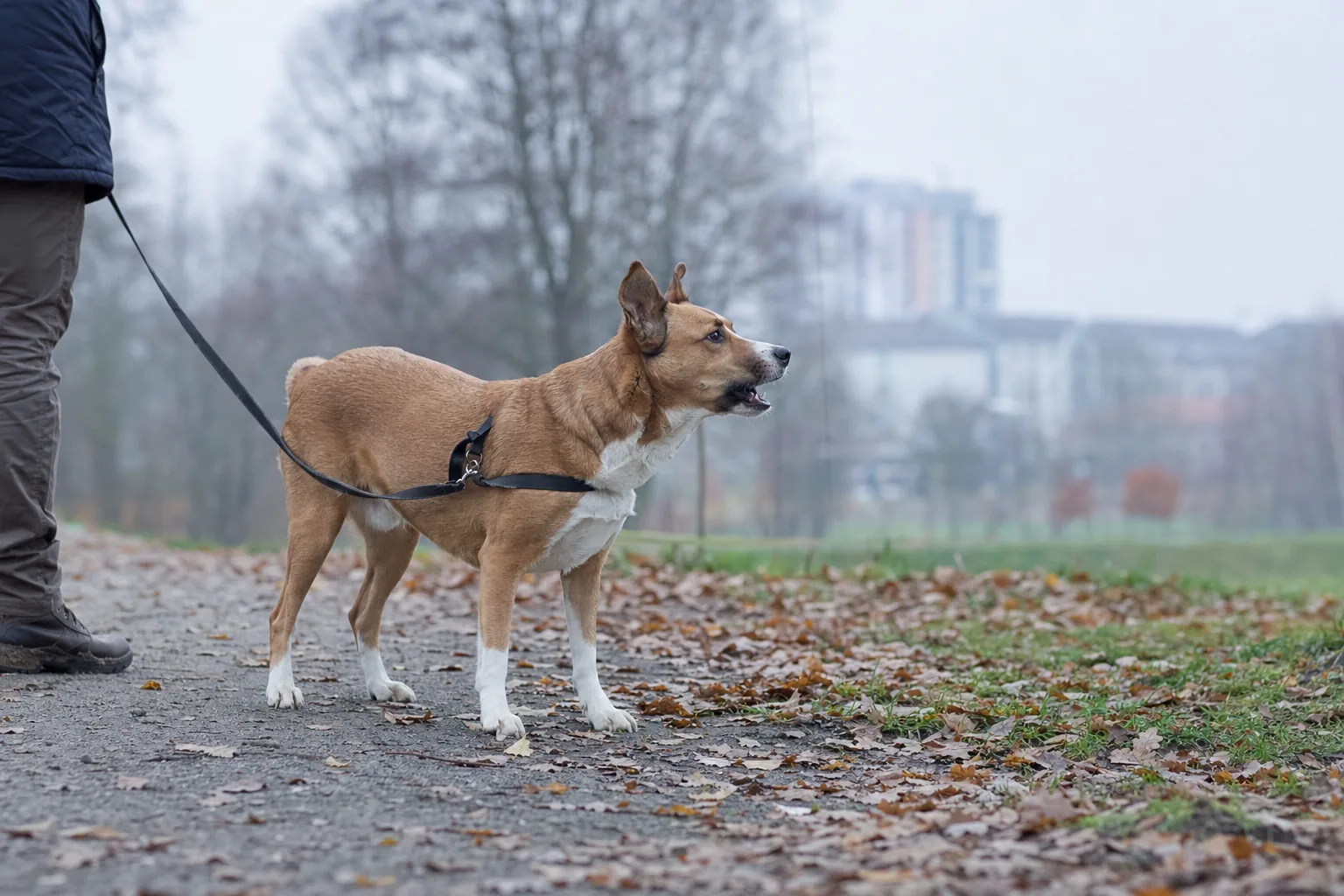
You get up from the sofa for a glass of water and the dog gets up too. Off to the bathroom, and he lies down pressed against the door. You walk from the kitchen to the bedroom and back, and he makes the trip with you every single time, eyes on you, even if he was fast asleep a moment ago. Some people love having a "velcro dog". Others cannot take a step around the house without a shadow behind them and wonder whether it is normal. Most of the time it is. Sometimes, though, it is a sign of unease worth working on, and telling the two apart is easier than you might think.
Why he follows you everywhere
Dogs are social animals and have lived alongside people for thousands of years. Wanting to stay close to their person is natural. What matters more than the following itself is what he does when he cannot follow. A dog who trails after you but settles quietly when you close a door has no problem. One who whines, scratches at the door and pants when he cannot see you has one.
The causes usually come mixed, two or three in the same dog, so it is worth running through all of them.
Breed and temperament
Herding dogs, small companion breeds, labradors and generally any dog bred to work close to people have staying by your side in their blood. For an Australian shepherd, keeping track of every person in the house at every moment is practically a job.
You taught him without meaning to
He follows you into the kitchen and now and then gets a piece of cheese. He follows you to the door and sometimes you go for a walk. Over time, staying near you has brought him a great many good things, so he keeps doing it. The habit itself is a good one. It just helps to know where it comes from.
Boredom
A dog with nothing to do all day sticks to the only source of excitement in the house, which is you. Any move you make might mean something.
Insecurity or fear
Shy dogs, recently adopted dogs and dogs who are scared of noises (thunderstorms, fireworks, building work next door) seek out their person as a safe place. After a house move, a loss in the family or a stay at the vet's, many dogs get clingier for a few weeks.
He cannot cope with being alone
In some dogs, following you around the house is just the visible part of a bigger worry: they cannot bear being separated from their person. The signs are clear. He gets upset when a door closes between you, gets agitated when you put your shoes on or pick up your keys, and after you leave he barks, howls, damages things by the door or wees indoors. We have a separate guide to separation anxiety.
Age
Puppies of a few months follow you everywhere, and that is a good thing, because it is how they learn. Older dogs whose sight or hearing is starting to go, or who show the first signs of brain ageing, can suddenly become much clingier, especially in the evening.
Pain or illness
A dog who feels unwell sometimes seeks out his person more than usual. That matters most when the change comes on suddenly.
He senses something in the house
A pregnancy, an illness of yours, tension between people. Dogs notice very well when routines or moods shift, and they respond.
What does not work, even when it seems to
Shutting the door in his face without warning. A dog who follows you out of insecurity and suddenly runs into a closed door becomes even less sure of himself. Next time he watches you more closely so he does not miss the moment.
Ignoring him completely, as a method. The advice to ignore him entirely so he "unsticks" may cut down attention-seeking for a while, but in an anxious dog it leaves the anxiety untouched. It works far better to give him your attention exactly when he is settled on his own.
Telling him off. A snapped "leave me alone!" aimed at a dog who comes to you to feel safe only confirms that something is wrong.
A second dog to keep him company. Dogs who are glued to their person usually stay glued to their person, even with a sibling in the house. A second dog is a fine idea if you want another dog, but it is not a treatment.
Fussing over him at every step. If every trip round the house ends with a stroke or a treat, following you becomes more and more worthwhile. It is not a serious mistake, but if the following bothers you, this is where you start.
The plan, step by step
If the following does not bother you and he stays calm when he cannot see you, you do not need a plan. If it does, there are five parts.
1. Three days of notes
Write down when he follows you, where, what he does when he cannot follow (lies down, waits by the door, whines) and how long it takes him to settle. After three days you will see whether it is habit, boredom or unease.
2. Give him something to do, especially for his nose
A lot of the clingy dogs we meet simply do not have enough to do. In the morning, a sniffing walk on a long line. His meals from a stuffed food toy or hidden around the house. While you work, something to chew: a suitable chew, a root. A dog tired out by things he enjoyed finds it much easier to stay on his own cushion.
3. His blanket, where calm brings good things
Pick a bed or blanket and put it, to begin with, somewhere he can see you from. Every time he lies down on it of his own accord, praise him and drop a treat on the blanket. Then ask him to lie on it for a few seconds, then a minute, then five, praising him calmly and taking the treats to him on the blanket. Once he settles well two metres from you, move the blanket a little further, then next to the door, then into the next room. A dog who has learnt that his blanket is a good place no longer feels the need to be glued to your leg.
4. Short separations around the house
Put a baby gate between rooms so you can see each other but he cannot come through. Go into the kitchen for ten seconds and come back without any fuss. Next time, twenty. Leave him something good to chew on his side. Come back before he starts to whine. When he copes calmly for a few minutes, close the door for a few seconds, then for longer.
5. Praise independence, not just coming after you
When he chooses by himself to stay in another room, in the garden or on his blanket, wander over calmly, say something kind and leave again. He learns that good things happen when he is away from you too.
The first week
| Day |
What you do |
| 1–3 |
Notes. Sniffing walk in the morning. Meals from food toys. |
| 2–4 |
His blanket: treats when he lies there on his own, then a few seconds on request. |
| 4–7 |
Blanket a few metres away. Baby gate, separations of 10–30 seconds, many times a day. |
| 7 |
Reread your notes: is he whining less, settling faster? If not, see the section on getting help. |
When it is a medical problem
In a few situations, see your own vet first and start the plan afterwards:
- he became clingy suddenly, from one week to the next, with nothing changing at home;
- he is over 8 or 9, and the following comes with restlessness in the evening, aimless wandering, upside-down sleep or getting stuck in corners;
- he seems not to hear you when you call or bumps into furniture;
- he moves stiffly, pants for no reason, cannot settle;
- he eats or drinks differently from before.
Pain, fading sight and hearing, and brain ageing often change the way a dog seeks out his person. Training exercises will not fix those.
How nose work helps
At mantrailing training we often see dogs who will not leave their person's side at home working at the end of a ten-metre line, nose down, making their own decisions. Searching gives a dog a job he does well without you next to him, and the confidence he builds there shows at home too. You do not need to take up a sport. Treat-finding games around the house, with the treats hidden further and further from you, work on the same thing on a small scale.
When to call in a professional
- he panics when he cannot see you: whining non-stop, scratching the door, drooling, panting;
- he cannot be left alone at home even for a few minutes without barking, howling, damage or wee;
- he growls or bites when someone comes near you (here he is guarding you as if you were one of his possessions);
- after three weeks of consistent work, your notes show no change.
A behaviour professional who works with rewards will tell you after an assessment whether you are dealing with a habit, general anxiety or separation anxiety, and which plan suits your dog.
A behaviour that appears suddenly or changes for no apparent reason can have a medical cause. For full details, consult your dog's own veterinarian.