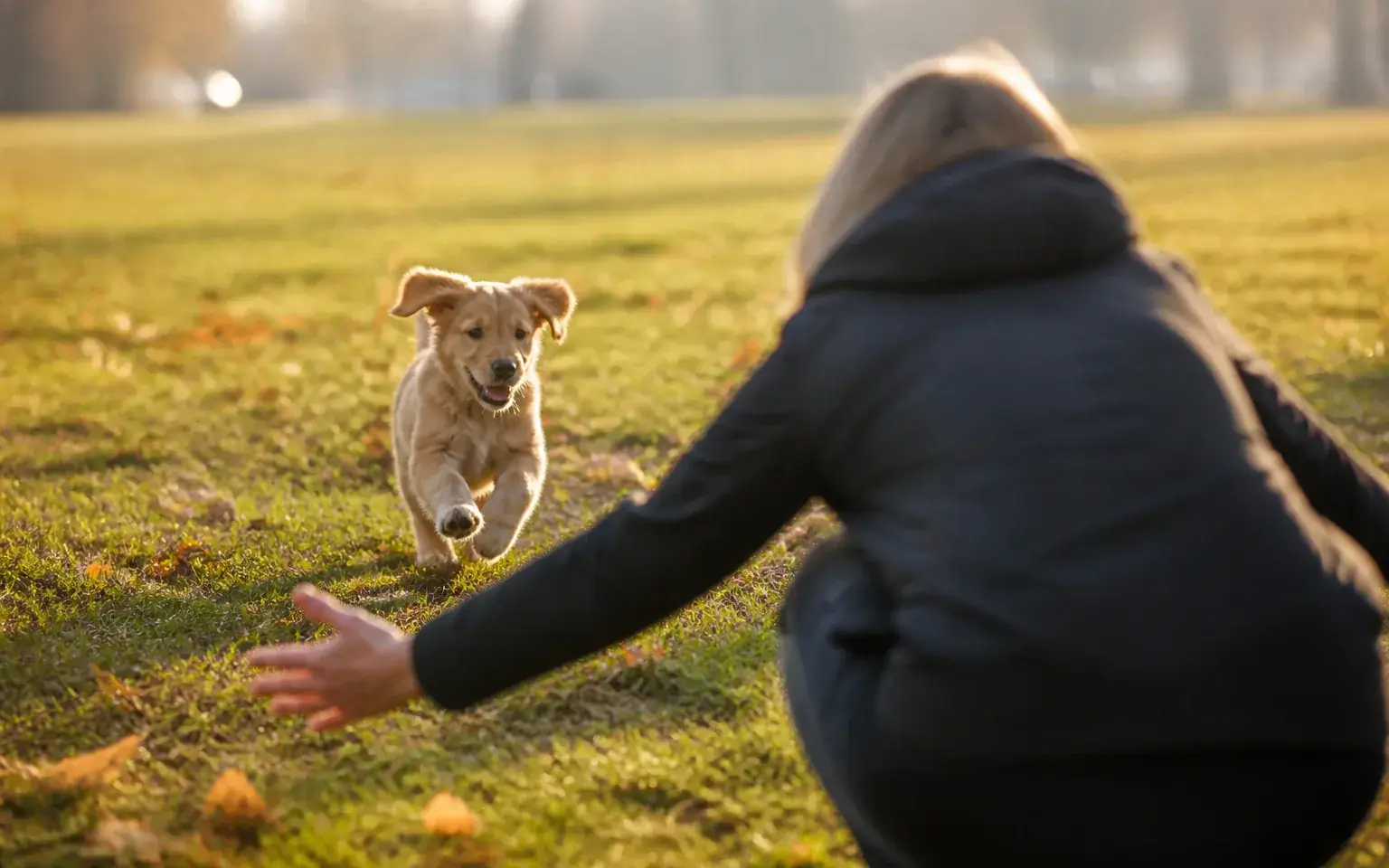
A Golden Retriever puppy running across the grass towards a crouching person waiting with an outstretched arm

For puppies between 3 and 6 months

Puppy Class: socialisation and early education

The first few months count the most. This is where the puppy learns to be relaxed around people, dogs and noise - through play, exploration and exercises that fit its age.

3-6 months the age for Puppy Class
14 modules from socialisation to rest
130 topics covered point by point
Positive methods rewards and cooperation

About the course

A course in socialisation and early education

The first months of a dog's life weigh heavily on its behaviour as an adult. This is when it learns how to behave around people, around other dogs and around everything that moves.

Puppy Class is a course for puppies between 3 and 7 months, built on controlled socialisation, play, exploration and age-appropriate exercises.

We are not only after a few cues. We are after a curious, confident and balanced dog that copes more easily with everyday situations.

The methods are positive: rewards, cooperation and respect for each puppy's own pace.

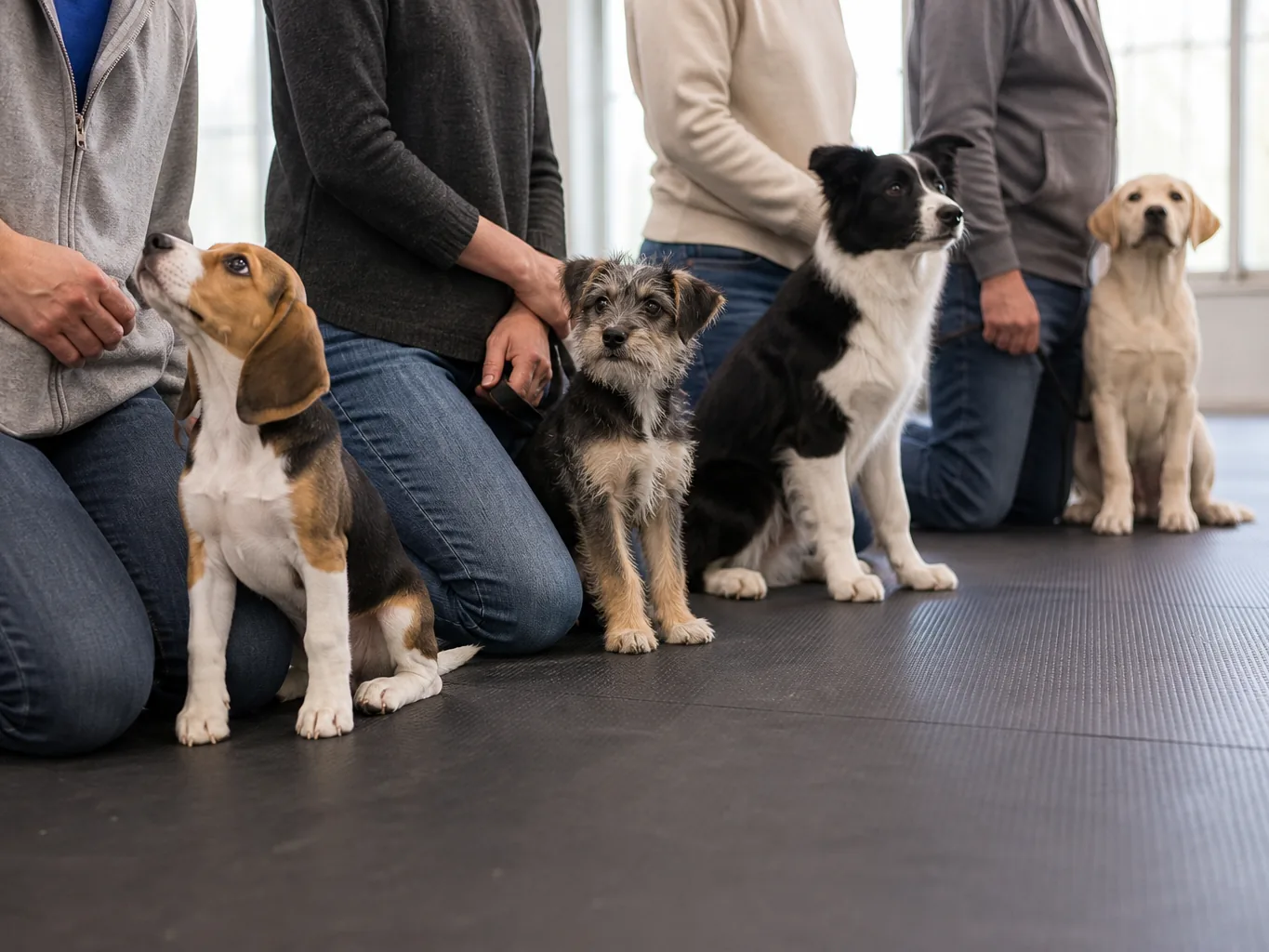
Four puppies of different breeds sitting calmly on the mat of a training hall, each next to the knees of its kneeling owner

Before the first session

What you bring with you and what conditions have to be met

What you need to bring

  • a fixed collar or a comfortable harness that fits the puppy
  • a fixed fabric leash, roughly 2 metres long
  • a fixed long line of 8-10 m
  • a treat pouch
  • small food rewards that are easy to eat
  • the puppy's favourite toy
  • a mat or small blanket
  • water and a bowl
  • bags for picking up after your dog

Retractable leashes are not recommended during the group exercises.

Conditions for taking part

  • the course is for puppies between 3 and 6 months of age
  • the puppies must be clinically healthy
  • vaccinations and parasite treatments follow the puppy's age and the vet's recommendations
  • vaccination against kennel cough may be required for the group activities
  • puppies with a cough, vomiting, diarrhoea, nasal discharge or other signs of illness cannot take part
  • the person responsible for the dog must be at least 18 years old
  • children may take part only accompanied and supervised by an adult
  • every participant respects the space and the pace of the other puppies
  • the interactions between dogs are set up and supervised by the instructor

How the curriculum is built

Three stages, at the pace the puppy grows

We do not rush anything. Each module builds on the one before it, and the exercises match the puppy's age and attention span.

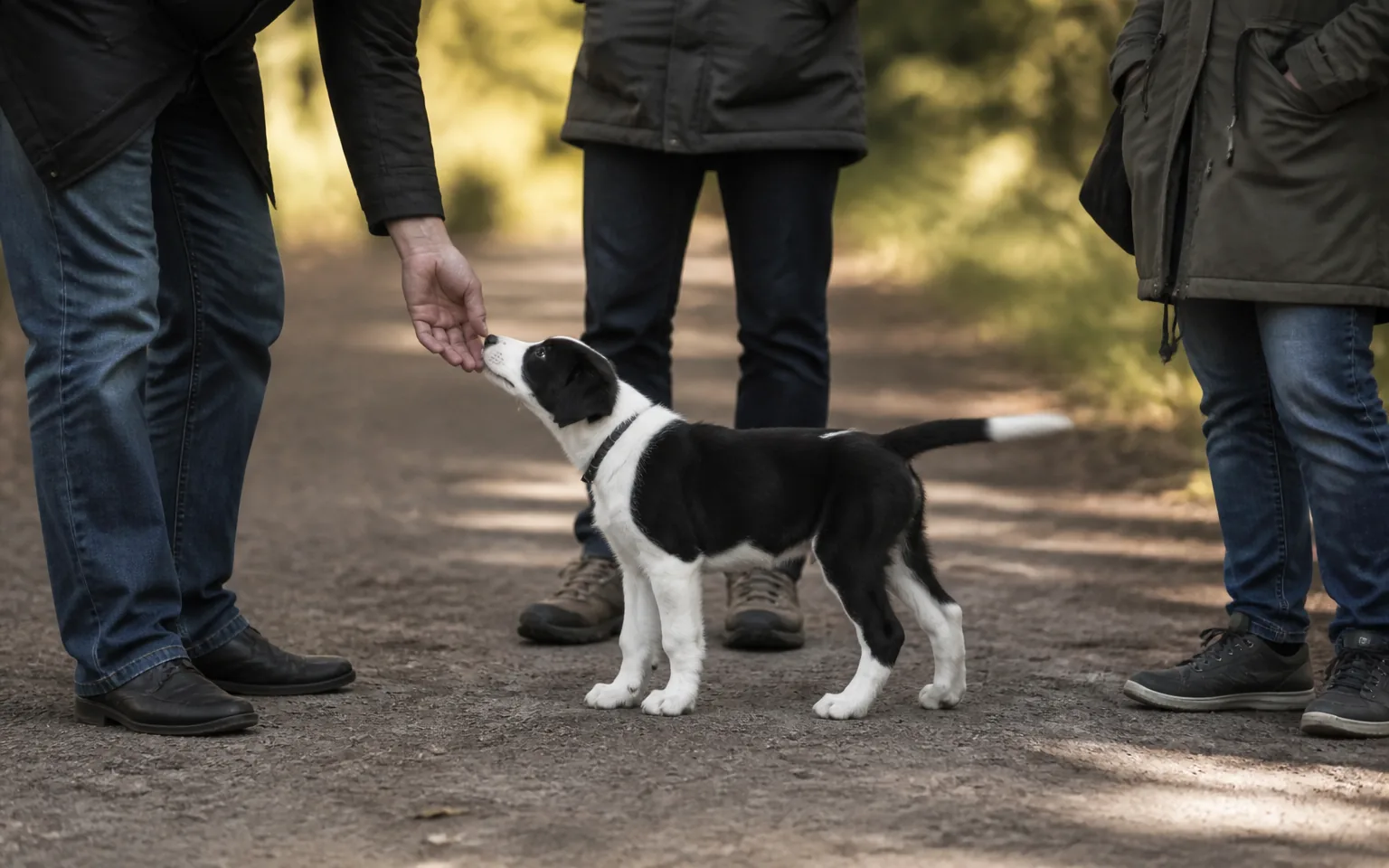
A black and white puppy sniffing a person's open palm in the middle of a group of people standing on a park path Stage 1 · Modules 1-3

The foundation: socialisation, relationship and needs

We start with what matters most at this age: being relaxed around people and dogs, looking to you, and you understanding what your puppy actually needs.

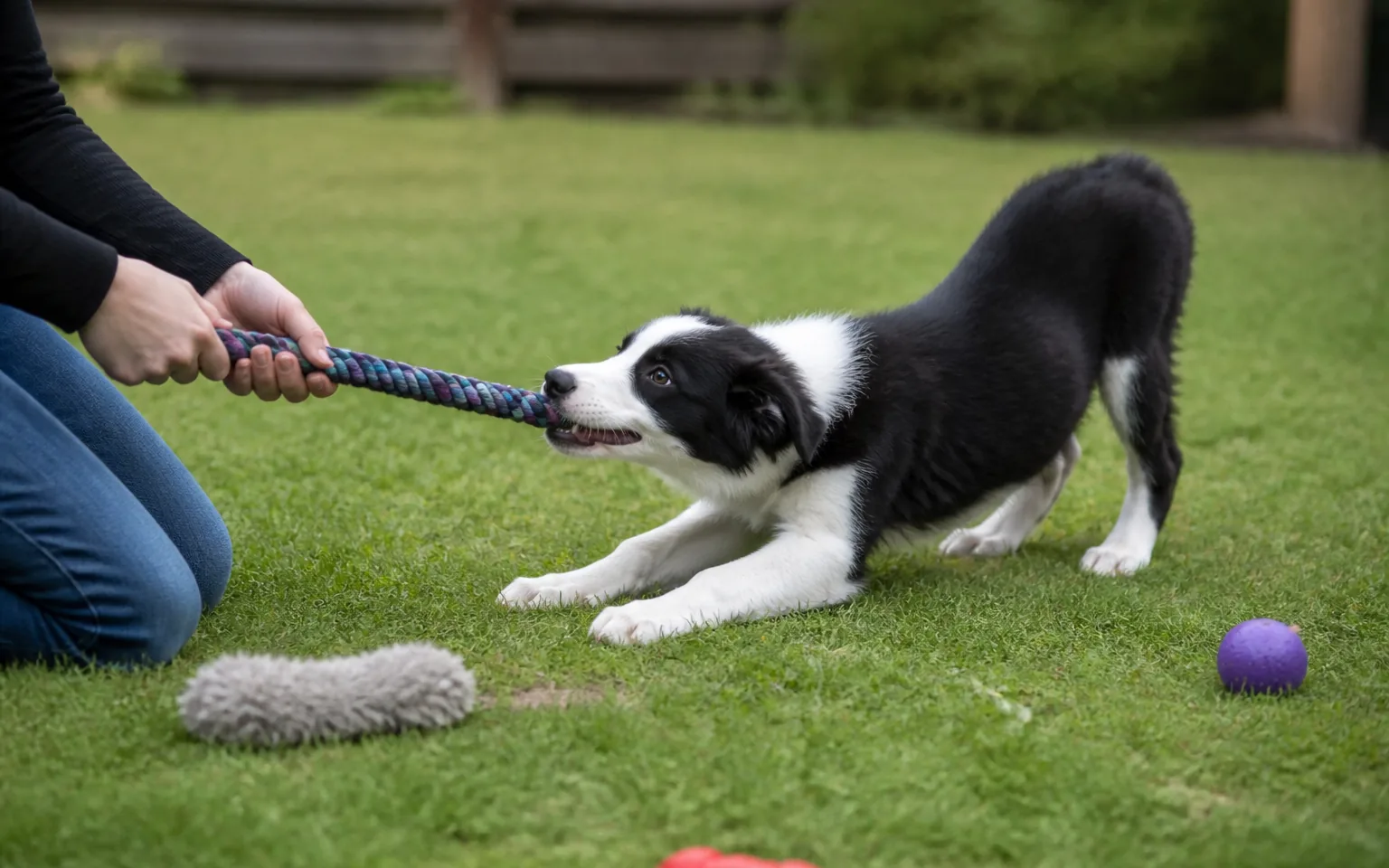
A Border Collie puppy in a play bow, tugging on a rope held by a person kneeling on the grass Stage 2 · Modules 4-7

The exercises: cues, recall and play

The first cues, the recall out of the middle of play, and play used as a reward. This is also where we prevent what wears families down: mouthing, jumping up, pulling on the leash.
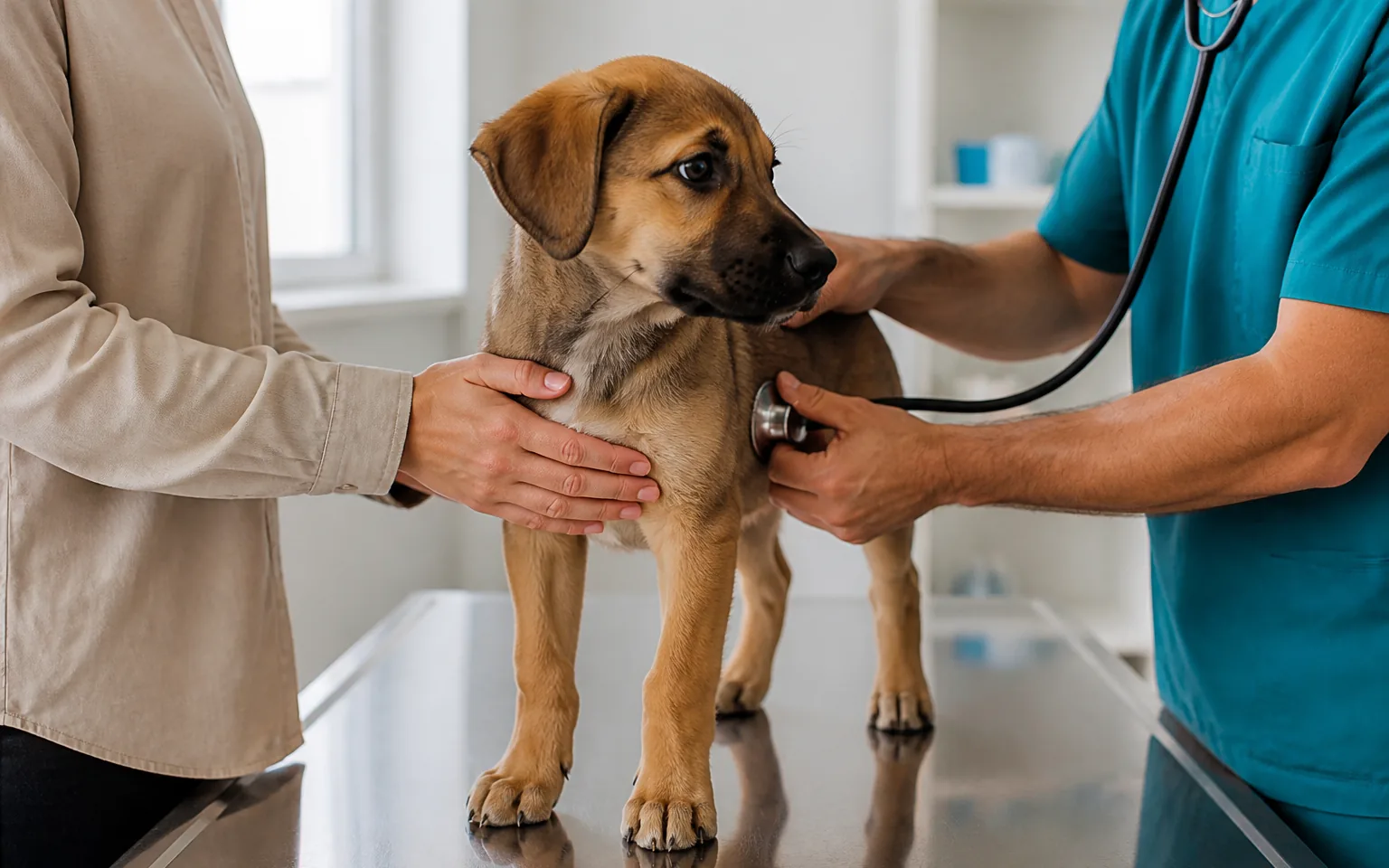
A puppy held gently on the examination table while the vet listens to it with a stethoscope Stage 3 · Modules 8-14

The real world: handling, new experiences and rest

We get the puppy used to being handled, to the vet visit and to new surfaces and objects. And, just as importantly, to resting and to being alone.

The full curriculum

What we work on in class, module by module

The 14 modules cover 130 topics, from the first meeting with another puppy to the exercises you do at home between sessions.

01

Correct socialisation

9 topics

Socialisation does not mean free play with every dog. The puppy needs to learn to be relaxed around people, dogs, noises and everything else in its environment.

  • controlled interactions with other puppies
  • proper greetings between dogs
  • approaching and withdrawing from an interaction
  • respecting the other dog's personal space
  • balanced play and interrupting play when that is needed
  • preventing overwhelming experiences
  • reading body language during interactions
  • the difference between socialisation, play and simply being near other dogs
  • the puppy's ability to stay calm without interacting with every dog it meets
02

The relationship between puppy and handler

9 topics

A good relationship is built out of trust, consistency and clear communication.

  • how to communicate with the puppy properly
  • how to use your voice and body language
  • how to get the puppy's attention without forcing it
  • responding to its name
  • voluntary eye contact
  • orientation towards the handler
  • following the handler voluntarily
  • how to encourage cooperation
  • how to stay relevant to the puppy even when there are distractions
03

Understanding the puppy's needs

9 topics

Many of the behaviours that bother us are, in fact, perfectly normal at this stage of development.

  • the puppy's physical, emotional and mental needs
  • periods of sleep and rest
  • the level of activity that suits its age
  • the puppy's stages of development
  • sensitive periods and fear periods
  • how to set realistic expectations
  • how to recognise tiredness, stress and over-stimulation
  • the difference between an energetic puppy and one that needs to rest
  • building a balanced daily routine
04

Basic cues and exercises

13 topics

The exercises are adapted to the age and the development level of each puppy.

  • responding to its name
  • the “sit" cue
  • the “down" cue
  • the recall
  • waiting for short periods
  • the “leave it" cue
  • the “drop it" cue
  • being sent to the mat or to the safe space
  • walking on the leash without pulling
  • following the handler
  • going in and out of the door under control
  • self-control before getting the reward
  • ending exercises clearly with a release cue

The emphasis is not on performing the cues perfectly, but on the pleasure of learning and cooperating.

05

The recall and attention around other puppies

7 topics

Leaving a game and coming when called is hard for a puppy. That is exactly why the recall is built up step by step and rewarded accordingly.

  • the recall over short distances
  • the recall out of exploration
  • the recall from close to other puppies
  • rewarding the return to the handler
  • releasing the puppy back to play
  • changing direction and following the handler
  • holding attention when there are distractions
06

Playing with the puppy the right way

9 topics

Play is one of the most effective ways of building the relationship and motivating the puppy.

  • how to choose suitable toys
  • how to start and how to end a game
  • retrieve games that suit the puppy's age
  • controlled tug games
  • swapping one object for another object or for food
  • preventing possessiveness over toys
  • using play as a reward
  • how to avoid over-stimulation
  • how to teach the puppy to settle after play
07

Preventing common problems

12 topics

During the growing period, behaviours appear that are normal but hard for the family to live with.

  • mouthing hands and clothes
  • chewing things around the house
  • jumping up at people
  • pulling on the leash
  • barking for attention
  • begging at the table
  • stealing objects
  • difficulties with house training
  • excess energy
  • frustration when the puppy does not get what it wants straight away
  • preventing resource guarding
  • preventing fear of people, dogs or new objects
08

Gentle handling and grooming

10 topics

The puppy gradually learns that being handled and groomed can be a safe, predictable experience.

  • touching the paws
  • checking the ears
  • touching the muzzle and the mouth
  • checking the teeth
  • brushing
  • getting ready for nail trimming
  • accepting a towel
  • wearing a harness and a collar
  • getting used to a muzzle through positive methods
  • holding a calm position for short periods
09

Preparing for the visit to the vet

7 topics

A trip to the vet practice does not have to become a stressful experience.

  • getting up onto a surface similar to an examination table
  • accepting a body examination
  • staying calm while being handled
  • being rewarded throughout the procedures
  • walking into an unfamiliar space
  • controlled interaction with strangers
  • preparing for check-ups, treatments and routine procedures
10

Desensitisation to new objects and situations

9 topics

Puppies are exposed gradually and under control to the things they will meet every day.

  • walking on different surfaces
  • crossing mats, sheeting, grates or low platforms
  • exploring unfamiliar objects
  • getting used to umbrellas, bags, pushchairs and moving objects
  • controlled exposure to sounds
  • approaching parked bicycles and scooters
  • getting used to people wearing hats, glasses, hoods or uniforms
  • getting in and out of the car
  • waiting calmly near traffic, at a safe distance

Exposure is never forced. We never make a puppy approach something that frightens it.

11

Exercises for neuro-motor development

9 topics

The activities are adapted to the puppy's age and work on coordination and confidence in its own body.

  • stepping over low obstacles
  • weaving between cones
  • getting onto stable, low platforms
  • walking through short tunnels
  • touching targets with the nose or a paw
  • balance exercises on safe surfaces
  • exploring paths with different textures
  • going through narrow spaces, without being forced
  • exercises for hind-leg awareness

No high jumps, no repetitive movements and no effort that is unsuitable for joints that are still developing.

12

The puppy's safe space

7 topics

Every puppy needs a place of its own, where it can rest and retreat without being disturbed.

  • how to choose the safe space
  • how to build a positive association with the mat, the bed or the travel crate
  • going to the safe space voluntarily
  • rewarding calmness
  • how to teach the puppy to stay alone for short periods
  • how to prevent separation-related anxiety
  • respecting rest periods
13

Mental stimulation activities

10 topics

The mind tires faster than the body. Mental stimulation helps development and prevents a lot of unwanted behaviour.

  • games that involve searching for rewards
  • snuffle mats
  • boxes and safe objects to explore
  • simple nose work exercises
  • choosing which hand the reward is in
  • finding a familiar person
  • solving simple problems
  • interactive toys
  • target exercises
  • short exploration routes
14

Activities for home

10 topics

You get recommendations and exercises to repeat at home, between sessions.

  • short attention exercises
  • recalls inside the house
  • getting used to the collar, the harness and the leash
  • settling exercises on the mat
  • body handling
  • scent games
  • exploration walks
  • short, positive visits to new places
  • keeping a progress diary
  • setting up a daily routine

The exercises should be short, enjoyable and matched to the puppy's attention span.

What a session looks like

Examples of activities from the course

No two sessions are the same - we choose the activities according to the group and to how the puppies are feeling that day. Here is what we can put together:
  • supervised play sessions, in well-matched pairs
  • calling the puppy out of play and releasing it back to the interaction
  • sensory routes with different surfaces and objects
  • settling exercises close to other puppies
  • swapping toys and objects
  • approach-and-retreat exercises with new stimuli
  • mini simulations of a vet visit
  • leash walking exercises among people and dogs
  • simple searches for food or people
  • self-control exercises
  • cooperation activities between puppy and handler
  • controlled breaks for rest and settling back down
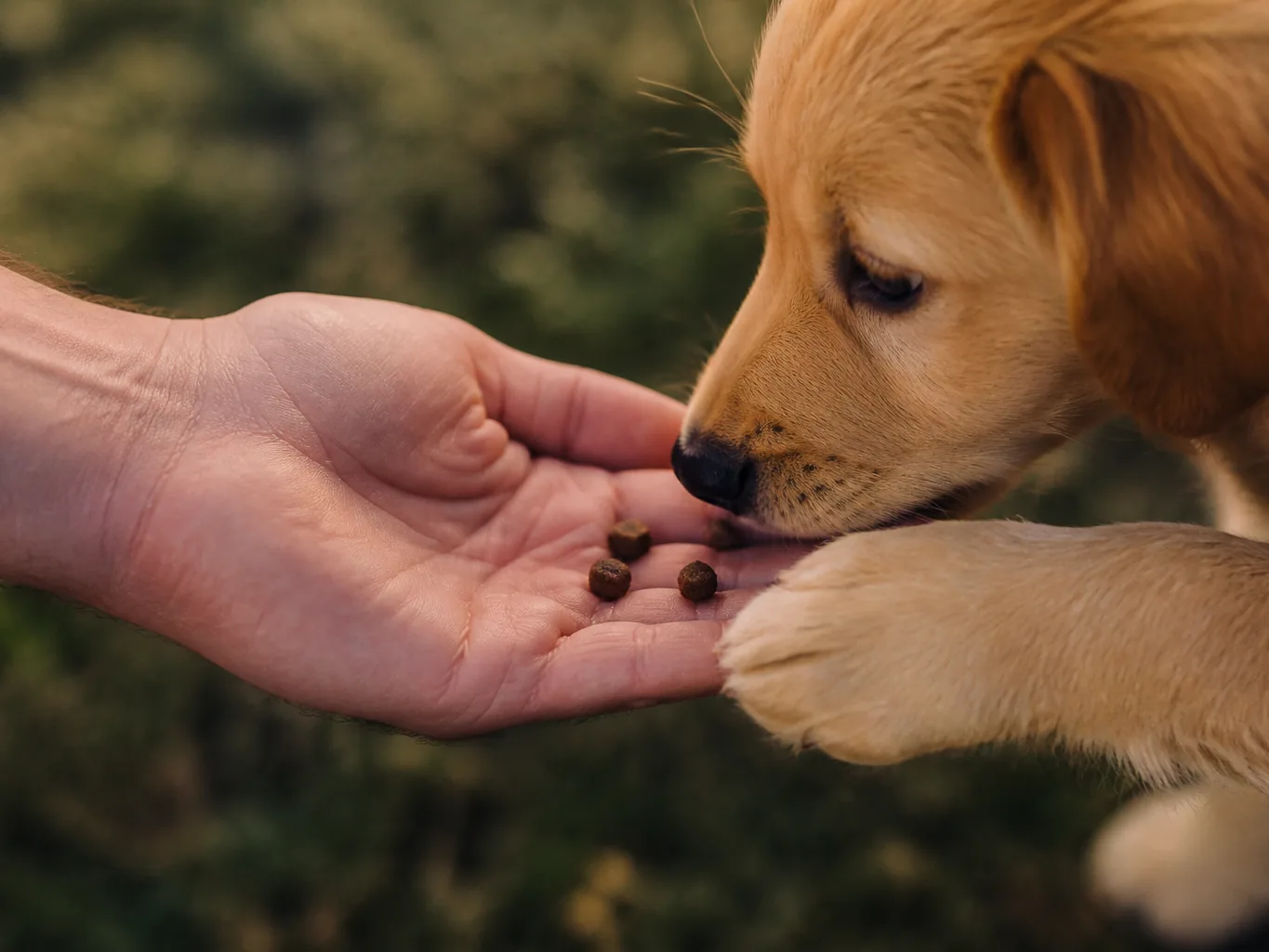
A puppy taking a small reward from a person's open palm, with one paw resting on their hand

How we work

Three rules we never break

At this age, one bad experience weighs more than ten successful exercises. That is why we keep three things in mind at all times.

  • Each puppy's own pace Exposure to new things happens gradually. If something frightens the puppy, we never make it come closer.
  • Socialisation, not just free play A balanced puppy also knows how to stay calm next to another dog, not only how to play with every dog it meets.
  • Short exercises, matched to the age No high jumps and no effort that strains growing joints. What counts is the pleasure of learning, not a perfect performance.

The same method sits behind all of our courses. After Puppy Class, the natural next step is the basic obedience course, for dogs over 8 months. And if your puppy enjoys working with its nose, the scent games in module 13 are the first step towards mantrailing.
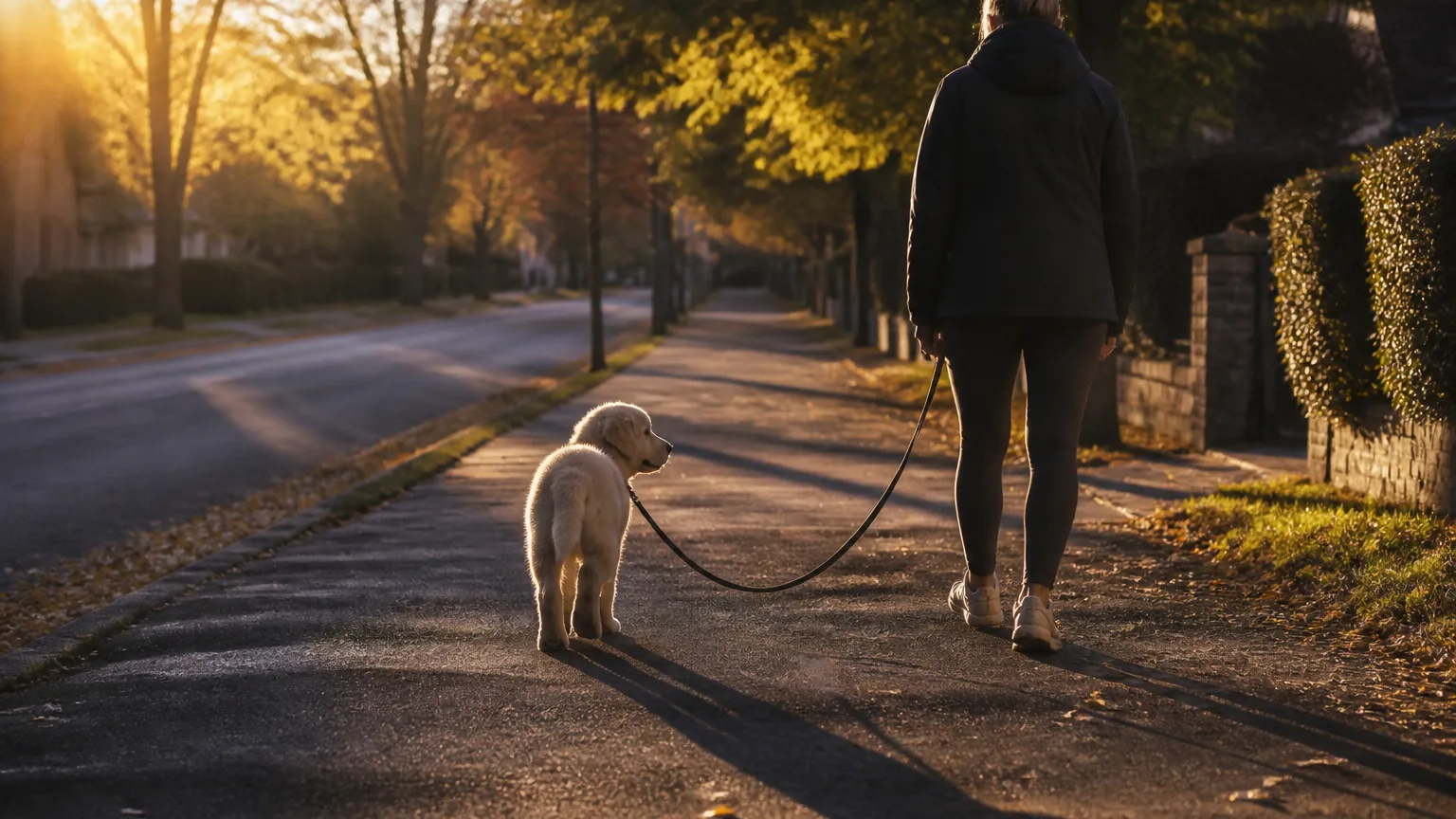
A puppy walking on a loose leash beside a person along a quiet street in evening light

After the course

What you take away from the course

By the end of Puppy Class you will understand your puppy far better and you will know how to carry the education on at home.

Puppy Class is the foundation for the obedience courses, for sporting activities or for specialised training - but above all for a peaceful life together with the family.

The puppy leaves the course with

  • positive experiences with people, dogs and new environments
  • better communication with you
  • the habit of turning towards its handler
  • more ease in unfamiliar situations
  • the first cues and self-control exercises
  • a place of its own where it knows how to rest

Frequently asked questions

What puppy owners ask us most often

At what age can a puppy join Puppy Class?

The course is for puppies between 3 and 6 months of age. This is the window in which a puppy learns most easily how to behave around people, around other dogs and in the world in general. For dogs over 8 months, the next step is the basic obedience course.

What do we need to bring to the course?

A fixed collar or a comfortable harness, a fixed fabric leash of about 2 metres, a treat pouch with small, easy-to-eat rewards, your puppy's favourite toy, a mat, water with a bowl and bags for picking up after your dog. Retractable leashes are not recommended for the group exercises.

What medical conditions have to be met?

The puppy must be clinically healthy, vaccinated and treated for parasites according to its age and the vet's recommendations. For group activities, vaccination against kennel cough may also be required. Puppies with a cough, vomiting, diarrhoea or nasal discharge cannot take part in the session.

Do the puppies just play with each other?

No. Supervised play is only one part of the course. The puppy also learns to stay calm next to other dogs, to come when called from the middle of play and to stop when that is needed. The interactions between dogs are set up and supervised by the instructor.

Can children come to the course?

Yes, but only accompanied and supervised by an adult. The person responsible for the dog must be at least 18 years old.

What comes after Puppy Class?

Puppy Class is the foundation for the obedience courses, for dog sports or for specialised training. The natural next step is the basic obedience course, for dogs over 8 months.
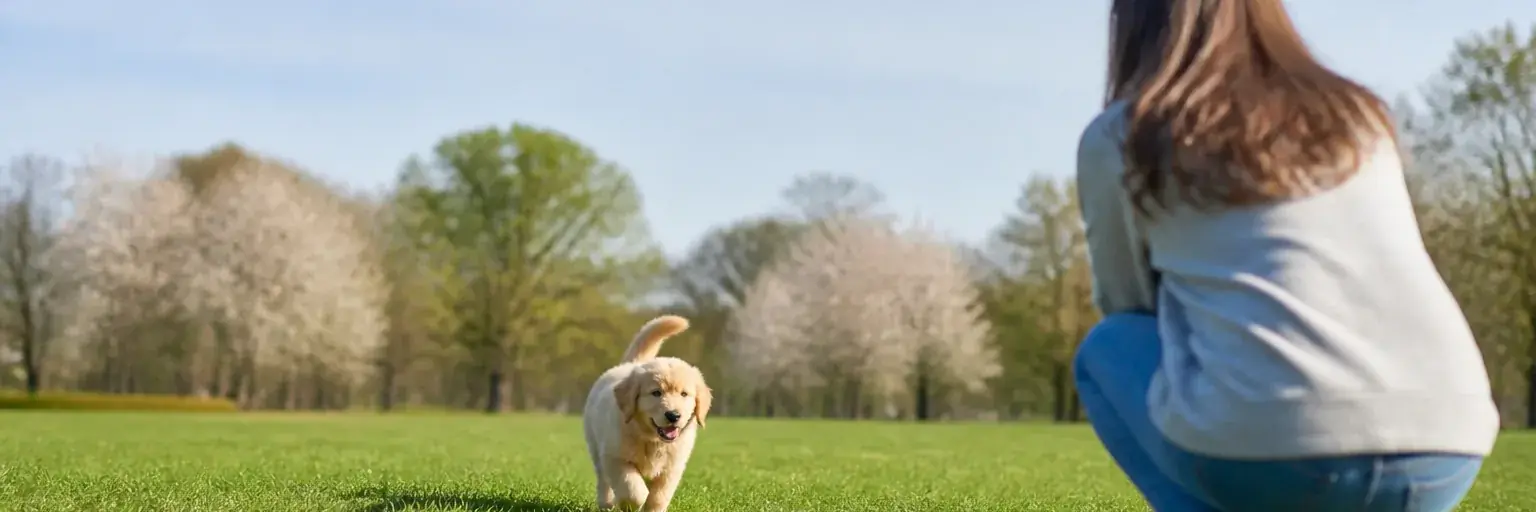
A Golden Retriever puppy trotting across a sunny spring meadow towards a person crouching at the edge of the frame

Would you like to enrol your puppy in Puppy Class?

Write to us and we will tell you when the next group starts, how the sessions run and whether your puppy's age is right for it now.