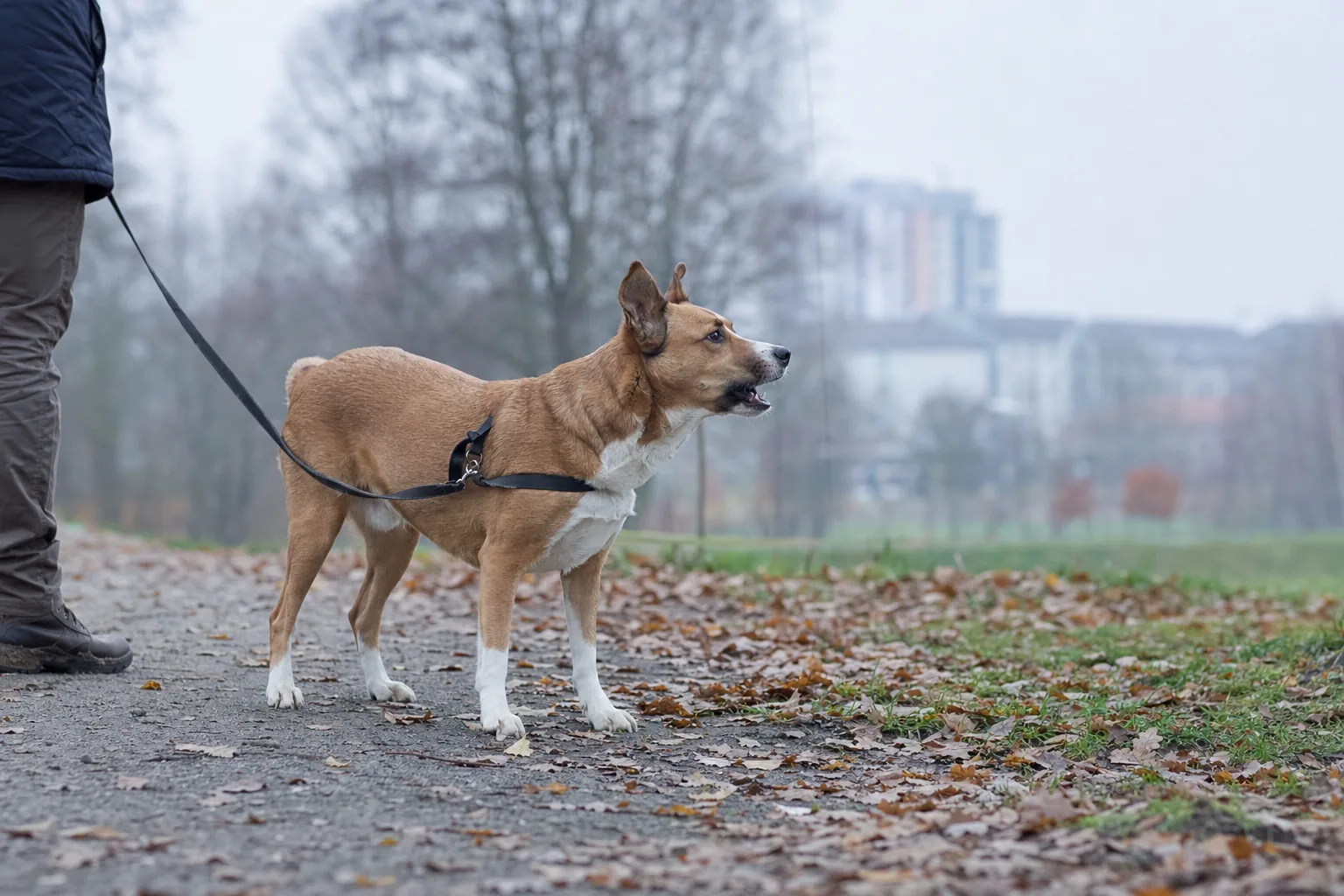
You found him with his head in the cat's litter tray. Or you watched him in the park, thirty metres away, make a beeline for a fresh pile and swallow it before you could even shout. Or your four-month-old puppy is eating his own poo in the garden and someone has told you to sprinkle chilli on it. Coprophagia (eating faeces) is the kind of problem people google rather than mention to anyone, because they are embarrassed. The dog is not. Here is why he does it, what genuinely works and what is just park folklore.
Why does my dog eat poo?
Start with this: it is common and, to a large extent, normal dog behaviour. The biggest study on the subject, two surveys of nearly 3,000 owners run at UC Davis, found that about one dog in six had been seen eating dog faeces at least six times, and nearly one in four at least once. Mothers eat their puppies' faeces in the first weeks to keep the nest clean, and that is most likely where the whole behaviour comes from.
The same study turned up two details that matter for your plan. The dogs ate almost exclusively fresh faeces, no more than two days old. And the habit had nothing to do with diet, the age at which the dog was acquired, house training or any nutritional need. The only links found were greedy eating and living in a house with several dogs. The authors suggested an explanation: parasite eggs in fresh faeces are not yet infective (they need a few days in the environment), so ancestors who cleared fresh stools from their sleeping area protected their group from parasites. An old instinct, no use today, still hanging around.
On top of the instinct come each dog's own reasons. Usually there are two at once.
The puppy. Between 2 and 6 months he puts everything in his mouth, his own poo or another dog's included. Most grow out of it by a year, as long as they are not punished and it does not turn into a game.
The litter tray. To a dog, cat faeces are food: cats digest protein poorly, so what comes out is rich. Almost any dog who can reach the tray will help himself. The problem here is where the box is, and the fix is moving it.
Hunger. A dog fed once a day on small portions, or one on a diet, goes looking for calories. Some medicines can make a dog desperately hungry.
Boredom and being alone in the garden. Eight hours alone outside with his own faeces within reach: he finds himself something to do with what is there.
Attention. You shouted, chased him, prised his mouth open. For a dog who gets little attention otherwise, that whole scene is an event, so he repeats it.
Being told off for mess indoors. A puppy scolded, or whose nose was pushed in his wee, sometimes learns to "hide the evidence" and eats the stool so the telling-off does not come. Studies have not proven this, but in training we have met plenty of puppies from homes that used the old method.
Illness. Rare, but it matters. An adult dog who suddenly starts eating faeces, loses weight while eating huge amounts and passes large, greasy, pale stools may have a pancreas that no longer produces digestive enzymes. Intestinal parasites, absorption problems and some hormonal diseases also cause excessive hunger. The medical section below lists the signs to watch for.
What does not work (and why it seems to)
Chilli, pineapple, pumpkin, "anti-coprophagia" powders. The Davis study asked owners about these too. The 11 commercial products had reported success rates of 0 to 2%. Pineapple or pumpkin added to food to make the stool "unpleasant" has no evidence behind it at all. Chilli on the faeces teaches the dog to sniff first and eat the piles without it. And a dog who has swallowed chilli tends to vomit and have an upset stomach for a couple of days.
Punishment. Shouting, smacking, his nose rubbed in it. He learns to eat faster, and when you are not looking. As above, being told off for mess indoors may itself be one of the causes, so it will not mend anything.
Chasing him. In the park he spots the pile, you shout and run, he gulps it on the move. You have just turned dinner into a game of tag.
"He will grow out of it." Puppies often do. An adult who has been at it for two years will not.
Forcing his mouth open to get it out. Once, in an emergency, it may happen. As a habit, it teaches him to swallow before you arrive and to dodge your hand whenever it comes near his mouth. The very hand you will need at the vet.
Just changing his food. If the food is complete and of reasonable quality, switching it achieves nothing; the study found no link with diet. If the food is poor or the portion too small, change it, but then the portion was the problem.
The plan, step by step
In the Davis study, owners also reported what they had tried and how it went. Training methods had success rates of 1 to 4%. The one thing that worked consistently, for the authors and for anyone who has lived with a poo-eating dog, was making sure the faeces were out of reach. That is where we start.
First stop, your own vet: a stool sample for parasites (a dog who eats other dogs' faeces runs a real and repeated risk of worms and Giardia), a weigh-in and a few questions about food and appetite. If you see any of the signs in the medical section, blood tests are added. Every animal in the house goes on the same worming schedule, or they keep reinfecting one another.
2. Nothing within reach
- Clear the garden straight after every poo, not once a day. If you cannot be there, he does not spend hours alone in the garden.
- The litter tray goes where the dog cannot get to it: on a shelf, behind a door with a stopper that only the cat can squeeze past, in a room with a cat flap. There is no second option that works.
- In the park he stays on a long line (5 to 10 metres) until the recall below is reliable. With the line you can stop him; without it, all you can do is shout.
- If you live somewhere with a pile every ten metres and your dog is quick, use a basket muzzle for the duration of the plan, introduced gradually with good treats. It is not a punishment: he can pant, drink and take treats through it. You drop it once the recall works.
3. The after-poo routine
This is the training part, and it is simple. The dog learns that once he has done his business, the best thing in the world comes from you.
- As he squats, have something he adores ready in your hand (cheese, cooked meat, not his everyday kibble).
- The moment he finishes, say his name cheerfully and take two steps back. When he turns towards you, celebrate with him: lots of praise and everything in your hand, piece by piece, ten seconds of party.
- While he eats, pick up the poo with your other hand, bag at the ready.
- Do this after every poo for three weeks. After about 60 repetitions where that moment brought treats and a good mood, many dogs start turning to you on their own.
4. "Leave it" for other dogs' piles
For other dogs' faeces, teach "leave it" at home first. Hold a treat in your fist; when he takes his nose off it, praise him and give him a good one from the other hand. Then practise with your palm open, then with the treat on the floor. Only after a week do you use it outdoors, at a distance, with him on lead. Said for the first time next to a fresh pile, the words mean nothing to him.
5. Meals, hunger and his day
- Two or three meals a day, weighed rather than guessed. If he is on a diet, ask your vet how to add volume without adding calories.
- Some of his food comes from stuffed toys and search games rather than the bowl. A dog who has spent ten minutes hunting is less interested in what he finds in the garden.
- If he is alone a lot, stretch the morning walk and make it a sniffing walk on a long line.
The first week
| Day |
What you do |
| 1 |
Vet appointment booked, with a stool sample. Litter tray moved. Garden cleared after every poo, from today. |
| 2 |
Long line in the park. Start the after-poo routine with his favourite treats. |
| 3 to 4 |
Food split into two or three meals. First "leave it" session indoors. |
| 5 to 7 |
The routine after every poo, "leave it" daily indoors, food from toys. |
| 7 |
Count how often he tried and how often he managed it. If the second number has not dropped, look for where he is still getting access. |
When it is a medical problem
A puppy who eats his own poo now and then is not ill. An adult dog who has never done it and suddenly starts is worth a vet visit. Make it urgent if:
- he is losing weight even though he eats a lot or begs constantly;
- his stools are large, soft, greasy, pale and strong-smelling;
- he drinks and wees a lot more than before;
- he is a puppy with a pot belly, a rough coat and no energy;
- he also eats things that are not food (soil, stones, fabric);
- the habit began after a new treatment (some medicines increase appetite);
- he has diarrhoea that does not settle, vomiting or blood in his stool.
Your vet will probably ask for a stool test (parasites, Giardia), blood tests and, if the pancreas is suspected, a specific blood test. Bring your notes: when he eats faeces, whose, how often, what he had eaten that day.
One more thing you will hear from your vet rather than the internet. If he eats the faeces of a dog that is on medication, he can swallow traces of that dog's medicine. Tell your vet which dogs he spends time with.
When to call a specialist
- he eats faeces compulsively: he hunts for them, cannot be interrupted and seems switched off while he does it;
- he growls or snaps when you try to move him away from faeces or take something out of his mouth (he is guarding what he has got; trainers call it resource guarding, and it is a separate problem with its own plan);
- the habit started alongside other signs of stress: destructiveness, constant licking, restlessness when left alone;
- you have stuck to the plan for four weeks, with nothing in reach and the after-poo routine, and he still tries every time he finds some;
- there are several dogs in the house, one eats the others' faeces, and mealtimes are tense between them.
An assessment session with us starts with your notes and with what his day looks like. With this problem, we often find that half the answer lies in mealtimes and in how long he spends alone in the garden.
A behaviour that appears suddenly or changes for no apparent reason can have a medical cause. For full details, consult your dog's own veterinarian.