
Mantrailing Romania
Search and Rescue Dogs in Romania
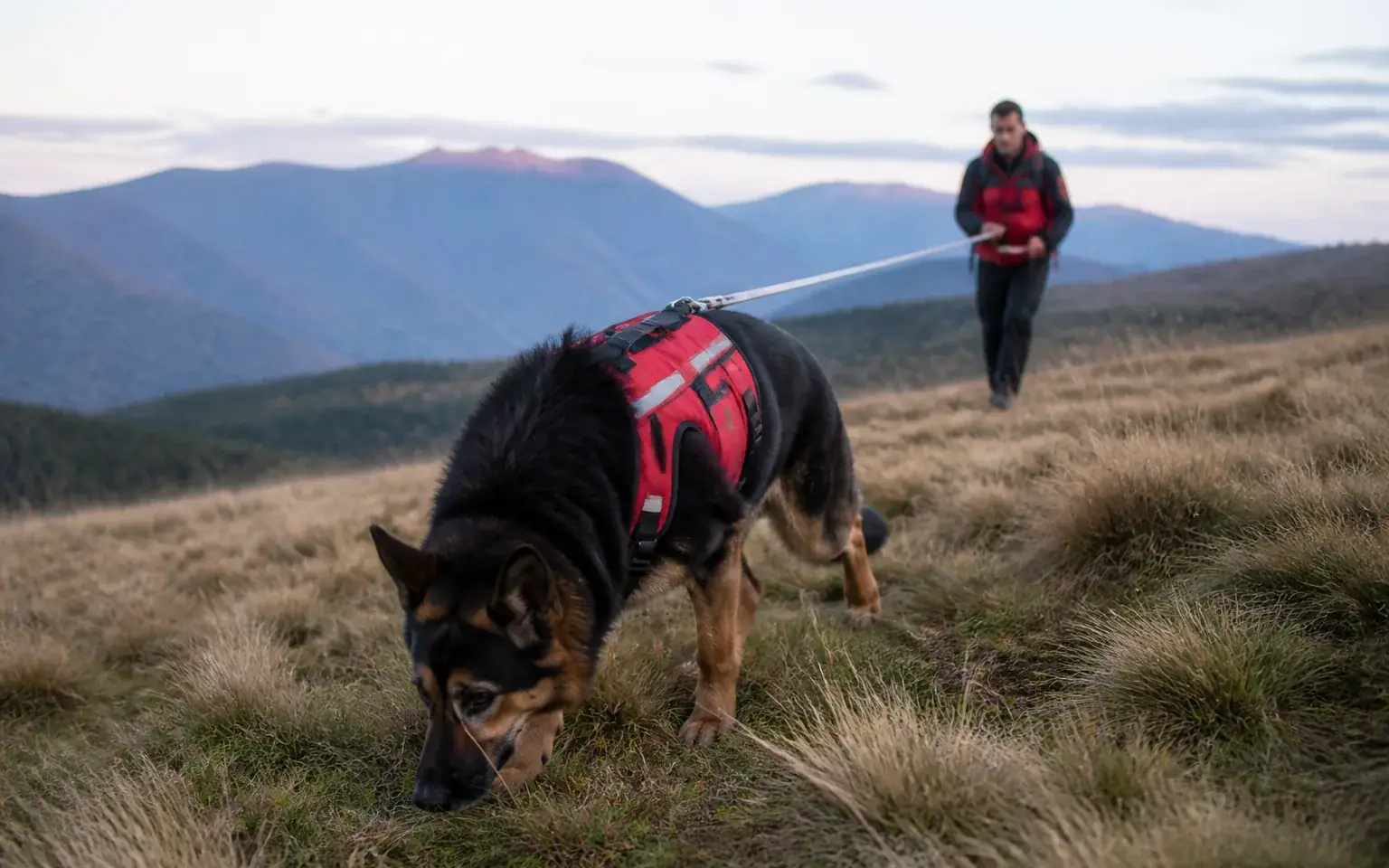
Search and rescue (SAR) dogs are dogs trained to locate missing people using their sense of smell. They work in real emergencies - people lost in the mountains or forests, victims trapped under rubble after earthquakes, people missing in urban areas - and they do their job through play and motivation, not compulsion. A well-trained SAR dog can cover in minutes an area that dozens of people would search for hours.
In short
What search and rescue dogs are
In Romania, canine search and rescue work is sustained by associations and volunteers who invest years of training into each human-dog team. This page explains the disciplines, certifications, equipment and the steps through which you can enter this field with your dog. The practical foundation of most search dogs is mantrailing - the scent sport closest to real rescue work.
The disciplines of search and rescue dogs
The term "rescue dog" covers several specialisations, each with its own technique and exams. A dog usually trains for one or two disciplines, depending on its aptitude and the environment in which the team works:
- Mantrailing - the dog follows the individual scent of one specific person, starting from a scent article (an object worn by that person). It is the reference discipline for identifying a specific individual, even in a city, among other human scents.
- Area search - the dog scans a wide area (forest, open ground, ruins) for the airborne scent of any living person and signals by barking or returning to the handler when it finds someone.
- Rubble / USAR search - a specialisation for areas hit by earthquakes or explosions; the dog locates people trapped under debris. This is the discipline used by teams responding to disasters.
- Avalanche search - dogs trained to detect people buried under snow, essential in mountain areas.
- Water search - the dog detects, from a boat or the shore, the scent carried by currents from a person underwater.
For a detailed comparison between mantrailing and the other forms of search, see our article on the difference between scent sport and real rescue work.
→ Full guide: the types of search with dogs - mantrailing, area, rubble, avalanche, water and cadaver, compared technically.
How a search operation works
A real operation starts with information: the missing person's last known location, the time, the probable direction of travel and, if possible, an object carrying their scent. The coordinator divides the area into sectors and sends the canine teams to cover them systematically.
The mantrailing dog starts from the scent article and follows the person's exact route. The area search dog works differently: it moves in a zigzag through the sector, "reading" the air, and signals any human scent. When it finds the person, the dog alerts - usually with a sustained bark - and calls its handler. Success depends on wind, temperature, humidity and the age of the trail, factors we explain in detail on our training pages.
→ Full guide: how dogs find missing people, an operation step by step, with scent theory.
→ Guides: how the dog signals that it has found the person - the bark alert, the bringsel alert and the position alert.
→ Interactive tool: the search and rescue simulator shows how wind, buildings, sun, rain and the passing of time move the available scent away from the person's path.
How to become a search and rescue volunteer with your dog
You don't need a "special" dog or prior experience - you need patience and the willingness to commit for the long term. Here is the typical path, step by step:
- 1. The scent foundation. Start with mantrailing, which builds trust in the dog and teaches you to read its signals. It is the most natural entry point.
- 2. Basic obedience. A search dog must be reliable off-leash and controllable at a distance. The BH (social companion) test certifies this level.
- 3. Consistent training. Operational teams frequently accumulate over 1,000 hours of training per year, in varied terrain and weather conditions.
- 4. Tiered certification. You pass progressive exams (IRO, TSAC) that certify the human-dog team can work safely in a real operation.
- 5. Joining a team. You take part in joint exercises and, over time, may be called to real operations alongside the authorities.
If you want to take the first step, you can join our community as a volunteer, even without a dog, in the role of layer or observer.
→ Full guide: how to become a search and rescue volunteer with your dog, step by step, with timeline and costs.
Which breeds are suited for search and rescue
Temperament matters more than breed. A good search dog is strongly motivated by food or toys, is sociable, has balanced energy and physical stamina, and wants to cooperate with people. Breeds frequently seen in SAR teams:
- Belgian Malinois - very high energy and working motivation; frequently in operational teams.
- German Shepherd - versatile, resilient, balanced.
- Border Collie - intelligent and extremely trainable.
- Labrador and Golden Retriever - excellent nose, strong food motivation, friendly temperament.
- Mixed breeds - a dog without a pedigree but with the right temperament can excel just as well.
For more on choosing the right dog, read our guide on which dog breed is suited for scent work.
→ Full guide: which dog breeds are suited for search and rescue, with breed profiles and tests you can do at home.
Certifications for search and rescue dogs: IRO, TSAC, BH, K9
Certification is what turns a well-trained dog into a recognised operational team. Mantrailing Romania is the only project in the country that documents these international exams in detail - a real advantage for anyone who wants to understand the system before entering it:
- IRO exams - the international standard of the International Search and Rescue Dog Organisation for mantrailing, area search and rubble search, plus the obedience and dexterity test.
- TSAC exam - a tiered evaluation system for working dogs.
- BH test - the social companion certification, the obedience foundation required for any advanced discipline.
- Mantrailing Hungary K9 - a certification system for mantrailing, with clear difficulty levels.
See all the certifications and exams explained step by step.
→ Full guide: search and rescue certifications explained (IRO, TSAC, BH, K9), side by side.
The equipment of a canine search team
A SAR team's equipment is simple but essential: a working harness that signals to the dog that "it's time to work", a long line for mantrailing, the scent article, the rewards that keep motivation high and, for operations, visibility and safety gear. Each piece has a functional role - see the complete equipment guide.
→ Full guide: the equipment of a canine search and rescue team, piece by piece, sport vs operational.
The search and rescue dog ecosystem in Romania
Romania has several organisations and groups dedicated to rescue dogs, some with intervention protocols alongside the authorities, others focused on training and scent sport. Mantrailing Romania contributes to this ecosystem through the educational side: we explain the disciplines, document the international certifications and train handlers through mantrailing, the foundation of any search dog. Globally, over 1,400 search and rescue organisations have been identified, proof of how widespread and important this activity is.
Frequently asked questions
Frequently asked questions about search and rescue dogs
01
What is a search and rescue dog?
A search and rescue (SAR) dog is a dog trained to locate missing people using its sense of smell. Depending on the discipline, it may follow the individual scent of a specific person (mantrailing), scan a wide area for the airborne scent of any living person (area search), or work in special conditions such as avalanches, rubble or water. It is work built on motivation and play.
02
How do I become a search and rescue volunteer with my dog in Romania?
Join a team that trains rescue dogs and start with a solid foundation of obedience and scent work, most often through mantrailing. This is followed by years of consistent training (frequently over 1,000 hours per year) and passing tiered certification exams. You don't need a specific breed, but a sociable, playful, motivated dog, plus your own long-term commitment.
03
Which dog breeds are suited for search and rescue?
Temperament matters more than breed: strong motivation, sociability, balanced energy, physical stamina and a willingness to cooperate. Frequent breeds are the Malinois, German Shepherd, Border Collie, Labrador and Golden Retriever, but mixed-breed dogs can excel too. A reactive, very fearful or play-indifferent dog is harder to train.
04
What certifications exist for search and rescue dogs?
The best known are the IRO exams (mantrailing, area and rubble search, plus obedience and dexterity). In Romania, TSAC exams and the basic BH test are also taken, and mantrailing can be certified through Mantrailing Hungary K9. Each has progressive difficulty levels.
05
What is the difference between mantrailing and search and rescue?
Mantrailing is the discipline in which the dog follows the individual scent of one specific person, starting from a scent article. Search and rescue (SAR) is the broader operational activity of finding missing people in real emergencies. Mantrailing is the sport training closest to real search work, which is why it is often the foundation of a SAR dog's preparation.
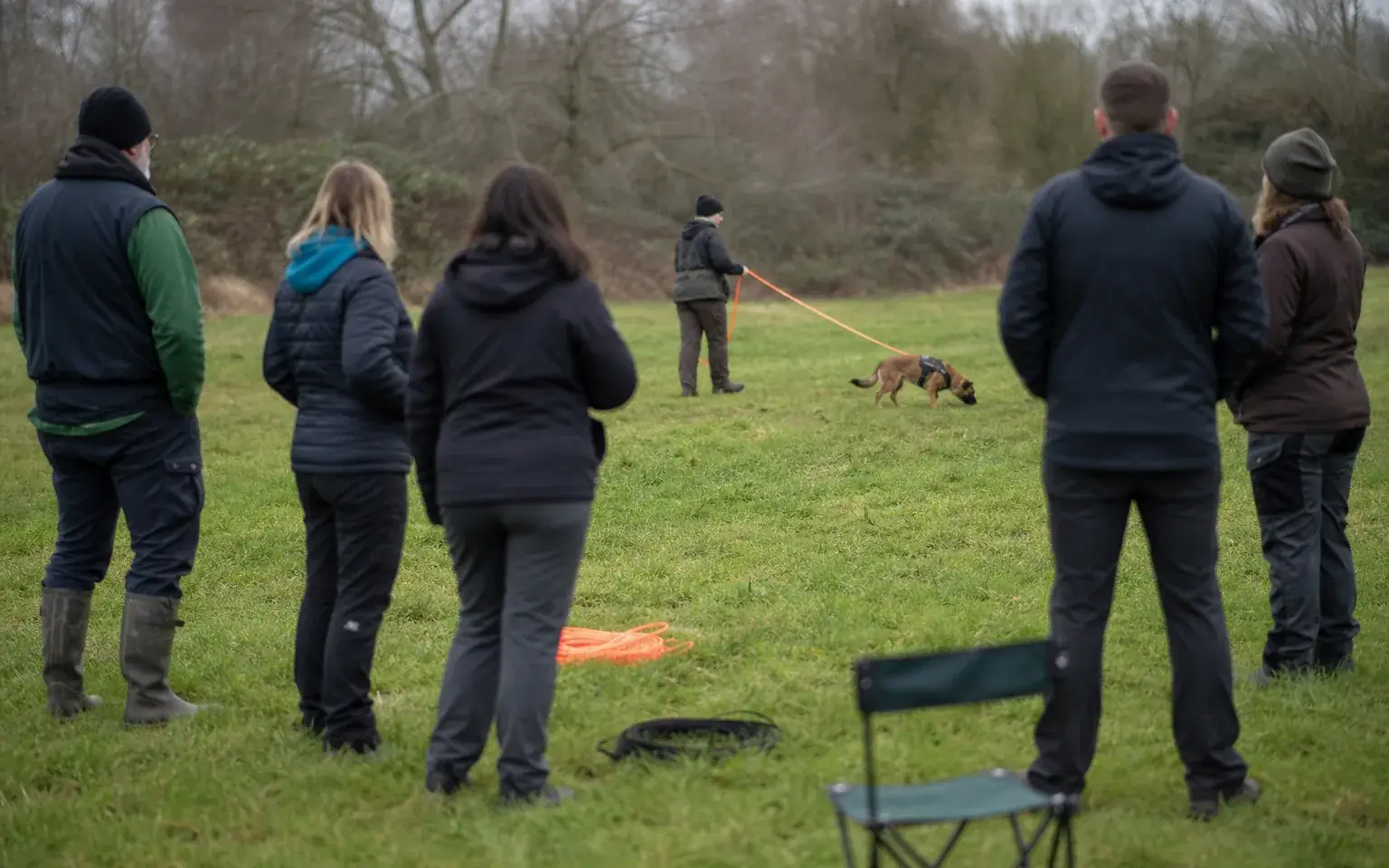
Want to start with your dog?
The first step towards search and rescue is mantrailing. Join the Mantrailing Romania community.