A German Shepherd walking at heel beside its owner on the training field, watched by a judge in the background

Exam preparation

Advanced and competition training

For teams that are past basic obedience and want precision: technical preparation for TSAC and FCI-BH, up to the point where exam day holds no more surprises.

TSAC + BH the exams we prepare for
34 stages from assessment to simulation
333 topics covered point by point
12 months minimum age at the exam

About the course

Preparing for the TSAC and BH exams

The course is for dog-owner teams that have already covered the basics of obedience and want to build precision, control, attention and the ability to work in conditions close to those of an official exam.

The training looks both at the technical performance of the exercises and at the dog's general behaviour: self-confidence, stability, sociability, motivation, attention to the owner and the ability to work among distractions.

The goal is not just passing an exam, but building a harmonious team, in which the dog works willingly and the owner can guide it clearly, naturally and within the rules.

The methods are positive and adapted to each team: rewarding, gradual progress, motivation and an understanding of the assessment criteria.

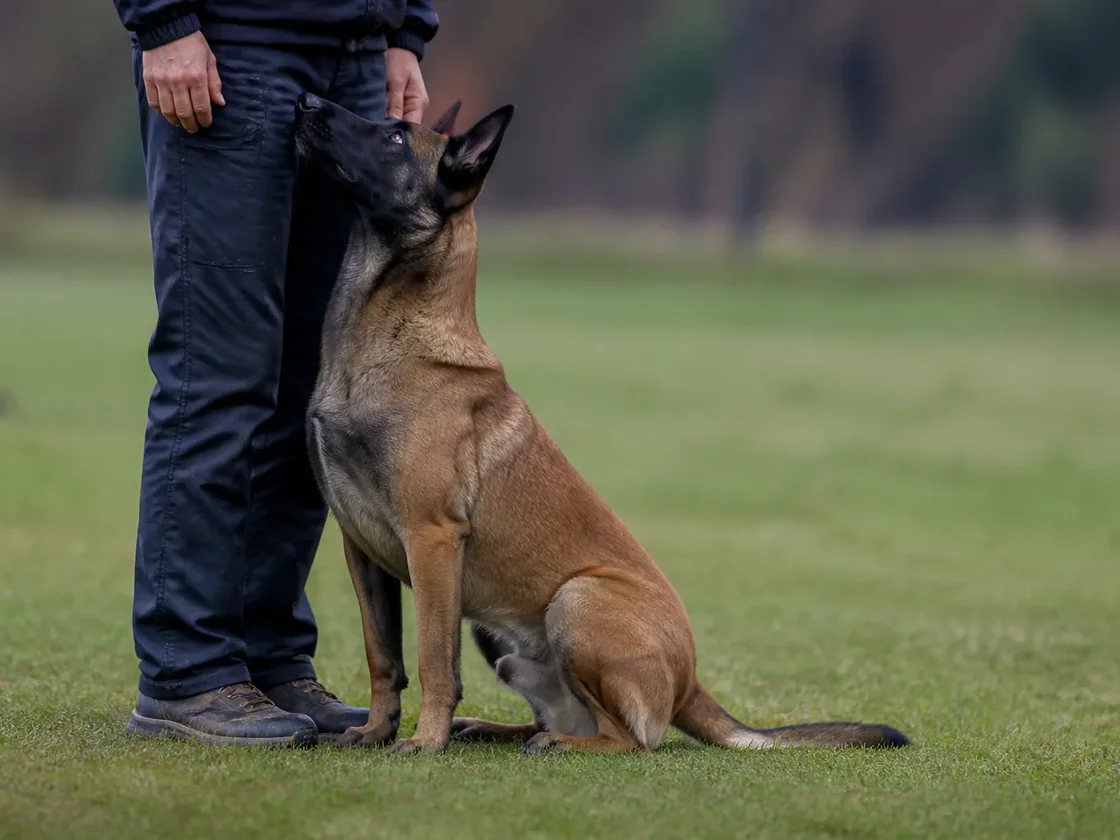
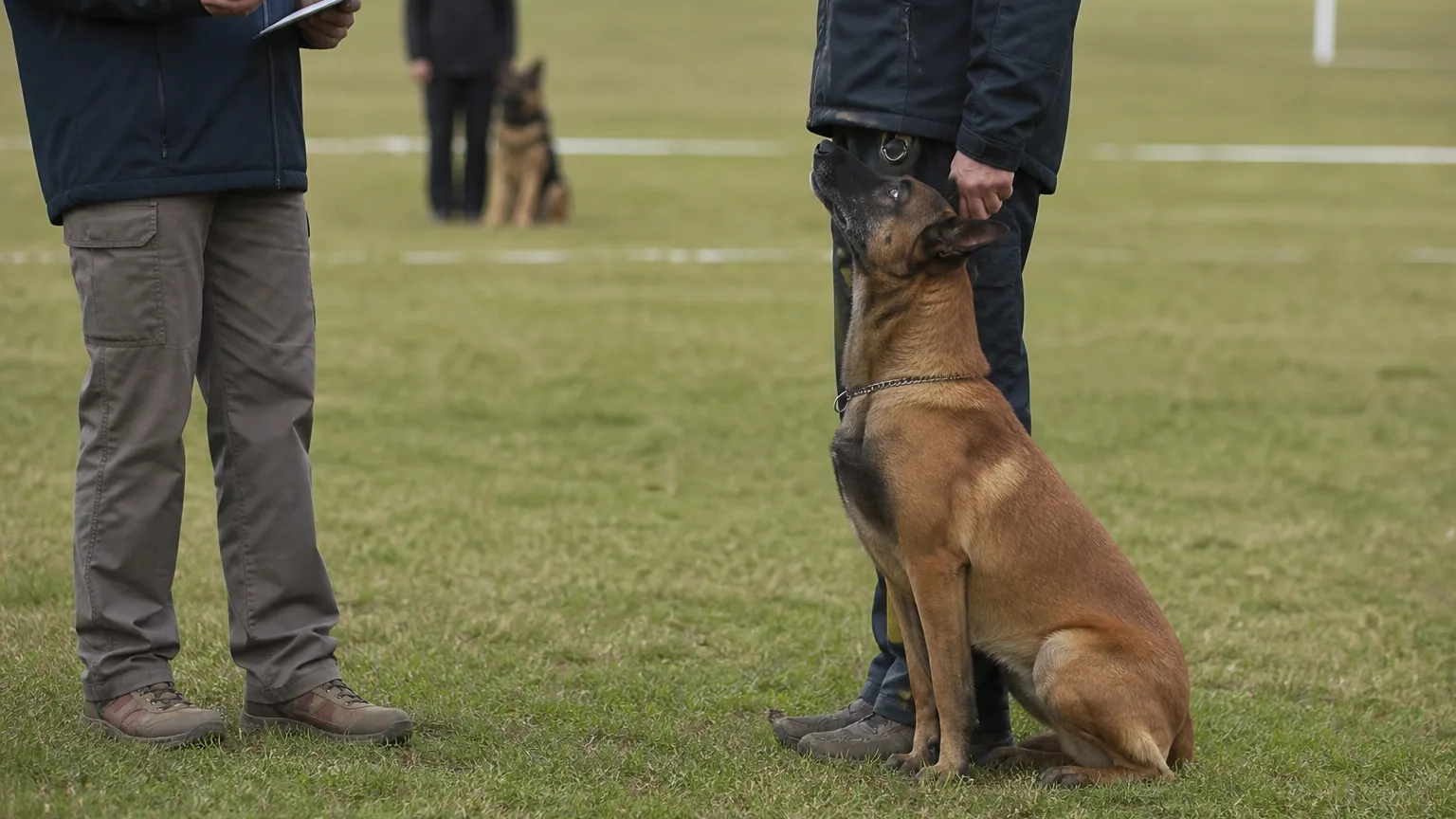
A Malinois sitting in the basic position, close to the owner's left leg, looking up at them

What we are aiming at

Two exams, two different logics

They are not prepared for in the same way. The Canine Sociability and Aptitude Test (TSAC) checks how balanced and under control the dog is together with its owner, and whether the two can walk in public places without worrying that something might happen. BH also asks “how precisely does the team work?". The programme covers both.

TSAC

The canine sociability and aptitude test

It looks at balance of character, the dog's sociability and the owner's ability to keep control of it.

  • behaviour with the owner present and with the owner away
  • the reaction to people, to handling and to the microchip check
  • the reaction to noises, to a bicycle and to moving groups
  • the reaction to other dogs
  • the obedience test: leash walking, changes of direction, walking through a group, the wait and the recall

An imperfect performance does not automatically mean a deferral, so there is no need to worry: if the animal shows balance and sociability and stays under control, the exam is as good as passed. Minimum age: 12 months, and the dog is presented by its owner. See also our page on the TSAC exam.

FCI-BH

The companion dog examination with a socialisation test

It is made up of two parts: Test A, which is obedience, and Test B, which is socialisation. Social compatibility comes first.

  • the basic position, heelwork on the leash, a group of four people
  • the sit and down cues, followed by the recall
  • the down with distraction, at a minimum of 10 metres
  • the socialisation test, in a public space, with traffic and other dogs
  • the assessment of temperament, throughout the whole event

To pass you need at least 70% of the points in the obedience test, plus sufficient behaviour in every exercise of the socialisation test. The regulations have been in force since 1 January 2025; within A.Ch.R., the minimum age is 12 months. See also the page on the BH exam.

Before signing up

Who it is for, what the conditions are and what you bring

Who it is for

  • dogs that already have the basics of obedience, and not only: together we also work on fixing behaviour problems
  • teams that want to enter TSAC- or BH-type exams
  • owners who want to learn how to present a dog according to the rules
  • people interested in dog sports and in working exams
  • dogs that need to improve their attention and self-control
  • teams that want to work more precisely around people and other dogs
  • participants who have already taken an exam and want to improve their performance
  • teams that want to move on to other disciplines or levels of work

Conditions for taking part

  • the dog must be clinically healthy
  • vaccinations and parasite treatments must be up to date according to the vet's recommendations
  • for an official exam, the dog must meet the age and paperwork requirements of the applicable regulations
  • the dog must be identified by microchip or by the method allowed in the regulations
  • the owner must be able to control the dog safely
  • the equipment must be suitable and safe
  • dogs with uncontrolled aggression may need a behaviour assessment before joining a group
  • taking part in the course does not automatically guarantee a pass; a lot depends on how much you work between sessions, following our recommendations
  • you enter the exam separately, through an authorised organiser

Recommended equipment

  • a collar that complies with the current year's regulations
  • a fixed leash
  • small food rewards
  • a motivational toy
  • water for the dog
  • the health record
  • the dog's documents
  • a performance record book, where that is needed
  • clothes and footwear suitable for working
  • a training diary

For the official TSAC/BH presentation, we must follow the regulations in force on the day of the exam.

How the programme is built

Three stages, from training to exam day

An exercise performed correctly in training does not mean much. What counts is whether both the owner and the dog hold up in an unfamiliar place, in front of a judge and with no rewards in your hand.

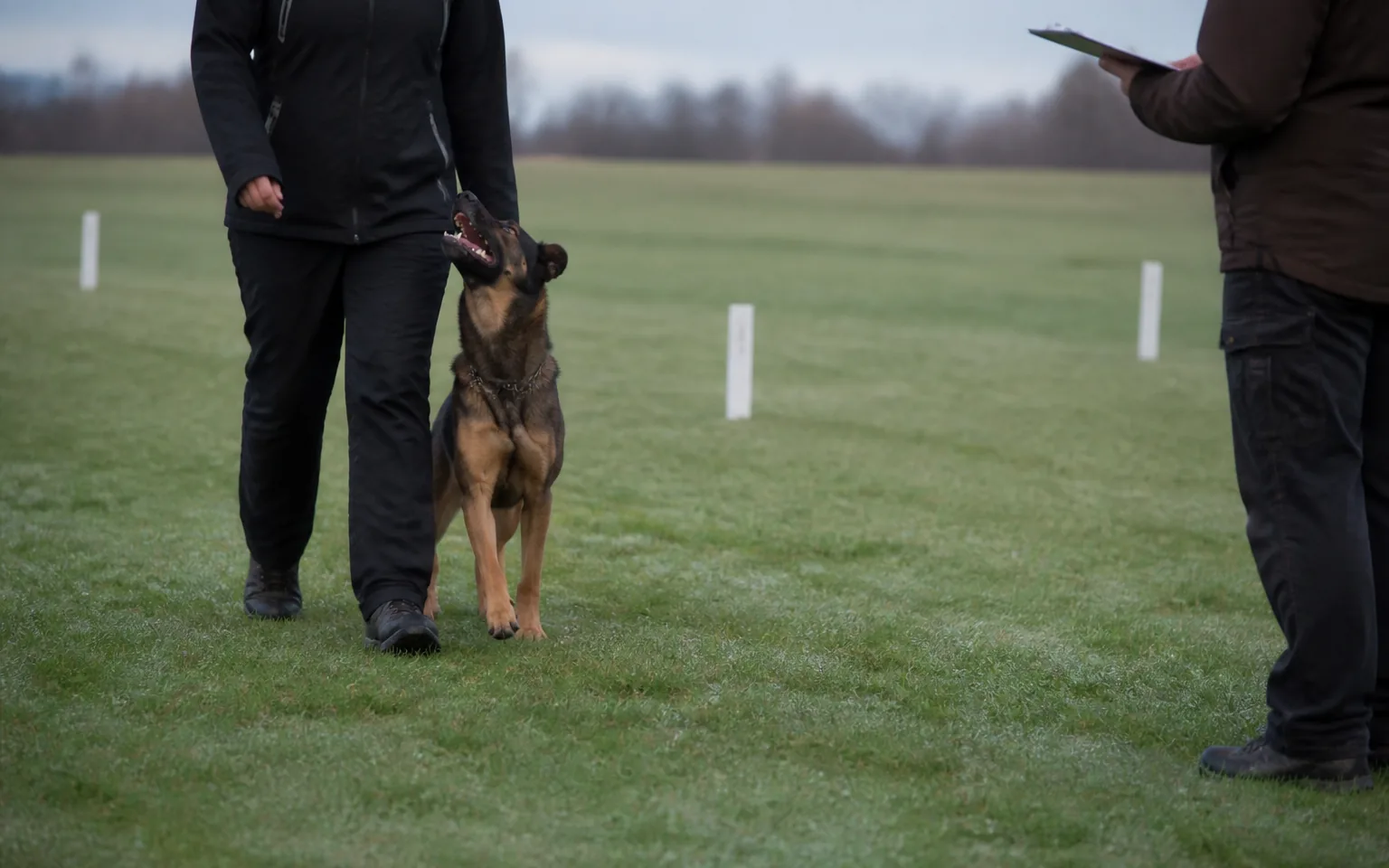
A dog and owner team working on heelwork while an assessor takes notes on a clipboard on the right of the frame Stage 1 · Assessment

We see where the team is now

We assess the human-dog team, from the basic position to the way the handler gives the cues. Then we set the plan and train so that you can enter the next exam.

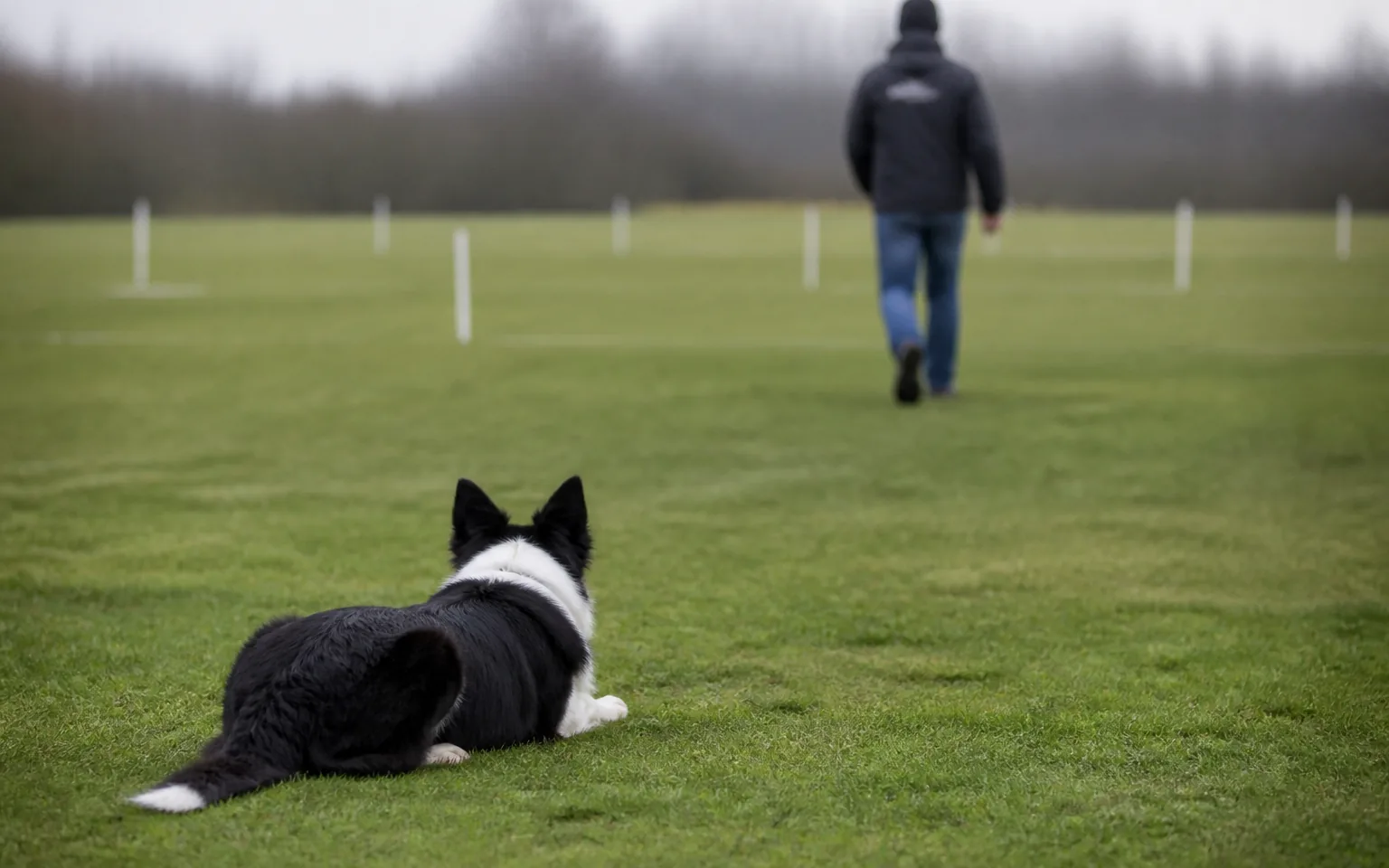
A Border Collie lying down on the training field, watching its owner walk away Stage 2 · Technique

We build the exercises piece by piece

The basic position, heelwork, sit and down, the wait, the recall. Each one is trained separately and only joined together once every single part is performed without mistakes, as the regulations require.
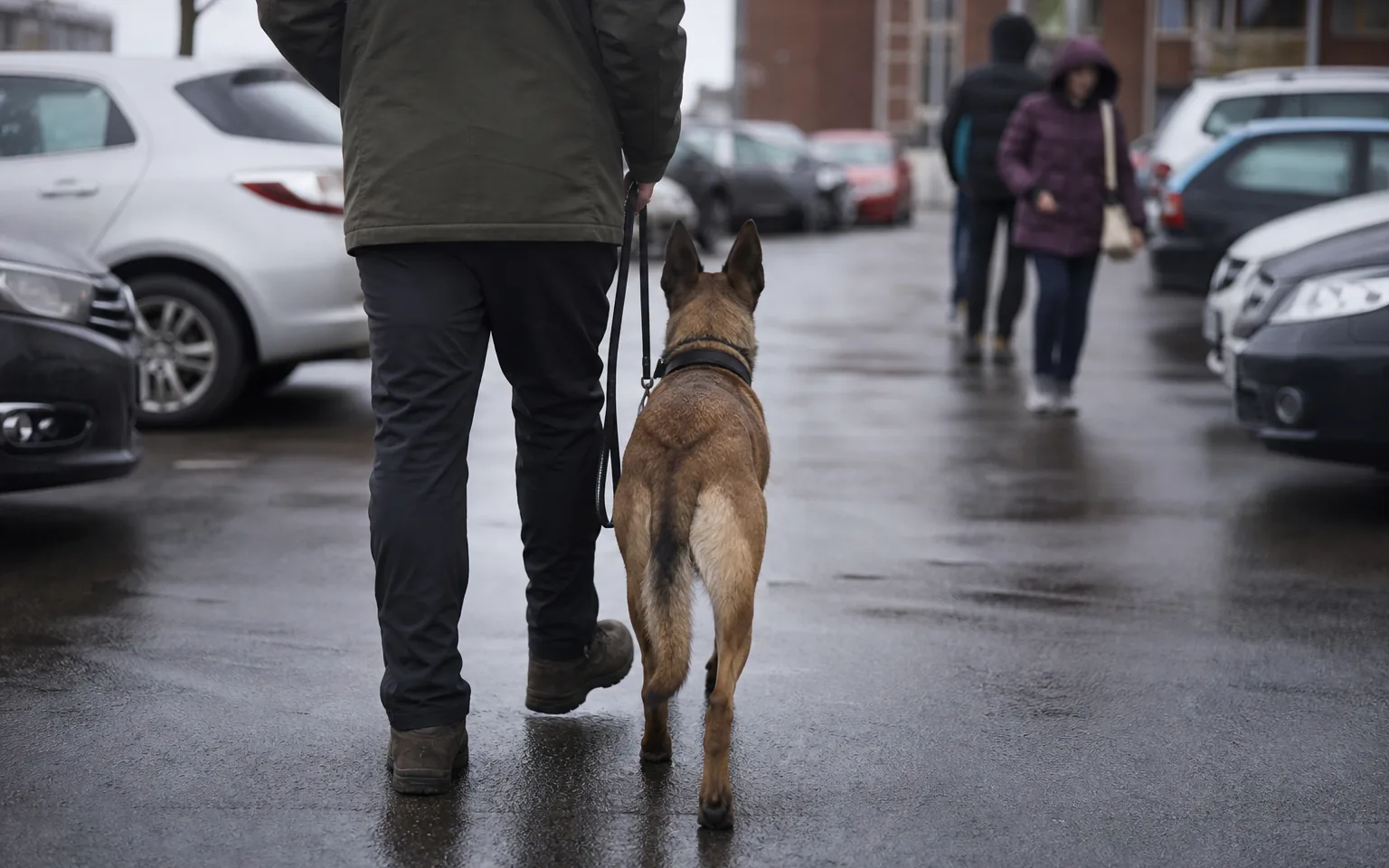
A Malinois walking on a loose leash beside its owner between parked cars and pedestrians on wet tarmac Stage 3 · The exam

We move everything into real conditions

Car parks, pedestrian areas, traffic, other dogs. No visible rewards, the exercises in the order set by the regulations, with someone playing the judge and one or more other human-dog teams alongside, so that exam day holds no surprises.

The full curriculum

What we work on, stage by stage

The 34 stages cover 333 topics, grouped around the two exams plus the shared part on socialisation, methods and mistakes. These stages are not fixed: they can change depending on the initial assessment.

Before we start

01

The initial assessment of the team

15 topics

Before we set the preparation plan, we look at where the dog and the owner actually are.

  • the dog's response to cues
  • attention and orientation towards the owner
  • the quality of the heelwork
  • the basic position
  • stability in the sit and the down
  • the recall
  • the ability to wait
  • behaviour close to other dogs
  • the reaction to people and to handling
  • the reaction to noises and unusual objects
  • tolerance of being temporarily separated from the owner
  • the level of motivation
  • the owner's control over the dog
  • the way the owner gives cues and body signals
  • how well the current level matches the exam being aimed at

After the assessment, each team receives a preparation plan of its own.

Preparing for TSAC

01

What the TSAC exam looks for

8 topics

TSAC mainly looks at balance of character, the dog's sociability and the owner's ability to keep control of it. The regulations put the emphasis on behaviour with the owner present and with the owner away, and on the reaction to people, handling, noises, a bicycle, other dogs and moving groups.

  • behaviour with the owner present
  • behaviour with the owner away
  • the reaction to people and to handling
  • the reaction to noises and unusual stimuli
  • the reaction to a bicycle and to moving groups
  • the reaction to other dogs
  • the obedience exercises
  • the general control of the team

The obedience exercises count, but an imperfect performance does not automatically mean a deferral if the animal shows balance and sociability and stays under control. In training we work the sociability parts and the obedience parts separately.

02

Stability and sociability within a group of people

9 topics

We prepare the dog for the moments when people are close, moving and may touch it by accident.

  • moving in a controlled way through a group of people
  • holding the basic position with people nearby
  • approaching the judge and presenting the team
  • accepting one or more unfamiliar people nearby
  • handing the leash over to a stranger for a short time
  • staying calm while the owner is at a distance
  • tolerating a neutral interaction with the people in the group
  • no jumping up, barking or backing away excessively
  • keeping control in crowded spaces

The dog does not have to seek interaction with people. It only has to stay stable, neutral and manageable.

03

Physical handling and the microchip check

8 topics

At TSAC, the dog may be handled by the judge or a steward - head, muzzle, back, limbs - and then its microchip may be checked.

  • accepting the approach of an unfamiliar person
  • having the head and muzzle touched
  • having the back and limbs touched
  • having the ears and the neck area checked
  • staying calm while the microchip is scanned
  • tolerating handling while the owner is a short distance away
  • settling again after the procedure
  • the owner standing in the right place

Exposure is gradual. We never push the dog beyond its level of tolerance.

04

The reaction to noises and unusual stimuli

11 topics

We introduce the stimuli step by step, in increasing order of difficulty.

  • noises made by metal objects
  • containers filled with pebbles
  • plastic objects
  • a horn or a hooter
  • a bicycle in motion
  • people opening an umbrella
  • groups moving quickly
  • people running up from behind the dog
  • sounds made at a distance
  • stimuli introduced with the owner present
  • stimuli introduced while the owner is briefly away

The aim is not for the animal never to flinch, but for it to keep control of itself and recover quickly.

05

Behaviour when the handler is away

8 topics

An emotional exercise, built in very small steps.

  • leaving the dog with a familiar person or a steward
  • the owner moving away progressively
  • disappearing out of sight for short intervals
  • the owner returning calmly
  • reducing vocalising
  • preventing attempts to escape
  • tolerating stimuli while the owner is away
  • pairing the exercise with predictable, safe experiences

The exercise is always adapted to the dog's emotional level.

06

The reaction to other dogs

10 topics

We train neutrality, not free socialising.

  • walking towards another dog under control
  • crossing paths with another team
  • passing in parallel
  • keeping attention on the owner
  • avoiding staring
  • keeping the leash loose
  • the sit or the down close to another dog
  • coming back to the owner after a distraction appears
  • choosing the right distance for each step
  • neutral behaviour, with no obligation to interact

The objective is not play, but the ability to stay under control.

07

Leash walking for TSAC

11 topics

We build the routine in pieces and only join it up from end to end at the very last.

  • the correct position relative to the owner
  • setting off from the basic position
  • walking in a straight line
  • changes of direction
  • right and left turns
  • 180-degree turns
  • the halts
  • walking through the group of people
  • passing people on the right and on the left
  • keeping attention without the leash being constantly tight
  • putting the whole routine together

In the TSAC regulations, the obedience test includes leash walking, changes of direction, walking through the group, the wait with the owner out of sight and recalling the dog from a distance.

08

The wait and the recall for TSAC

9 topics

Two exercises linked together: the dog stays, the owner disappears, then calls it.

  • leaving the dog in a chosen position
  • moving away progressively
  • the owner going out of sight for short periods
  • holding the position without constant help
  • the owner returning calmly
  • the recall from the distance set by the regulations
  • coming in directly and quickly
  • not anticipating the cue
  • control before and after the recall

Preparing for FCI-BH

01

What the BH exam involves

7 topics

The FCI-BH exam has two parts: Test A - obedience and Test B - socialisation. The dog's social compatibility comes first, and the technical side is assessed together with attitude, basic obedience and the harmony of the team.

  • Test A - obedience
  • Test B - socialisation
  • at least 70% of the points in the obedience test
  • sufficient behaviour in every exercise of the socialisation test
  • the assessment of the team's attitude and harmony
  • basic obedience
  • the technical quality of the performance

The BH regulations have been in force since 1 January 2025. Within A.Ch.R., the minimum age set for taking part in BH is 12 months.

02

The attitude and harmony of the team

11 topics

In BH preparation we are not after the mechanical execution of cues.

  • the dog's willingness to work
  • a happy, motivated performance
  • constant attention to the owner
  • a natural body posture
  • no signs of stress
  • prompt response to the cues
  • the harmonious movement of the team
  • clarity of the cues
  • reducing body signals
  • the technical quality of the performance
  • the dog's ability to work without visible rewards in the exam

The regulations state that the judge looks at motivation, concentration, harmony and technical quality, but also at the dog's expression, body tension, breathing, salivation and any anxious behaviour.

03

The basic position

10 topics

The basic position is the starting and finishing point for the BH exercises. It is worth training separately, until it becomes automatic.

  • placing the dog on the left-hand side
  • the dog's shoulder level with the owner's knee
  • parallel alignment
  • a straight sit
  • attention to the owner
  • getting into position quickly
  • staying calm
  • no repeated repositioning
  • the correct posture of the owner's body
  • reducing help from the hands or shoulders
04

Heelwork on the leash

14 topics

In BH, heelwork on the leash is an important exercise and is scored separately.

  • setting off from the basic position
  • responding to the first cue
  • keeping the dog's shoulder level with the knee
  • walking in a straight line
  • the about-turn to the left
  • changing from normal pace into a run
  • changing from a run into a slow pace
  • returning to normal pace
  • changing pace without intermediate steps
  • halting and taking up the basic position
  • entering a group of four people
  • moving in a figure of eight
  • halting inside the group
  • leaving the group under control

The diagram in the BH regulations (page 21) shows the whole pattern: the 50-pace line, the turn, the changes of pace, the halt and entering the group.

05

The sit cue

10 topics

The owner walks, gives the cue, the dog sits - and the owner carries on walking.

  • correct walking as the exercise starts
  • taking up the position as set by the regulations
  • a prompt response to the cue
  • holding the position
  • the owner moving away
  • waiting calmly
  • the owner coming back
  • finishing in the basic position
  • preventing the dog from lying down or staying on its feet
  • getting rid of additional cues

In the exam, if a dog goes into a down or stays standing instead of sitting, the exercise is reduced to half of the available points.

06

The down cue with a recall

10 topics

The same principle, with a greater distance and a recall at the end.

  • starting the exercise with heelwork
  • going into the down as set by the regulations
  • the owner moving away the required distance
  • staying calm
  • a fast, direct recall
  • stopping in front of the owner, close in
  • moving into the basic position
  • not anticipating the recall
  • no detours and no coming in slowly
  • a motivated, confident return

According to the BH regulations, the owner moves away about 30 paces before the recall, and the dog must come in directly, promptly and with motivation.

07

The down with distraction

11 topics

The exercise takes place while another human-dog team performs its obedience test, with elements such as noise, cues and movement all around.

  • the basic position before the exercise
  • going promptly into the down
  • the owner moving away
  • holding the position at a minimum of 10 metres
  • tolerating the presence of the other team
  • ignoring cues given to another dog
  • staying calm while the other team does its heelwork and recall
  • the owner coming back
  • moving into the basic position on cue
  • not getting up too early
  • less fidgeting and vocalising

The regulations require the animal to stay in the down without the owner intervening, while the other team performs its exercises.

08

Handling cues and penalties

10 topics

A good part of the points is lost not because of the dog, but because of the way the owner gives cues.

  • choosing the cues
  • saying them short and clear
  • not repeating them
  • cutting down double cues
  • removing involuntary body signals
  • controlling body posture
  • respecting the pauses between exercises
  • rewarding only at the permitted moments in simulation training
  • the difference between training and presenting in the exam
  • presenting without visible food or motivational objects

In BH, the first additional cue carries a penalty of 1.5 points and the second a penalty of 2.5 points. If the exercise is still not performed after the permitted cues, it can be scored zero.

09

Preparing for the temperament test

10 topics

The assessment of temperament starts when the exam starts and carries on throughout the whole event.

  • moving on a loose leash
  • the judge approaching
  • the identity check
  • the microchip scan
  • keeping control in a new environment
  • calm behaviour near the other participants
  • presenting without excessive avoidance
  • recovering after a moment of surprise
  • neutrality towards people
  • tolerating a short examination

The regulations describe a positive attitude as a dog that is self-confident, calm, attentive, active, detached and good-natured. Dogs that show severe fear, avoidance, aggression or that bite cannot continue the examination.

Socialisation and the urban environment

01

Meeting a group of people

8 topics

We also work in open spaces, not only on the training field.

  • walking on a loose leash
  • passing pedestrians
  • a person crossing your path
  • entering a group
  • holding the sit or the down
  • the owner greeting a person
  • ignoring the social contact between people
  • keeping control in public spaces
02

The reaction to cyclists

9 topics

Socialising with cyclists is done step by step, starting from a long distance and ending with getting close to them.

  • watching the bicycle from a distance
  • the bicycle passing from behind
  • being overtaken at close range
  • the bicycle passing from the front
  • the sound of the bell
  • placing the dog between the owner and the cyclist
  • keeping the leash loose
  • ignoring the bicycle
  • bringing attention back to the owner
03

The reaction to cars and traffic

10 topics

We work in small steps, not through direct exposure.

  • walking past parked cars
  • an engine starting
  • a car door closing
  • a car stopping nearby
  • the driver and the owner talking
  • the sit or the down during the conversation
  • staying calm
  • progressive exposure to traffic
  • not chasing vehicles
  • keeping control in an urban environment
04

Meeting runners or people in motion

9 topics

Fast movement, in front or behind, triggers the hunting instinct. That is why we train it separately.

  • being overtaken from behind
  • someone passing from the front
  • two or more people running
  • the runners coming back
  • the sit or the down if that is needed
  • keeping the dog next to the owner
  • no chasing
  • bringing arousal down
  • getting back to calm quickly
05

Behaviour towards other dogs

9 topics

The last piece of the socialisation test, and usually the hardest.

  • crossing paths with another team
  • passing at close range
  • ignoring the other dog
  • the “heel", “sit" or “down" cues
  • keeping the dog tied at a fixed point
  • the owner moving out of sight
  • a helper dog passing at about five paces
  • staying calm
  • no barking, pulling or trying to interact

The BH socialisation test takes place in a public space and looks at the general impression the dog makes in traffic and in everyday situations, not at a separate technical score.

Training methods

01

Rewarding correct behaviours

8 topics

We reward exactly what we want to see in the exam.

  • voluntary attention
  • correct positioning
  • a prompt response to the cue
  • staying calm
  • ignoring stimuli
  • coming back to the owner quickly
  • a happy, motivated performance
  • self-control

Rewards can be food, toys, play, praise or access to an enjoyable activity.

02

Progressive shaping

8 topics

Complex exercises are broken into pieces. Heelwork, for example, is built through:

  • the basic position
  • a single correct step
  • several steps in a straight line
  • a halt
  • a turn
  • a change of pace
  • a group of people
  • the whole routine

We do not rehearse the full routine until the parts are stable enough.

03

Gradually reducing rewards

7 topics

In the exam, the dog works without rewards. That has to be trained.

  • gradually increasing the number of exercises between rewards
  • introducing the delayed reward
  • rewarding at the end of a sequence
  • alternating the rewards
  • using surprise rewards
  • keeping motivation without depending on food in the hand
  • progressively removing the treat pouch from the exam simulations
04

Generalising the exercises

10 topics

An exercise learnt in a single place is not learnt at all. We work in:

  • the training field
  • car parks
  • parks
  • pedestrian areas
  • places with moderate traffic
  • near shops
  • places with bicycles and runners
  • groups of people
  • unfamiliar grounds
  • environments close to those of the exam

The dog needs to understand the exercise, not memorise it in one single place.

05

Training below threshold

6 topics

For sensitive or easily distracted dogs, we introduce the stimuli from a distance at which the dog can finish the exercise successfully:

  • take the reward
  • respond to its name
  • perform a simple cue
  • keep the leash loose
  • come back to the owner
  • watch without over-reacting

We only reduce the distance when the dog is ready; we do not rush the process.

06

Exam simulations

11 topics

Through the programme we run full simulations, as close as possible to exam day.

  • presenting to the judge
  • the microchip check
  • performing the routine without visible rewards
  • keeping to the order of the exercises
  • working alongside a second team
  • the down with distraction
  • entering the group
  • traffic exercises
  • unfamiliar people and dogs
  • giving an indicative score
  • technical feedback once the simulation is over

During the simulation we do not correct every mistake. The point is to see the team's real level.

Common mistakes

01

Handler mistakes

13 topics

Most of the lost points come from here, not from the dog.

  • repeated cues
  • cues drawn out for too long
  • changing the cues from one session to the next
  • incorrect body posture
  • staring at the dog the whole time
  • too much help from the hands
  • keeping the leash tight
  • rushing through the routine
  • rewarding at the wrong moment
  • increasing the difficulty too fast
  • training only the complete routine
  • working for too long without breaks
  • having no routine before stepping onto the field
02

Common mistakes made by the dog

14 topics

Each of them has a technical cause and a training solution.

  • moving too far forward or too far back
  • drifting sideways away from the owner
  • a crooked basic position
  • sitting slowly
  • anticipating the halts
  • taking the position before the cue
  • confusing the sit with the down
  • getting up out of the wait
  • coming in slowly on the recall
  • taking detours before coming in
  • losing attention inside the group
  • staring at other dogs
  • reacting to bicycles or runners
  • stress during the presentation

The plan of work

01

One-to-one preparation

9 topics

One-to-one sessions are for the details and for the sensitive cases.

  • correcting the basic position
  • improving the heelwork
  • precision in the cues
  • working on one specific difficulty
  • preparing sensitive dogs
  • video analysis
  • building motivation
  • preparing the owner
  • setting weekly goals
02

Preparation in a group

9 topics

The group gives you exactly what you cannot simulate on your own: other dogs, other people, the unpredictable.

  • working close to other dogs
  • the down with distraction
  • entering the group of people
  • simulating the presentation to the judge
  • walking between participants
  • practising neutrality
  • changing the helper teams
  • simulating exam conditions
  • building control in dynamic environments
03

Training at home

11 topics

Progress happens between sessions. You get a concrete plan to follow at home.
  • a weekly plan of exercises
  • clear goals for each stage
  • recommendations on how long sessions should be
  • criteria for rewarding
  • simplified routines
  • basic position exercises
  • recall exercises
  • a progressively longer wait
  • attention exercises
  • recommendations on filming the training
  • a progress monitoring sheet
A owner presenting their dog in the basic position in front of a judge with a clipboard, with a second team waiting

After the course

What you take away from the programme

The owner will better understand

  • the structure of the TSAC and BH exams
  • the general assessment criteria
  • the correct way to present
  • how the exercises are built technically
  • preparing the dog for groups, noises and traffic
  • working without visible rewards
  • managing emotions before and during the exam
  • spotting and correcting mistakes
  • planning a training session
  • keeping the dog motivated
  • the owner's responsibility during an official event

The dog will improve

  • attention
  • self-control
  • stability
  • heelwork
  • the basic positions
  • the recall
  • the wait
  • neutrality towards people and dogs
  • behaviour in traffic
  • the ability to work in a new environment

For a successful presentation, the team has to be able to work

  • in an unfamiliar place
  • with a judge present
  • alongside other participants
  • without visible rewards
  • in the order set by the regulations
  • with the emotions that come with exam day
  • around people, dogs, vehicles and noises

Frequently asked questions

What teams ask us most often

What is the difference between TSAC and BH?

TSAC mainly looks at balance of character, the dog's sociability and the owner's ability to keep control. An imperfect performance of an exercise does not automatically mean a deferral, as long as the animal stays balanced, sociable and under control. BH has two parts, Test A for obedience and Test B for socialisation, and to pass you need at least 70% of the points in the obedience test, plus sufficient behaviour in every exercise of the socialisation test.

From what age can a dog take the exam?

For TSAC, the regulations set a minimum age of 12 months and require the dog to be presented by its owner. For BH, the minimum age is 12 months, with a valid rabies vaccination and the requested documents. We do recommend starting training at any age, though, to strengthen the relationship and build the exercises as well as possible.

Can I use rewards during the exam?

No. The dog is presented without visible food or motivational objects. That is exactly why we reduce rewards gradually in training: we increase the number of exercises between them, introduce the delayed reward and progressively remove the treat pouch from the exam simulations.

What happens if I repeat a cue?

In BH, the first additional cue carries a penalty of 1.5 points and the second a penalty of 2.5 points. If the exercise is still not performed after the permitted cues, it can be scored zero. That is why we work separately on the way the owner gives cues.

Does the course guarantee that I will pass the exam?

No. Taking part in the course does not automatically guarantee a pass; a lot depends on how much you work between sessions, following our recommendations. You enter the exam separately, through an authorised organiser, and the age and paperwork conditions are those of the applicable regulations.

What equipment is allowed at BH?

The equipment allowed is the one set by the regulations in force on the day of the exam. For the official TSAC/BH presentation, always follow the regulations in force and the organiser's announcement.
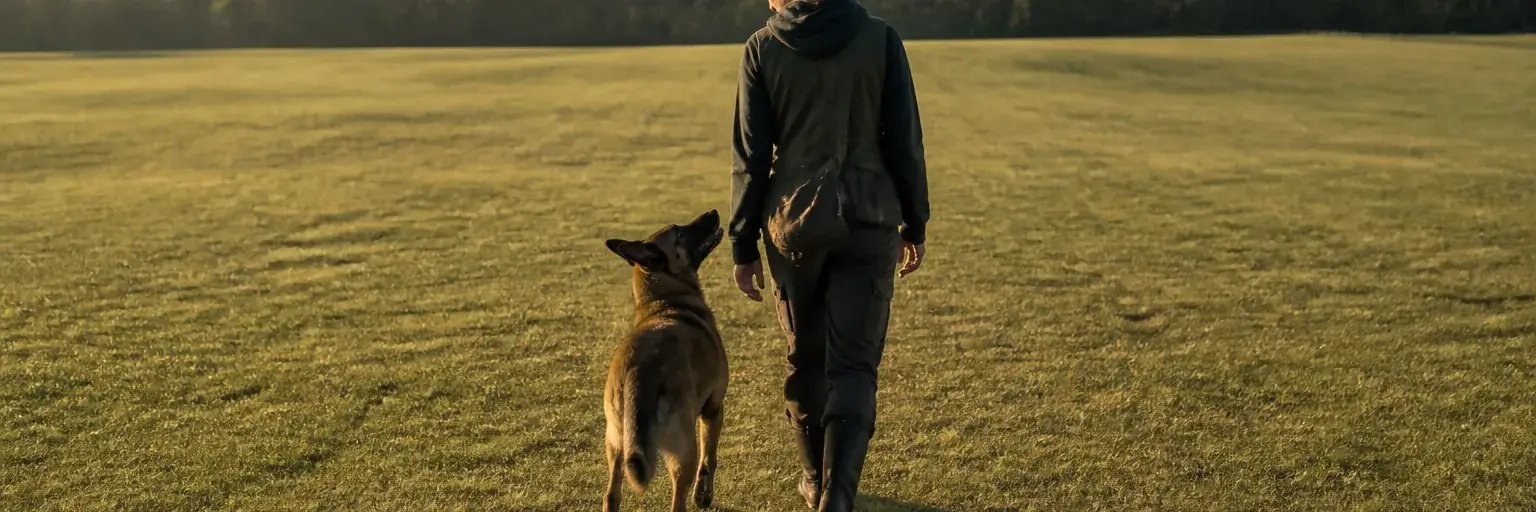
A owner and dog walking together across a field in evening light, the dog looking up at them

Competition training is not only about precision

It is about communication, trust, discipline and the pleasure of working together. Through steady, progressive and well-adapted training, a dog-owner team gets to a confident, harmonious and motivated performance. Write to us and we will arrange an assessment.