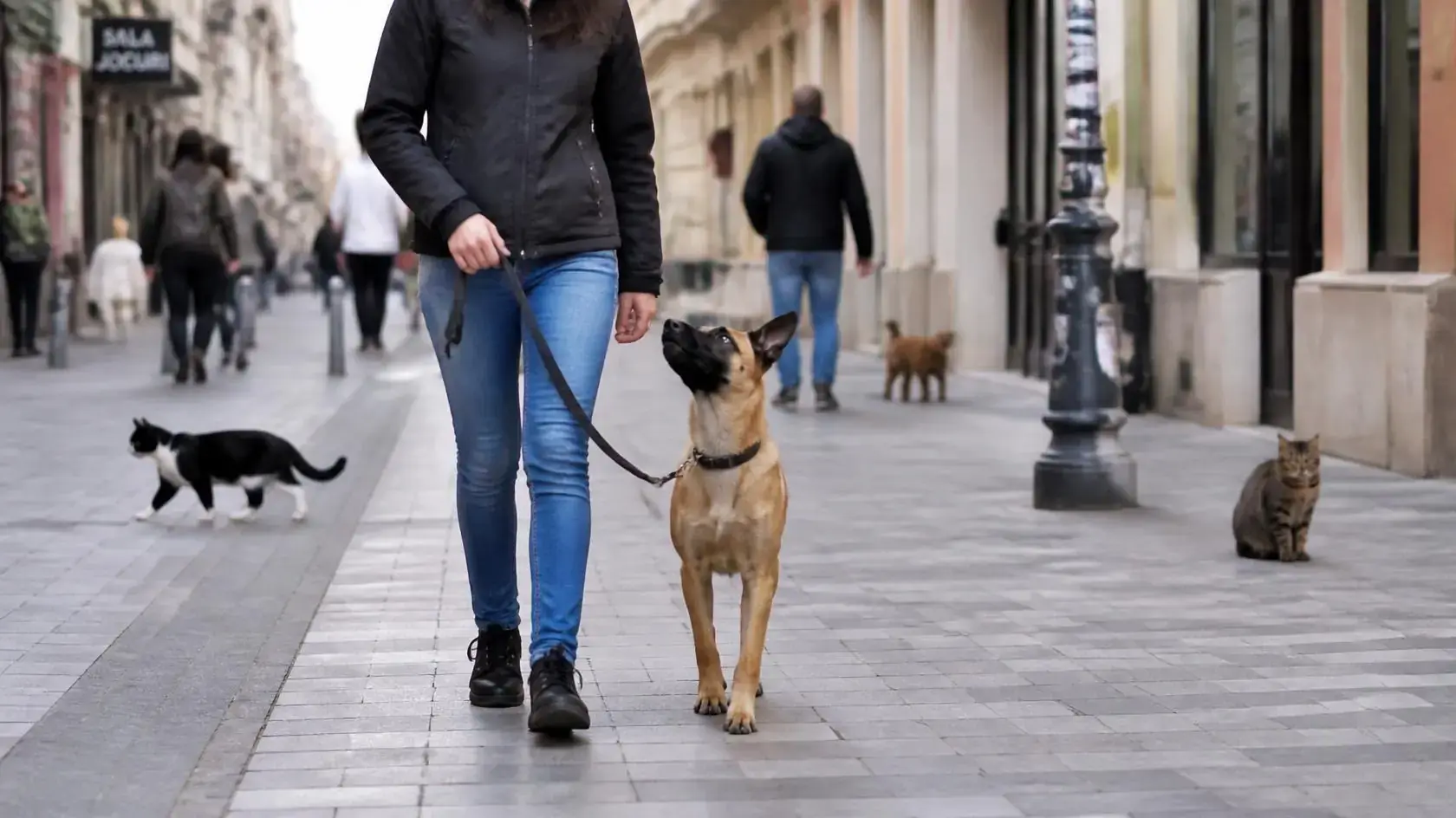
Dog walking calmly on a leash along a city street, passing cats and pedestrians

For dogs over 6 months

Basic dog discipline and obedience course

A complete curriculum that improves the relationship between you and your dog and gives you the tools for everyday life. Built on reward and cooperation.

6 months + minimum age to take part
12 modules from relationship to legislation
99 topics covered one by one
Positive methods reward and cooperation

About the course

A complete curriculum, not just a few commands

The basic discipline course covers a complete curriculum, designed to improve the relationship between dog and owner. It gives you the tools you need to manage your dog in everyday life.

The methods we use are positive methods, based on reward, communication, cooperation and building a relationship of trust. The dog learns because it wants to, not because it is forced to.

The course is designed for dogs over 6 months of age, regardless of breed or previous experience.

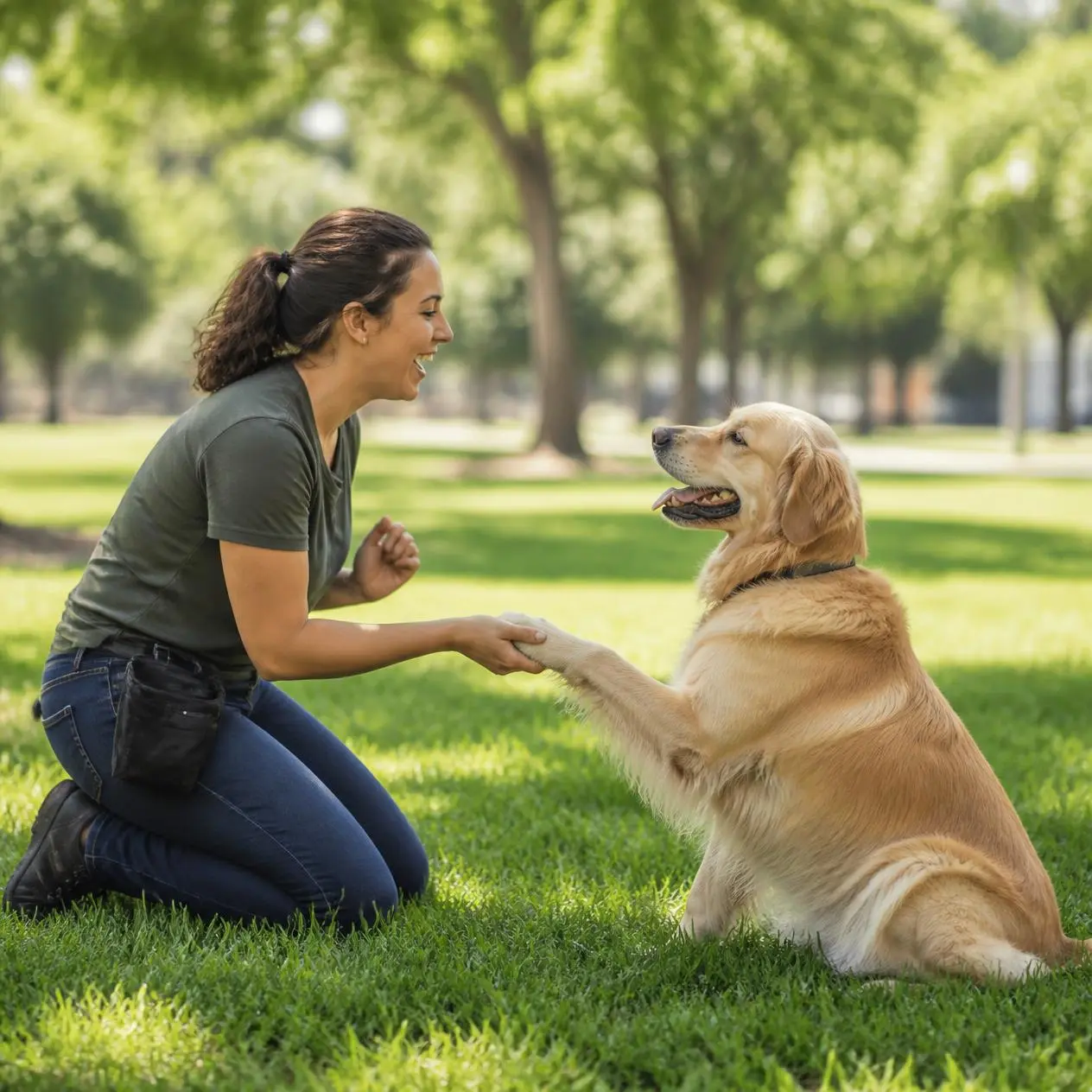
Dog offering its paw to the owner during an exercise in the park

Before the first session

What you need and the conditions to be met

What you will need

  • a fixed collar made of fabric or leather
  • a fixed leash of about 1.5 metres or longer
  • a treat pouch
  • your dog's favourite rewards, either food or toys

Conditions for taking part

  • the course is designed for dogs over 6 months of age
  • dogs must be vaccinated and treated for internal and external parasites according to age
  • dogs must be vaccinated against kennel cough
  • people attending the course must be over 18
  • courses take place in Bucharest and in Ilfov county, in a group or one-to-one, depending on the situation

How the curriculum is built

Three stages, in the order a dog learns

Each module builds on the one before it. We do not start with commands but with the relationship, because a dog that does not listen usually does not understand you, rather than defying you.

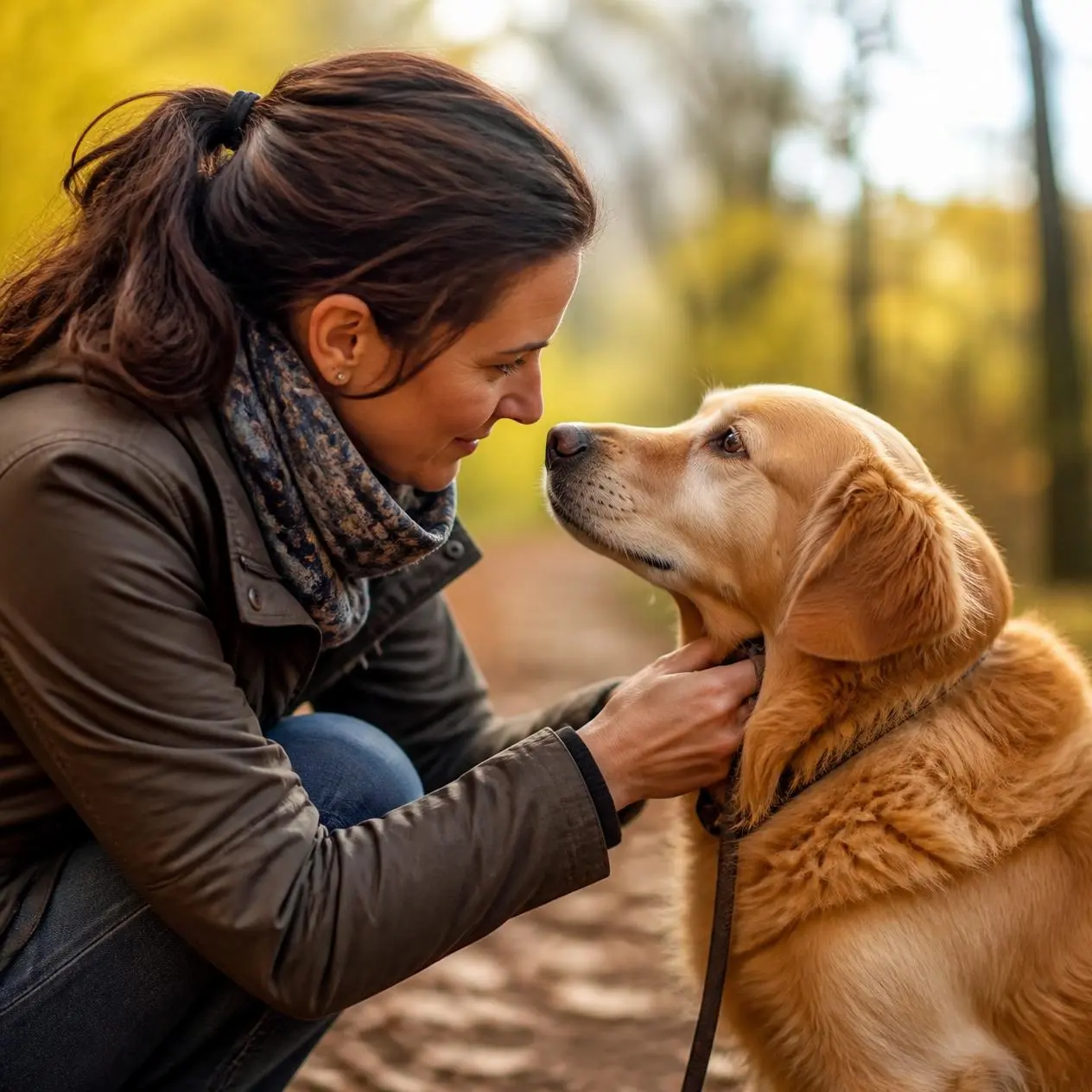
Owner and dog making eye contact during a focus exercise Stage 1 · Modules 1-4

Foundation: relationship and understanding

Before commands, we build communication. You learn to read your dog, understand its needs and signals, socialise it correctly and find out what truly motivates it.

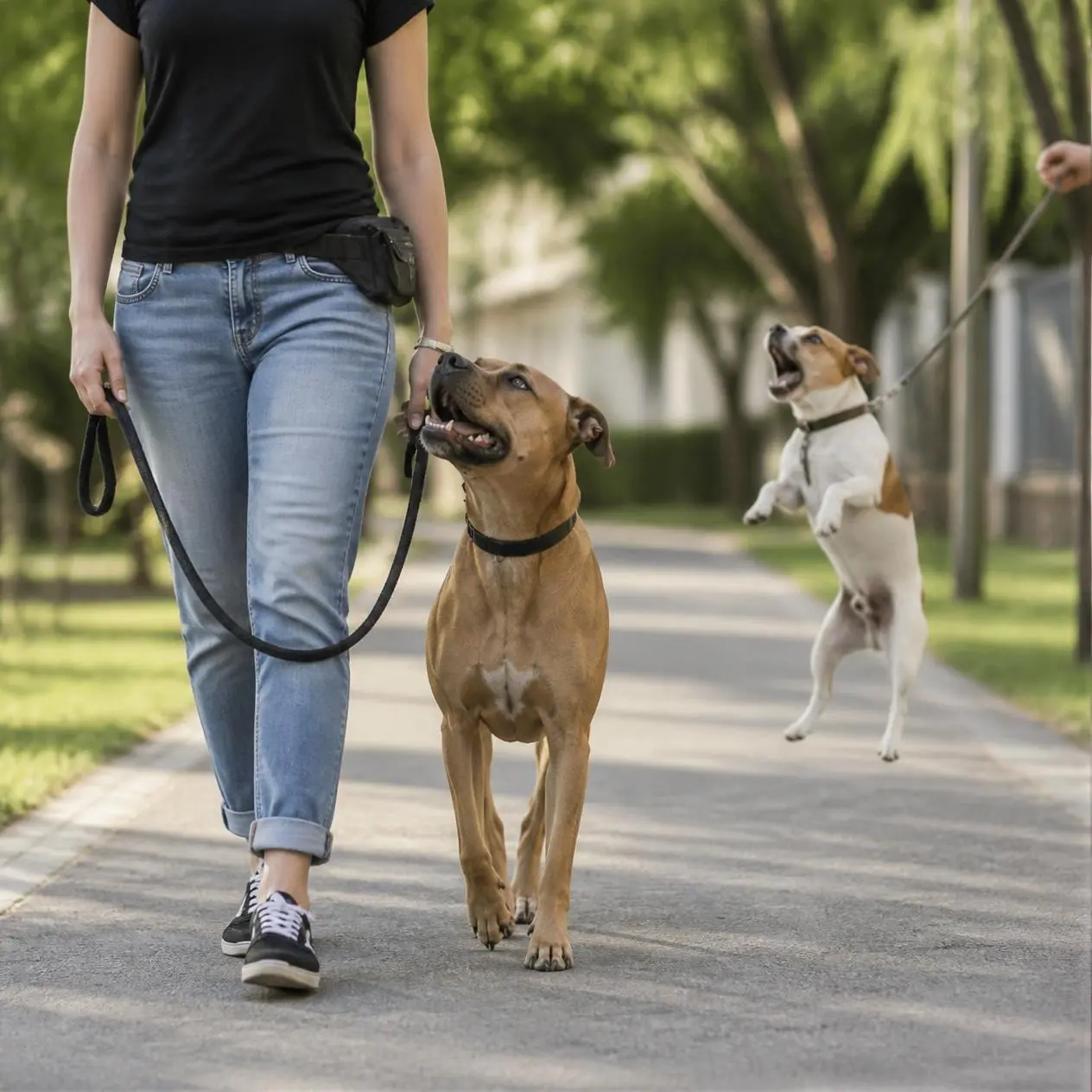
Dog walking correctly on the leash next to its owner, ignoring another excited dog nearby Stage 2 · Modules 5-7

Execution: commands and self-control

The most practical part. Correct leash walking, the eleven basic commands and self-control around food, toys or other dogs are repeated until they become reliable.
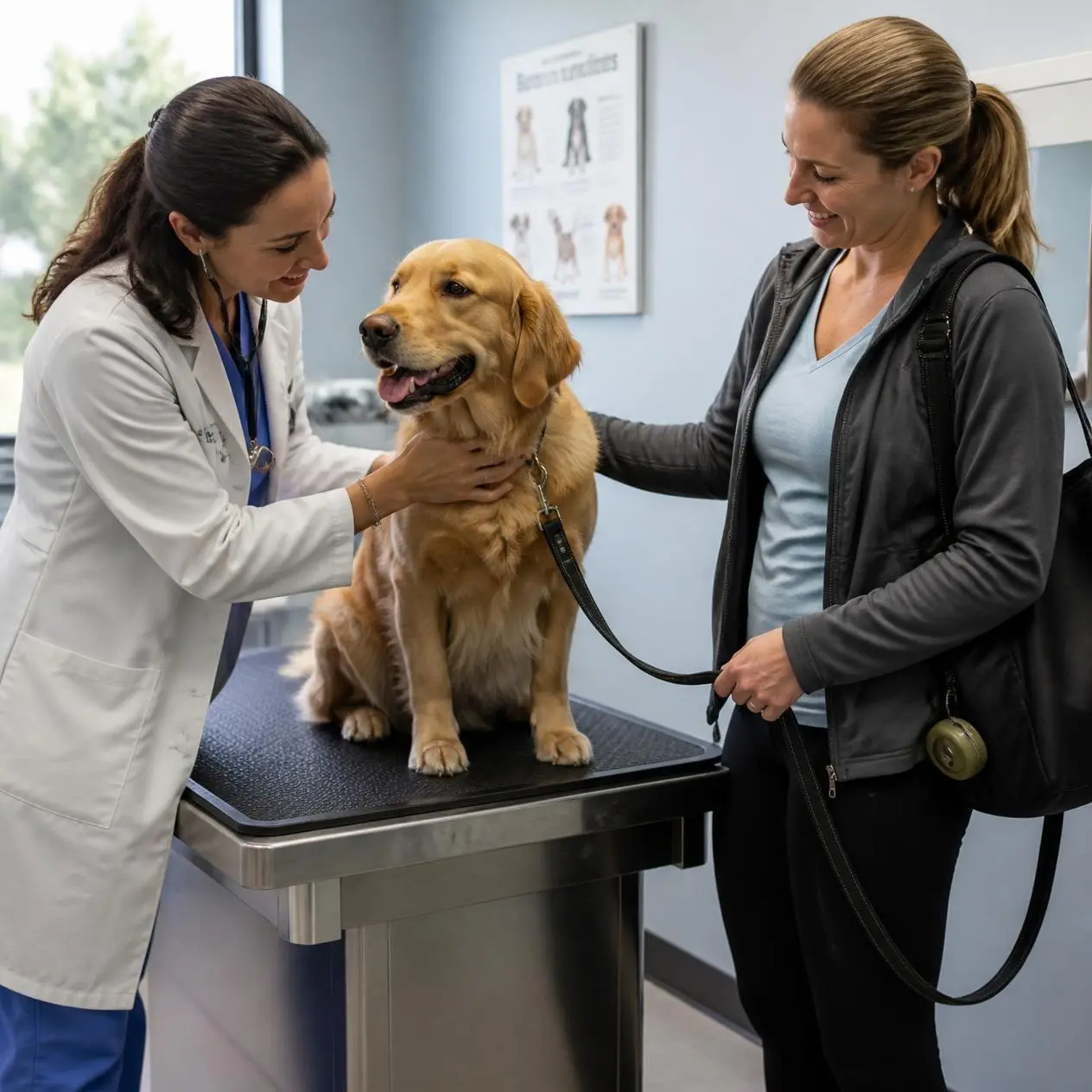
Dog staying calm on the examination table during a vet check-up, with its owner present Stage 3 · Modules 8-12

Real life: prevention and responsibility

We apply everything learned to everyday situations: preventing behaviour problems, vet visits, games at home, safety and the owner's legal obligations.

The full curriculum

What you learn, module by module

The 12 modules cover 99 topics, from the first moment of eye contact to the owner's legal obligations. The modules are a guide: they adapt and change depending on the dog.
01

The human-dog relationship

8 topics
  • how to communicate correctly with your own dog
  • building a relationship based on trust and cooperation
  • correct use of voice, posture and body language
  • the dog responding to its name
  • eye contact and orienting towards the owner
  • voluntarily following the owner
  • exercises for attention and focus
  • building cooperation without forcing the dog
02

Canine needs and psychology

7 topics
  • the physical, emotional and mental needs of the dog
  • the basics of canine psychology and behaviour
  • how to set realistic expectations for the medium and long term
  • recognising signals of stress, fear, discomfort and calming
  • understanding the dog's limits
  • the difference between physical activity and mental stimulation
  • building a balanced daily routine
03

Correct socialisation

8 topics
  • correct socialisation with people, dogs, environments, noises and new objects
  • the difference between socialisation, interaction and controlled exposure
  • managing encounters with strangers
  • avoiding forced greetings between dogs
  • preventing conflicts between dogs
  • calm behaviour in public spaces
  • walking calmly past people, dogs, bicycles, cars and scooters
  • the dog's behaviour on a terrace, in a park or on public transport
04

Motivating and rewarding the dog

8 topics
  • motivating the dog
  • identifying the right rewards for each dog
  • types of rewarding
  • correct use of food, toys, praise and play
  • the right moment to reward
  • marking the desired behaviours
  • gradually increasing the difficulty of the exercises
  • generalising the exercises across different places and situations
05

Leash walking and controlled movement

9 topics
  • correct leash walking
  • walking to heel
  • changing direction while moving
  • keeping attention on the owner while walking
  • preventing and correcting pulling on the leash
  • ignoring other dogs while walking
  • stopping and waiting at the kerb
  • controlled entering and leaving the house
  • controlled getting in and out of the car
06

Basic commands

12 topics
  • the “sit” command
  • the “down” command
  • the “stay” command
  • waiting
  • calling the dog back
  • the recall from play or from the presence of other dogs
  • the interdiction command
  • the “leave it” command
  • the “drop it” command
  • the “place” command
  • the “free” command, to clearly end an exercise
  • holding the commands at a distance and around distractions
07

Self-control and managing emotions

8 topics
  • impulse control around food, toys or other dogs
  • developing patience
  • managing frustration
  • staying calm before being fed
  • waiting before going out the door
  • settling back down after play or excitement
  • voluntarily giving up objects or food
  • keeping attention around distractions
08

Preventing behaviour problems

9 topics
  • preventing jumping up on people
  • preventing begging at the table
  • managing excessive barking
  • preventing chewing on household objects
  • preventing pulling towards other dogs
  • preventing and managing resource guarding
  • managing chasing behaviours
  • managing the hunting instinct
  • the mistakes owners most often make during training
09

Handling, grooming and vet visits

8 topics
  • accepting being handled
  • getting the dog used to having its paws, ears, mouth and tail touched
  • preparing for brushing
  • preparing for nail trimming
  • muzzle training through positive methods
  • preparing for veterinary consultations and procedures
  • the dog's behaviour at the vet's practice
  • calmly administering treatments and medication
10

Play, mental stimulation and activities at home

8 topics
  • scent games and search exercises
  • mental stimulation activities
  • choosing the right games and toys
  • using play as a reward
  • short exercises to do at home
  • putting together an individual training plan
  • keeping a training journal
  • tracking the dog's progress
11

Safety and responsibility

7 topics
  • choosing the right leash, harness, collar and muzzle
  • safety rules for interactions between children and dogs
  • what to do if a dog gets off the leash
  • transporting the dog safely
  • preventing dangerous situations
  • an introduction to canine first aid
  • the owner's responsibility towards the dog and the community
12

Romanian animal legislation

7 topics
  • the legal framework for keeping and managing animals
  • the owner's legal obligations
  • identifying and microchipping the dog
  • registering the dog
  • the rules on access to public spaces
  • the owner's legal responsibility
  • the rules on dogs considered dangerous or aggressive
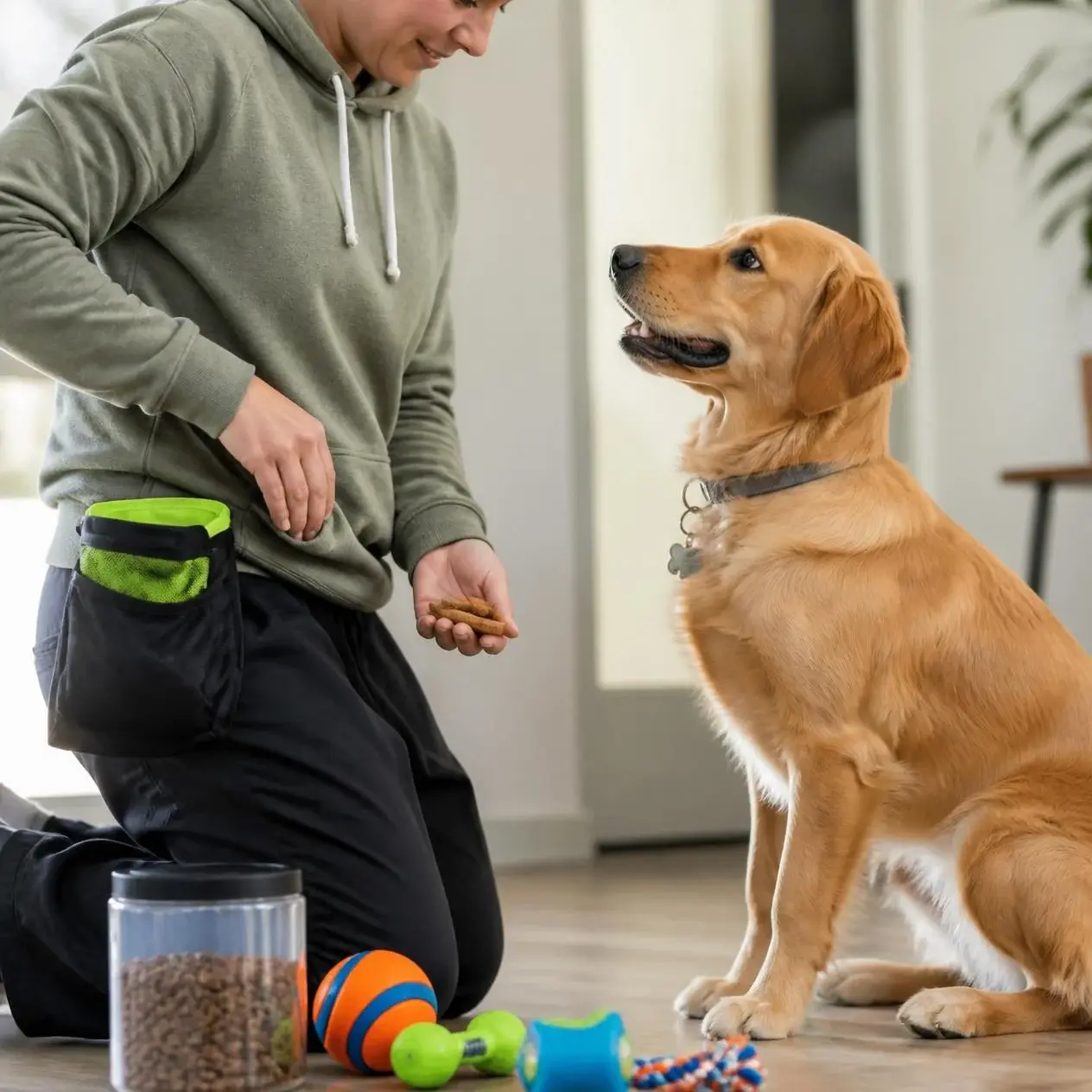
Owner with a treat pouch working with a dog, next to food rewards and toys

Our method

Reward, cooperation and trust

Every exercise in the curriculum is taught the same way: we mark the desired behaviour, reward at the right moment and increase difficulty only when the dog is ready.

  • Marking and rewarding on time The dog understands exactly what it did right, because the timing of the reward is precise. Without that, any command stays a lottery.
  • Difficulty that grows gradually We move to the next step only when the current one is solid. Skipping stages brings frustration and loss of motivation.
  • Generalisation across different places A command that only works in the yard has not been learned. We repeat the exercises in the park, on the street and around distractions.

The same method underpins the scent activities we organise. If you want to go further after basic obedience, mantrailing is the natural next step. For equipment, see our guide.

Human-dog team walking down a street during the assessment in an urban environment

At the end

The final assessment

A practical assessment in an urban environment can be organised at the end of the course. It is not a competition exam, but a check on the things that matter in everyday life.

The human-dog team will demonstrate

  • correct leash walking
  • the basic commands
  • the recall
  • waiting
  • self-control
  • attention towards the owner
  • calm behaviour near people and other dogs
  • handling situations met in everyday life

Frequently asked questions

What owners ask us most

From what age can a dog join the basic obedience course?

The course is designed for dogs over 6 months of age. Younger puppies need a different programme, such as a Puppy Class course, built around early socialisation and very short exercises that match their attention span.

What equipment do I need for the course?

You need a fixed collar made of fabric or leather, a fixed leash of about 1.5 metres or longer, a treat pouch and your dog's favourite rewards, either food or toys. No special or expensive equipment is required.

What are the conditions for signing up?

The dog must be over 6 months old, vaccinated and treated for internal and external parasites according to its age, and vaccinated against kennel cough. People attending the course must be over 18.

What training methods do you use?

We use positive methods only, based on reward, communication and cooperation. The dog learns by having the desired behaviours marked and by gradually increasing difficulty. The goal is a relationship of trust between dog and owner.

Is there an assessment at the end of the course?

A practical assessment in an urban environment can be organised at the end of the course. The human-dog team demonstrates correct leash walking, the basic commands, the recall, waiting, self-control and calm behaviour near people and other dogs.

Where does the basic obedience course take place?

In Bucharest and in Ilfov county. The exact place and schedule are agreed when you sign up, depending on the format and the group.

Is the course run in a group or one-to-one?

Both exist. We decide together, depending on your dog's situation and yours: some dogs need a few one-to-one sessions first, others work well in a group from the start.

What is the difference between basic obedience and mantrailing?

Basic obedience gives you the tools for everyday life: commands, correct leash walking, self-control and calm behaviour in public. Mantrailing is a scent activity in which the dog follows the individual scent of a specific person. The two are not alternatives: basic obedience is the foundation any more advanced activity is built on.

Dog working with its nose alongside the owner accompanying it

Want to enrol your dog?

Write to us and we will tell you when the next group starts, how the sessions work and what suits your dog.