
The position alert
Down, sit or stand still beside the person found. Three variants with the same logic - and the same limit, which decides whether the method suits you at all.
The limit we start from
What a position alert can and cannot do
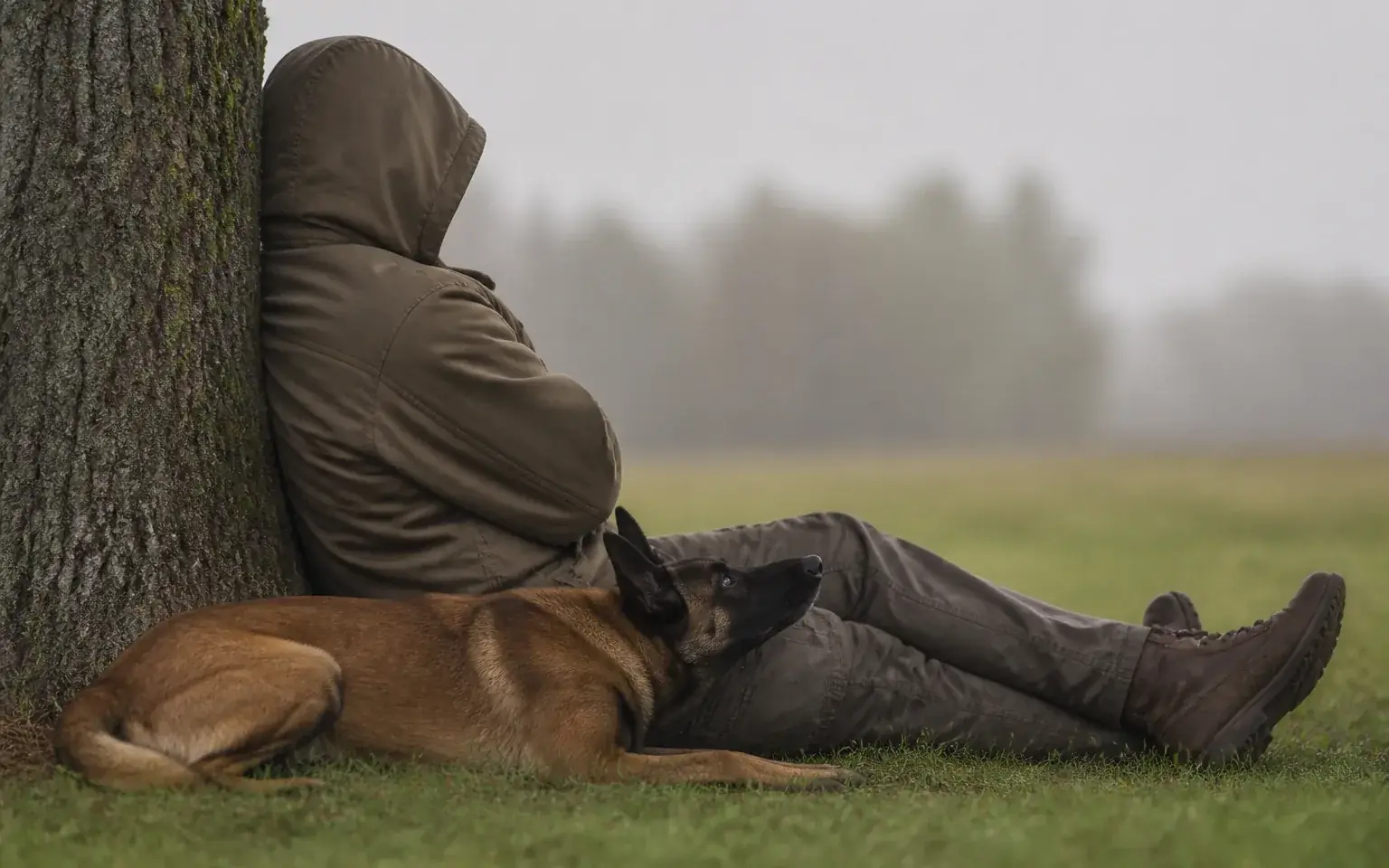
The dog finds the person, stays beside them and holds a trained position. It does not bark, it does not come back for you, it does not touch anything. It marks the spot with its own body.
That sounds clean, and it is - but it comes with a limit worth stating before anything else. A position does not bring the handler to the dog. A bark travels. A bringsel comes to you. A position does neither: it sits there and waits to be seen.
That consequence matters more than every training detail below. The position alert is not an alternative to barking for large sectors. It is a solution for situations where the handler can see the dog, or will reach it shortly anyway: small sectors, open ground with good visibility, working close in.
Anyone choosing a down alert for dense woodland has chosen a method that will never tell them anything.
So why does this family exist? Three real reasons: naturally quiet dogs, where barking cannot be produced without frustration; people whom a barking dog frightens; and environments so loud that barking is useless anyway.
The three positions
The variants
The difference between them is not stylistic. Each solves something different and fails somewhere different.
| Position | Main advantage | Where it fails |
|---|---|---|
| Down | Most visible at distance and calmest for the casualty | Hard to hold on cold, wet or stony ground |
| Sit | Easy to hold on any surface | Looks like a dog that has simply stopped |
| Stand, with fixed gaze | Asks nothing of the dog physically | Hardest to read; not advised as the only signal |
Down
The horizontal outline is immediately distinguishable from a dog that is still searching. It is also the least threatening position for a frightened person, which counts for more than it appears to. The drawback is physical: on snow, stones or in water, the dog will get up eventually no matter how well it was trained.
Sit
It can be held anywhere, on anything. The problem is that a sitting dog looks exactly like a dog that has stopped to scratch or look around. At fifty metres you cannot tell an alert from a pause.
Stand, with fixed gaze
A dog on its feet, facing the person, motionless. The most comfortable for the dog and the most ambiguous for the handler. Not advised as the only signal; as a secondary one, alongside something else, it can work.
Bark plus position
The combination solves exactly the limit from the previous section: the bark brings the handler, the position marks the spot and keeps the dog there. It is more to train, but it is the only variant in this family that also works at distance.
Methodology
Training
The position is learned quickly. The duration is not. That is where all the work goes, and where most teams come unstuck.
Stage 1 - The position, away from searching
Down or sit is trained separately, for long durations, with no connection to a hidden person. The target is not the execution - that comes straight away - but the minutes. A dog that cannot hold three minutes in the garden will not hold thirty seconds in the field.
Stage 2 - The position beside the subject
The subject sits a few metres away, in view. The dog arrives, sits or lies down, the subject rewards. As with barking, the distance stays deliberately short so the link forms cleanly.
Stage 3 - Duration
The hard part, and the reason this method has a reputation for being more difficult than barking. A barking dog has something to do: the barking sustains the behaviour and keeps the dog engaged. A dog lying down has nothing. It waits. And boredom is a more serious opponent than distraction.
Build in small steps, returning often to durations already owned. Pushing a criterion that has already been lost costs more here than in any other method.
Stage 4 - The handler who arrives late
Now the handler moves away and arrives after a realistic delay. The test is not whether the dog lies down. It is whether the dog is still lying down when you get there.
The dog that gets up after thirty seconds
The most common failure, and nearly always the same cause: duration was built too fast, and the dog learned that the position lasts until it gets bored. The repair is not a firmer command but a return to short durations with dense reward, then a slower build than the first time.
Operational context
When to prefer it, and when not
The choice comes down to one practical question: will you see the dog?
If the answer is yes, the method is sound and has real advantages - it does not frighten the casualty, it works with quiet dogs, and it is useful in loud environments where barking is lost anyway.
It fits small sectors, open ground with visibility, searches where the team works close in, and cases where the profile of the missing person is known and barking is ruled out: a small child, an older person with dementia, someone with an anxiety disorder. See also how a search works.
When it is the wrong choice
- Large sectors. The dog gives a perfect alert two hundred metres away and nobody finds out.
- Dense woodland or tall vegetation. A dog in the down is invisible from thirty metres.
- Broken ground. Without a line of sight, a position communicates nothing.
In every case above the answer is a bark, a bringsel or a refind - methods that reach the handler on their own. The full comparison sits in types of search and in the selection guide.
Frequently asked questions
Frequently asked questions
01
Can a position be combined with barking?
Yes, and that combination solves the limit of the method. The bark brings the handler, the position marks the spot and keeps the dog with the person. It costs more training, because there are two criteria to hold at once, but it is the only variant in this family that also works when the handler cannot see the dog.
02
Why is duration harder than with a bark alert?
Because a dog in the down has nothing to do. Barking sustains itself - the dog is active, so it stays awake and engaged. A held position offers nothing, and boredom sets in faster than any distraction around it. That is why duration is built in small steps, with frequent returns to values already owned.
03
What do certifications require?
It depends on the organisation and the discipline, and the rules differ. Check the actual requirements on the certifications page before choosing a method: some assessments explicitly require an audible alert, which rules out positions as the only signal.
04
How long does it take to consolidate?
The position is learned in a few sessions. Operational duration - minutes, in the field, after the dog has already been working - takes months. The practical test is not whether it goes down on command, but whether it is still down when you reach it after three minutes, tired, somewhere it has never been.
Method follows discipline
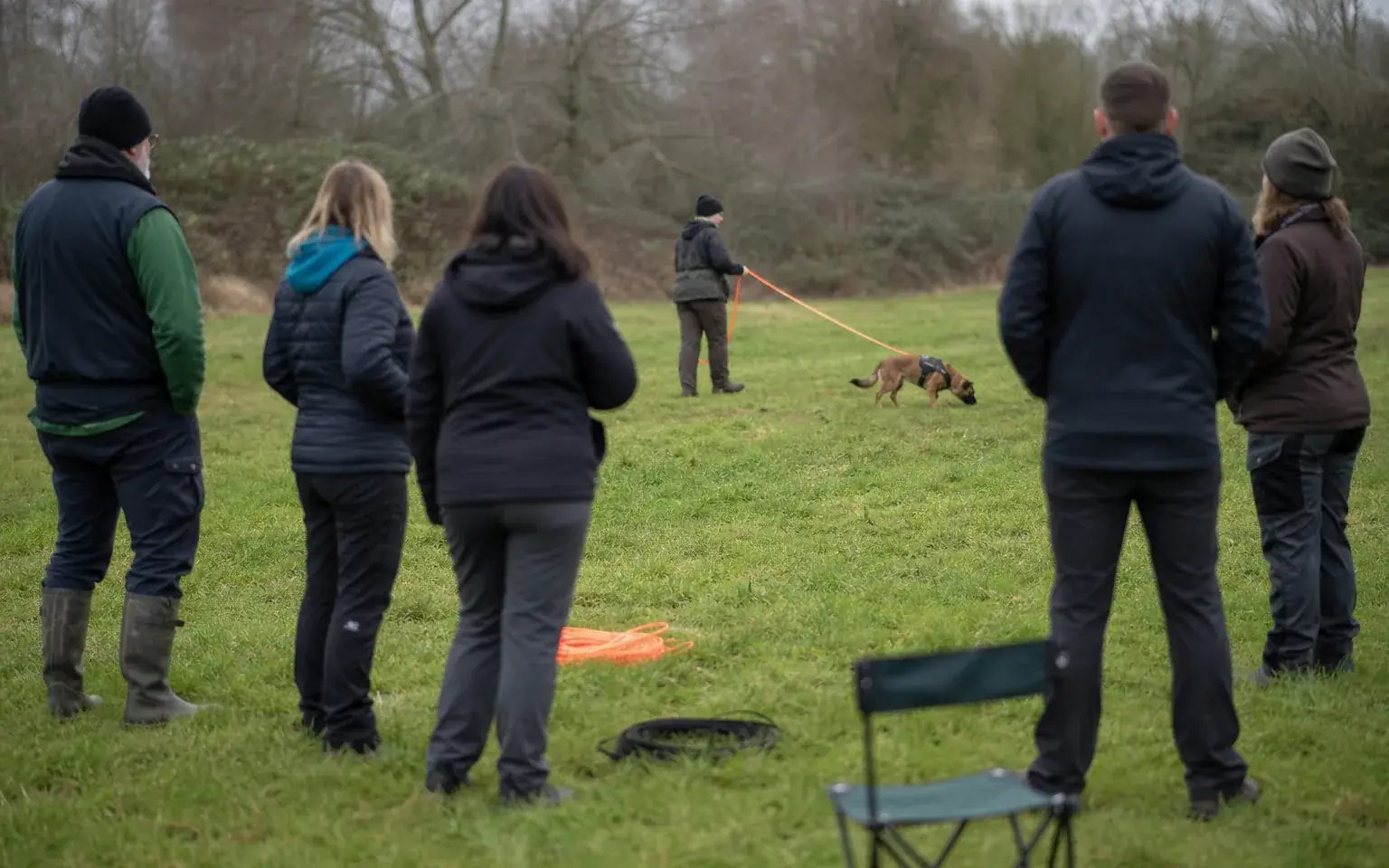
No alert method is good in the abstract. What matters is where you work and which dog you have.