
Search and Rescue Dogs
Types of search with dogs
Search dogs specialise in different types: mantrailing (the individual trail of one specific person), area search / air-scenting (any living person in a zone), tracking (the disturbance left by footsteps), rubble search, avalanche, water and cadaver detection. Each uses a different target scent, environment and type of alert.
In short
Not all searches are the same
This page clarifies the technical differences - including the classic confusion between trailing and tracking - and shows you when each is used. For how a real operation unfolds, see the guide on how a search works, or go back to the big picture.
Mantrailing - the individual trail
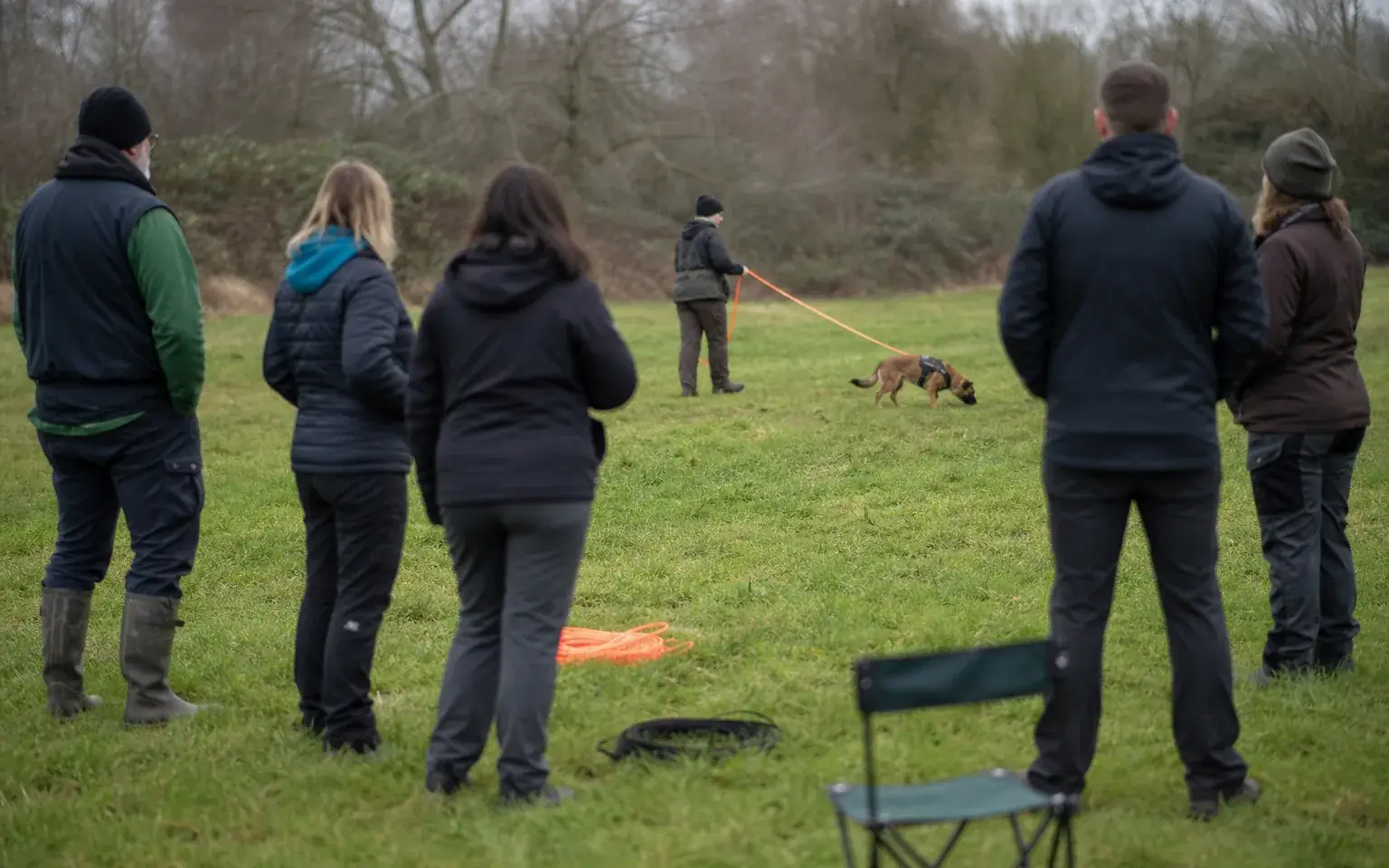
The dog starts from a scent article and follows the unique scent of one specific person, distinguishing them from everyone else who has passed by. It is the reference discipline for finding out where an identified person went, even in a crowded urban environment - see how scent work changes between city, forest or mixed terrain. It is also the most natural foundation for any search dog - see why mantrailing.
Area search (air-scenting)
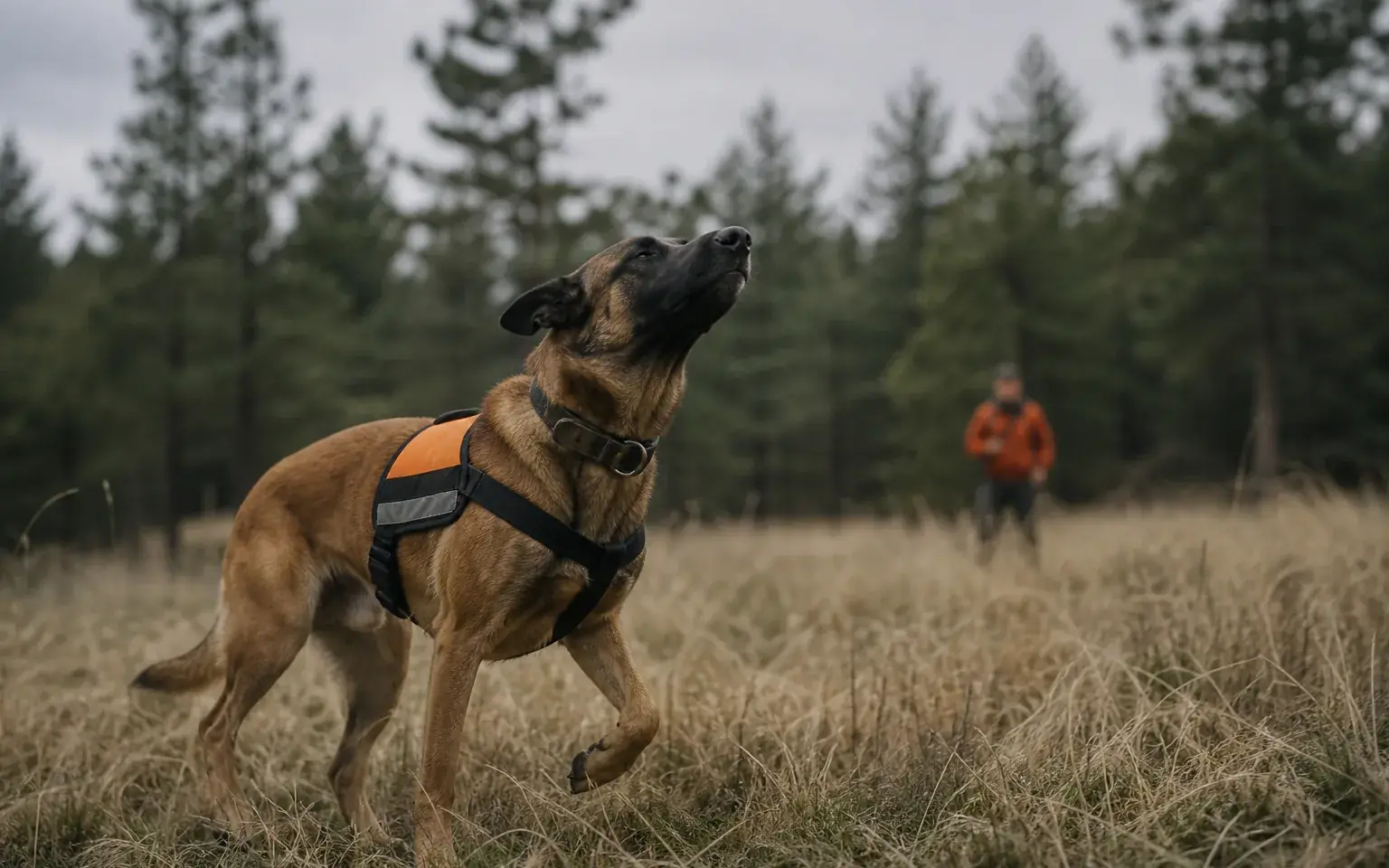
Here the dog is not looking for a specific person. It scans the air within a sector and reacts to the airborne scent of any living person. This is the right method when there is no scent article or starting point - for example a large forest area where someone is lost. The dog works freely, in a zigzag, to move into the scent cone.
Trailing vs tracking - the classic confusion
Although both "follow a trail", they are different. In tracking, the dog follows the physical disturbance left by footsteps (trodden earth, crushed grass) with its nose to the ground, step by step, very precisely. In trailing, the dog follows the individual scent of the person, which can drift slightly to the side on the wind, so it works more freely and naturally. In short: tracking follows the footsteps; trailing follows the person.
Rubble search (USAR)
A specialisation for areas hit by earthquakes, explosions or collapses. The dog locates people trapped under debris, working on unstable and dangerous surfaces. It is the discipline of teams that respond to disasters, often alongside international USAR structures.
Avalanche and water
Avalanche dogs detect people buried under snow, essential in mountain areas where time is critical. Water dogs detect, from a boat or the shore, the scent carried by currents from a person underwater - a niche discipline with highly specific training.
Cadaver detection (HRD)
The cadaver detection dog (human remains detection) is trained on the specific scent of human remains, not living people. It is a completely separate discipline, used when deceased people are being searched for. The target scent and training differ radically, which is why it is usually kept distinct from searching for living people.
Comparison table
| Discipline | Scent it follows | Typical environment |
|---|---|---|
| Mantrailing | The individual scent of one specific person | Urban, mixed, anywhere with a starting point |
| Area (air-scenting) | The scent of any living person | Forest, open ground, large areas |
| Tracking | The disturbance left by footsteps, on the ground | Field, natural terrain with a clear track |
| Rubble (USAR) | Living people under debris | Collapsed buildings, disasters |
| Avalanche | People under snow | Mountain, snow |
| Water | Scent carried by currents from underwater | Lakes, rivers, from a boat or the shore |
| Cadaver (HRD) | Human remains | Varied, including investigations and water |
When each is used
The choice of discipline depends on the situation: if there is a starting point and an object belonging to the person, mantrailing retraces the route; if a large area with no reference points must be searched, the area dog comes in; after an earthquake, the rubble teams; in winter, in the mountains, the avalanche dogs. Mantrailing remains the common foundation - which is why we document it in detail across the site. See also the certifications for each discipline.
Frequently asked questions
Frequently asked questions
01
What is the difference between mantrailing and area search?
In mantrailing, the dog follows the individual scent of one specific person, starting from a scent article, and retraces their exact route. In area search (air-scenting), the dog reacts to the scent of any living person in a sector. Mantrailing answers where did person X go; area search answers is there anyone alive here.
02
What is the difference between trailing and tracking?
Both follow a trail, but differently. In tracking, the dog follows the disturbance left by footsteps with its nose to the ground, step by step. In trailing (mantrailing), it follows the individual scent of the person, which can drift on the wind, so it works more freely. Tracking follows the footsteps; trailing follows the person.
03
What is a cadaver detection dog?
An HRD (human remains detection) dog is trained on the specific scent of human remains, not living people. It is a separate discipline, used when deceased people are being searched for. The training and target scent are completely different from searching for living people.
04
Can one dog do several types of search?
Yes, but it usually specialises in one or two. Many teams first build the foundation through mantrailing, then add area or rubble search. Cadaver detection is usually kept separate, because the target scent is different. Specialisation depends on the dog's aptitude and the team's needs.
It all starts with mantrailing
The foundation of every search discipline is the individual trail. Find out where you begin.