
Search and Rescue Dogs
How to become a search and rescue volunteer with your dog
To become a search and rescue volunteer with your dog in Romania, you join a team that trains rescue dogs, build a foundation through mantrailing, commit to years of consistent training (frequently over 1,000 hours per year) and pass tiered certification exams. You don't need a specific breed, but a sociable, motivated dog and your own willingness to commit for the long term.
In short
The first step towards a rescue team
This page explains the full path, step by step, with a realistic timeline and no illusions: search and rescue is not a weekend hobby, it is a way of life. If you first want the big picture, go back to the guide on search and rescue dogs in Romania.
What it really means
Before the steps, an honest clarification: training a search and rescue dog means several years of weekly sessions, in every season, plus the readiness to be called out to operations. The reward matches the effort - a deep partnership with your dog and the real ability to help people in danger. But the decision should be made with full awareness, not on a wave of enthusiasm.
The right dog
Temperament decides, not breed: strong motivation for food or toys, sociability, balanced energy and physical stamina. A very fearful or reactive dog is hard to train. The full details, with breed profiles and tests you can do at home, are in the guide on breeds suited for search and rescue.
Step 1 - The mantrailing foundation
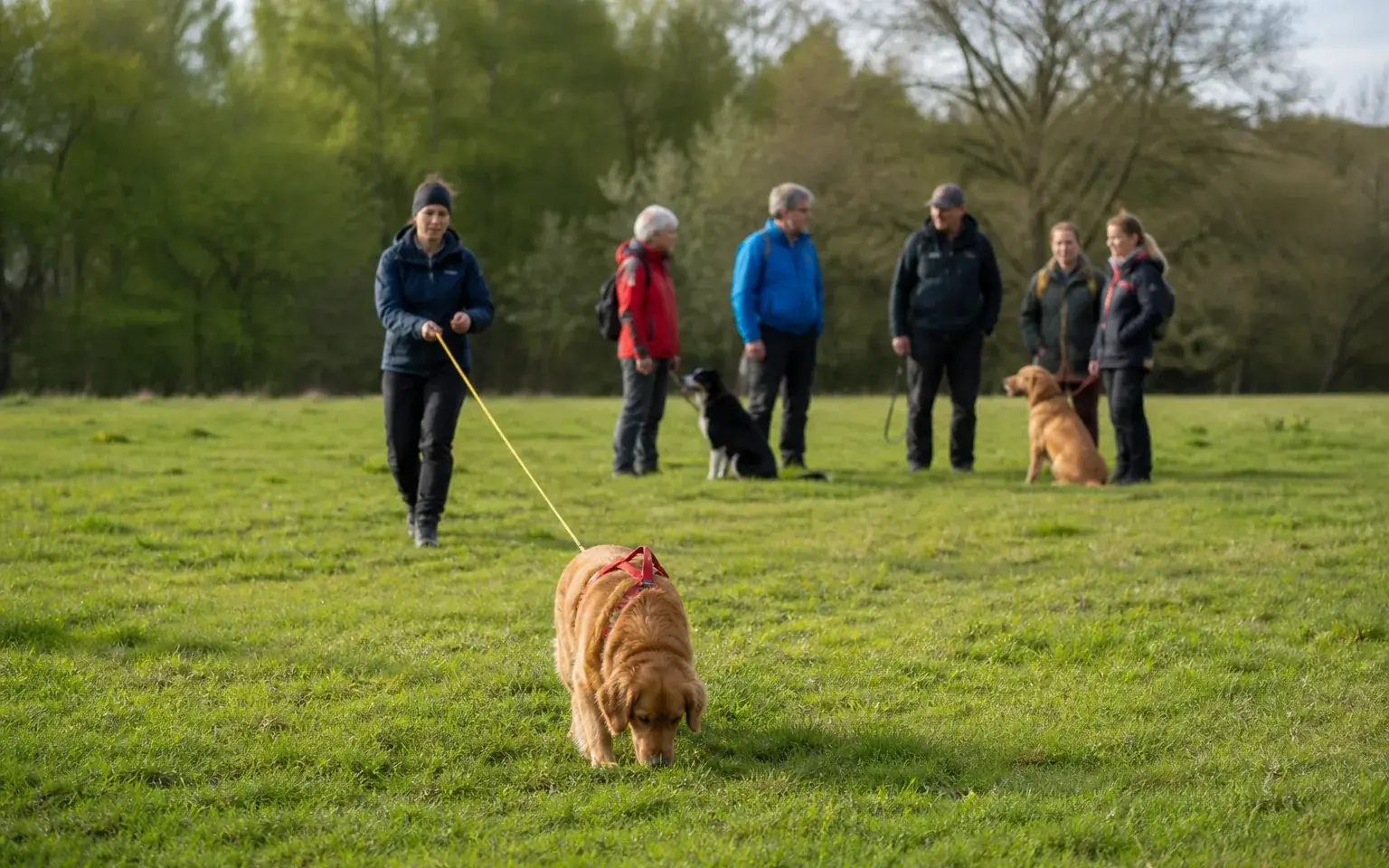
Almost every search dog starts with mantrailing: the dog follows the individual scent of a person while you learn to read its signals. It is the most natural and most motivating entry point, because it works on the dog's natural instinct and builds mutual trust. See why mantrailing is the ideal foundation.
Step 2 - Basic obedience
A search dog must be reliable off-leash and controllable at a distance, in environments full of distractions. This level of obedience is certified through the BH (social companion) test, which is the mandatory foundation before any advanced rescue certification.
A realistic year-by-year timeline
Every team advances at its own pace, but this is the typical path:
| Period | Main goal |
|---|---|
| Year 1 | Socialisation, scent foundation through mantrailing, first simple trails, the working relationship with the handler. |
| Year 2 | Basic obedience, the BH and TSAC tests, increasing trail difficulty, first introductory exam levels. |
| Year 3+ | Operational certifications (IRO), training in varied conditions, joining a team and taking part in joint exercises. |
For what each exam involves, see the guide on search and rescue certifications.
Cost and time
Volunteering itself is not paid - you give time and commitment. The personal costs are real though: equipment (harness, long line, GPS tracker), travel to training and exams, certification fees, vaccinations and vet checks. The biggest cost remains time: weekly sessions over several years. Those who join for a quick result give up; those who join for the dog and the mission stay.
5 myths about rescue volunteering
- "I absolutely need a German Shepherd or a Malinois." False - temperament matters, not breed. Mixed-breed dogs can be excellent.
- "My dog is too old." The scent foundation can start at any healthy age; mantrailing suits senior dogs too.
- "It needs harsh, dominance-based training." False - search and rescue is built on motivation and play, not compulsion.
- "We'll be ready for operations within a year." Unrealistic - the path to operational level usually takes 2-4 years.
- "I need to be an experienced trainer." False - most volunteers start from scratch and learn within the team.
Checklist before you start
- Is your dog sociable and motivated by food or toys?
- Can you commit a few hours a week, consistently, for several years?
- Are you willing to travel to training and exams?
- Is your dog healthy and up to date on vaccinations?
- Are you ready to learn within a team, patiently, with no overnight results?
If you answered "yes" at least a few times, the first concrete step is to contact us or join as a volunteer, even without a dog.
Frequently asked questions
Frequently asked questions
01
How long until my dog can take part in a real operation?
Realistically, between 2 and 4 years of consistent training. The first year builds the scent foundation and socialisation, the second adds basic obedience and the first exam levels, and from the third year the team can pass operational certifications. An operational team frequently accumulates over 1,000 hours of training per year.
02
What dog do I need for search and rescue?
Not a specific breed, but a sociable, playful dog motivated by food or toys, with balanced energy and good health. Common breeds are the Malinois, German Shepherd, Border Collie, Labrador and Golden Retriever, but mixed-breed dogs can excel too. Temperament matters, not pedigree.
03
Do I have to pay to become a volunteer?
Volunteering itself is not paid. There are personal costs though: equipment, travel, certification fees and vaccinations. The biggest cost is not money but time - a long-term commitment of several years, with weekly sessions.
04
Can I start with no experience at all?
Yes. Most volunteers start with no experience. The most natural entry point is mantrailing. You can even take part without a dog, as a layer (the hidden person) or observer, to see how it works before committing your own dog.
Ready for the first step?
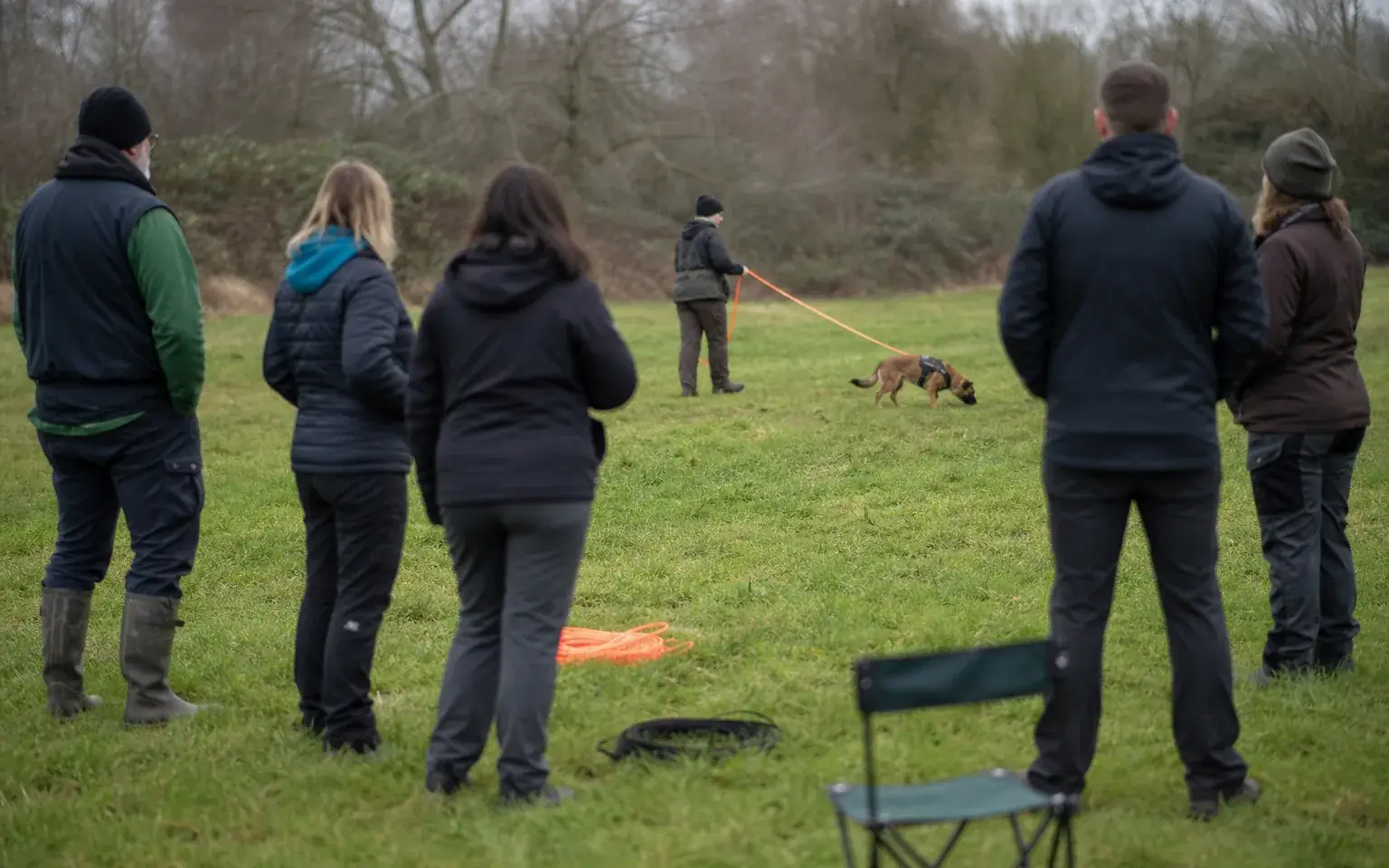
Contact us and find out how to start mantrailing training, the foundation of search and rescue.