
Search and Rescue Dogs
Which dog breeds are suited for search and rescue
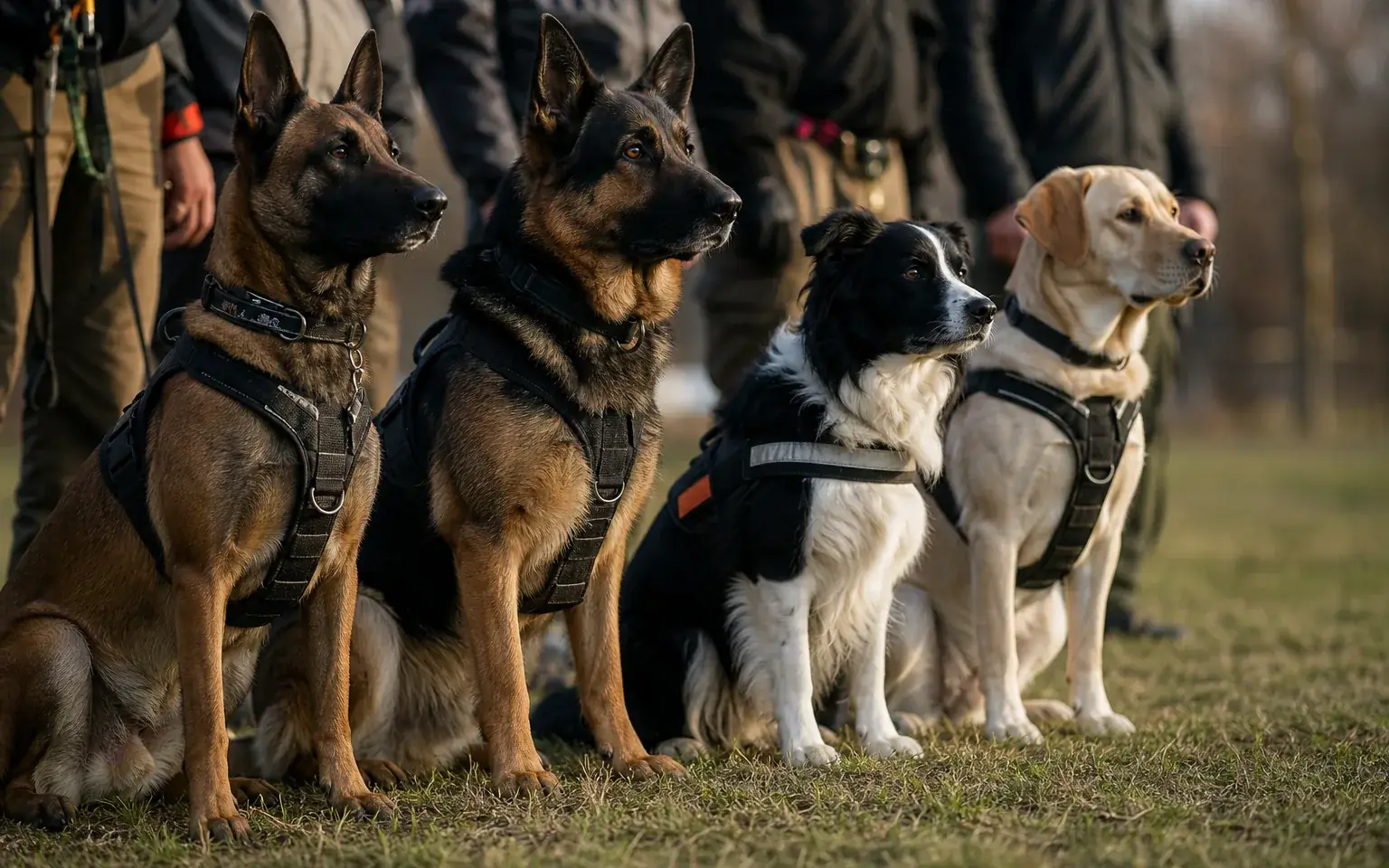
There is no single "best" breed for search and rescue - individual temperament matters. A good rescue dog has strong motivation for food or toys, balanced nerves, sociability, stable energy and a willingness to cooperate with people. Common breeds are the Malinois, German Shepherd, Border Collie, Labrador and Golden Retriever, and for individual scent trailing, the Bloodhound - but mixed-breed dogs can excel too.
In short
Temperament, not breed, makes the rescue dog
This page first explains the three qualities that really decide, then goes through the breed profiles and shows you how to test at home whether your own dog is suited. For the big picture, go back to the guide on search and rescue dogs.
The temperament triad: drive, nerves, sociability
SAR instructors look at three qualities before any breed:
- Drive (motivation) - the intense desire to work for a reward (food or toys). Without drive, the dog gives up when the search gets hard.
- Balanced nerves - the ability to stay steady in new, noisy environments, on unstable surfaces and around many people. A dog with good nerves focuses on the work, not on fear.
- Sociability - openness towards unfamiliar people. A rescue dog must want to find and approach strangers, not avoid them.
When all three come together in the same dog - regardless of breed - you have a good candidate.
Breed profiles
| Breed | Strengths | To keep in mind |
|---|---|---|
| Belgian Malinois | Very high drive and energy, resilient, highly trainable. | Needs an experienced handler and plenty of exercise; not a dog for passive beginners. |
| German Shepherd | Versatile, balanced, resilient, long tradition in rescue. | Variable health lines; choose from working lines. |
| Border Collie | Intelligent, extremely trainable, agile. | Sensitive; needs constant mental stimulation. |
| Labrador Retriever | Excellent nose, strong food motivation, friendly temperament. | Can be greedy/prone to weight gain; maintain fitness. |
| Golden Retriever | Sociable, gentle, cooperative, easy to motivate. | Sometimes less intensity than working shepherds. |
| Bloodhound | The benchmark nose for individual scent trailing (mantrailing). | Stubborn, drools heavily; obedience takes patience. |
| Mixed breeds | With the right temperament, as capable as any breed. | Assess drive and nerves individually; don't assume anything from looks. |
For choosing a dog in a mantrailing context, see also our guide on which dog breed is suited for scent work.
What disqualifies a dog
As important as what you look for is what instructors avoid:
- Extreme fear of new environments, noise or unstable surfaces.
- Reactivity or aggression towards people or other dogs.
- A total lack of interest in play and food (nothing to motivate with).
- Serious physical problems that limit sustained effort.
How to test if your dog is suited
A few simple checks you can do at home or in the park, as an indicative signal (not a diagnosis):
- The toy/food test: does the dog persistently chase a thrown toy or work for a reward even when distracted?
- The new-environment test: in an unfamiliar place, does it recover quickly after a sudden noise and go back to exploring?
- The social test: does it approach a calm stranger in a friendly way, without fear and without aggression?
- The nose test: does it show pleasure when sniffing and follow a simple trail of treats on the grass?
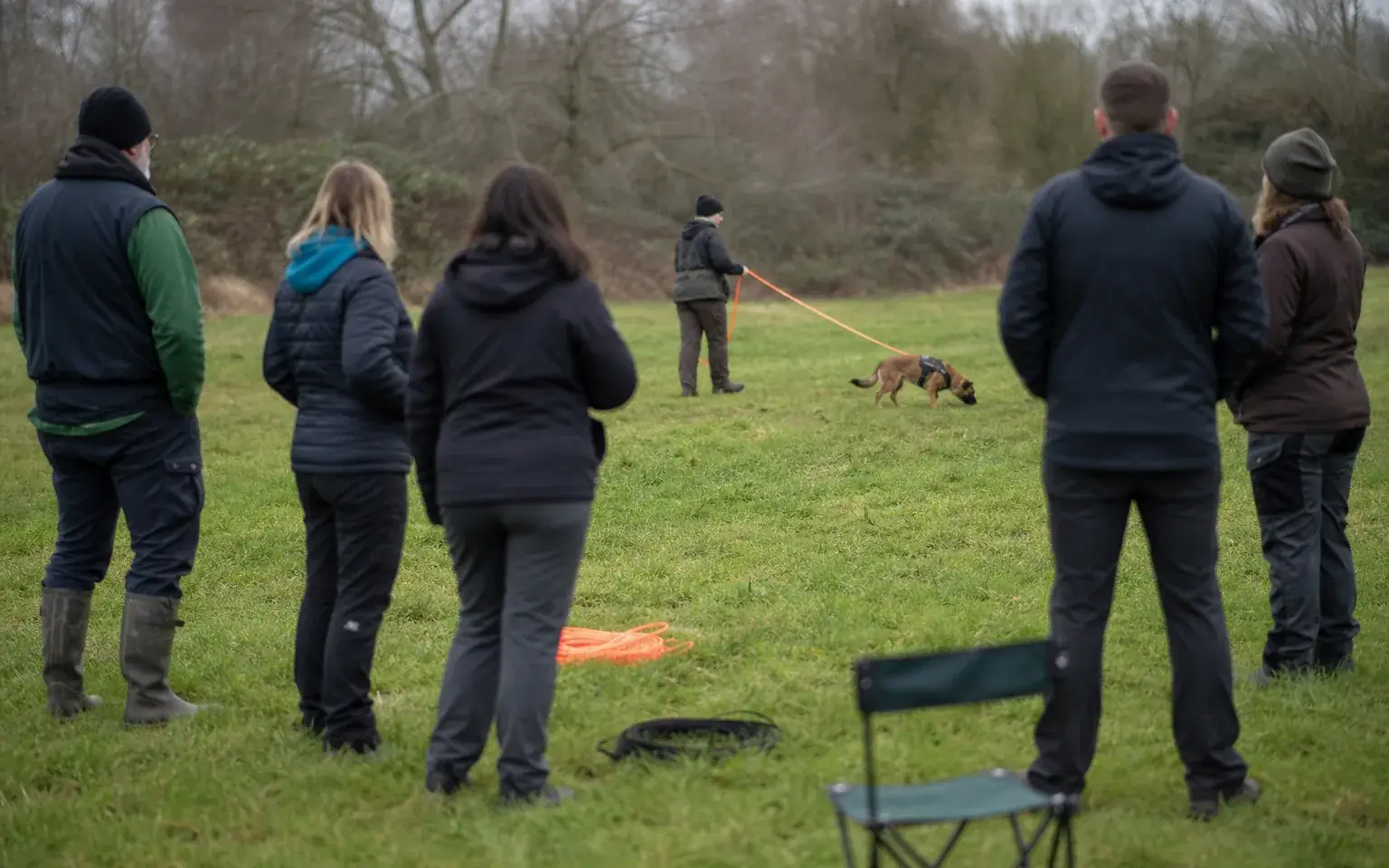
The best test, however, remains a first real mantrailing session with an instructor who can assess your dog in context. Contact us for an assessment.
Frequently asked questions
Frequently asked questions
01
What is the best dog breed for search and rescue?
There is no single "best" breed - individual temperament matters. The most common are the Malinois, German Shepherd, Border Collie, Labrador and Golden Retriever, and for mantrailing, the Bloodhound. A good dog has strong motivation, balanced nerves and a willingness to cooperate, regardless of breed.
02
Can a mixed-breed dog be a search and rescue dog?
Yes. A mixed-breed dog with the right temperament - motivated, sociable, balanced and resilient - can excel just as well as a pedigree dog. What matters is what the dog can do, not its papers. Many rescue dogs worldwide are mixed-breed or adopted dogs.
03
What disqualifies a dog for rescue work?
Extreme fear, reactivity or aggression towards people and dogs, a total lack of interest in play or food, and serious health problems. A dog that cannot cope with new environments, noise or being touched by strangers is very hard to train.
04
At what age can I start training a rescue dog?
The scent foundation through mantrailing can be introduced from 8-10 weeks, with short, playful sessions. There is no need to wait for maturity. Healthy adult or senior dogs can start at any age, however - it is never too late for the foundation.
Think your dog is suited?
The best test is a first mantrailing session. Contact us for an assessment.