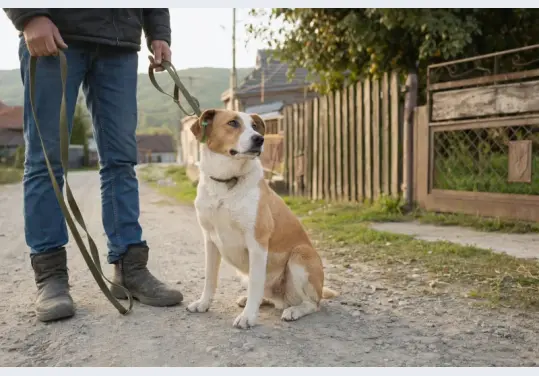
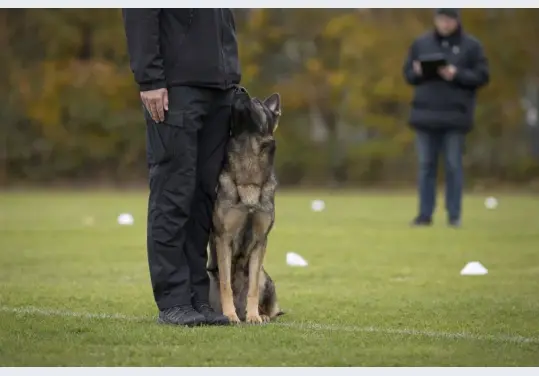
A research effort carried out in just a few days by the volunteers of the "Drumeții Montane" Association, through the Mantrailing Romania project, led to the identification of over 1,400 Search & Rescue and Mantrailing organisations from 29 countries. The result represents the first step towards one of the most extensive public databases dedicated to the international search and rescue community.
Behind every search operation for a missing person there are hundreds of hours of training, dedicated volunteers, instructors, coordinators, and dogs trained to do what technology still cannot fully do: track the unique scent of a person and lead the response teams along the correct trail.
Starting from the desire to better understand how this community is organised worldwide, the volunteers of the "Drumeții Montane" Association, through the Mantrailing Romania project, began documenting publicly declared Search & Rescue (SAR), K9 Search, Mantrailing, and volunteer rescue organisations.
After just a few days of research, the results exceeded expectations: 1,406 organisations identified in 29 countries. The information was collected exclusively from public sources: official websites, volunteer organisations, rescue services, dog clubs, specialised associations, and public pages of SAR teams.
This project is not just a list of organisations. It lays the foundation for a global map of the Search & Rescue community and can become a valuable tool for international collaborations, exchange of experience, and the development of volunteering in the field of searching for missing persons.
Top 10 countries by number of identified organisations
1. Germany - 464
2. Switzerland - 290
3. United States - 116
4. United Kingdom - 114
5. Netherlands - 79
6. Austria - 78
7. France - 52
8. Italy - 30
9. Australia - 21
10. Canada - 21
The high number of organisations in these countries shows that volunteering, continuous training, and collaboration between authorities and civil society are essential elements for a real response capacity in cases of missing persons.
Why are Search & Rescue organisations so important?
Every year, hundreds of thousands of people are reported missing around the world. In most cases they are found alive, but response time is one of the most important factors influencing the outcome of a search operation.
At the European level, there is not yet a single database for all missing persons. Estimates cited in the specialised literature indicate between 300,000 and 600,000 people reported missing annually in Europe, a significant proportion of whom are minors. The lack of a common methodology makes direct comparison between countries difficult.
Relevant statistics on missing persons
Europe: Estimates between 300,000 and 600,000 people reported missing annually. There is not yet a single, fully comparable European database.
United States: 498,038 entries reported in NCIC in 2025; 88,093 active cases as of December 31, 2025. Official FBI / NCIC data.
Germany: Approximately 108,900 children and adolescents reported missing in 2025; nearly 98% return safely. Data publicly communicated by the Bundeskriminalamt (BKA).
France: 38,477 reports regarding missing minors in 2024. Report by 116 000 Enfants Disparus / Droit d'Enfance.
United Kingdom: The Missing People organisation states that a person is reported missing every 90 seconds. Public indicator used to describe the scale of the phenomenon in the UK.
Australia: Approximately 50,000 missing person reports annually. Statistic mentioned by ICMEC, referring to Australian authorities.
Canada: 34,189 reports regarding missing children in 2025. Statistic aggregated by ICMEC.
These figures must be read carefully: each country uses its own definitions, age categories, and reporting methods. Even so, the message is clear: missing person cases are not isolated events, but a constant reality for which communities must be prepared.
A brief history of Search & Rescue
Search and rescue of people in distress have always existed, but modern forms of Search & Rescue developed especially in mountain and maritime areas and in communities exposed to natural risks. In the Alps, the need to rescue travelers, climbers, and locals caught by extreme weather led to the emergence of organised mountain rescue structures.
A historic symbol of alpine rescue is the dog Barry, the famous St. Bernard from the Great St. Bernard Pass, active in the early 19th century and credited with rescuing more than 40 people. Although many stories about Barry have become legend, his role remains important in the history of rescue dogs and in the public image of canine teams.
After World War II, international collaboration in mountain rescue developed rapidly. In 1948, mountain rescue pioneers from several countries met in the Wilden Kaiser area, and this collaboration laid the foundation for the International Commission for Alpine Rescue (ICAR), officially founded in 1955. Today, modern rescue combines volunteering, technical training, communications, GPS, drones, helicopters, canine teams, and inter-institutional coordination.
A brief history of Mantrailing
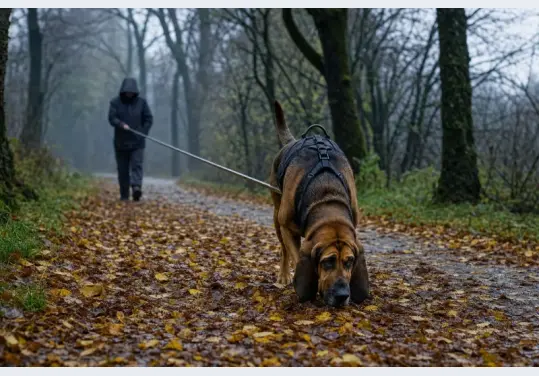
Mantrailing is based on the natural ability of dogs to follow the scent left by a person. Historically, scent hound-type dogs, especially the Bloodhound, were used for tracking people in policing, investigation, and search contexts. In the 19th century, the use of the Bloodhound for tracking human scent was already well known in certain law enforcement contexts.
In its modern form, mantrailing is a structured discipline: the dog receives a scent sample of the person being searched for, starts from the last known point, and works together with the handler to follow the correct direction of the scent. Unlike simply following footprints, mantrailing seeks the individual scent of the person, which makes it particularly valuable in searching for missing persons in urban, rural, or forested environments.
Today, mantrailing teams are used by volunteer organisations, police structures, and SAR teams in many countries. Training is continuous: dogs work on fresh and old trails, in different weather conditions, in crowded areas, forests, cities, agricultural land, and environments contaminated with many scents.
How a Mantrailing team works
A mantrailing team is usually made up of a dog, a handler, and one or more support members. In a real mission, the team does not work in isolation, but as part of an operation coordinated by the authorities or the search command.
1. Receiving the request and assessing the risk: the age of the missing person, medical condition, context of the disappearance, and the time and place of the last contact are established.
2. Establishing the last known point (LKP): the team tries to identify the location from which the dog can start working with the greatest chance of success.
3. Collecting the scent sample: a personal item of the missing person is used, ideally as uncontaminated as possible by other people.
4. Starting on the trail: the dog smells the sample, then begins to search for the direction in which the person's scent continues.
5. Handler-dog work: the handler reads the changes in the dog's behaviour, manages the long leash, and communicates observations to the team.
6. Documenting the route: the route is recorded via GPS, and the information is transmitted to the operation coordinator.
7. Locating the person or indicating a useful direction: even when the person is not found directly, the team can confirm or rule out important areas.
8. Handing over the information: the results are integrated with data from other teams, the police, volunteers, drones, or other SAR resources.
In a good team, the dog is not the "instrument", and the handler is not just the person holding the leash. They form a working unit. The dog brings the olfactory capacity, and the handler brings the decision-making, safety, communication, and integration into the operation.
Mantrailing vs Air Scent vs Tracking
What the dog is searching for
Mantrailing: The dog follows the unique scent of a specific person.
Air Scent: The dog searches for any human scent present in the search area, without following a specific person.
Tracking: The dog follows the physical traces left on the ground, such as footprints and disturbances of the terrain.
Requires a scent sample
Mantrailing: Yes. In most cases, a scent sample of the missing person is essential.
Air Scent: No. The dog searches for the presence of human scent without needing a reference sample.
Tracking: Usually not, although this can vary depending on the training method and the procedures used.
Way of working
Mantrailing: The dog usually works on a long leash, together with the handler, following the individual scent of the person being searched for.
Air Scent: The dog generally works free or semi-free, quickly covering large areas and detecting human scent carried by air currents.
Tracking: The dog works on a leash, with attention focused on the ground and the physical traces left by the person being tracked.
Ideal use
Mantrailing: It is recommended for searching for a known person, starting from the last known point (LKP), in urban, rural, or forested environments.
Air Scent: It is ideal for searching large areas when the position or direction of movement of the person is not known.
Tracking: It is most effective on fresh trails, on favorable terrain, and in situations where there are clear physical clues on the ground
Main advantage
Mantrailing: It can differentiate the scent of the person being searched for from the scents of other people in the area.
Air Scent: It allows the rapid checking of very large areas in a short time.
Tracking: It offers very high precision when the trail conditions are favorable.
Limitations
Mantrailing: Results can be influenced by the quality of the scent sample, its contamination, and the age of the trail.
Air Scent: It does not always identify a specific person, but only detects the presence of human scent.
Tracking: It can be significantly affected by the type of terrain, heavy traffic, weather conditions, and hard surfaces.
The three methods are not mutually exclusive. In a real operation, they can be complementary. Mantrailing can indicate the probable direction of movement, Air Scent can check large areas, and Tracking can confirm terrain clues where they exist.
Why do Germany, Switzerland, and the United Kingdom rank so high?
The countries at the top of the ranking have a solid tradition of organised volunteering, technical training, and collaboration between authorities and civil society. Germany, for example, has a strong culture of volunteer organisations and specialised structures, and canine teams are frequently integrated into local and regional organisations. Switzerland has a historical tradition linked to alpine rescue, and the United Kingdom has active organisations in mountain rescue, coastal rescue, lowland rescue, and missing persons support.
This model shows that success does not depend solely on the existence of professional institutions, but also on the community's capacity to support trained, available, and well-coordinated teams.
Conclusions for the development of volunteering in Romania
Romania has very well-trained specialists within state institutions and existing response structures. However, the experience of the countries leading the ranking demonstrates that the development of a strong community of volunteers represents one of the most important factors in increasing response capacity.
Every canine team formed, every volunteer trained, and every newly developed organisation contributes to increasing the chances that a missing person will be found in time. Volunteering in Search & Rescue does not mean only participating in spectacular missions. It means repeated training, discipline, patience, collaboration, and adherence to clear procedures.
Through the Mantrailing Romania project, the "Drumeții Montane" Association aims to contribute to the development of this culture of training and volunteering. The objective is to form a responsible community, connected to international standards and capable of collaborating with organisations from the country and abroad.
The development of volunteering in the field of Search & Rescue is not only an investment in community safety, but also in solidarity among people.
Get involved
Whether you are passionate about dogs, outdoor activities, or simply want to contribute to community safety, volunteering with a Search & Rescue organisation can be one of the most valuable experiences.
Every training session, every hour of preparation, and every volunteer means an extra chance for a missing person to be found in time.
Learn more about the Mantrailing Romania project: https://mantrailing.ro
Sources
Note: Statistics on missing persons are not always directly comparable between countries, as each country may use different definitions, age categories, and reporting methods. The sources below were used for statistical and historical context.
• FBI - 2025 NCIC Missing Person and Unidentified Person Statistics: https://www.fbi.gov/file-repository/2025-ncic-missing-person-and-unidentified-person-statistics.pdf
• Bundeskriminalamt (BKA) - Spurlos verschwunden / Missing children and adolescents in Germany: https://www.bka.de/DE/Landingpages/SpurlosVerschwunden/SpurlosVerschwunden_node.html
• Droit d'Enfance / 116 000 Enfants Disparus - Rapport 2024 sur les disparitions de mineurs en France: https://www.droitdenfance.org/ressources/rapport-2024-sur-les-disparitions-de-mineurs-en-france/
• Missing People UK - public missing persons indicator: https://www.missingpeople.org.uk/
• National Crime Agency UK - Missing Persons Statistical Bulletins downloads: https://www.nationalcrimeagency.gov.uk/find-support/downloads
• ICMEC - Missing Children Statistics: https://www.icmec.org/missing-children-statistics/
• ENACT - Missing Persons Flash Report: https://enact-eu.net/wp-content/uploads/2025/03/ENACT-FLASH-REPORT-5-MISSING-PERSONS.pdf
• ICAR - International Mountain Rescue Day / history of alpine rescue cooperation: https://www.alpine-rescue.org/articles/1599--icar-international-mountain-rescue-day
• Natural History Museum of Bern - Barry, the legendary St. Bernard: https://www.nmbe.ch/en/exhibitions/barry
• National Association for Search and Rescue - Canine SAR: https://nasar.org/page/K9SAR
• SARDUS - History of Search and Rescue Dogs of the United States: https://sardogsus.org/history/
• American Kennel Club - Mantrailing for the Scent-Driven Dog: https://www.akc.org/expert-advice/sports/mantrailing-for-the-scent-driven-dog/
• Mantrailing Scent Dogs UK - History of Mantrailing: https://mantrailingscentdogs.co.uk/history-mantrailing/
Research carried out by the volunteers of the "Drumeții Montane" Association, through the Mantrailing Romania project (https://mantrailing.ro).