For many dog owners, the daily walk is considered the primary—and sometimes the only—way to meet their dog’s needs. Leash walking has become synonymous with “the dog is exercised.” In reality, while walks are necessary, they are far from sufficient for a dog’s physical, mental, and emotional well-being. Mantrailing represents a natural step beyond the traditional walk, offering dogs what is often missing: purpose, autonomy, and meaningful stimulation.
What Does a Leash Walk Really Provide?
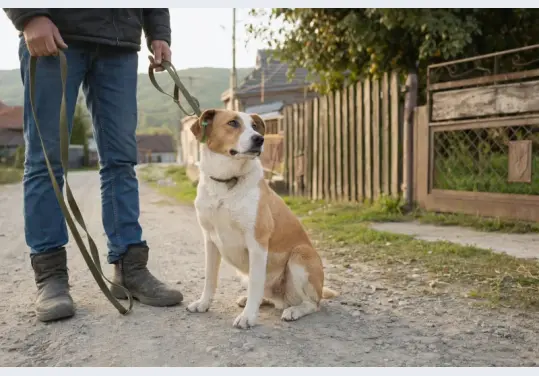
In most cases, leash walking is an activity controlled almost entirely by the human. The route, pace, duration, and interactions are decided by the handler. The dog is expected to walk “nicely,” ignore stimuli, not pull, and comply.
While leash walks are useful for:
- basic physical movement,
- environmental exposure,
- physiological needs,
- they are often:
- repetitive,
- predictable,
- mentally under-stimulating,
- frustrating for curious, sensitive, or reactive dogs.
For many dogs, the walk becomes a series of restrictions rather than a fulfilling experience.
Why Physical Exercise Alone Is Not Enough
A common misconception is that “if I walk my dog more, they will calm down.” In reality, physical fatigue without mental engagement often creates dogs with higher endurance, not better emotional balance. Dogs are highly cognitive animals, and the lack of mental challenges can lead to:
- frustration,
- hyperactivity,
- destructive behaviours,
- increased reactivity.
- A dog can walk for miles and still remain mentally under-stimulated.
What Is Missing from the Traditional Walk?
What is missing is the dog’s active role. During leash walks, the dog is a follower. It adapts, avoids corrections, and rarely makes decisions. Thinking is minimal.
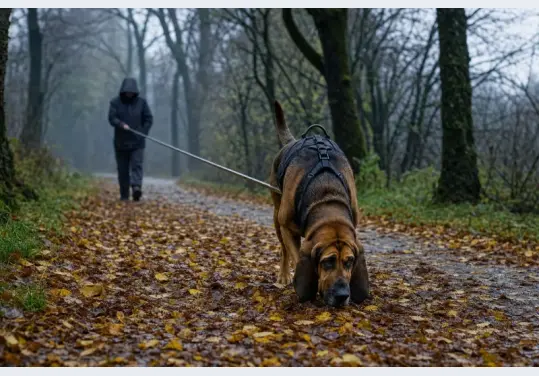
Also missing is the meaningful use of the dog’s primary sense: the nose. Although sniffing is sometimes allowed, it is often rushed or interrupted. The nose is treated as a distraction rather than a valuable resource.
Mantrailing: From Control to Collaboration
Mantrailing completely shifts the perspective. The dog is no longer guided—the dog leads. Instead of following a predefined route, the dog follows the unique scent of a specific person, engaging in a process that requires decision-making, adaptation, and focus.
Key differences compared to leash walking include:
- the dog has a clear purpose,
- the dog makes independent decisions,
- the handler provides support, not direction,
- the activity is varied and unpredictable.
- This shift has a profound impact on the dog’s emotional state.
- Why Nose Work Changes Everything
Intensive nose work activates areas of the brain associated with calmness, focus, and problem-solving. Dogs that practice mantrailing:
- are more emotionally balanced,
- recover more quickly from stressful stimuli,
- develop stronger self-confidence,
- improve their ability to self-regulate.
For anxious or reactive dogs, mantrailing offers a healthy alternative to confrontation and helps prevent emotional overload.
The Human–Dog Relationship: A Subtle but Essential Difference
In traditional walks, the relationship is often about management: “don’t pull,” “don’t react,” “keep moving.” In mantrailing, the relationship becomes a partnership.
The handler learns to:
- observe rather than correct,
- slow down,
- trust the dog.
- The dog learns that:
- it is being listened to,
- its decisions matter,
- it can explore the world safely.
This shift often carries over into everyday life, including regular walks.
Walks and Mantrailing Are Not Opposites
Mantrailing does not replace walks. Each serves a different purpose. Walks remain essential for routine and daily structure, while mantrailing complements what walks cannot provide: deep mental fulfillment and genuine purpose.
A dog that practices mantrailing:
- is calmer on walks,
- displays fewer explosive behaviours,
- is more present and connected.
Conclusion
Leash walking is a necessary minimum—not a sufficient maximum. Dogs need to think, decide, use their noses, and feel actively involved in their environment. Mantrailing meets these needs in a way that traditional walks simply cannot.
Moving from walks to mantrailing is not a radical shift, but a natural evolution—from control to collaboration, from energy expenditure to true balance.
For dogs, the difference is immediate. For humans, it is reflected in a deeper, more authentic relationship built trail by trail.