National or international animal transport
National or international transport moves the animal over varying distances and involves a vehicle, containers, stops, d...

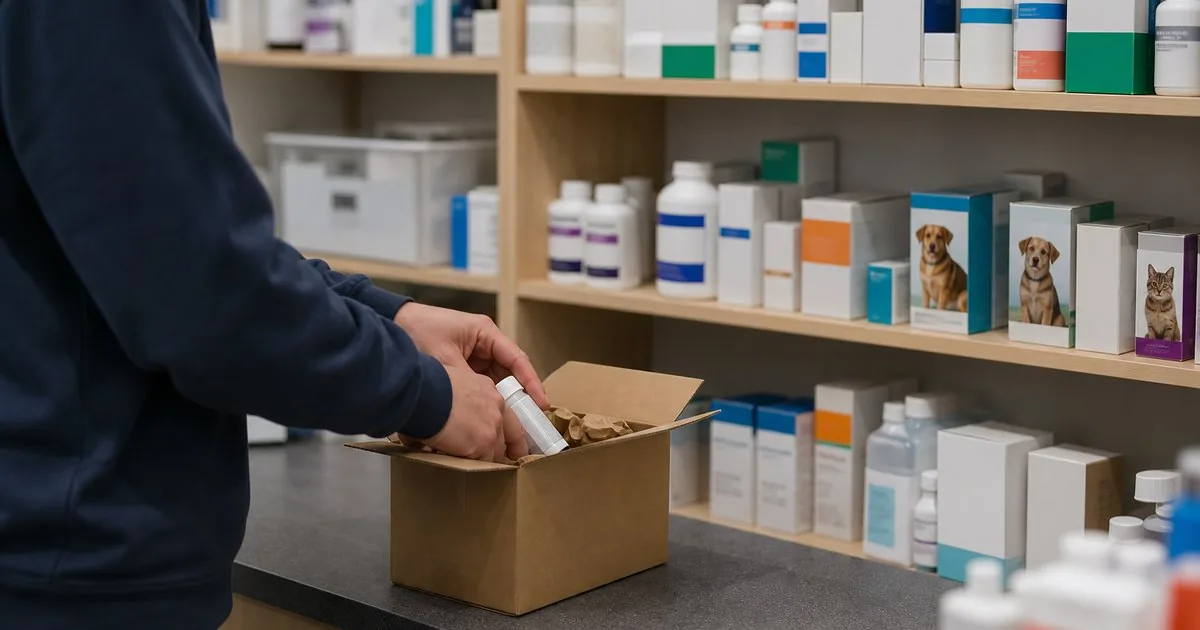
A veterinary pharmacy supplies medicines, care products and other items, and delivery can make them easier to obtain.
Access to veterinary products can be made easier through a pharmacy and delivery, especially for long-term treatments, recommended diets or people with reduced mobility. Convenience must not reduce the checks on the product, the prescription, the expiry date and the transport conditions.
Prescription medicines require a valid recommendation and are used only for the animal they were prescribed for. They are not kept “for next time" without agreement and are not given to another dog with similar symptoms. The weight, the illness, the interactions and the strength can all be different.
On delivery you check the name, the form, the strength, the quantity, the integrity of the packaging and the storage instructions. Products that need controlled temperature have to be transported in suitable conditions. If the packaging is damaged or the conditions look compromised, the product is not given until this has been clarified.
Supplements, care products and diets are not entirely without risk. The owner has to tell the vet about everything they are giving. With therapeutic diets, the change is made according to a plan, not simply because the product is available online.
Delivery can also cover logistical items: dressing materials, recommended solutions, food, protective items or consumables. It is important that the description of the service does not suggest that buying something replaces a consultation.
Among the situations where it can make sense are owners collecting prescribed products, animals on long-term treatment and situations where travelling is difficult.
Convenient delivery does not change the obligation to use the product correctly, and a medicine must not be substituted because the packaging or the name looks similar.
checking the prescription where one is needed; confirming the product, the strength and the quantity.
transport in the conditions required; handover and storage according to the instructions.
Signs such as reactions after a dose, refusing the product, vomiting or diarrhoea, and unusual changes that have to be reported to the vet can show how the animal is experiencing the situation.
A preparation sheet should cover the prescription and the patient's details, the address and the person authorised to take delivery, the storage conditions, and a list of the products already being given.
More useful criteria are traceability and expiry dates, intact packaging, a cold chain where one is needed, clear instructions, competences and responsibilities explained clearly, and medical data passed on correctly.
Training can help with cooperative dosing, but it does not justify repeatedly hiding the product if the animal is having an adverse reaction or refusing it unusually.
the pharmacy does not change the treatment without the vet; supplements and care products are not automatically risk-free. Among the risks to be discussed are delivery at the wrong temperature, confusing strengths, a double dose and the dog getting at the products.
A good decision about a veterinary pharmacy and product delivery does not start from the idea that the same format has to work for everyone.
How a service is organised responsibly, how to recognise quality, where the limits are and what to ask before you pay - explained once, for all services.
This page explains the service, it does not sell it. Some of these we run ourselves, others happen at a veterinary practice, a grooming salon, or with people we work alongside.
Frequently asked questions
It can make sense above all for owners collecting prescribed products, animals on long-term treatment and situations where travelling is difficult.
Useful information includes the prescription and the patient's details, the address and the person authorised to take delivery, the storage conditions, and a list of the products already being given.
What is relevant is reactions after a dose, refusing the product, vomiting or diarrhoea, unusual changes that have to be reported to the vet, the general condition and level of consciousness, and the breathing.
the pharmacy does not change the treatment without the vet; supplements and care products are not automatically risk-free.
Training can help with cooperative dosing, but it does not justify repeatedly hiding the product if the animal is having an adverse reaction or refusing it unusually.
Veterinary and logistics
National or international transport moves the animal over varying distances and involves a vehicle, containers, stops, d...
Documentary help organises the steps, the deadlines and the checks needed to travel with a dog, without substituting for...
A partner veterinary practice can make referral, the exchange of information and continuity between training, care and m...
Vaccination and parasite control are preventive medical measures set according to age, state of health, lifestyle and ri...
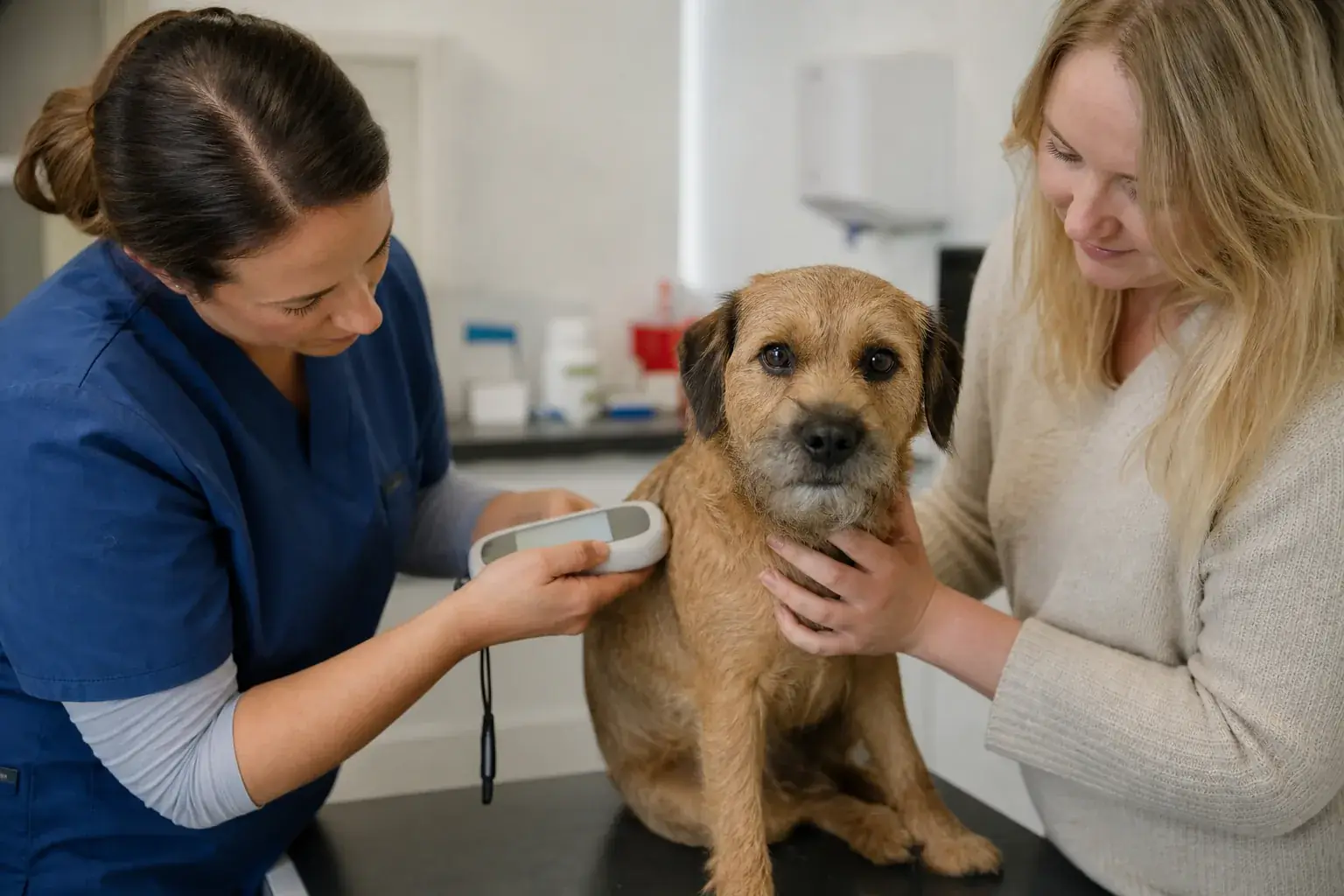
A microchip provides an electronic identifier, and registration links that number to the owner's details in the relevant...
Collecting blood, urine, faeces or other samples provides the material for the investigations the vet has ordered.
Write to us about what is actually happening with your dog. We will tell you which kind of service would help - and, if that is the case, that you need none of them.