Help with travel documents
Documentary help organises the steps, the deadlines and the checks needed to travel with a dog, without substituting for...

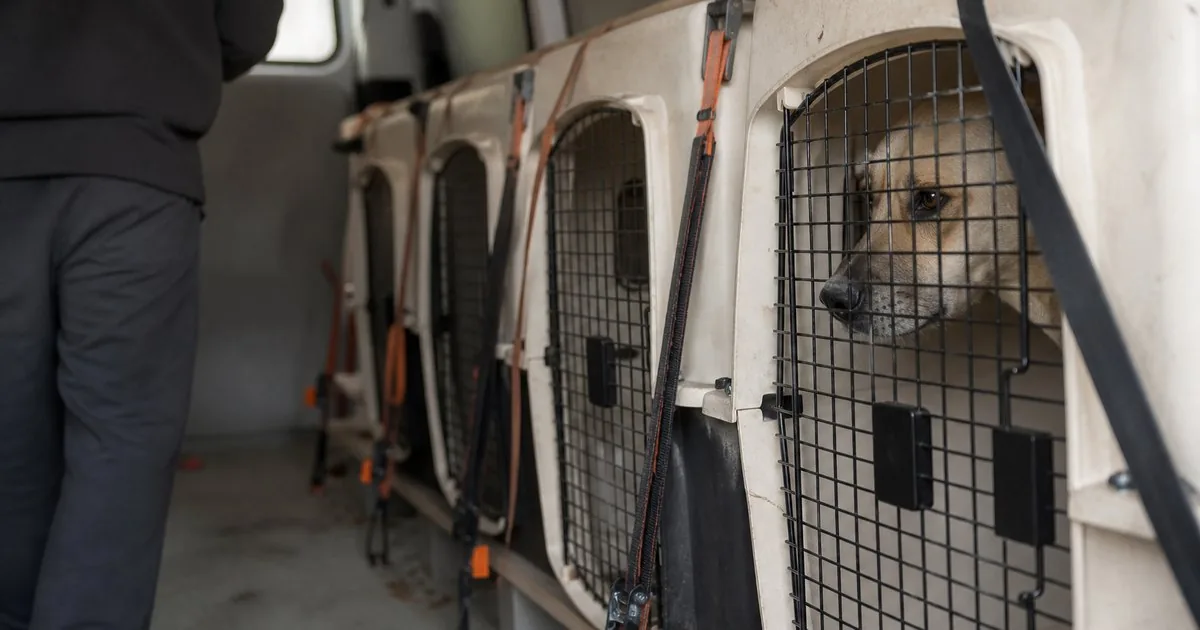
National or international transport moves the animal over varying distances and involves a vehicle, containers, stops, documents and a handover at the destination.
Transport within the country may be needed to the surgery, a boarding kennel, the salon, a new family, events or another town. The planning covers the duration, the breaks, the temperature, the restraint system, water, the documents and the handover. A dog must not be transported loose in a vehicle where it can distract the driver or get out when a door opens.
Before collection, the animal's condition and any medical restrictions are checked. Dogs that are ill, recently operated on, very young or with breathing difficulties may need a different type of vehicle, someone to travel with them, or a medical recommendation. A transporter does not decide that an animal is “fit" from its appearance alone.
The crate has to be the right size and secured. The dog is got used to it beforehand, where there is time. On longer journeys, safe stops are planned, without letting the animal out in open areas. A leash is attached before the crate or the car door is opened.
If several animals are being transported, compatibility and separation are essential. It is not assumed that two dogs can share the space just because they are sociable. Food and valued objects can cause conflict.
The handover is made to an identified person, and the documents and instructions are passed on. Photographs and updates can be reassuring, but they do not replace the safety protocol.
It can be considered above all for relocations, journeys to family or to specialist services, and trips organised through a transporter.
A long journey cannot be judged by its estimated duration alone. The regulations, the weather, the routes, the breaks and the conditions at the border can all change.
checking the current requirements and the route; assessing fitness to travel.
preparing the crate, the documents and the stops; monitoring, handover and confirmation.
Signs such as travel sickness, dehydration, panic in the carrier and difficulty breathing or recovering can show how the animal is experiencing the situation.
The owner's preparation includes identification and valid documents, food, water and prescribed medication, the details of the sender and the recipient, and instructions about behaviour and handling.
More useful criteria are a suitable, ventilated vehicle, separation of the animals, an emergency plan and contacts, transparency about the route and the stops, competences and responsibilities explained clearly, and medical data passed on correctly.
Getting used to the carrier and the car can reduce stress, but the behavioural preparation has to start in good time and does not replace medical fitness to travel.
the requirements are checked against official sources for the exact route; the transporter cannot guarantee what the authorities will decide. Among the risks to be discussed are overheating, escape, delays at the border, incomplete documents and the spread of disease.
How a service is organised responsibly, how to recognise quality, where the limits are and what to ask before you pay - explained once, for all services.
This page explains the service, it does not sell it. Some of these we run ourselves, others happen at a veterinary practice, a grooming salon, or with people we work alongside.
Frequently asked questions
It can make sense above all for relocations, journeys to family or to specialist services, and trips organised through a transporter.
Useful information includes identification and valid documents, food, water and prescribed medication, the details of the sender and the recipient, and instructions about behaviour and handling.
What is relevant is travel sickness, dehydration, panic in the carrier, difficulty breathing or recovering, the general condition and level of consciousness, and the breathing.
the requirements are checked against official sources for the exact route; the transporter cannot guarantee what the authorities will decide.
Getting used to the carrier and the car can reduce stress, but the behavioural preparation has to start in good time and does not replace medical fitness to travel.
Veterinary and logistics
Documentary help organises the steps, the deadlines and the checks needed to travel with a dog, without substituting for...
A partner veterinary practice can make referral, the exchange of information and continuity between training, care and m...
Vaccination and parasite control are preventive medical measures set according to age, state of health, lifestyle and ri...
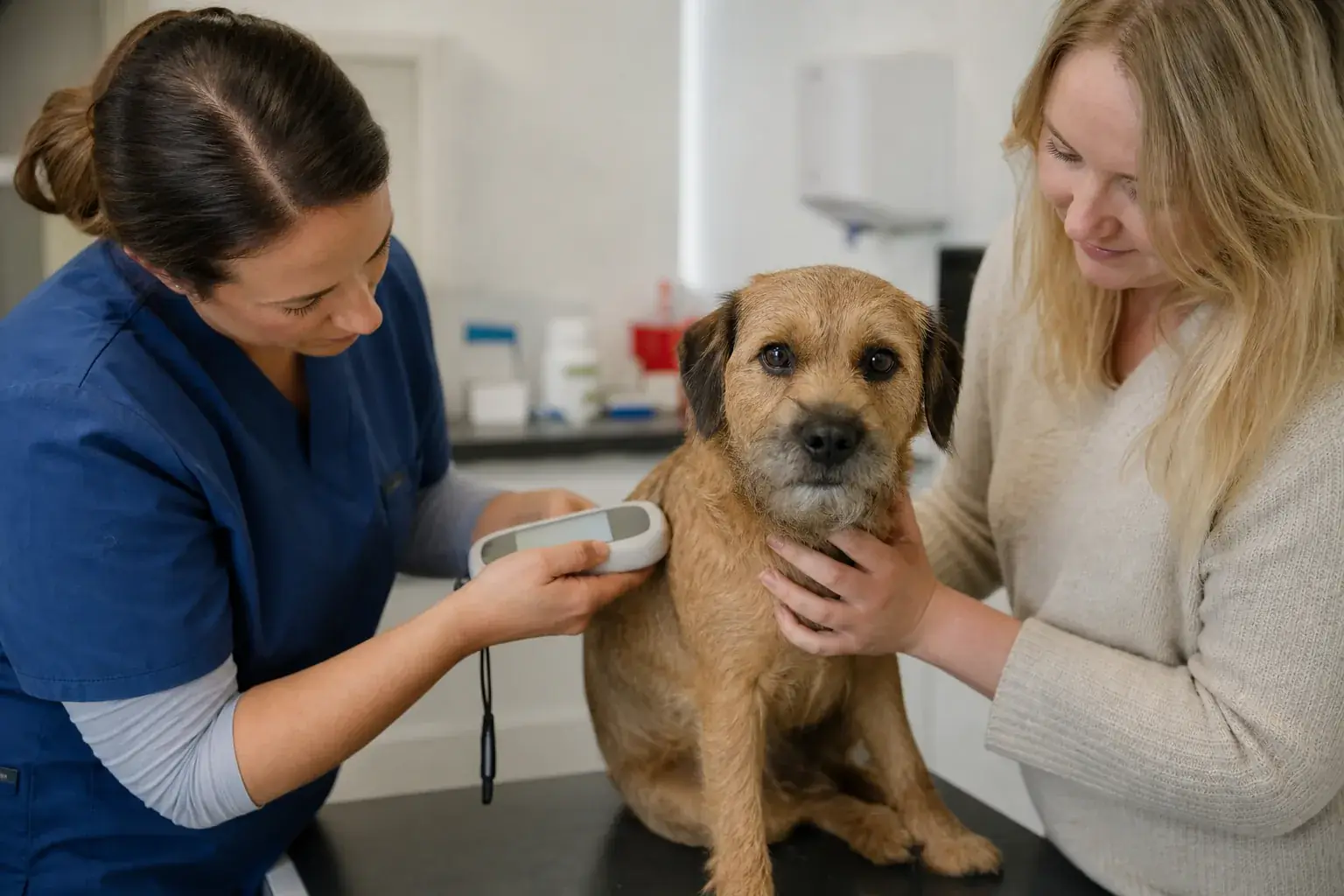
A microchip provides an electronic identifier, and registration links that number to the owner's details in the relevant...
Collecting blood, urine, faeces or other samples provides the material for the investigations the vet has ordered.
A veterinary ambulance provides organised transport for ill or injured animals and may have equipment and staff suited t...
Write to us about what is actually happening with your dog. We will tell you which kind of service would help - and, if that is the case, that you need none of them.