Sample collection for tests
Collecting blood, urine, faeces or other samples provides the material for the investigations the vet has ordered.

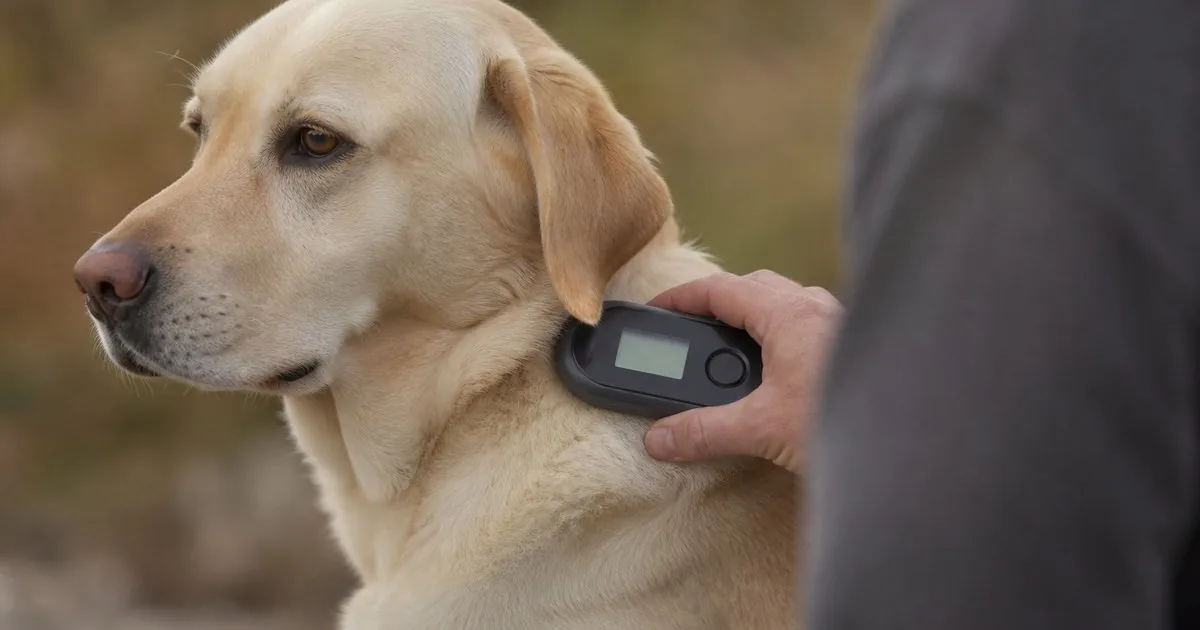
A microchip provides an electronic identifier, and registration links that number to the owner's details in the relevant register.
A microchip is an identification device, not a GPS system. It holds a unique code that can be read with a scanner. How useful it is depends on the code being registered correctly and on the owner's details being kept up to date. A microchip that is not registered, or that is linked to old details, can delay reuniting the dog with its family.
In Romania, dogs with owners are identified and registered in the national register kept for dogs. The procedure is carried out by an authorised vet, who issues or completes the documents and records the relevant events. The owner has to provide correct details and report any change of owner, address, contact details, loss or death according to the procedures in force.
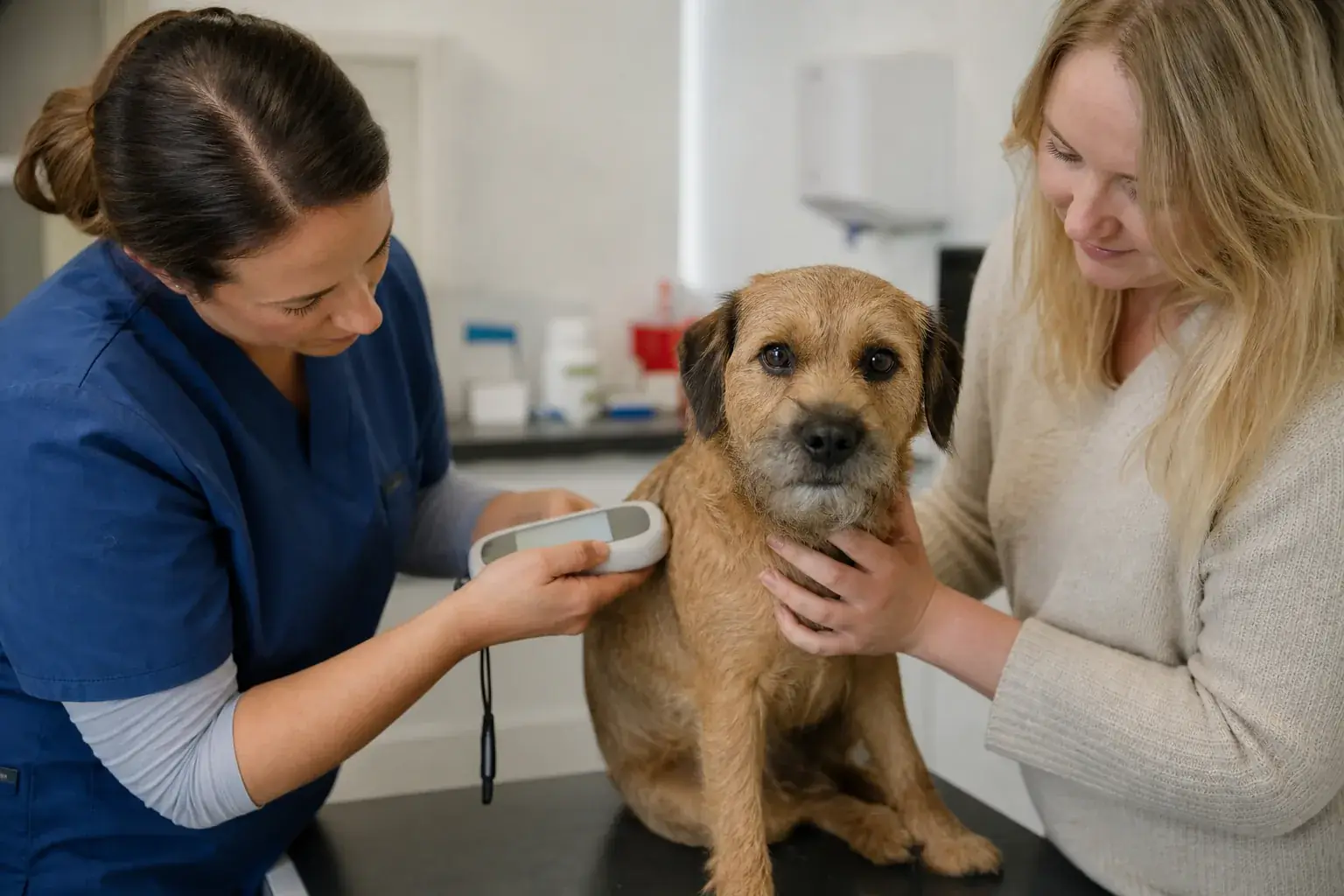
At every significant consultation, or before travelling, the microchip can be scanned to check the code and its position. The code on the scanner has to match the health record, the passport and the register. Errors are easier to correct before departure than at the border.
Implanting is a veterinary procedure. The dog has to be handled safely, and the owner informed about the procedure. If there is fear of handling, cooperative preparation can be done beforehand, but the procedure is not postponed without good reason when identification is compulsory.
A tag with a phone number is still useful even if the animal is microchipped. Someone who finds the dog can contact the family immediately, without first having to get to a scanner. The two forms of identification complement each other.
Among the situations where it can make sense are dogs that have to be identified under the applicable requirements, animals that travel, and families who want to improve the chances of getting the dog back if it is lost.
A microchip is not a GPS device and does not show where the dog is. It can be read with a scanner and is useful only if the details linked to it are correct.
checking the identity and the documents; implanting by the authorised professional.
reading the number and registering it; updating the details when things change.
Signs such as brief discomfort during handling, local sensitivity that has to be watched, stress on the examination table, and avoidance after an unpleasant experience can show how the animal is experiencing the situation.
Beforehand you need information and resources such as correct contact details, the dog's documents, information about the owner, and a periodic check of the number and the register.
More useful criteria are traceability, confirmation that the chip has been read, data protection, instructions for changing owner or address, competences and responsibilities explained clearly, and medical data passed on correctly.
Getting used to being handled and staying calm at the consultation can help, but identification remains a procedure separate from training.
the procedure and the registration are done according to the applicable framework; identification does not replace the leash, the tag and preventing escape. Among the risks to be discussed are incorrect or out-of-date details, confusing the chip number with location tracking, and incomplete documents.
A good decision about microchipping and registration does not start from the idea that the same format has to work for everyone.
How a service is organised responsibly, how to recognise quality, where the limits are and what to ask before you pay - explained once, for all services.
This page explains the service, it does not sell it. Some of these we run ourselves, others happen at a veterinary practice, a grooming salon, or with people we work alongside.
Frequently asked questions
It can make sense above all for dogs that have to be identified under the applicable requirements, animals that travel, and families who want to improve the chances of getting the dog back if it is lost.
Useful information includes correct contact details, the dog's documents, information about the owner, and a periodic check of the number and the register.
What is relevant is brief discomfort during handling, local sensitivity that has to be watched, stress on the examination table, avoidance after an unpleasant experience, the general condition and level of consciousness, and the breathing.
the procedure and the registration are done according to the applicable framework; identification does not replace the leash, the tag and preventing escape.
Getting used to being handled and staying calm at the consultation can help, but identification remains a procedure separate from training.
Veterinary and logistics
Collecting blood, urine, faeces or other samples provides the material for the investigations the vet has ordered.
A veterinary ambulance provides organised transport for ill or injured animals and may have equipment and staff suited t...
A veterinary pharmacy supplies medicines, care products and other items, and delivery can make them easier to obtain.
National or international transport moves the animal over varying distances and involves a vehicle, containers, stops, d...
Documentary help organises the steps, the deadlines and the checks needed to travel with a dog, without substituting for...
A partner veterinary practice can make referral, the exchange of information and continuity between training, care and m...
Write to us about what is actually happening with your dog. We will tell you which kind of service would help - and, if that is the case, that you need none of them.