Veterinary ambulance
A veterinary ambulance gets sick or injured animals to the clinic in an organised way. Some carry equipment and staff se...

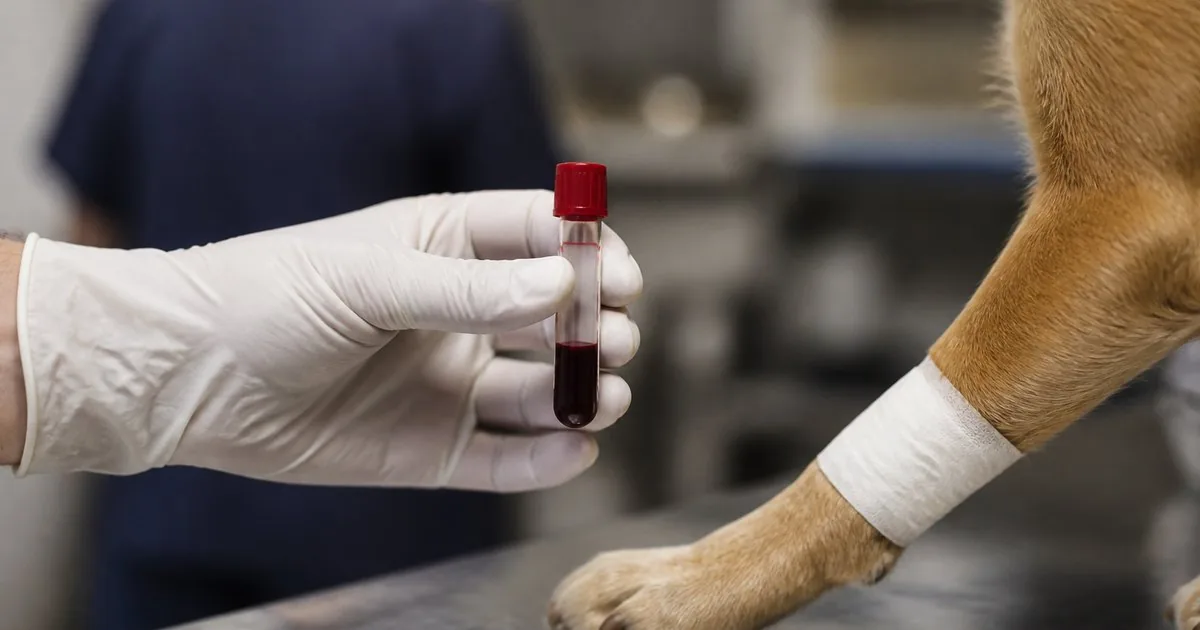
Your vet decides which tests your dog needs. For those, blood, urine, faeces or other samples get collected.
Tests get ordered for different reasons: to diagnose something, to keep track of a condition or a treatment, as prevention, before a procedure or to issue certain documents. Authorised staff take the sample, using the right technique. It has to be labelled correctly and stored and transported under the right conditions. Leave a sample sitting on a warm desk for two hours and even the best lab can't get a reliable result out of it.
Before the sample is taken, you should get clear instructions. You'll be told whether the dog needs to fast, whether their usual treatment is given or held back, what time to come in, and how to collect a urine or faeces sample. Don't guess, and don't copy what someone else was told for their dog. Each test has its own rules.
A nervous dog can be prepared ahead of time. Practise standing still, letting you handle their legs and wearing a muzzle they've learned to link with good things, and do a few short visits to the clinic where they just go in and come out again. On the day, a quieter room and fewer people can be arranged. Holding a dog safely doesn't mean pinning them down. When the stress or the risk is high, the vet decides whether a different approach is needed.
Home collection can make life easier for some dogs. It doesn't work for every test, though, and it's not for emergencies. Ask up front which samples can be taken at home, with what equipment, how they get to the lab and how long before they're processed.
The vet reads the results alongside the clinical exam and the dog's history. A single value outside the range doesn't turn into a diagnosis because you looked it up online. Your vet should explain what happens next and, if needed, when to repeat the test.
Sample collection mostly comes in for preventive check-ups, keeping track of a condition or a treatment, and looking into symptoms.
A sample read without context tells you very little. How the dog was prepared, the container, the timing and the transport can all change the result.
It all starts with the vet's reasons for the test and the prep instructions. The dog has to be identified correctly.
Then the sample is taken and labelled. It goes to the lab, and the vet interprets the result.
Watch how your dog copes. Fear while being held, pain or soreness, dizziness or weakness, and a defensive reaction all tell you they're finding it hard.
So you're not making it up as you go, stick to the fast if you've been asked to, and bring the list of medicines, a suitable container, the collection time and the dog's details.
Look at hygiene and labelling, and at how the sample is stored on its way to the lab. Staff should be competent and incidents reported. Everyone's skills and responsibilities should be explained clearly, and medical data passed on correctly.
Cooperative handling practice lowers stress and helps the dog hold the right position. When the procedure has to happen, it doesn't replace safe restraint.
Invasive collection and interpreting results are medical procedures, and the lab's instructions are followed to the letter. The risks to talk through are a contaminated sample, wrong labelling, stress or an accident while the dog is being held, and results read without a vet.
How a service is organised responsibly, how to recognise quality, where the limits are and what to ask before you pay - explained once, for all services.
This page explains the service, it does not sell it. Some of these we run ourselves, others happen at a veterinary practice, a grooming salon, or with people we work alongside.
Frequently asked questions
It matters most for preventive check-ups, keeping track of a condition or a treatment, and looking into symptoms. Which tests are needed is the vet's call.
Stick to the fast if it's required, and have the list of medicines, a suitable container, the collection time and the dog's details ready.
Watch for fear while being held, pain or soreness, dizziness or weakness, and defensive reactions. Check their general condition, alertness and breathing too.
Invasive collection and interpretation are medical procedures. The lab's instructions have to be followed.
Cooperative handling practice lowers stress and helps with positioning. It doesn't replace safe restraint when the procedure has to happen.
Veterinary and logistics
A veterinary ambulance gets sick or injured animals to the clinic in an organised way. Some carry equipment and staff se...
A veterinary pharmacy stocks medicines and care products, plus other things your dog needs. With delivery, they come to...
Moving an animal, within the country or across borders, takes more than a long drive. You need a suitable vehicle, crate...
Help with travel documents puts the steps and deadlines in order, along with the checks you need to travel with your dog...
When a vet practice works in partnership with your trainer, referrals happen faster, the right information reaches the r...
Vaccines and parasite treatments are preventive medicine. Your vet sets them based on the dog's age, health, lifestyle a...
Write to us about what is actually happening with your dog. We will tell you which kind of service would help - and, if that is the case, that you need none of them.