Partner veterinary practice
A partner veterinary practice can make referral, the exchange of information and continuity between training, care and m...


Documentary help organises the steps, the deadlines and the checks needed to travel with a dog, without substituting for the issuing authority or the vet.
A document assistance service can organise the list of requirements, the appointments and the checks, but it does not “issue" medical documents in place of the vet or the authority. The owner remains responsible for providing correct information and for confirming the final rules.
The process can start with the destination, the route, the date, the means of transport, the purpose of the trip, the number of animals and the person accompanying them. Then the microchip, the vaccination, the passport or certificate, the compulsory treatments, the tests, the declarations and any permits are checked.
The owner's name, the microchip code, the vaccination dates, the signatures and the stamps have to be legible and consistent. A single wrong digit can cause problems. Documents are not filled in retroactively and are not amended informally.
The assistance has to use official sources and note the date of the check. Forums and other travellers' experiences can offer clues, but they are not enough. The rules can change between booking and departure, so a re-check close to the date is useful.
For the return trip, the re-entry conditions are checked too, not only the exit. Some tests or registrations have to be done before the animal leaves its country of origin, to avoid delays on the way back.
It is most useful in contexts such as international travel, routes with transit and families who need a chronological list and a check of the file.
A passport or a certificate used on a previous trip is not automatically enough for every destination, date or type of transport.
establishing the destination and the transit; consulting official sources and the carrier.
booking the medical procedures in good time; a final check of the originals and the copies.
Signs such as the fact that the dog's stress is handled separately from the paperwork, while its fitness to travel, its reaction to the carrier and its medical condition still have to be discussed, can show how the animal is experiencing the situation.
Beforehand you need information and resources such as the microchip number, the medical documents, the details of the owner and the recipient, and the booking and the carrier's rules.
More useful criteria are official sources quoted and dated, a personalised checklist, uncertainties flagged rather than approval promised, competences and responsibilities explained clearly, and medical data passed on correctly.
Training for transport has to be worked on in parallel, because a correct file does not by itself reduce panic or difficulty with handling.
it does not issue documents and does not decide on admission; the rules have to be re-checked close to departure. Among the risks to be discussed are a missed deadline, a document filled in wrongly, a microchip mismatch and a transit requirement overlooked.
How a service is organised responsibly, how to recognise quality, where the limits are and what to ask before you pay - explained once, for all services.
This page explains the service, it does not sell it. Some of these we run ourselves, others happen at a veterinary practice, a grooming salon, or with people we work alongside.
Frequently asked questions
It can make sense above all for international travel, routes with transit and families who need a chronological list and a check of the file.
Useful information includes the microchip number, the medical documents, the details of the owner and the recipient, and the booking and the carrier's rules.
What is relevant is that the dog's stress is handled separately from the paperwork, while its fitness to travel, its reaction to the carrier and its medical condition have to be discussed, along with its general condition, its level of consciousness and its breathing.
it does not issue documents and does not decide on admission; the rules have to be re-checked close to departure.
Training for transport has to be worked on in parallel, because a correct file does not by itself reduce panic or difficulty with handling.
Veterinary and logistics
A partner veterinary practice can make referral, the exchange of information and continuity between training, care and m...
Vaccination and parasite control are preventive medical measures set according to age, state of health, lifestyle and ri...
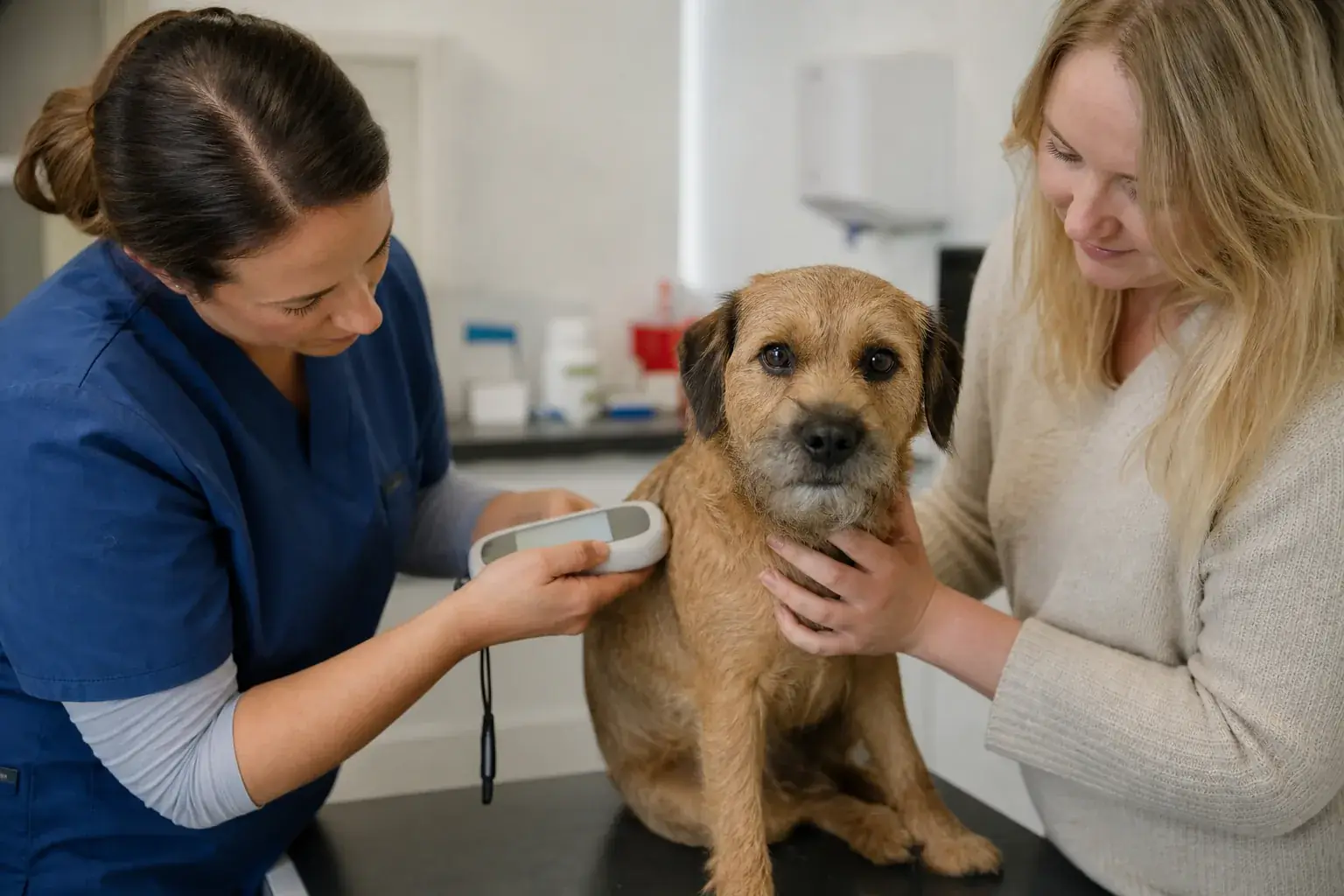
A microchip provides an electronic identifier, and registration links that number to the owner's details in the relevant...
Collecting blood, urine, faeces or other samples provides the material for the investigations the vet has ordered.
A veterinary ambulance provides organised transport for ill or injured animals and may have equipment and staff suited t...
A veterinary pharmacy supplies medicines, care products and other items, and delivery can make them easier to obtain.
Write to us about what is actually happening with your dog. We will tell you which kind of service would help - and, if that is the case, that you need none of them.