Preparing for exams, competitions and dog sports
Sports preparation builds the exercises according to a set of rules and develops precision, endurance, emotional control...

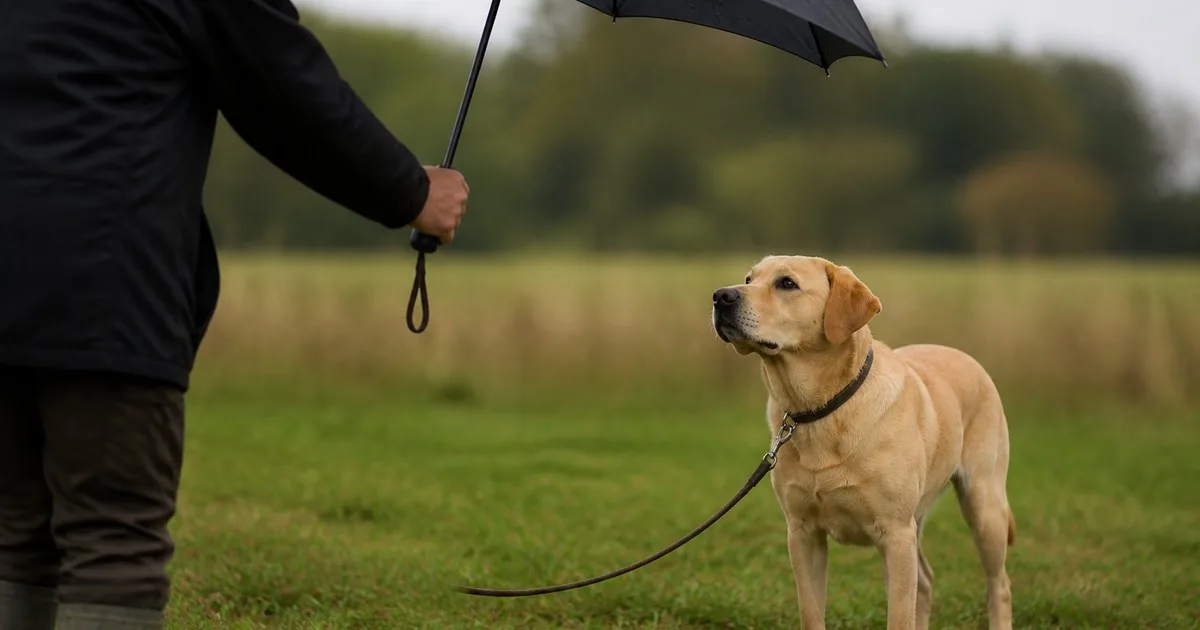
Temperament testing observes a dog's reactions in standardised or controlled situations, in order to gather information about its behaviour at that moment.
Temperament testing tries to observe tendencies in how a dog responds in standardised situations: exploring, recovering after a surprise, orientation towards people, interest in food or play, tolerance of certain interactions and the reaction to the environment. The results have to be interpreted with caution. A single test does not describe the dog completely and does not predict future behaviour with any certainty.
The dog's state that day, tiredness, pain, the environment, the person testing and earlier experiences all influence the response. A dog that has shut down can look “calm" even though it is very frightened. A dog that is very active in a new space is not automatically dominant or unsuitable.
Testing can be useful for steering a programme, for selecting dogs for certain activities, or for identifying aspects that need further observation. It must not be used to justify permanent labels. Good data comes from several sources: the history, observation in different contexts, a medical assessment and how things develop over time.
Among the situations where it can make sense are assessments for adoption or for activities, selecting suitable working contexts, and understanding the response to people, the environment and handling.
A test does not describe the whole personality and cannot predict with certainty how the dog will behave in every environment or stage of life.
defining the purpose of the test; checking the health and the history.
ethical and reproducible exposures; interpretation together with the limits of the result.
Signs such as how long the response takes, its intensity and the recovery, avoidance strategies and a change in the reaction on repetition can show how the animal is experiencing the situation.
To reduce improvisation, the specific purpose of the assessment, information about incidents, the medical condition and tiredness, and the conditions in which the test was carried out all have to be prepared.
More useful criteria are no deliberate provocation of a bite, contextual interpretation, a report that describes observations rather than absolute labels, observable and realistic goals, and explanations about the criterion, the reward and the progression.
The results can guide the training and management plan, but they have to be combined with the history and with observation in everyday life.
it is not a permanent certificate of safety; it has to be repeated or supplemented when the context changes. Among the risks to be discussed are a result influenced by the environment and by stress, false conclusions from a single reaction, and using the test to justify forcing the dog.
The results depend on what happens between sessions. Family members have to use the same cues and avoid situations where one of them rewards a behaviour and another punishes it. Perfection is not needed, just enough consistency for the dog to be able to anticipate the consequences and learn without constant conflict.
How a service is organised responsibly, how to recognise quality, where the limits are and what to ask before you pay - explained once, for all services.
This page explains the service, it does not sell it. Some of these we run ourselves, others happen at a veterinary practice, a grooming salon, or with people we work alongside.
Frequently asked questions
It can make sense above all for assessments for adoption or for activities, selecting suitable working contexts, and understanding the response to people, the environment and handling.
Useful information includes the specific purpose of the assessment, information about incidents, the medical condition and tiredness, and the conditions in which the test was carried out.
You watch for how long the response takes, its intensity and the recovery, avoidance strategies, a change in the reaction on repetition, the ability to take rewards, and whether the dog can orient towards the handler.
it is not a permanent certificate of safety; it has to be repeated or supplemented when the context changes.
The results can guide the training and management plan, but they have to be combined with the history and with observation in everyday life.
Training and education
Sports preparation builds the exercises according to a set of rules and develops precision, endurance, emotional control...
Training at home takes place in the environment where some of the everyday behaviours appear, and allows the family's re...
Board and Train means the dog lives temporarily in boarding accommodation and takes part in an agreed training programme...
One-to-one sessions give dedicated time to a single human-dog team and allow the exercises to be adjusted according to p...
A behaviour assessment gathers information about the dog's history, health, environment and reactions in order to form h...
Behavioural intervention aims to reduce the risk and to change the conditions that trigger or maintain a difficult behav...
Write to us about what is actually happening with your dog. We will tell you which kind of service would help - and, if that is the case, that you need none of them.