Correcting behaviour problems
Working on a behaviour problem has two aims: to bring the risk down, and to change the conditions that set off or keep u...

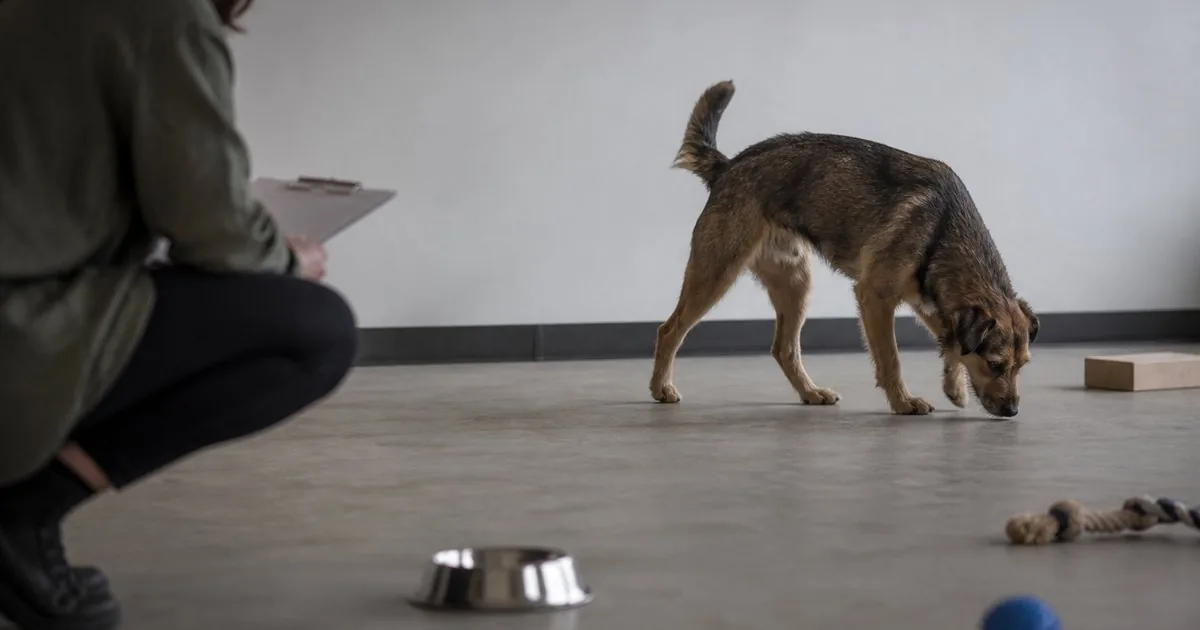
A behaviour assessment pulls together what's known about the dog's history and health, then about where it lives and how it reacts to the world around it. From that come a few working hypotheses and a first plan.
An assessment is a conversation plus an observation that follows a clear structure. The aim is to understand the behaviours, the situations they show up in and what keeps them going. A lot of owners walk in worried the dog will get labelled “good”, “bad”, “dominant” or “hopeless”. An assessment doesn't hand out labels like that. Behaviour shifts with the environment and the person in front of the dog. Distance matters too, as do the dog's physical state and what it has been through.
Before the meeting you may be asked for some basics: the dog's age, where it came from, its medical history. Then when the problem started and in which situations it comes up. You'll be asked how intense it is and how often it happens, plus what the family does before and after. Video shot safely is a big help. But nobody should ever set up an incident just to film it.
During the assessment, the instructor watches the dog's body language and how often it checks in with people. They see how it explores and how it reacts to its surroundings. They note how quickly it bounces back after a trigger, how much approach it tolerates and how it uses distance. Not every test suits every case. A dog with a bite history must not be pushed into repeating the behaviour just to confirm what you already know.
At the end you should get an explanation you can follow and goals set out in order of priority. You also leave with management recommendations. Where needed, you get referred to a vet or a specialist. The plan starts here, and it'll change along the way.
It's worth doing when a new behaviour appears, or when the dog shows fear, reactivity or aggression. Same when you're dealing with difficulties that general advice hasn't fixed.
An assessment doesn't judge the dog's character. Nor can it predict without fail everything the dog will do from now on.
It starts with a questionnaire and a detailed history. The dog gets observed without being needlessly provoked.
Next, the triggers and the factors that keep the behaviour going are identified. You finish with management recommendations and the next steps.
A few things say a lot about how the dog is experiencing the situation. Look at the distance at which reactions start and how long it takes to recover. Watch whether it goes stiff or backs off. Notice too if it behaves differently with different people.
So you're not making it up as you go, get together video shot safely and the medical history, including any treatments. Write down what happened in each incident and the context around it. Note the dog's daily schedule and what its home environment is like.
A serious assessment tells you how sure each conclusion is. Safety comes first. When there are signs of a medical issue, you're told to see a vet. The goals are realistic and you can see them. You get an explanation of what criteria the dog is asked to meet, how you reward it and how you move forward.
The assessment is the foundation of a training or management plan. The plan gets revised as you go, as new information comes in and you see how the dog responds.
An assessment doesn't guarantee there won't be incidents in future. Sometimes it takes several observations and working with a vet. Talk the risks through as well. The worst is provoking a bite as a test. Then there's simplistic labelling. And there's ignoring pain or neurological changes.
How a service is organised responsibly, how to recognise quality, where the limits are and what to ask before you pay - explained once, for all services.
This page explains the service, it does not sell it. Some of these we run ourselves, others happen at a veterinary practice, a grooming salon, or with people we work alongside.
Frequently asked questions
It makes most sense when a new behaviour appears, when the dog shows fear, reactivity or aggression, or when general advice hasn't solved the problem.
Get together video shot safely and the medical history, including treatments. Bring a description of the incidents with their context, plus the dog's daily schedule and environment.
Watch the distance at which reactions appear and the recovery time. See whether there's stiffness or avoidance and whether the behaviour changes from one person to another. Good signs are that the dog takes rewards and can turn towards its handler.
It doesn't guarantee there won't be incidents in future. It may need several observations and cooperation with a vet.
The assessment is the basis of a training or management plan. The plan gets revised as new information comes in and you see how the dog responds.
Training and education
Working on a behaviour problem has two aims: to bring the risk down, and to change the conditions that set off or keep u...
Controlled socialisation introduces the dog, step by step, to the things in its life: people and animals, surfaces, soun...
Preparing for adoption can involve the people and the dog alike. The point is to make the move to a new home realistic a...
Settling in means getting the dog used to the home and the household routine bit by bit. Then come its relationships wit...
Before the newborn comes home, you gradually change the dog's routine and how the space is set up. That's also when you...
A dog will be with you for years. Advice before you commit helps you hold what you want up against what you really have:...
Write to us about what is actually happening with your dog. We will tell you which kind of service would help - and, if that is the case, that you need none of them.