Board and Train - training while boarding
Board and Train means the dog lives temporarily in boarding accommodation and takes part in an agreed training programme...

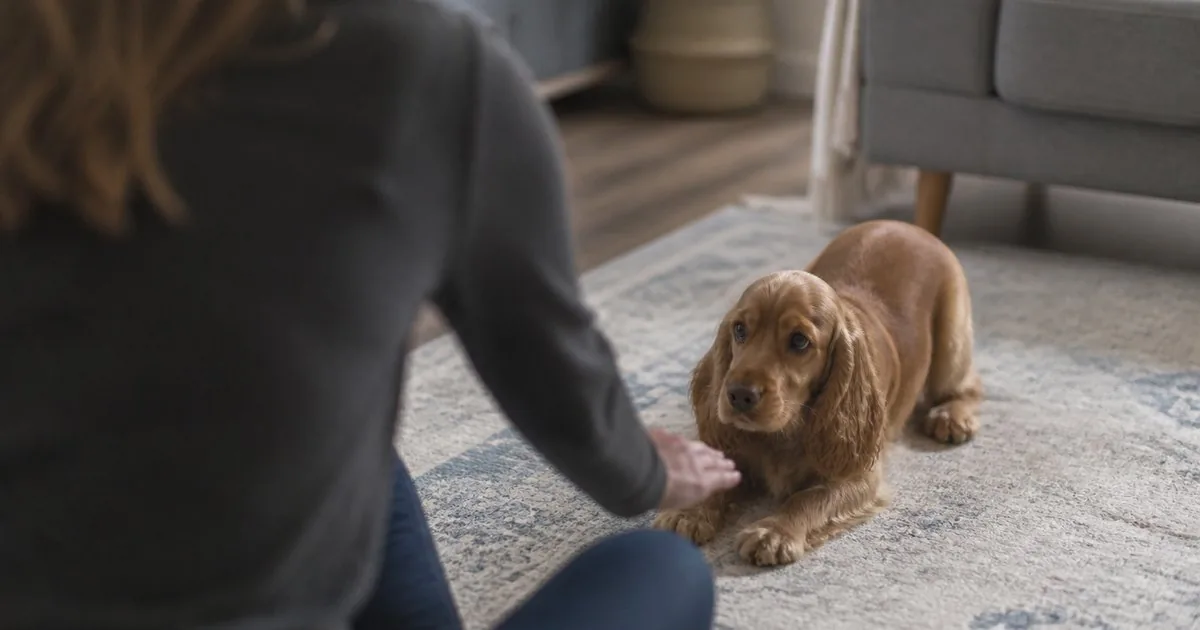
Training at home takes place in the environment where some of the everyday behaviours appear, and allows the family's real routine to be observed.
Training at home has the advantage of working directly in the environment where many of the difficulties appear. You can observe guests arriving, the reaction to the doorbell, walking in the stairwell, behaviour in the yard, the relationship with family members, access to resources and the daily routine. The information is closer to real life than it would be on neutral ground.
This format can suit puppies at the very beginning, recently adopted dogs, animals that feel overwhelmed in new places, families with several dogs, or situations where travelling is difficult. The session can include organising the home, setting up resting areas, learning to use a crate positively, preventing chewing, self-control exercises and planning the outings.
Even so, the home is not the only context that matters. A dog can respond very well in the living room and lose the exercise completely out on the street. Once the basics are built, they have to be generalised in other places, with different levels of distraction. The instructor can move the sessions gradually around the block, into car parks, parks or other environments that suit the goal.
The family's involvement is essential. The instructor does not come simply to “work the dog", but to show the people how to repeat things correctly. If each member uses different rules, different words and different consequences, the dog is given a system that is hard to make sense of. A good session ends with a simple plan, short exercises and criteria by which the family can see progress.
This subcategory can be relevant in situations such as puppies at the start of their education, dogs that shut down in new places, and problems to do with the door, guests, rest or life in the home.
The fact that the instructor sees the house does not mean every problem can be resolved in a single visit; the environment shows the context, but change takes practice.
a conversation about the history and the goals; observation without needlessly provoking the behaviour.
demonstrating some simple exercises; a work plan and a check on progress.
Signs such as avoiding the instructor, restlessness near the door, difficulty settling and losing the ability to respond to light cues can show how the animal is experiencing the situation.
To reduce improvisation, a list of the problem situations, the daily schedule, rewards and the usual equipment, and the relevant medical information all have to be prepared.
More useful criteria are observing the context before making recommendations, involving the family, exercises that can realistically be repeated, observable and realistic goals, and explanations about the criterion, the reward and the progression.
The main advantage is tying the exercises to the real routine, but the behaviours then have to be generalised in other places too.
it does not replace a veterinary assessment; it cannot reproduce every outdoor situation inside the house. Among the risks to be discussed are provoking the dog for the sake of a demonstration, different expectations between family members and overlooking a possible medical cause.
How a service is organised responsibly, how to recognise quality, where the limits are and what to ask before you pay - explained once, for all services.
This page explains the service, it does not sell it. Some of these we run ourselves, others happen at a veterinary practice, a grooming salon, or with people we work alongside.
Frequently asked questions
It can make sense above all for puppies at the start of their education, dogs that shut down in new places, and problems to do with the door, guests, rest or life in the home.
Useful information includes a list of the problem situations, the daily schedule, rewards and the usual equipment, and the relevant medical information.
You watch for avoiding the instructor, restlessness near the door, difficulty settling, losing the ability to respond to light cues, the ability to take rewards, and whether the dog can orient towards the handler.
it does not replace a veterinary assessment; it cannot reproduce every outdoor situation inside the house.
The main advantage is tying the exercises to the real routine, but the behaviours then have to be generalised in other places too.
Training and education
Board and Train means the dog lives temporarily in boarding accommodation and takes part in an agreed training programme...
One-to-one sessions give dedicated time to a single human-dog team and allow the exercises to be adjusted according to p...
A behaviour assessment gathers information about the dog's history, health, environment and reactions in order to form h...
Behavioural intervention aims to reduce the risk and to change the conditions that trigger or maintain a difficult behav...
Controlled socialisation means gradual exposure to people, animals, surfaces, sounds and contexts, without forcing the d...
Preparation for adoption can involve both the family and the dog, so that the transition is realistic and as safe as pos...
Write to us about what is actually happening with your dog. We will tell you which kind of service would help - and, if that is the case, that you need none of them.