Behaviour assessment
A behaviour assessment gathers information about the dog's history, health, environment and reactions in order to form h...

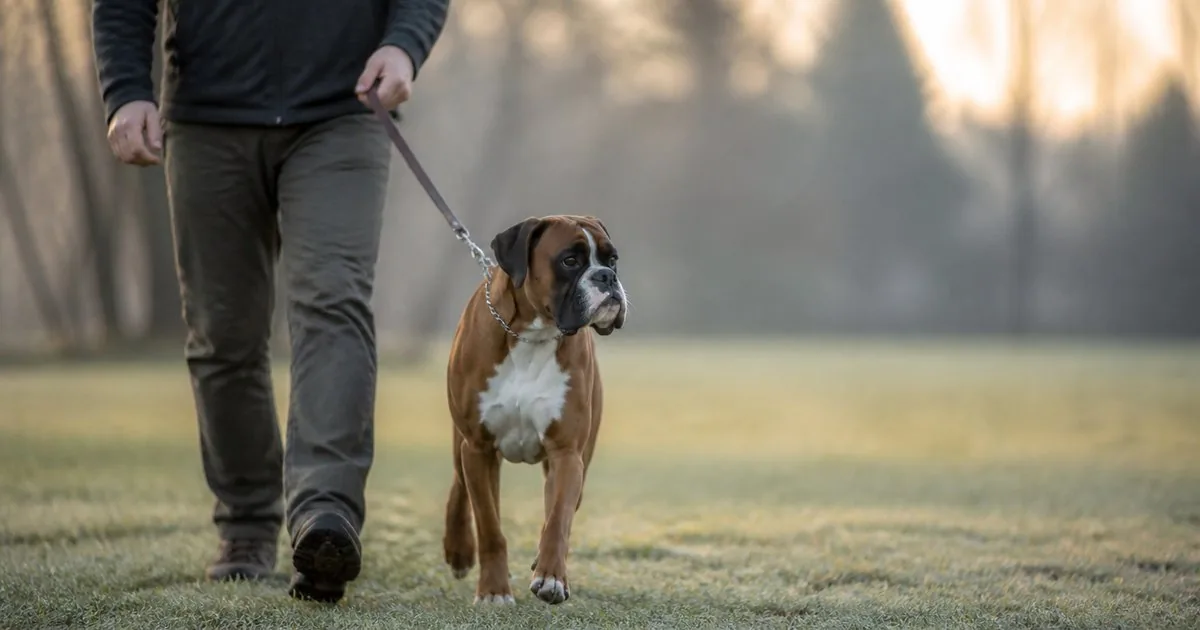
One-to-one sessions give dedicated time to a single human-dog team and allow the exercises to be adjusted according to progress.
One-to-one sessions allow the pace and the content to be adapted to a single dog and to its family. They suit basic skills, preparing a puppy, strengthening the recall, leash walking, managing excitement, working in the presence of distractions or resolving specific difficulties.
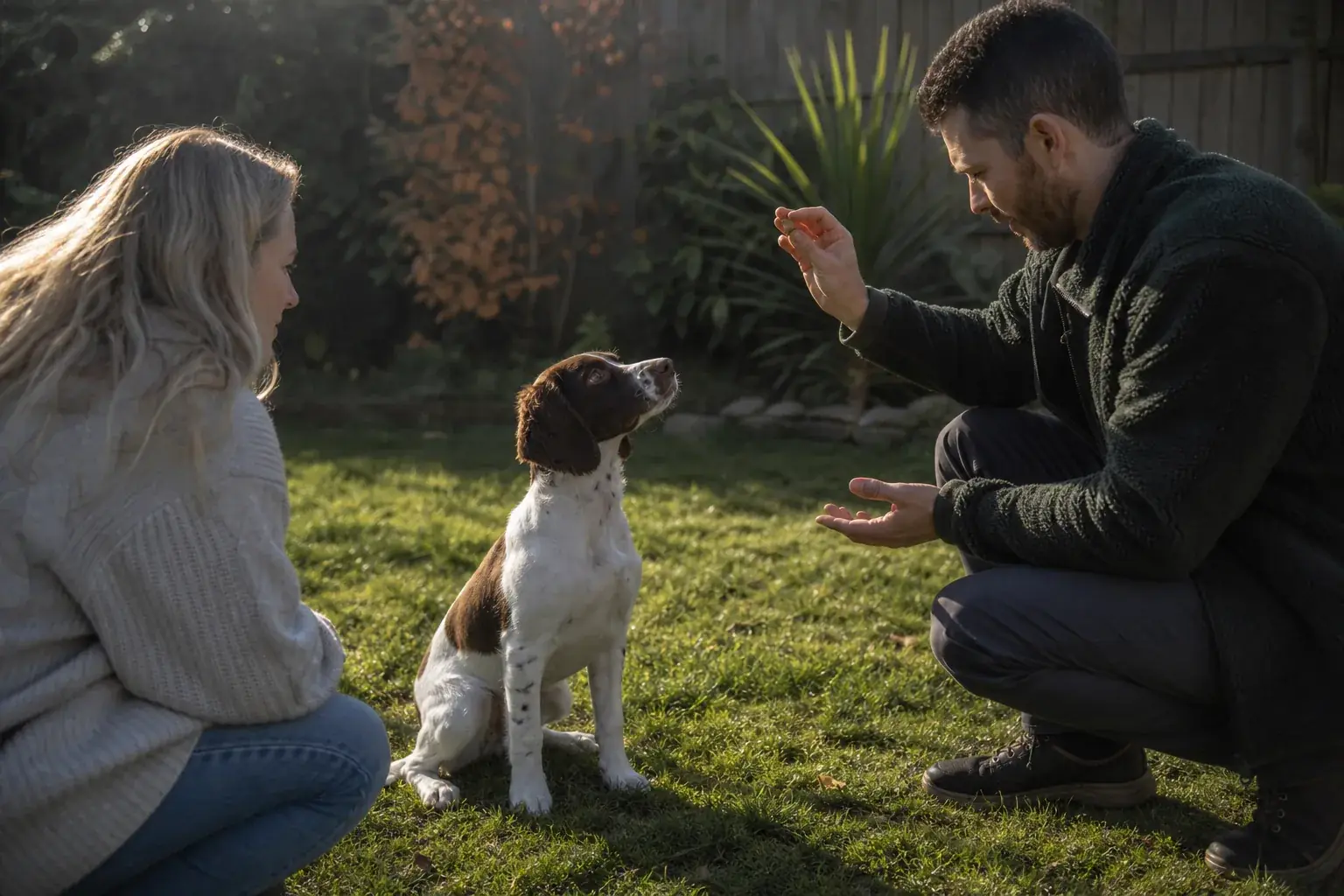
In a one-to-one session, the instructor can notice details that get lost in a group: the exact moment when the dog starts to tense up, the type of reward it prefers, the way the owner holds the leash, how fast the cues are given, or how hard the exercise is. Small adjustments can change the outcome a great deal.
The actual working time has to be adapted. An hour of booked time does not mean an hour of continuous repetitions. The dog needs breaks, sniffing, water and time to process. With puppies, sensitive dogs or dogs without experience in particular, very short and successful sessions are worth more than persistence.
The family should leave with measurable goals and realistic homework. Five well-organised minutes a few times a day can be more effective than one long session at the weekend. Consistency does not mean rigidity, but rules that are easy to follow and predictable responses.
It is most useful in contexts such as families with specific goals, dogs that cannot work comfortably in a group and people who need practical feedback.
The one-to-one format does not guarantee progress if the exercises are only repeated in the instructor's presence, or if there are too many goals.
setting a measurable goal; observing the current level.
guided practice with feedback; realistic homework and a reassessment.
Signs such as frustration when the criterion rises too fast, dependence on a visible reward, avoiding the handler and a drop in concentration can show how the animal is experiencing the situation.
To reduce improvisation, the usual equipment, suitable rewards, short video clips where relevant, and information about the context in which the problem appears all have to be prepared.
More useful criteria are enough time for questions, the progression explained, an emphasis on the owner's skill rather than only on the instructor's demonstration, observable and realistic goals, and explanations about the criterion, the reward and the progression.
The value of a one-to-one session is precise feedback and adaptation, and the final goal is for the owner to be able to work without permanent dependence on the instructor.
they do not replace practice between meetings; some cases need a broader medical or behavioural assessment. Among the risks to be discussed are too many repetitions, technical correction without taking emotion into account, and unclear goals.
A good decision about one-to-one dog training sessions does not start from the idea that the same format has to work for everyone.
How a service is organised responsibly, how to recognise quality, where the limits are and what to ask before you pay - explained once, for all services.
This page explains the service, it does not sell it. Some of these we run ourselves, others happen at a veterinary practice, a grooming salon, or with people we work alongside.
Frequently asked questions
It can make sense above all for families with specific goals, dogs that cannot work comfortably in a group and people who need practical feedback.
Useful information includes the usual equipment, suitable rewards, short video clips where relevant, and information about the context in which the problem appears.
You watch for frustration when the criterion rises too fast, dependence on a visible reward, avoiding the handler, a drop in concentration, the ability to take rewards, and whether the dog can orient towards the handler.
they do not replace practice between meetings; some cases need a broader medical or behavioural assessment.
The value of a one-to-one session is precise feedback and adaptation, and the final goal is for the owner to be able to work without permanent dependence on the instructor.
Training and education
A behaviour assessment gathers information about the dog's history, health, environment and reactions in order to form h...
Behavioural intervention aims to reduce the risk and to change the conditions that trigger or maintain a difficult behav...
Controlled socialisation means gradual exposure to people, animals, surfaces, sounds and contexts, without forcing the d...
Preparation for adoption can involve both the family and the dog, so that the transition is realistic and as safe as pos...
Settling in means introducing the dog gradually to the home, to the routine and to its relationships with the people and...
The aim is to adapt the routine, the space and the behaviours gradually, before the newborn comes home.
Write to us about what is actually happening with your dog. We will tell you which kind of service would help - and, if that is the case, that you need none of them.