Grooming and dog cosmetics
Grooming brings together the procedures that keep the coat, the skin, the paws and the overall appearance in good order,...

Nutrition advice looks at the food, the amount, the body condition, the life stage and any medical needs in order to make competent recommendations.
Serious nutrition advice starts from the dog, not from a dietary ideology. Age, size, neuter status, activity, illnesses, treatments, body condition score, preferences and digestive tolerance all influence the choice. The label, the marketing or the ingredient list taken in isolation are not enough to judge a diet.
For a healthy dog, advice can clarify the portion, the number of meals, the transition between products, the use of treats and how to monitor weight. For illnesses, suspected allergies, kidney, digestive or endocrine conditions and other medical situations, the diet has to be set by the vet, ideally with specialist support in veterinary nutrition.
Home-prepared diets need a complete formulation. Combining meat, vegetables and supplements by guesswork does not guarantee balance. Recipes have to be adapted and reviewed, particularly for puppies, pregnant bitches, working dogs and animals with illnesses.
Supplements are not automatically risk-free. They can interact with treatments, they can double up on nutrients, or they can simply be pointless. Any product given regularly has to be mentioned to the vet.
It can be considered above all for growing puppies, for adults whose weight is changing and for senior dogs or dogs with medically defined needs.
Words such as “natural”, “premium” or “grain-free” do not on their own show that a product suits a particular dog.
the dietary and medical history; assessing the weight and body condition.
setting the plan and the transition; monitoring tolerance and adjusting.
Signs such as itching or digestive upsets, a change in appetite, unusual thirst and weight loss or gain can show how the animal is experiencing the situation.
A preparation sheet should cover the exact labels and amounts, the list of treats and supplements, any relevant test results and diagnoses, and the activity schedule.
More useful criteria are training in nutrition, recommendations with reasons behind them, follow-up over time, cooperation with the vet, hygiene of the instruments and the space, and calm handling with breaks.
Food can be built into training intelligently, but treats have to be counted in the total intake and adapted to the dog's health.
medical cases belong to the veterinarian; a diet is not changed simply because of online trends. Among the risks to be discussed are unbalanced diets, pointless or incompatible supplements, too rapid a transition and delaying the diagnosis of an illness.
How a service is organised responsibly, how to recognise quality, where the limits are and what to ask before you pay - explained once, for all services.
This page explains the service, it does not sell it. Some of these we run ourselves, others happen at a veterinary practice, a grooming salon, or with people we work alongside.
Frequently asked questions
It can make sense above all for growing puppies, for adults whose weight is changing and for senior dogs or dogs with medically defined needs.
Useful information includes the exact labels and amounts, the list of treats and supplements, any relevant test results and diagnoses, and the activity schedule.
You watch for itching or digestive upsets, a change in appetite, unusual thirst, weight loss or gain, panting, trembling or freezing, and any attempt to withdraw.
medical cases belong to the veterinarian; a diet is not changed simply because of online trends.
Food can be built into training intelligently, but treats have to be counted in the total intake and adapted to the dog's health.
Physical care
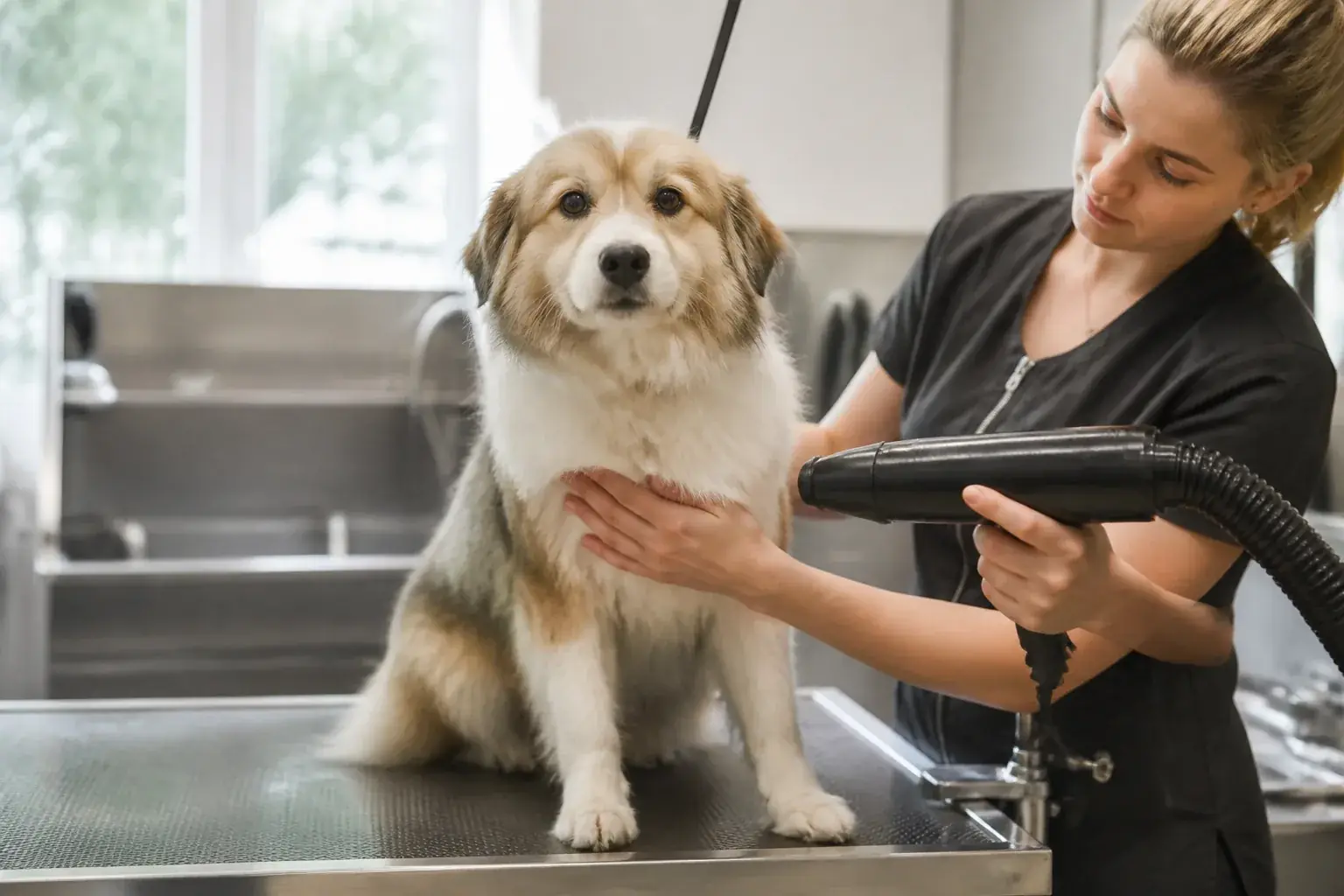
Grooming brings together the procedures that keep the coat, the skin, the paws and the overall appearance in good order,...
Washing and drying remove dirt and keep the coat in good order, but the products, the frequency and the technique have t...
Clipping or filing the nails aims to keep them at a functional length and to prevent catching, breaking or discomfort wh...
Ear and dental care covers preventive routines and watching for changes, without confusing cleaning at home with medical...
Clipping shortens the coat with clippers or scissors, while stripping removes mature hair in a controlled way for certai...
Canine massage uses touch and manual techniques for relaxation or comfort, within the limits of the practitioner's train...
Write to us about what is actually happening with your dog. We will tell you which kind of service would help - and, if that is the case, that you need none of them.