Nail trimming
Clipping or filing the nails aims to keep them at a functional length and to prevent catching, breaking or discomfort wh...

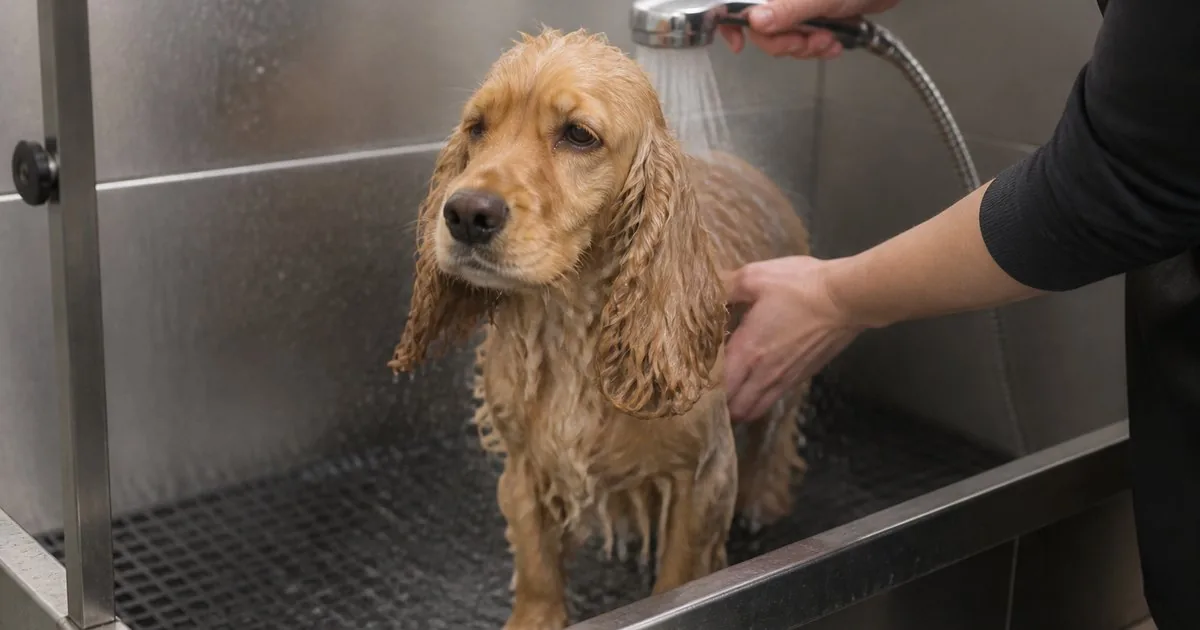
Washing and drying remove dirt and keep the coat in good order, but the products, the frequency and the technique have to suit the skin and the type of hair.
A bath removes dirt and can be part of skin care, but the frequency and the products have to be adapted. A dog should not be washed automatically to a universal timetable. Its lifestyle, the coat type, the condition of the skin and the vet's recommendations all matter. Products made for people are not chosen just because they smell nice; products suited to dogs and to their situation are used.
Before wetting, the coat is detangled where possible, because water can tighten certain mats. The temperature has to be comfortable, and the water must not be aimed suddenly at the face and ears. The dog is secured on a non-slip surface, with no pulling at the neck.
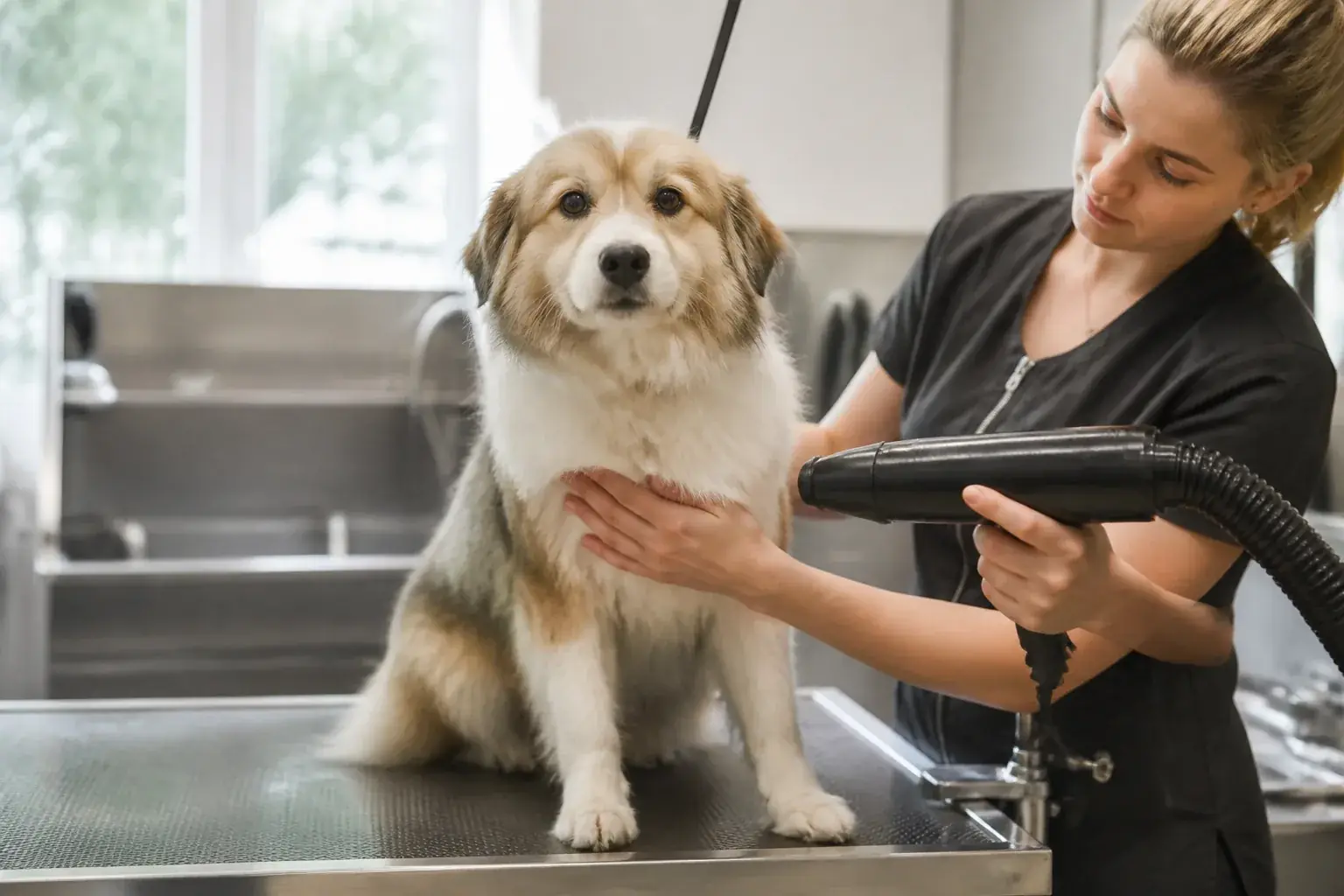
Rinsing matters, because residues can irritate the skin. Drying is adapted to what the animal will tolerate. The towel is not rubbed roughly over mats, and the dryer is introduced gradually. Excessive heat and lack of supervision are risks. For sensitive dogs, drying can be split into stages and paired with breaks.
If there is itching, a persistent smell, unusual hair loss, wounds or discharge, a bath does not replace a consultation. Medicated shampoos are used as medically indicated, with the contact time and frequency set by the vet.
It is most useful in contexts such as dogs that get dirty after activities, animals with an established care routine, and situations where the vet recommends specific products.
Frequent bathing is not automatically healthier, and a strong scent says nothing about the state of the skin.
detangling the coat where possible; wetting gradually and shampooing appropriately.
rinsing thoroughly; monitored drying and a check on the skin.
Signs such as trying to get out of the bath, tension at the noise of the dryer, redness, and persistent shaking or scratching after the bath can show how the animal is experiencing the situation.
A preparation sheet should cover a product suited to dogs, a non-slip surface, towels and a comfortable temperature, and information about any dermatological treatments.
More useful criteria are careful rinsing, controlled temperature, the dryer introduced gradually, never leaving the dog unsupervised, hygiene of the instruments and the space, and calm handling with breaks.
Getting used to the bath, the water and the sound of the dryer is a form of education for grooming, and the pace has to be set by the dog's response.
medicated shampoos are used as medically indicated; a bath alone does not treat a skin condition. Among the risks to be discussed are slipping, thermal burns, skin irritation and water in the airways.
A good decision about washing and drying does not start from the idea that the same format has to work for everyone.
How a service is organised responsibly, how to recognise quality, where the limits are and what to ask before you pay - explained once, for all services.
This page explains the service, it does not sell it. Some of these we run ourselves, others happen at a veterinary practice, a grooming salon, or with people we work alongside.
Frequently asked questions
It can make sense above all for dogs that get dirty after activities, animals with an established care routine, and situations where the vet recommends specific products.
Useful information includes a product suited to dogs, a non-slip surface, towels and a comfortable temperature, and information about any dermatological treatments.
You watch for trying to get out of the bath, tension at the noise of the dryer, redness, persistent shaking or scratching after the bath, panting, trembling or freezing, and attempts to withdraw.
medicated shampoos are used as medically indicated; a bath alone does not treat a skin condition.
Getting used to the bath, the water and the sound of the dryer is a form of education for grooming, and the pace has to be set by the dog's response.
Physical care
Clipping or filing the nails aims to keep them at a functional length and to prevent catching, breaking or discomfort wh...
Ear and dental care covers preventive routines and watching for changes, without confusing cleaning at home with medical...
Clipping shortens the coat with clippers or scissors, while stripping removes mature hair in a controlled way for certai...
Canine massage uses touch and manual techniques for relaxation or comfort, within the limits of the practitioner's train...
Veterinary physiotherapy and rehabilitation use a functional assessment together with prescribed exercises or procedures...
Hydrotherapy uses a water environment, for example a pool or an underwater treadmill, as part of a plan for recovery or...
Write to us about what is actually happening with your dog. We will tell you which kind of service would help - and, if that is the case, that you need none of them.