Washing and drying
A bath gets the dirt out and keeps the coat clean. How often you do it, which product you use and how you dry the dog af...

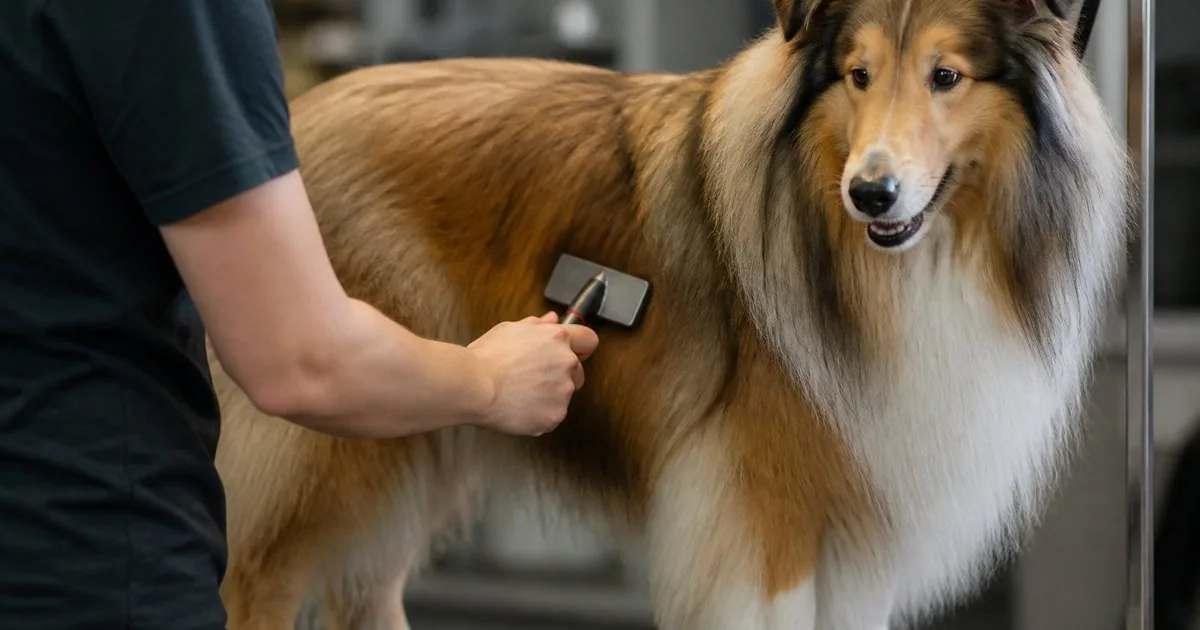
Grooming keeps the coat, skin, paws and overall look of a dog in good order. What gets done depends on the dog: a double-coated shepherd needs something different from a poodle or a short-haired mix.
A grooming session can include brushing, detangling, a bath, drying, paw care, cleaning the areas that need it, and clipping or hand-stripping. Not every dog gets all of it. The point is to keep skin and coat healthy, get rid of the mats that make the dog uncomfortable, and pick up early on anything that needs a vet.
Before you book, tell the groomer about the coat type, when the last session was, how the dog reacts to being handled, any skin problems, known allergies, current treatments and the spots where it's sensitive. A groomer doesn't diagnose. What they can do is spot redness, sores, lumps, parasites, an odd smell, discharge or signs of pain, and tell you to get the dog checked by a vet.
Don't plan the session around the finished look alone. Very tight mats pull on the skin and can hide sores underneath. If you try to save coat length at any cost, the dog spends longer on the table and in discomfort. Sometimes a shorter clip is the kinder choice, and regular brushing afterwards stops the mats from coming back.
Tools, surfaces and towels should be clean between dogs. A dog on the table or in a restraint system is never left alone, not even for a minute. During drying someone keeps an eye on the temperature, the dog's breathing and how stressed it is. And be honest about how your dog behaves, growling or biting included. The groomer can only plan a safer session if they know what's coming.
Grooming makes most sense for dogs whose coats need brushing or clipping, for animals that need regular cleaning, and for owners who want to head off mats and discomfort before they start.
The finished look isn't worth any price. A session that drags on for hours, or a matted coat saved by force, puts the dog through more than a practical fix would, such as a short clip that simply grows back.
It starts with a conversation about the coat, the skin and the dog's behaviour. The groomer checks the mats and sees how much handling and brushing the dog will put up with.
The work is done in stages, with breaks in between. At the end you get realistic advice for upkeep at home, meaning things you can realistically do between sessions.
Watch the dog. It will show you how it's coping. Panting and trembling, trying to get off the table, guarding one spot, or refusing to get back on the table next time all tell you something hurts or scares it.
Bring the history of allergies and skin problems, explain how the dog copes with handling and, if it helps, bring a photo of the result you're after. Also give the dog time to settle in, without rushing it.
Look at concrete things. The tools are clean, the table is stable and the restraints are safe. The dog is handled calmly and gets breaks. A good groomer stops when they see signs of pain and tells you what they noticed on the skin or in the coat, even when it isn't good news.
If you practise cooperative handling at home, with the brush, getting up on a table or the noise of the dryer, the dog turns up to grooming far more relaxed. Forced restraint is not a training method, so don't let anyone turn it into one.
The groomer doesn't diagnose illness. Some procedures have to wait until a vet has seen the dog. The risks to talk through beforehand are cuts or skin irritation, overheating while drying, falling off the table and severe stress.
What works for one dog can be wrong for another. If yours is scared, old, ill or in pain, say no to the standard session and ask for one that fits, shorter or split over several days.
How a service is organised responsibly, how to recognise quality, where the limits are and what to ask before you pay - explained once, for all services.
This page explains the service, it does not sell it. Some of these we run ourselves, others happen at a veterinary practice, a grooming salon, or with people we work alongside.
Frequently asked questions
Not every dog needs the same thing. Grooming makes most sense for dogs whose coats need brushing or clipping, animals that need regular cleaning, and owners who want to prevent mats and discomfort.
Tell the groomer about any allergies and skin problems, how the dog copes with being held and handled, bring a photo of the result you want if that helps, and allow time for the dog to settle in.
Watch the dog for panting, trembling or freezing, attempts to get off the table or back away, sensitivity in one area, and refusing to get on the table again. The less you see of these, the better the session was handled.
The groomer doesn't diagnose illness. Some procedures have to wait until a vet has assessed the dog.
Practising cooperative handling at home with the brush, the table or the dryer makes grooming easier for the dog. Forced restraint is not a training method.
Physical care
A bath gets the dirt out and keeps the coat clean. How often you do it, which product you use and how you dry the dog af...
You clip or file a dog's nails to keep them at a length it can walk on comfortably. Left too long, they catch and can br...
Looking after ears and teeth at home comes down to a few preventive habits and noticing when something changes. Cleaning...
Clipping takes the coat down with clippers or scissors. Hand-stripping is different: on certain coat types, the mature h...
Canine massage means hands-on touch and techniques for relaxation or comfort. How far it goes depends on the practitione...
Veterinary physiotherapy and rehabilitation start with an assessment of how the dog moves and functions. From there, the...
Write to us about what is actually happening with your dog. We will tell you which kind of service would help - and, if that is the case, that you need none of them.