Physiotherapy and rehabilitation
Veterinary physiotherapy and rehabilitation use a functional assessment together with prescribed exercises or procedures...
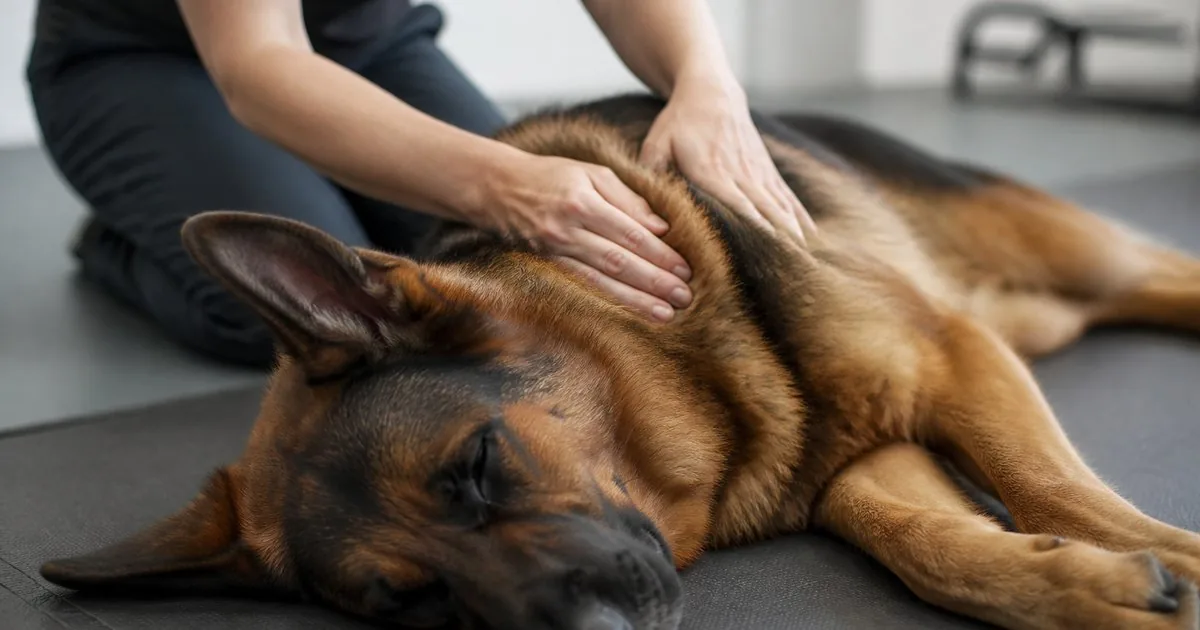
Canine massage uses touch and manual techniques for relaxation or comfort, within the limits of the practitioner's training and of the animal's medical condition.
Massage can be used for relaxation, comfort and body awareness, when it is done gently and adapted to the dog. Not every kind of touch is pleasant. Some dogs prefer contact on the chest and shoulders, others avoid the paws, the back or the hips. You judge whether the dog is taking part by a relaxed body, coming closer voluntarily and being free to leave.
Relaxation massage does not replace diagnosis and treatment. Pressure applied over a painful, inflamed or injured area, or after surgery, can do harm. If there is limping, sensitivity, weakness, muscle loss or a change in mobility, the dog has to be assessed medically before any therapeutic programme.
During a session the movements are slow and the pressure is adjusted. Sudden manipulation of joints and attempts to “put things back in place” are avoided. People offering therapeutic massage need relevant training and have to work within the limits of their competence.
An owner can learn simple relaxing touches, but also has to know when to stop: turning the head towards the hand, tensing up, walking away, repeated licking, trembling or vocalising all indicate discomfort.
This subcategory can be relevant in situations such as dogs that tolerate touch and can relax, active dogs after light effort, and senior dogs for whom the vet has not indicated any contraindications.
Massage is not a universal treatment for pain and must not be applied over injuries, inflammation or painful areas without an assessment.
a conversation about health and activity; observing the posture and the reaction to touch.
gentle, short techniques; stopping at any discomfort, plus monitoring advice.
Signs such as tensing muscles, turning the head, pulling away, and drowsiness or relaxation when the experience is pleasant can show how the animal is experiencing the situation.
To reduce improvisation, you should prepare a comfortable surface, a quiet environment, information about any surgery and pain, and the dog's consent to be touched.
More useful criteria are adapted pressure, knowledge of the contraindications, communication with the vet or physiotherapist where relevant, hygiene of the instruments and the space, and calm handling with breaks.
Cooperative handling can help the dog accept massage, but taking part has to stay voluntary and withdrawing has to be respected.
it does not replace physiotherapy or treatment; no work is done on suspect areas without an assessment. Among the risks to be discussed are making an injury worse, temporarily masking pain and a defensive reaction to touch.
How a service is organised responsibly, how to recognise quality, where the limits are and what to ask before you pay - explained once, for all services.
This page explains the service, it does not sell it. Some of these we run ourselves, others happen at a veterinary practice, a grooming salon, or with people we work alongside.
Frequently asked questions
It can make sense above all for dogs that tolerate touch and can relax, active dogs after light effort, and senior dogs for whom the vet has not indicated any contraindications.
Useful information includes a comfortable surface, a quiet environment, information about any surgery and pain, and the dog's consent to be touched.
You watch for tensing muscles, turning the head, pulling away, drowsiness or relaxation when the experience is pleasant, panting, trembling or freezing, and any attempt to withdraw.
it does not replace physiotherapy or treatment; no work is done on suspect areas without an assessment.
Cooperative handling can help the dog accept massage, but taking part has to stay voluntary and withdrawing has to be respected.
Physical care
Veterinary physiotherapy and rehabilitation use a functional assessment together with prescribed exercises or procedures...
Hydrotherapy uses a water environment, for example a pool or an underwater treadmill, as part of a plan for recovery or...
A weight control programme combines a medical assessment, measured food intake, suitable activity and monitoring of prog...
Nutrition advice looks at the food, the amount, the body condition, the life stage and any medical needs in order to mak...
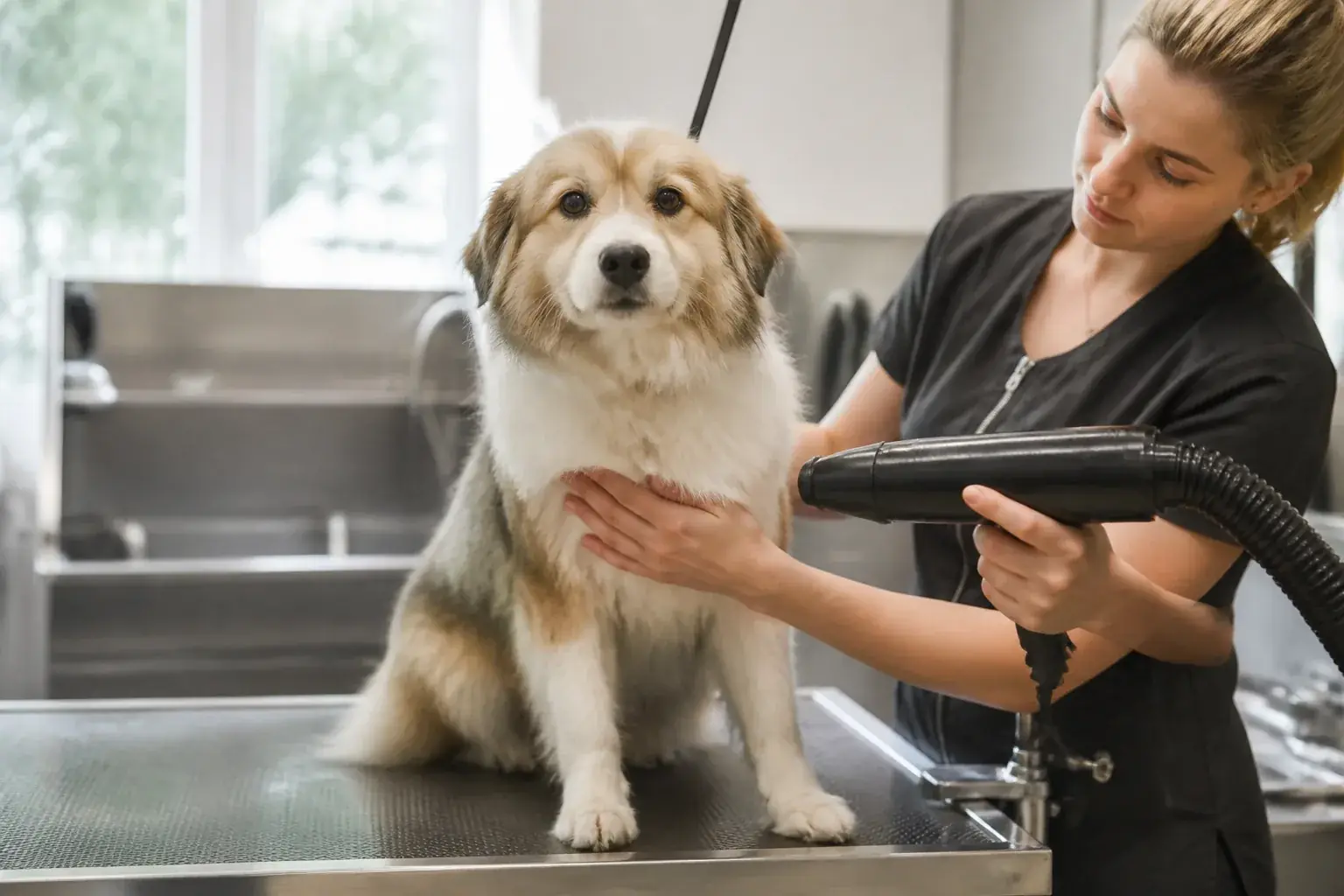
Grooming brings together the procedures that keep the coat, the skin, the paws and the overall appearance in good order,...
Washing and drying remove dirt and keep the coat in good order, but the products, the frequency and the technique have t...
Write to us about what is actually happening with your dog. We will tell you which kind of service would help - and, if that is the case, that you need none of them.