Ear and dental cleaning
Ear and dental care covers preventive routines and watching for changes, without confusing cleaning at home with medical...
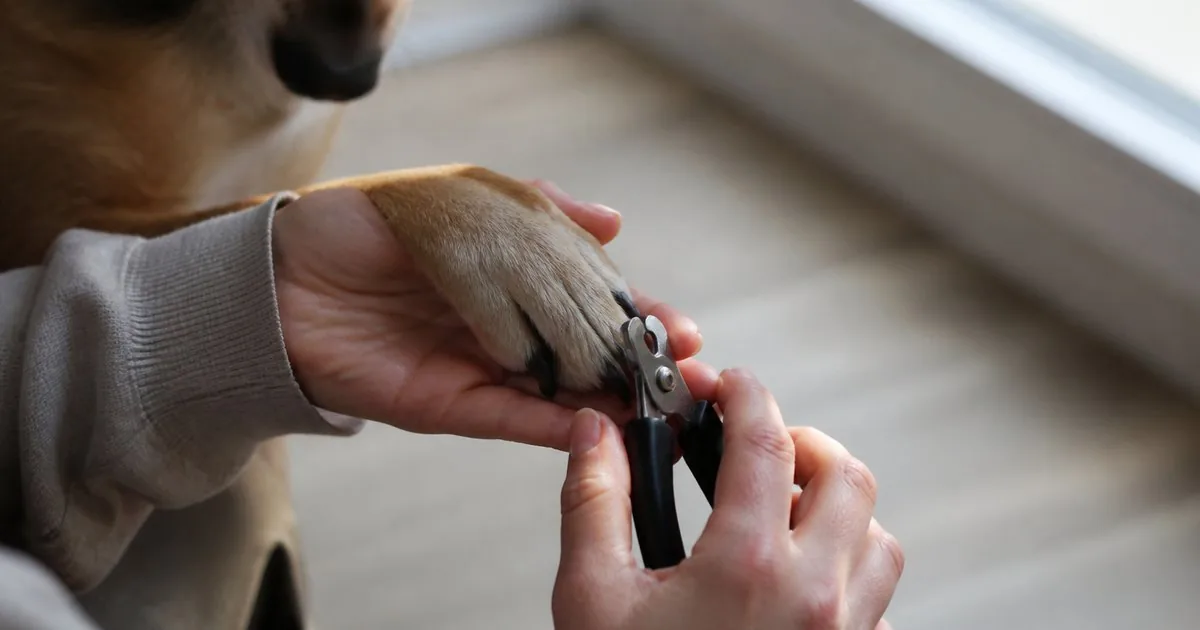
Clipping or filing the nails aims to keep them at a functional length and to prevent catching, breaking or discomfort when the dog puts weight on the paw.
Nails that are too long can catch and break, and can affect the way the dog puts weight on its paws. The rate of growth and the natural wear differ from dog to dog. Dogs that walk a lot on abrasive surfaces may need attention less often, while others need checking frequently. Extra claws that do not touch the ground have to be watched separately.
Trimming can be done with suitable clippers or by filing, depending on tolerance and experience. Inside the nail there is sensitive tissue with a blood supply, and cutting too short causes pain and bleeding. In pigmented nails the limit can be harder to see, so the work is done in small steps.
For dogs that are afraid, the first goal can be simply touching the paw or bringing the tool closer. A single nail can be done and the session then ended. Restraining the dog by force at every session can turn a routine procedure into a repeated conflict.
If a nail is broken, bleeds persistently, or there is swelling, discharge, pain or the dog will not put weight on the paw, a veterinary assessment is needed. A groomer or an instructor can help with cooperation, but they do not treat infections or injuries.
It is most useful in contexts such as dogs whose nails do not wear down enough, animals with extra claws, and puppies that need to get used to having their paws handled.
The procedure should not become a periodic fight. A single nail done calmly can be more useful than finishing all of them by force.
checking the length and the gait; touching the paw gradually.
small cuts or filing; reward, breaks and watching for bleeding.
Signs such as pulling the paw away, turning the head sharply, freezing and limping after the procedure can show how the animal is experiencing the situation.
A preparation sheet should cover a suitable, checked tool, material for controlling minor bleeding, good light, and a history of pain or bad experiences.
More useful criteria are small steps, a comfortable position, no painful compression of the joints, hygiene of the instruments and the space, and calm handling with breaks.
Exercises for offering the paw and for voluntary touching are very useful, but they have to be kept apart from moments when there is already pain.
a broken or painful nail needs a vet; sedation is not given without a vet. Among the risks to be discussed are cutting into the vascular tissue, falling off the table and making a broken or infected nail worse.
How a service is organised responsibly, how to recognise quality, where the limits are and what to ask before you pay - explained once, for all services.
This page explains the service, it does not sell it. Some of these we run ourselves, others happen at a veterinary practice, a grooming salon, or with people we work alongside.
Frequently asked questions
It can make sense above all for dogs whose nails do not wear down enough, animals with extra claws, and puppies that need to get used to having their paws handled.
Useful information includes a suitable, checked tool, material for controlling minor bleeding, good light, and a history of pain or bad experiences.
You watch for pulling the paw away, turning the head sharply, freezing, limping after the procedure, panting, trembling or freezing, and attempts to withdraw.
a broken or painful nail needs a vet; sedation is not given without a vet.
Exercises for offering the paw and for voluntary touching are very useful, but they have to be kept apart from moments when there is already pain.
Physical care
Ear and dental care covers preventive routines and watching for changes, without confusing cleaning at home with medical...
Clipping shortens the coat with clippers or scissors, while stripping removes mature hair in a controlled way for certai...
Canine massage uses touch and manual techniques for relaxation or comfort, within the limits of the practitioner's train...
Veterinary physiotherapy and rehabilitation use a functional assessment together with prescribed exercises or procedures...
Hydrotherapy uses a water environment, for example a pool or an underwater treadmill, as part of a plan for recovery or...
A weight control programme combines a medical assessment, measured food intake, suitable activity and monitoring of prog...
Write to us about what is actually happening with your dog. We will tell you which kind of service would help - and, if that is the case, that you need none of them.