Weight loss and weight maintenance programmes
A weight control programme starts with a vet assessment. Alongside it you need weighed food and activity that suits the...

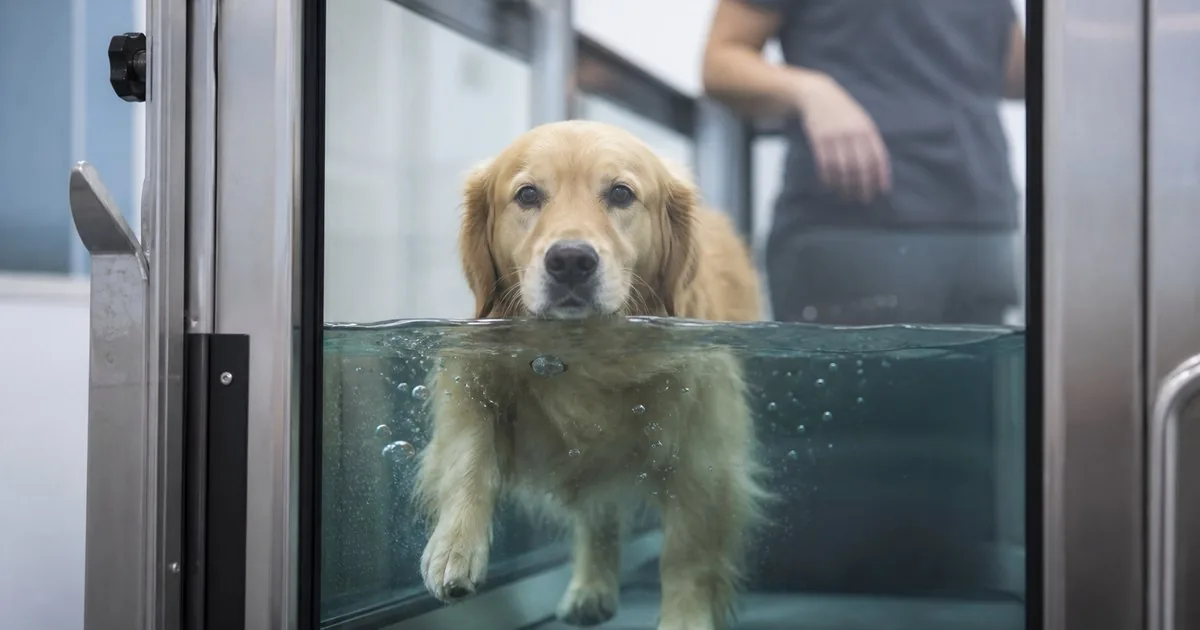
Hydrotherapy means working in water, for example in a pool or on an underwater treadmill, as part of a plan for recovery or controlled conditioning.
In hydrotherapy, water is used in recovery or conditioning programmes: the dog walks in the water under control or swims with guidance. The water holds the dog up and takes load off certain joints and structures. It also pushes back, and that resistance can be used for controlled effort. The type of exercise and the water level, speed and duration still have to be set around the dog's condition and goals.
Not every dog with joint problems is a good fit. Heart or breathing problems, skin conditions, open wounds, infections, a strong fear of water and other issues can change whether it's advisable. It needs a professional's approval and professional supervision throughout.
The dog goes into the water gradually and is supported. You don't fix a fear of water by throwing the dog in. Each session's settings are written down, and someone watches how the dog reacts during the work and afterwards. How clean the pool and equipment are matters too.
Swimming for fun and hydrotherapy aren't the same thing, even if they look alike from the poolside. In rehab, the movement has to be controlled. A dog that swims in a panic, head high and back legs dangling, can end up using its body in exactly the wrong way for the therapy goal.
Hydrotherapy is worth considering mainly when the vet and the specialist recommend water work: for recovering mobility and, in some cases, for low-impact conditioning.
Water takes the weight off, but that doesn't make every exercise safe. And a free swim in a lake or a pool is no substitute for hydrotherapy.
It starts with an assessment and a clear therapy goal. Then the dog gets used to the setup, whether that's the pool or the treadmill.
Sessions are measured and supervised. Afterwards the dog is dried off and the specialist checks how it responded.
Watch how the dog goes in and how it comes out. Panic on the way in, tiring quickly, struggling in an awkward position in the water, or walking differently after the session all show you how it's coping.
So you're not making it up on the day, bring the medical records and mention any skin, ear or breathing problems. Pack a towel and whatever kit you've been asked for. Follow the instructions about feeding before the session.
Look at the water quality and temperature. The staff should be able to support the dog in the water, and the exit from the pool should be safe. The space and equipment are clean, and the dog is handled calmly and given breaks.
It helps if you get the dog used to going into water and to being handled beforehand. The therapy goal and the session length are set by the specialist, though; they aren't training decisions.
Hydrotherapy is done within a plan set by someone qualified. Unsupervised swimming doesn't replace it. The risks to talk through are inhaling water, pain getting worse, skin or ear irritation and exhaustion.
How a service is organised responsibly, how to recognise quality, where the limits are and what to ask before you pay - explained once, for all services.
This page explains the service, it does not sell it. Some of these we run ourselves, others happen at a veterinary practice, a grooming salon, or with people we work alongside.
Frequently asked questions
It makes most sense when the vet and the specialist recommend water work, for recovering mobility and, in some cases, for low-impact conditioning.
Bring the medical records and mention any skin, ear or breathing problems. Pack a towel and the kit you've been asked for, and follow the feeding instructions before the session.
Watch the dog for panic on the way in, tiring quickly, an awkward position in the water, panting, trembling or freezing, trying to back away, and a change in gait after the session. A good centre spots these signs and adjusts the session.
Hydrotherapy is done within a plan set by someone qualified. Unsupervised swimming is no replacement.
Getting the dog used to entering the water and to being handled helps. The therapy goal and the duration aren't training decisions.
Physical care
A weight control programme starts with a vet assessment. Alongside it you need weighed food and activity that suits the...
Nutrition advice looks at what the dog eats and how much, its body condition, its life stage and any medical needs. The...
Grooming keeps the coat, skin, paws and overall look of a dog in good order. What gets done depends on the dog: a double...
A bath gets the dirt out and keeps the coat clean. How often you do it, which product you use and how you dry the dog af...
You clip or file a dog's nails to keep them at a length it can walk on comfortably. Left too long, they catch and can br...
Looking after ears and teeth at home comes down to a few preventive habits and noticing when something changes. Cleaning...
Write to us about what is actually happening with your dog. We will tell you which kind of service would help - and, if that is the case, that you need none of them.