Hydrotherapy
Hydrotherapy uses a water environment, for example a pool or an underwater treadmill, as part of a plan for recovery or...
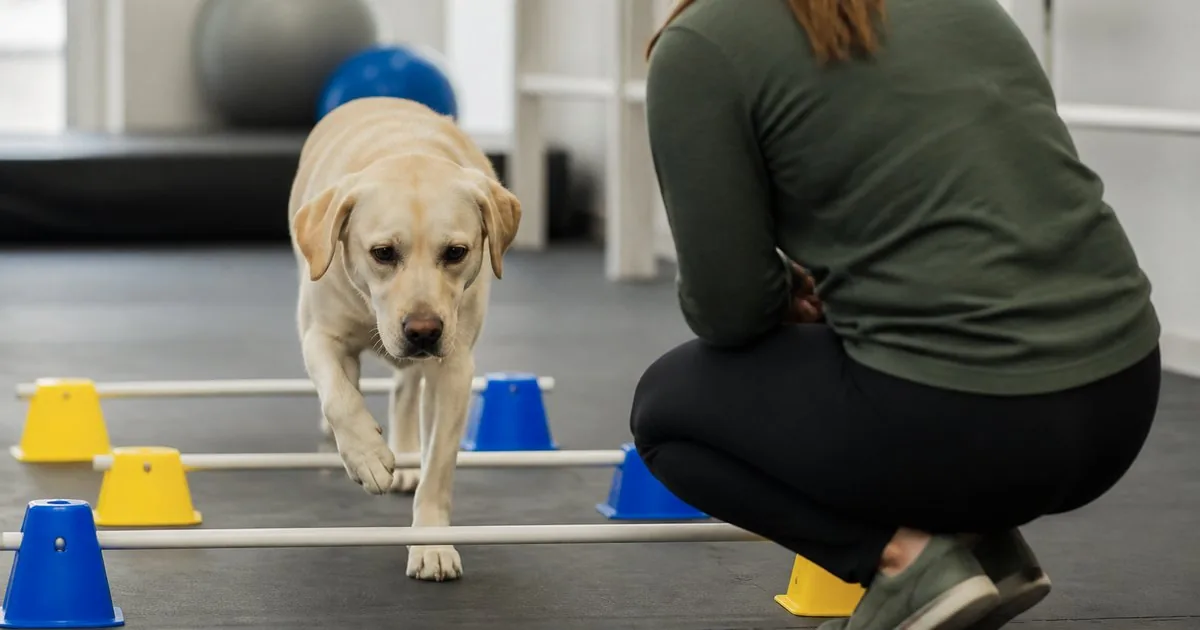
Veterinary physiotherapy and rehabilitation use a functional assessment together with prescribed exercises or procedures to restore mobility and function.
Veterinary physiotherapy aims to restore function, reduce discomfort, maintain mobility and support the dog after injuries, surgery, or orthopaedic and neurological conditions. It is a service built on a medical assessment and an individual plan. You do not pick a set of exercises off the internet and apply it identically to every dog.
The assessment can cover gait, posture, range of motion, muscle mass, weight-bearing on each limb, pain and the ability to carry out everyday activities. The goals may be a return to comfortable walking, controlled stair climbing, preventing muscle loss or a gradual return to sport.
The plan can combine active exercises, mobilisations, manual techniques, equipment and changes to the environment. At home, non-slip mats, ramps, limiting stairs, short walks and precise exercises may be recommended. Sticking to the number of repetitions matters. More is not better.
Pain, fatigue and compensation patterns have to be monitored. If the animal moves worse after the exercises, refuses the activity or shows new signs, the plan is reviewed. Rehabilitation is a collaboration between the vet, the specialist, the owner and, where relevant, the instructor or sports trainer.
It is most useful in contexts such as dogs after surgery or injury, animals with locomotor conditions and senior dogs losing mobility, on the vet's recommendation.
Exercises found online or copied from another dog can be unsuitable, even when the diagnosis looks similar.
a veterinary referral or diagnosis; assessment of gait, pain and range of motion.
a plan with goals and measured exercise doses; reviews and adjustments to the home programme.
Signs such as refusing a movement, compensating with the other limbs, pain on touch and excessive tiredness after a session can show how the animal is experiencing the situation.
Beforehand you need information and resources such as the medical records and imaging, the list of medication, a safe surface at home and a log of the response to the exercises.
More useful criteria are a specialist with relevant training, measurable goals, communication with the treating vet, hygiene of the instruments and the space, and calm handling with breaks.
Training is used for cooperation and for performing the movements voluntarily, but choosing the exercises is the rehabilitation specialist's job.
this is a medical or specialist rehabilitation field; the plan is changed only after a competent review. Among the risks to be discussed are making an injury worse, falls, an exercise performed incorrectly and progressing too fast.
How a service is organised responsibly, how to recognise quality, where the limits are and what to ask before you pay - explained once, for all services.
This page explains the service, it does not sell it. Some of these we run ourselves, others happen at a veterinary practice, a grooming salon, or with people we work alongside.
Frequently asked questions
It can make sense above all for dogs after surgery or injury, animals with locomotor conditions and senior dogs losing mobility, on the vet's recommendation.
Useful information includes the medical records and imaging, the list of medication, a safe surface at home and a log of the response to the exercises.
You watch for refusing a movement, compensating with the other limbs, pain on touch, excessive tiredness after a session, panting, trembling or freezing, and any attempt to withdraw.
this is a medical or specialist rehabilitation field; the plan is changed only after a competent review.
Training is used for cooperation and for performing the movements voluntarily, but choosing the exercises is the rehabilitation specialist's job.
Physical care
Hydrotherapy uses a water environment, for example a pool or an underwater treadmill, as part of a plan for recovery or...
A weight control programme combines a medical assessment, measured food intake, suitable activity and monitoring of prog...
Nutrition advice looks at the food, the amount, the body condition, the life stage and any medical needs in order to mak...
Grooming brings together the procedures that keep the coat, the skin, the paws and the overall appearance in good order,...
Washing and drying remove dirt and keep the coat in good order, but the products, the frequency and the technique have t...
Clipping or filing the nails aims to keep them at a functional length and to prevent catching, breaking or discomfort wh...
Write to us about what is actually happening with your dog. We will tell you which kind of service would help - and, if that is the case, that you need none of them.