Veterinary pharmacy and product delivery
A veterinary pharmacy stocks medicines and care products, plus other things your dog needs. With delivery, they come to...

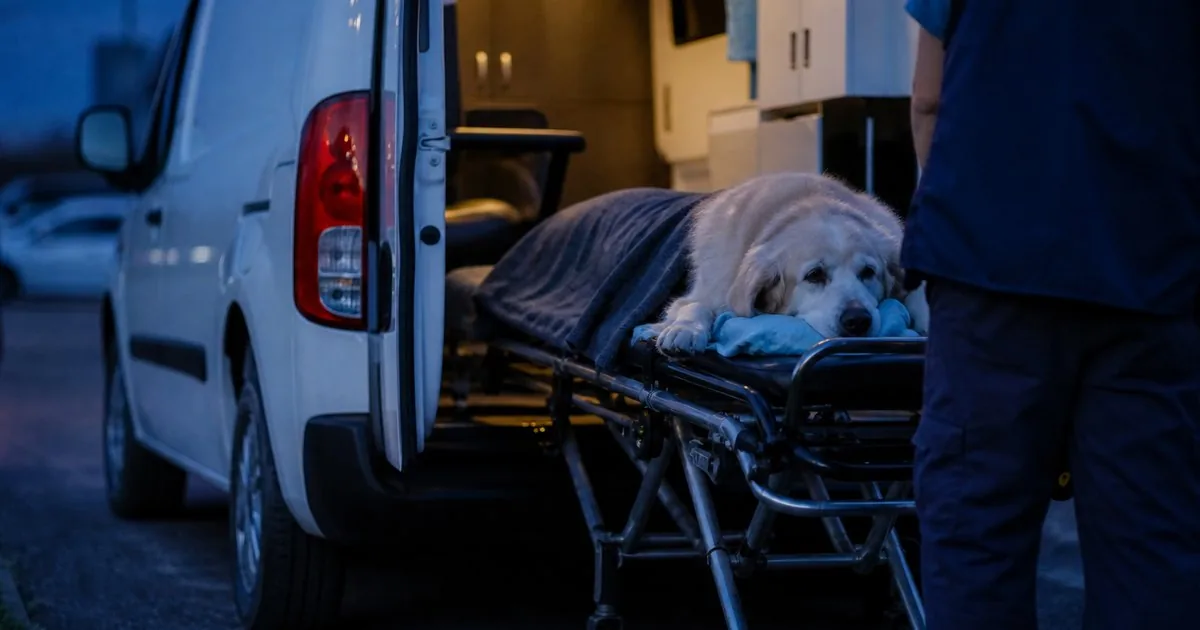
A veterinary ambulance gets sick or injured animals to the clinic in an organised way. Some carry equipment and staff set up for emergencies.
A veterinary ambulance carries an ill or injured animal and, if it has the right kit and people, can do some stabilising on the way. Services vary a lot. Ask exactly what the one you're calling offers: collection from home, oxygen, monitoring, a stretcher, medical staff, or just specialised transport.
In an emergency, the first thing to do is call the veterinary service and describe clearly what's going on: species, size, whether the animal is conscious, how it's breathing, any bleeding, trauma or seizures, whether it might have been poisoned, and where you are. The operator can tell you what's safe to do until the team arrives. Don't give any medicine and don't make the dog sick unless a vet tells you to.
An injured dog can bite, even the gentlest dog you know. Move in slowly, without making it harder for them to breathe or making the injuries worse. A muzzle isn't right in every case: leave it off if the dog is vomiting, struggling to breathe or has injuries to the face. The call depends on the risk and on what competent staff advise.
Clear the way for the team: gates open, the exact address, someone waiting out on the street, other animals shut away, documents to hand. If the dog is getting worse and you'd get there faster in your own car, the clinic may tell you to leave straight away. Don't sit waiting for an ambulance just on principle.
An ambulance doesn't guarantee the animal will survive, and it doesn't replace hospital care. What it does is cut the time between the scene and veterinary care, and lower the risks on the way.
It's worth calling one mostly for animals that can't be moved safely by ordinary means, emergencies where the clinic recommends assisted transport, and dogs that can barely move.
A van that carries animals isn't automatically an ambulance. And even a well-equipped ambulance can't diagnose and treat the way a clinic can.
It starts with the call where you describe the animal's condition. Competent staff tell you what to do.
The team stabilises the animal within what the service can do, then transports them and hands them over to the medical facility.
Watch the dog, not the clock. Laboured breathing, altered consciousness, heavy bleeding, and severe pain or not being able to get up tell you how serious it is.
Have ready the exact address and directions for getting in, the dog's weight and size, the important medical history, and whether they turn aggressive when in pain.
A serious service has clear dispatching, actually carries the transport and oxygen equipment it advertises, has trained staff and stays in touch with the receiving clinic. Everyone's skills and responsibilities should be explained clearly, and medical data passed on correctly.
A dog that's used to a muzzle and to travelling copes better in a planned situation. In an emergency, though, safety and medical instructions come first.
Every service can do different things, so ask. The actual treatment happens at the clinic. The risks to talk through are delay, handling that makes the injury worse, getting bitten, and taking the dog to the wrong place.
How a service is organised responsibly, how to recognise quality, where the limits are and what to ask before you pay - explained once, for all services.
This page explains the service, it does not sell it. Some of these we run ourselves, others happen at a veterinary practice, a grooming salon, or with people we work alongside.
Frequently asked questions
If the dog is getting worse and you'd get there faster in your own car, the clinic may tell you to leave straight away, and then you don't wait for an ambulance. It makes most sense for animals that can't be moved safely by ordinary means, emergencies where the clinic recommends assisted transport, and severely reduced mobility.
Give the exact address and how to get in, the dog's weight and size, the important medical history, and whether they turn aggressive when in pain.
Ask what the crew can actually do, and describe what you're seeing: difficulty breathing, altered consciousness, heavy bleeding, severe pain or not being able to get up, plus the general condition, alertness and breathing.
Capability differs from one service to another, so ask. Definitive treatment happens at the clinic.
Muzzle and travel training help in planned situations. In an emergency, safety and medical instructions come first.
Veterinary and logistics
A veterinary pharmacy stocks medicines and care products, plus other things your dog needs. With delivery, they come to...
Moving an animal, within the country or across borders, takes more than a long drive. You need a suitable vehicle, crate...
Help with travel documents puts the steps and deadlines in order, along with the checks you need to travel with your dog...
When a vet practice works in partnership with your trainer, referrals happen faster, the right information reaches the r...
Vaccines and parasite treatments are preventive medicine. Your vet sets them based on the dog's age, health, lifestyle a...
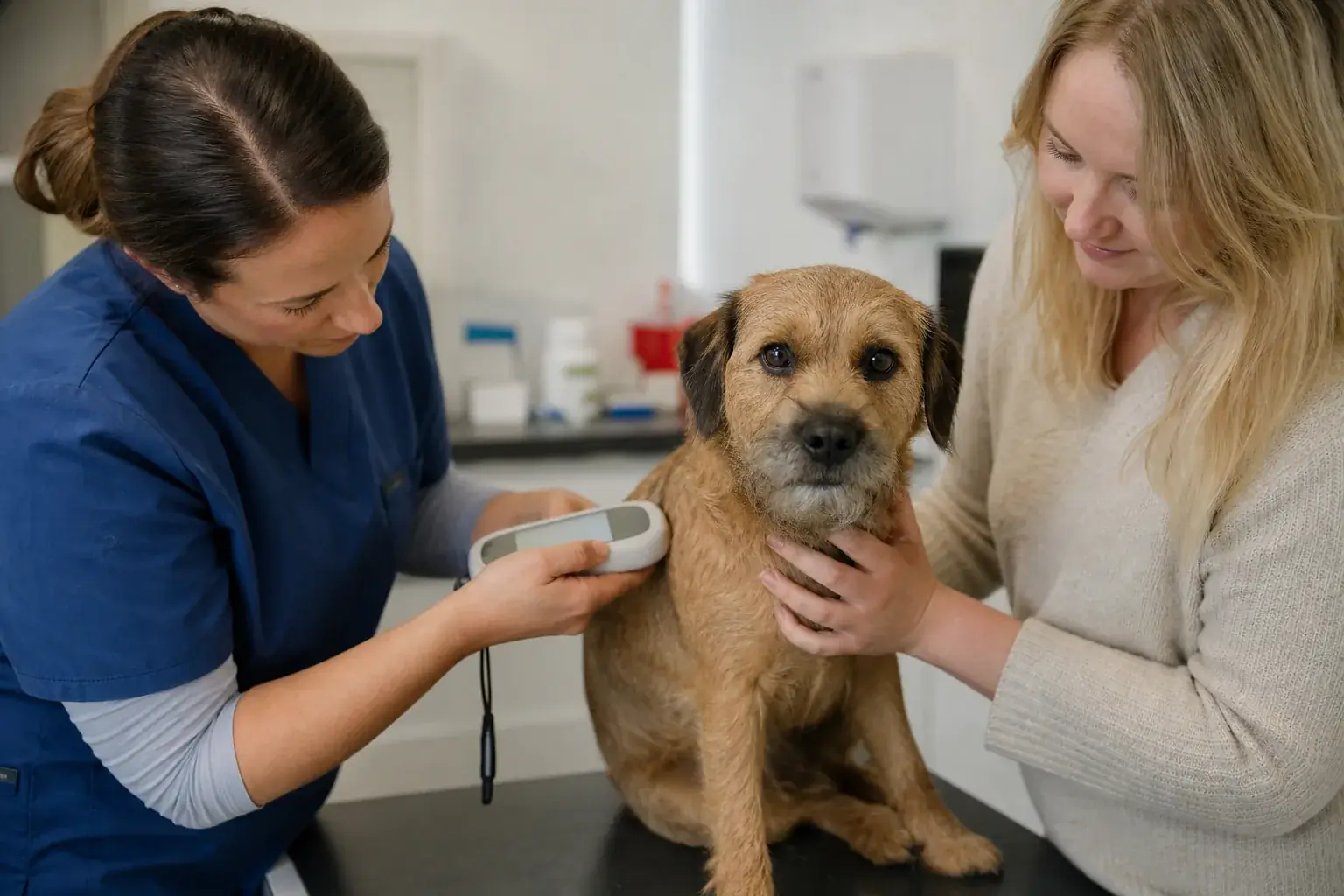
A microchip gives your dog an electronic ID code. Registration links that code to your details in the relevant official...
Write to us about what is actually happening with your dog. We will tell you which kind of service would help - and, if that is the case, that you need none of them.