Socialisation groups
Socialisation groups create controlled settings in which dogs can learn to be around others, with or without direct inte...

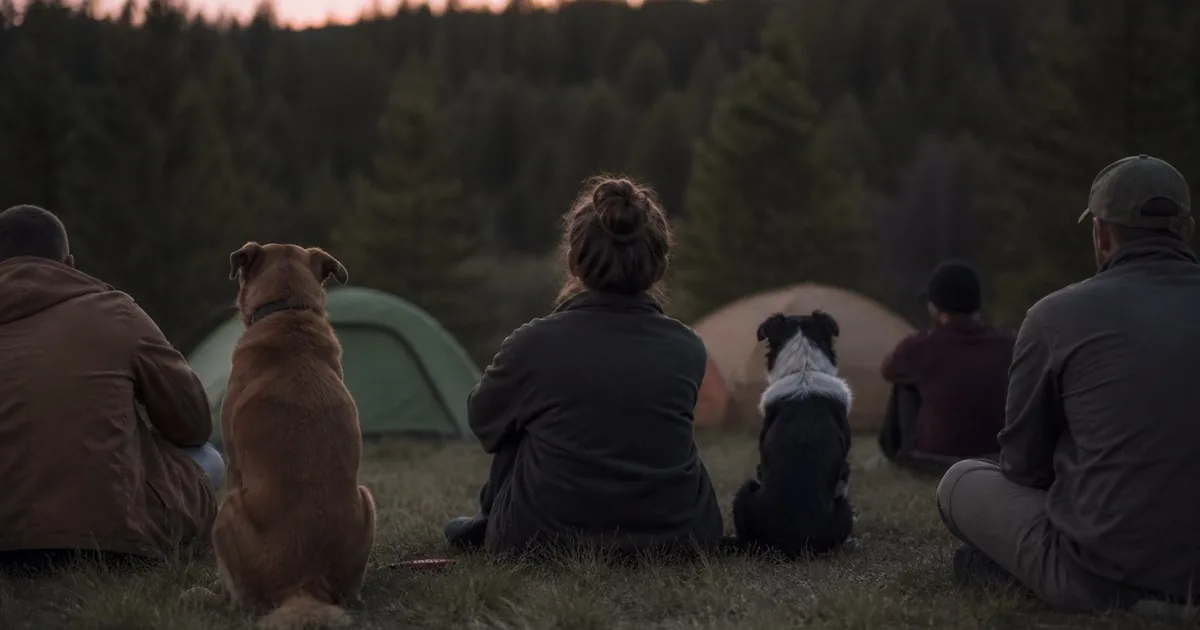
Dog trips and camps bring together activities, travel and accommodation for one or more days, in an environment different from the routine at home.
Trips and camps bring together activities, new environments and group life. They can be excellent experiences for dogs that cope well, but they are more complex than a simple outing. The travel, the accommodation, the presence of other people, the changed schedule and the build-up of stimuli all have to be planned.
Before signing up, compatibility has to be assessed. A dog should not be excluded just because it is shy or reactive, but it may need a different format, separate accommodation, distance and individual activities. The organiser has to know whether there is a history of escaping, resource guarding, conflict, sensitivity to handling or medical problems.
A camp's programme should not be full from dawn until night. Dogs need breaks and sleep. The resting areas have to allow separation, and feeding is done without competition. Group games are not compulsory for every participant.
The owner has to prepare the equipment, the food, the documents, any prescribed medication and safe things to rest on. A plan for emergencies and knowing the veterinary services in the area are both useful. A responsible camp puts the dog's safety and experience before the number of activities ticked off.
This subcategory can be relevant in situations such as teams that want guided experiences, dogs able to rest in a new place, and owners interested in group activities.
A packed programme is not automatically more valuable. The dog needs sleep, distance and the option of skipping an activity.
information and criteria for taking part; preparing the travel and the accommodation.
a programme with activities and breaks; a daily review and adjustment of how much the dog takes part.
Signs such as being unable to sleep, reactivity increasing from one day to the next, refusing food and irritability when other dogs come close can show how the animal is experiencing the situation.
The owner's preparation includes medical documents and contacts, food and things to rest on, spare equipment, and information about compatibility and the need for space.
More useful criteria are a plan for separation, a limited number of participants, a procedure for the weather and for emergencies, assessment of the level of training, and a warm-up with gradual progression.
A camp can generalise skills and strengthen cooperation, but it must not be used as an extreme test or as forced exposure to a group.
not every dog has to join in every activity; the group format can be unsuitable in some cases. Among the risks to be discussed are conflicts between dogs and cumulative tiredness.
How a service is organised responsibly, how to recognise quality, where the limits are and what to ask before you pay - explained once, for all services.
This page explains the service, it does not sell it. Some of these we run ourselves, others happen at a veterinary practice, a grooming salon, or with people we work alongside.
Frequently asked questions
It can make sense above all for teams that want guided experiences, dogs able to rest in a new place, and owners interested in group activities.
Useful information includes medical documents and contacts, food and things to rest on, spare equipment, and information about compatibility and the need for space.
You watch for being unable to sleep, reactivity increasing from one day to the next, refusing food, irritability when other dogs come close, the rhythm of the breathing and the gait, and the coordination.
not every dog has to join in every activity; the group format can be unsuitable in some cases.
A camp can generalise skills and strengthen cooperation, but it must not be used as an extreme test or as forced exposure to a group.
Activities and burning energy
Socialisation groups create controlled settings in which dogs can learn to be around others, with or without direct inte...
Mental stimulation games use searching, problem solving, discrimination and self-control to give the dog cognitive activ...
Nose Work and scent games give the dog the chance to search for food or a target odour and to use one of its main natura...
Recreational mantrailing means following a person's trail from a scent article, in a setting adapted to the level of the...
Recreational agility uses obstacles and simple sequences for coordination, communication and physical activity, without...
Canine fitness uses controlled exercises for body awareness, balance, strength and mobility, adapted to the purpose and...
Write to us about what is actually happening with your dog. We will tell you which kind of service would help - and, if that is the case, that you need none of them.