Preparing for adoption
Preparation for adoption can involve both the family and the dog, so that the transition is realistic and as safe as pos...

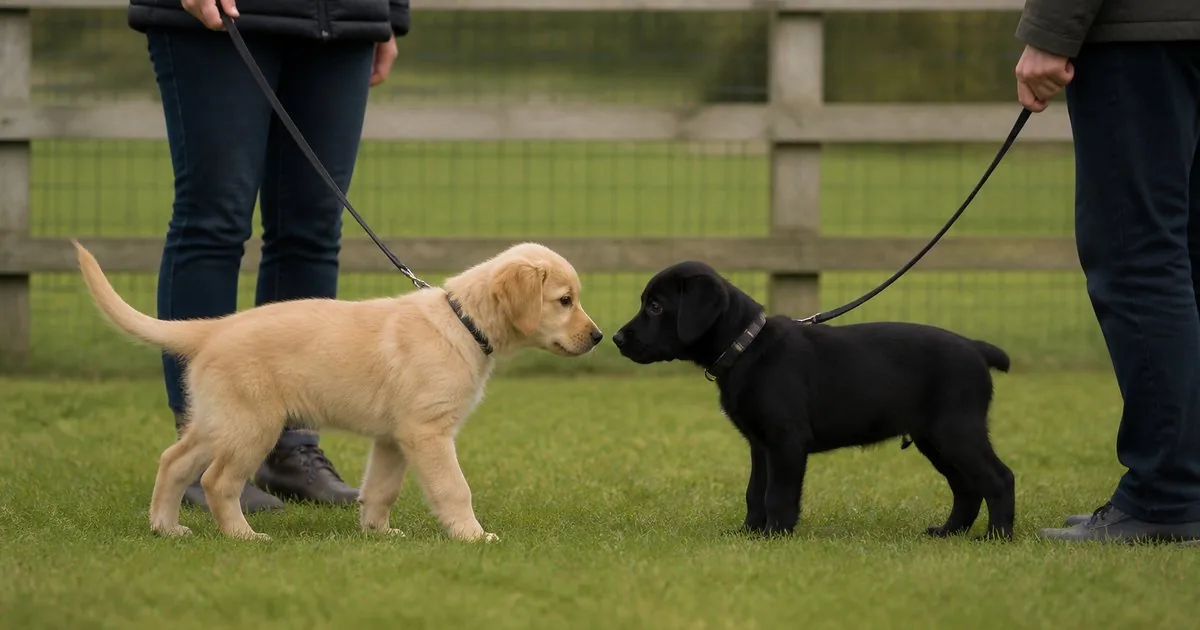
Controlled socialisation means gradual exposure to people, animals, surfaces, sounds and contexts, without forcing the dog to interact.
Socialisation does not mean a dog greeting every person and every animal. The aim is for it to be able to watch, process and stay functional around the things that make up its life. Sometimes it interacts, sometimes it simply walks on. Neutrality is often more useful than enthusiasm for every stimulus.
For puppies, early exposures have to be positive, short and adapted to the individual response. People who look different, sounds, surfaces, means of transport, gentle handling, objects, spaces and healthy animals can all be introduced without forcing anything. The puppy has to be able to move away. If it hides, freezes, refuses the reward or tries to run, the experience is too intense.
For adults, especially those with an unknown history, “socialisation” may mean desensitisation, working at a distance, parallel walks and learning tolerance. Not every animal will want to play, and it does not have to. Compatibility matters, and groups have to be managed.
The dog's medical status and the prevention plan agreed with the vet have to be taken into account before exposure to new spaces or animals. The instructor and the vet can help the family balance the need for early experiences against reducing health risks.
It can be considered above all for puppies in their development period, adults with limited experience and dogs that need to learn neutrality rather than constant play.
Socialisation is not about collecting a large number of encounters, nor about dropping the dog into a group so that it gets used to things.
choosing the stimuli and the distance; short exposures with the option of moving away.
pairing with pleasant experiences; increasing the difficulty gradually.
Signs such as turning the head away and avoiding, freezing, play that is too intense without breaks, and slow recovery after a stimulus can show how the animal is experiencing the situation.
The owner's preparation includes the medical and vaccination history discussed with the vet, rewards and safe equipment, goals for each session and carefully chosen canine partners.
More useful criteria are small, manageable groups, real breaks, respect for distance, stepping in before things escalate, observable and realistic goals, and explanations about criteria, rewards and progression.
Exercises for orienting towards the owner, walking on the leash and moving away on cue support socialisation, because the dog is given options instead of being left to manage the whole context on its own.
not every dog has to greet or play; severe fear may require an individual plan. Among the risks to be discussed are repeated negative experiences, transmissible disease and the dog learning that being near other dogs always means high arousal.
How a service is organised responsibly, how to recognise quality, where the limits are and what to ask before you pay - explained once, for all services.
This page explains the service, it does not sell it. Some of these we run ourselves, others happen at a veterinary practice, a grooming salon, or with people we work alongside.
Frequently asked questions
It can make sense above all for puppies in their development period, adults with limited experience and dogs that need to learn neutrality rather than constant play.
Useful information includes the medical and vaccination history discussed with the vet, rewards and safe equipment, goals for each session and carefully chosen canine partners.
You watch for the head turning away and avoidance, freezing, play that is too intense without breaks, slow recovery after a stimulus, whether the dog can take rewards and whether it can turn towards its handler.
not every dog has to greet or play; severe fear may require an individual plan.
Exercises for orienting towards the owner, walking on the leash and moving away on cue support socialisation, because the dog is given options instead of being left to manage the whole context on its own.
Training and education
Preparation for adoption can involve both the family and the dog, so that the transition is realistic and as safe as pos...
Settling in means introducing the dog gradually to the home, to the routine and to its relationships with the people and...
The aim is to adapt the routine, the space and the behaviours gradually, before the newborn comes home.
Advice of this kind helps a family compare what they want with the time, budget, space and experience they actually have...
Temperament testing observes a dog's reactions in standardised or controlled situations, in order to gather information...
Sports preparation builds the exercises according to a set of rules and develops precision, endurance, emotional control...
Write to us about what is actually happening with your dog. We will tell you which kind of service would help - and, if that is the case, that you need none of them.