Educational walks
On an educational walk the dog gets to explore, and you slip in simple exercises along the way: checking in with you, wa...

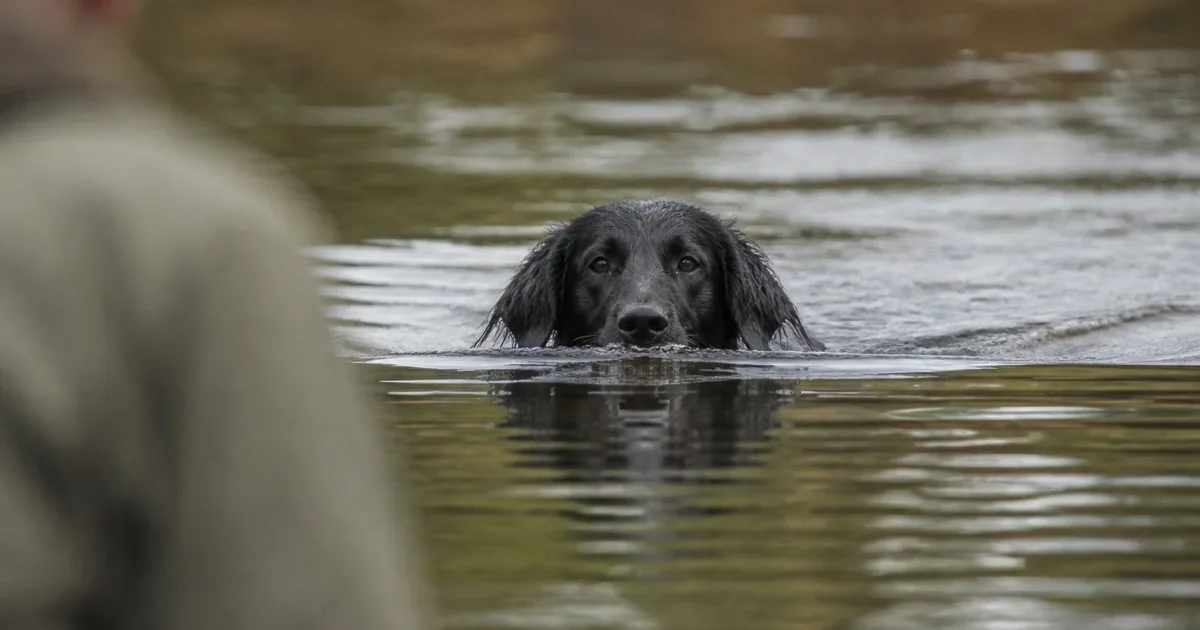
Swimming can give your dog exercise in water, play or conditioning. Before your dog goes in, check how well it swims, what the spot is like and whether it's safe for your dog.
For some dogs swimming is low-impact exercise that's easy on the joints, and in summer it can be one of the best outings going. Not every dog can swim, though, and not every dog wants to. Safety depends on the dog's build and experience, on water temperature and on currents. It also depends on where the dog can get out and how clean the water is.
Get your dog used to water gradually, somewhere it can walk in easily, like a gently sloping bank. Never throw it in or drag it in on the leash. A well-fitting buoyancy vest can help, but it doesn't let you take your eyes off the dog. Your dog needs an easy way out at all times, and early sessions stay short.
Lakes and rivers, or the sea, can hide obstacles and currents, algae or pollution. Check the local rules and warnings before you go in. After a swim, rinse your dog if needed and dry it off. Then look over the ears and skin. Don't put anything in the ears without your vet's say-so.
Hydrotherapy is a different thing from swimming for fun. It's a rehab treatment and follows a plan set by a professional. A dog that swims well won't necessarily benefit from any kind of work in water when it has a health condition.
Swimming makes sense for dogs that go in on their own and move comfortably in water, for supervised fun outings, and for cases where the vet has okayed the exercise.
Not every dog swims well, and not every dog enjoys water. A dog thrown into a pool or a lake can panic and inhale water.
Go in gradually, in shallow water. Use a vest when your dog needs one.
Keep sessions short, with an easy way out close by. Afterwards, rinse your dog and dry it off, then watch how it recovers.
Watch how your dog sits in the water. Swimming nearly upright, scrambling frantically to get out, coughing, tiring or shivering all tell you how it's finding the swim, and that it's time to get out.
Get a well-fitting vest ready and pick safe water your dog can get out of easily. Bring a towel and drinking water. If you're going to a pool or working with an instructor, mention any ear, skin or breathing problems.
Where needed, someone stays within arm's reach of the dog. The water has no strong currents and isn't too cold or too warm. If it's a pool, its hygiene has been checked. The dog's level gets checked at the start, and after a warm-up the effort builds gradually.
Coming when called, along with going in and out of the water on cue, makes swimming safer. Training should never be used to keep a frightened dog in the water.
Swimming isn't automatically right for every build or health condition, and medical hydrotherapy is a separate service. Risks to talk through: drowning and inhaling water, then ear infections or irritation. There's also exposure to contaminated water.
The same format won't suit every dog. Before you decide, think about your own dog: its build, how it feels in water, and what the vet says about its health.
How a service is organised responsibly, how to recognise quality, where the limits are and what to ask before you pay - explained once, for all services.
This page explains the service, it does not sell it. Some of these we run ourselves, others happen at a veterinary practice, a grooming salon, or with people we work alongside.
Frequently asked questions
It makes most sense for dogs that go in willingly and move comfortably in water, for supervised fun outings, and when the vet has okayed the exercise.
Get a well-fitting vest ready and pick safe water with an easy exit. Bring a towel and drinking water. Mention any ear, skin or breathing problems.
You can tell by what the person supervising watches for: swimming upright, frantic attempts to get out, coughing, tiredness or shivering. Keep an eye on breathing rate and gait too, plus coordination once the dog is out.
It isn't automatically suitable for every build or condition, and medical hydrotherapy is a different service.
Recall, plus going in and coming out on cue, improve safety. Training must never be used to force a frightened dog to stay in the water.
Activities and burning energy
On an educational walk the dog gets to explore, and you slip in simple exercises along the way: checking in with you, wa...
Hiking with your dog means heading out on natural trails together, ready for the terrain and the weather. You need to kn...
Running with your dog is repetitive and hard on the body. Bring it in gradually, once you've looked at the dog's age and...
On a dog trip or camp you take your dog away from home for one or more days. There's travel and somewhere new to stay, w...
A socialisation group is a controlled setting where dogs learn to be around other dogs. Sometimes they interact directly...
Mental stimulation games give your dog's brain something to do. The dog searches, solves problems, tells objects apart a...

Write to us about what is actually happening with your dog. We will tell you which kind of service would help - and, if that is the case, that you need none of them.