Hiking with dogs
Hiking with a dog means walking natural trails together, prepared for the terrain, the weather, the duration and unexpec...

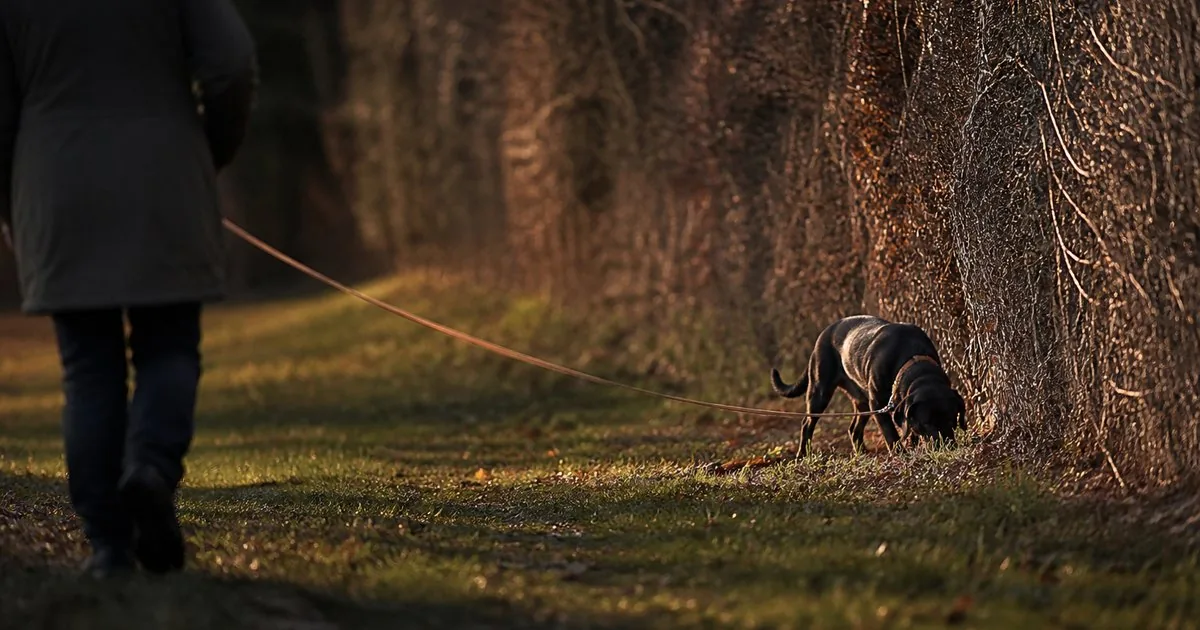
An educational walk combines exploring with simple exercises in orienting, leash walking, waiting and handling the encounters the environment throws up.
An educational walk combines the need for movement and exploration with exercises that are useful in everyday life. It is not an hour of strict heelwork. The dog is allowed to sniff, to look around and to choose, within the limits of safety. At the same time, you can practise orienting towards the handler, walking on a loose leash, waiting at a crossing, changing direction, recall on a long line and passing calmly by stimuli.
For a dog that pulls, the goal is not simply to hold it on a shorter leash. It has to learn which behaviour lets it move forward, and a distance has to be chosen at which it can respond. For a reactive dog, an educational walk can mean less crowded routes, watching from a distance and moving away before things escalate. For a puppy, it can mean short exposures to surfaces, sounds and people, with no obligation to interact.
Sniffing is an important part of the walk. Through its nose, the dog gathers information about the environment. Constant hurrying and correcting every stop can turn the outing into a frustrating activity. A balance can be struck between the stretches walked in an organised way and the stretches where the dog explores.
A good educational walk adapts to the day. If the animal is tired, startled by a noise or meets more stimuli than usual, the plan can be shortened. Flexibility does not mean there are no rules, but that the learning process is protected.
Among the situations where it can make sense are dogs that pull on the leash, puppies learning to explore the city, and teams who want to turn the outing into a learning context.
The goal is not perfect heelwork throughout, nor the removal of sniffing, which is a natural need.
choosing a suitable route; periods of exploration and short exercises.
increasing the distractions gradually; a calm finish and watching the recovery.
Signs such as constant tension, scanning the environment, refusing rewards and increased restlessness after encounters can show how the animal is experiencing the situation.
A preparation sheet should cover a suitable harness or collar, a leash of the right length, rewards, and information about triggers and health.
More useful criteria are a balance between freedom and structure, distance from stimuli, criteria adapted to the place, assessment of the level of training, and a warm-up with gradual progression.
It is a direct form of training in real life, in which behaviours are practised without taking away the dog's chance to sniff and process the environment.
it does not replace a walk for exploration; not every step is turned into an obedience test. Among the risks to be discussed are jerks and a tangled leash, forced approaches and being overloaded in a crowded environment.
A good decision about educational walks does not start from the idea that the same format has to work for everyone.
How a service is organised responsibly, how to recognise quality, where the limits are and what to ask before you pay - explained once, for all services.
This page explains the service, it does not sell it. Some of these we run ourselves, others happen at a veterinary practice, a grooming salon, or with people we work alongside.
Frequently asked questions
It can make sense above all for dogs that pull on the leash, puppies learning to explore the city, and teams who want to turn the outing into a learning context.
Useful information includes a suitable harness or collar, a leash of the right length, rewards, and information about triggers and health.
You watch for constant tension, scanning the environment, refusing rewards, increased restlessness after encounters, the rhythm of the breathing and the gait, and the coordination.
it does not replace a walk for exploration; not every step is turned into an obedience test.
It is a direct form of training in real life, in which behaviours are practised without taking away the dog's chance to sniff and process the environment.
Activities and burning energy
Hiking with a dog means walking natural trails together, prepared for the terrain, the weather, the duration and unexpec...
Running alongside a dog is a repetitive and demanding activity that has to be introduced gradually, after assessing age,...
Dog trips and camps bring together activities, travel and accommodation for one or more days, in an environment differen...
Socialisation groups create controlled settings in which dogs can learn to be around others, with or without direct inte...
Mental stimulation games use searching, problem solving, discrimination and self-control to give the dog cognitive activ...
Nose Work and scent games give the dog the chance to search for food or a target odour and to use one of its main natura...
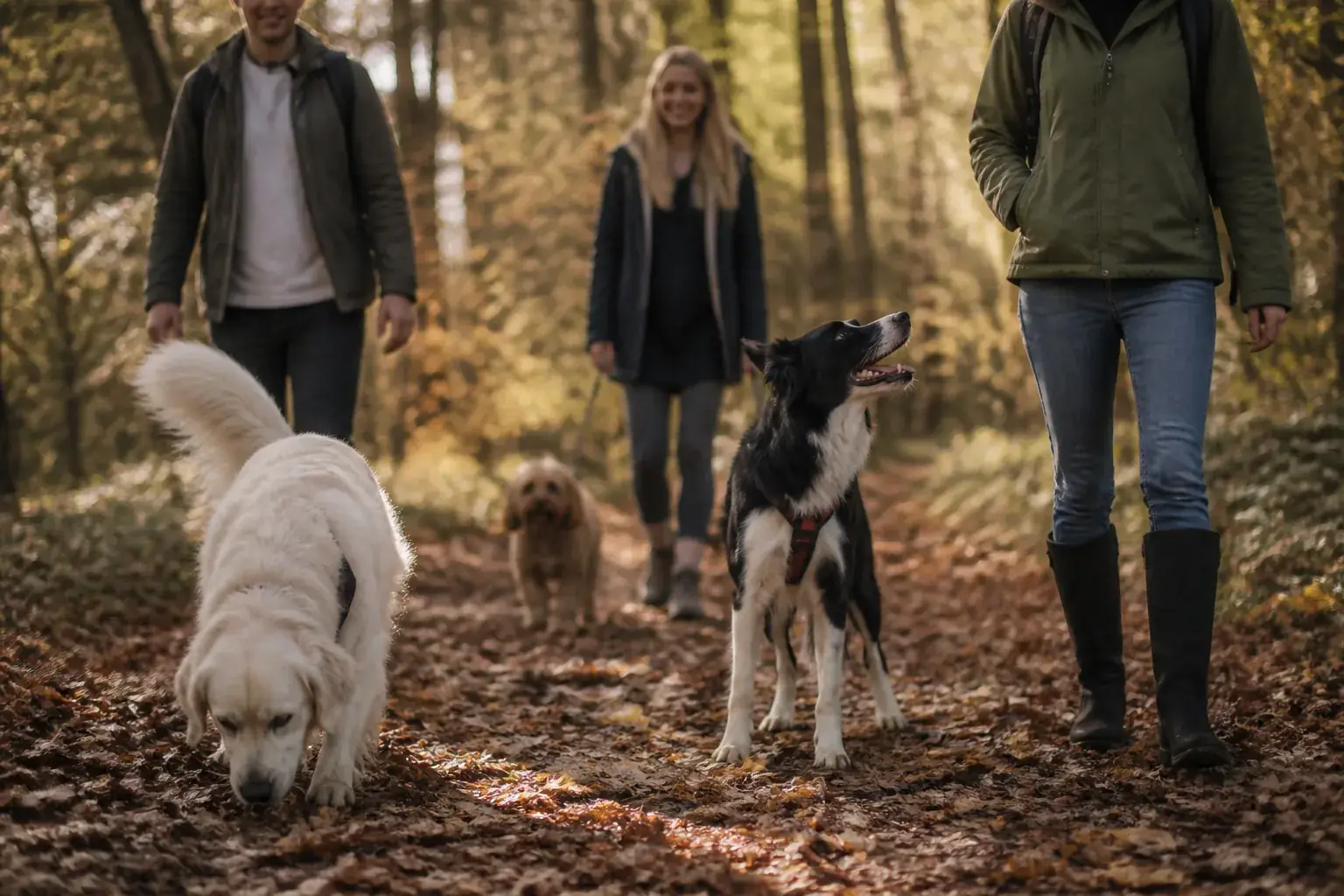
Write to us about what is actually happening with your dog. We will tell you which kind of service would help - and, if that is the case, that you need none of them.