Advice before buying or adopting a dog
A dog will be with you for years. Advice before you commit helps you hold what you want up against what you really have:...

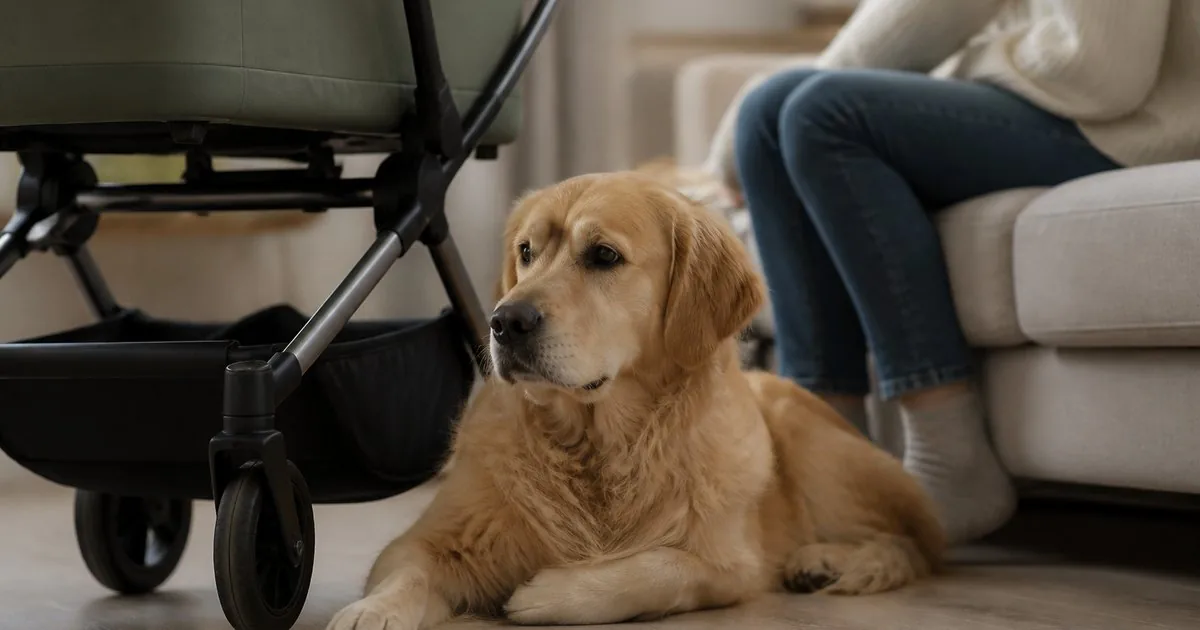
Before the newborn comes home, you gradually change the dog's routine and how the space is set up. That's also when you build the behaviours you'll need.
Preparation starts before the birth. You can bring in changes to the schedule and the furniture one at a time. The same goes for the areas the dog is allowed into and for walks. Do it gradually and the dog won't link every lost freedom to the baby turning up. In the months before, you can build up a few behaviours: settling on a mat and waiting at the door. You teach it to walk calmly beside the pram and to go off to a safe space.
New sounds and objects get introduced at low intensity first, paired with things the dog enjoys. The dog doesn't need to get interested in the baby. It's enough that it can stay calm and choose its own distance. The first meeting is planned ahead, without a crowd. Nobody pushes the dog closer.
No dog should ever be left unsupervised with a baby or a small child, whatever its breed, age or history. Many people think it's enough to have an adult somewhere in the house. Supervision means an attentive adult, close enough to step in in time. Barriers and gates are normal tools, and so are separate areas.
If you see fear or guarding, or the dog freezes, growls or keeps avoiding the baby, get help before things escalate. Don't punish the dog for what it's telling you.
It's worth it above all if you're expecting a baby and your dog is sensitive to sounds or change. It also helps when access around the house and the dog's resting spot need reorganising.
The dog doesn't have to love the baby or stay near it. It's enough that the two can live safely in the same home and that the dog always has somewhere to get away to.
You look at the dog's routine and how it reacts to change. Then you bring in the barriers and the new objects.
Practise calm settling at a distance. Make a clear supervision plan for after the baby arrives too.
Look out for a few signs. The dog tenses up at certain sounds or tracks every movement intensely. It avoids some rooms. It guards its resting place. Each of these shows you how it's coping with the change.
Before the birth you need safety gates and a retreat area that belongs to the dog alone. Plan how walks will work once the baby is here. Agree shared rules for adults and visitors as well.
With serious preparation, supervision is active: the adult is watching the dog and the baby, not just sitting in the same room. Nobody takes photos with the dog pressed up against the baby, and closeness is never forced. The dog's resources and rest are carefully managed. The goals are realistic and you can see them. You get an explanation of what criteria the dog is asked to meet, how you reward it and how the difficulty goes up.
It helps a lot if the dog knows how to go to its place and retreat behind a barrier. A reliable recall matters too. Physical separation and supervision are still non-negotiable, however well the dog does these.
No dog should be left alone with a small child. Pain or a sudden change in behaviour needs assessing. Talk the risks through openly. Unsupervised access is the first. The second is punishing the dog for signalling discomfort. And the third is changing every routine at once.
How a service is organised responsibly, how to recognise quality, where the limits are and what to ask before you pay - explained once, for all services.
This page explains the service, it does not sell it. Some of these we run ourselves, others happen at a veterinary practice, a grooming salon, or with people we work alongside.
Frequently asked questions
It makes most sense for families expecting a baby and for dogs sensitive to sounds or change. It also helps in homes where access and rest areas need reorganising.
Get safety gates and a retreat area for the dog ready. Plan walks for after the birth. Agree shared rules for adults and visitors.
Watch whether it tenses at sounds or intensely tracks movement. Notice if it avoids certain rooms or guards its resting place. Good signs are that it takes rewards and can turn towards its handler.
No dog should be left alone with a small child. Pain or a sudden change in behaviour needs assessing.
Going to a place and retreating behind a barrier are useful, and so is a recall. Physical separation and supervision remain non-negotiable.
Training and education
A dog will be with you for years. Advice before you commit helps you hold what you want up against what you really have:...
In temperament testing, the dog is put into standardised or controlled situations and someone watches how it reacts. Wha...
Sports preparation builds the exercises to a set of rules. Along the way the dog gains precision and stamina, learns emo...
Home training happens where the dog spends its day, so it's where a lot of the everyday behaviour shows up. The instruct...
With Board and Train, the dog stays in boarding accommodation for a while and works through a training programme agreed...
In a one-to-one session, the instructor works with just you and your dog. The exercises change as you go, depending on h...
Write to us about what is actually happening with your dog. We will tell you which kind of service would help - and, if that is the case, that you need none of them.