Temperament testing
Temperament testing observes a dog's reactions in standardised or controlled situations, in order to gather information...


Advice of this kind helps a family compare what they want with the time, budget, space and experience they actually have, before a decision that lasts for years.
The choice should not be made on looks alone, on a moving story or on a general description of the breed. What counts is the time available, the daily schedule, the family's experience, the children, the other animals, the space, the budget, the tolerance for noise, the appetite for activity and the access to veterinary and training services.
Advice helps you formulate the right questions: what history does the dog have, how does it react to being handled, what activity level does it show, how does it cope alone, what medical problems exist, how was it raised and what support will it need. With puppies you have to take into account development, socialisation and the fact that the adult temperament cannot be fully predicted from one short meeting.
A responsible specialist does not “choose” the dog for the family, but explains the risks and how well it fits. Sometimes the best recommendation is to wait. That is not a lack of love for animals; it is respect for the life the dog will have after the decision.
It is most useful in contexts such as first-time owners, families with children or other animals, and people torn between a puppy, an adult or a senior dog.
No breed and no age guarantees a particular character, and choosing by appearance or reputation can ignore the needs of the individual.
reviewing the schedule and the resources; a discussion about life stages and needs.
criteria for a responsible source and for the medical information; a plan for the first few weeks.
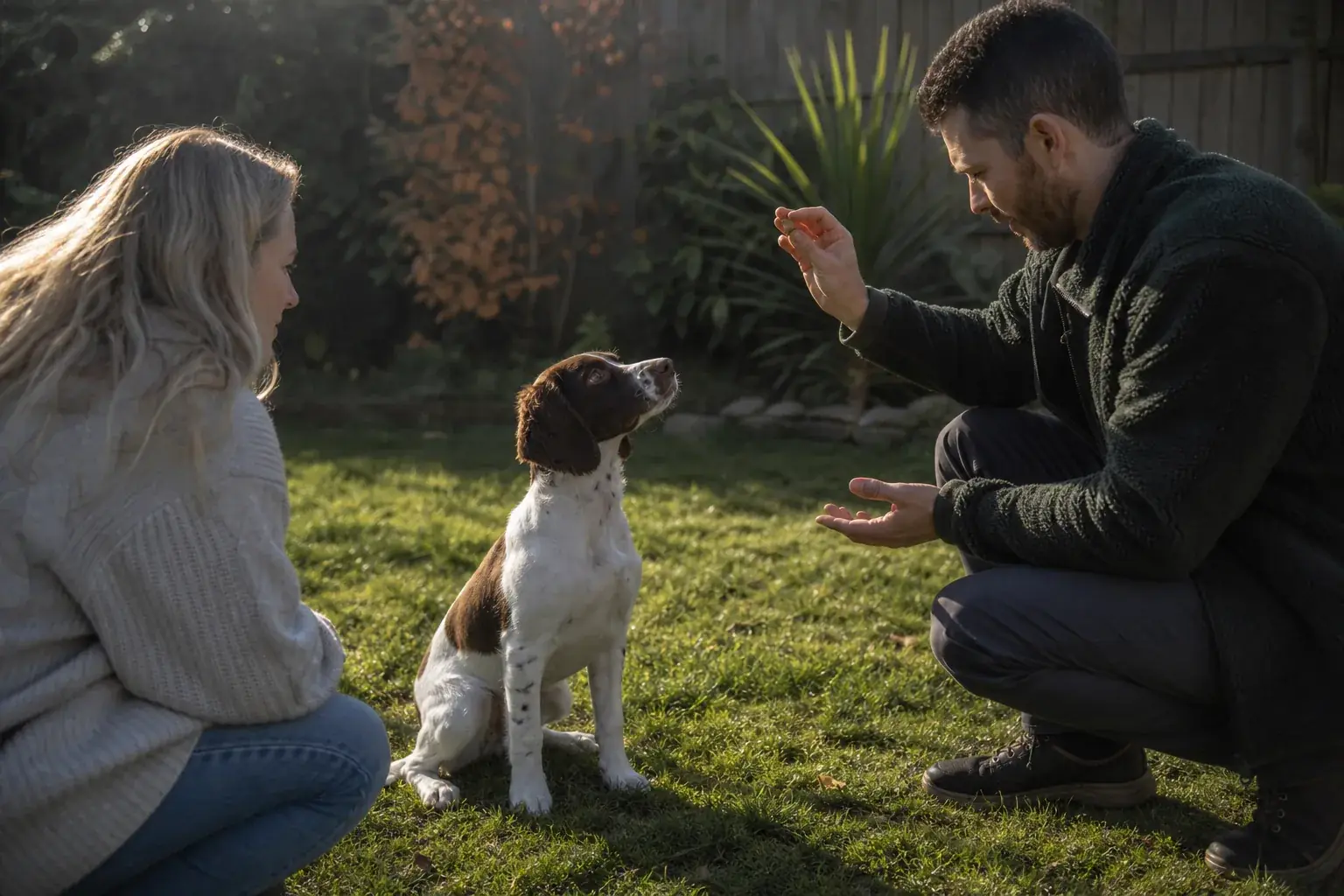
Signs such as how a particular dog explores and recovers, its activity level, its tolerance of being handled and its reaction to children, people and other animals can show how the animal is experiencing the situation.
Beforehand you need information and resources such as an estimated budget, a plan for holidays, the responsibilities of each adult and access to a vet and an instructor.
More useful criteria are a conversation without sales pressure, the difficulties presented rather than only the advantages, an openness to postponing the decision, observable and realistic goals, and explanations about criteria, rewards and progression.
Advice of this kind is a form of prevention: a realistic plan reduces the need for corrections later and helps the family start the dog's education from day one.
it cannot predict exactly what the future dog's personality will be; it does not replace checking the source and the paperwork. Among the risks to be discussed are an impulsive purchase, expectations based on stereotypes and underestimating the costs and the time involved.
How a service is organised responsibly, how to recognise quality, where the limits are and what to ask before you pay - explained once, for all services.
This page explains the service, it does not sell it. Some of these we run ourselves, others happen at a veterinary practice, a grooming salon, or with people we work alongside.
Frequently asked questions
It can make sense above all for first-time owners, families with children or other animals, and people torn between a puppy, an adult or a senior dog.
Useful information includes an estimated budget, a plan for holidays, the responsibilities of each adult and access to a vet and an instructor.
You watch how a particular dog explores and recovers, its activity level, its tolerance of handling, its reaction to children, people and other animals, whether it can take rewards and whether it can turn towards its handler.
it cannot predict exactly what the future dog's personality will be; it does not replace checking the source and the paperwork.
Advice of this kind is a form of prevention: a realistic plan reduces the need for corrections later and helps the family start the dog's education from day one.
Training and education
Temperament testing observes a dog's reactions in standardised or controlled situations, in order to gather information...
Sports preparation builds the exercises according to a set of rules and develops precision, endurance, emotional control...
Training at home takes place in the environment where some of the everyday behaviours appear, and allows the family's re...
Board and Train means the dog lives temporarily in boarding accommodation and takes part in an agreed training programme...
One-to-one sessions give dedicated time to a single human-dog team and allow the exercises to be adjusted according to p...
A behaviour assessment gathers information about the dog's history, health, environment and reactions in order to form h...
Write to us about what is actually happening with your dog. We will tell you which kind of service would help - and, if that is the case, that you need none of them.