Pet hotel with a training programme
Boarding plus training sessions. It sounds good, but it only means something once it can be put into numbers: how many s...

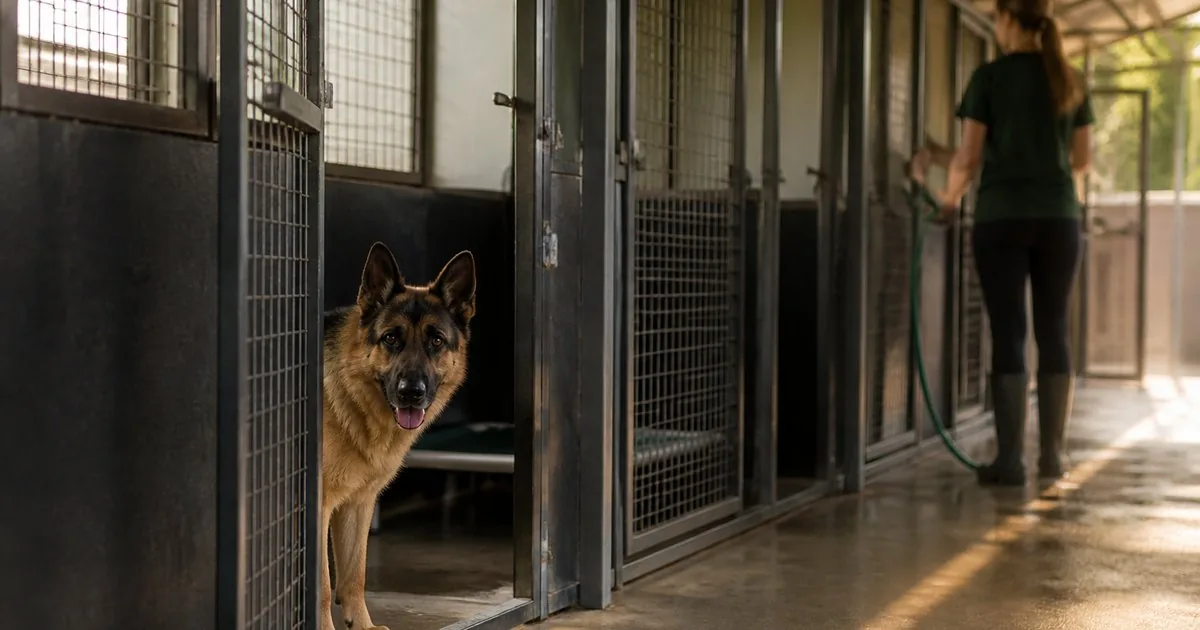
A boarding kennel provides temporary accommodation, food, outings and supervision in a space away from the dog's home.
A boarding kennel offers temporary accommodation when the owner cannot take the dog along. For some dogs, the new environment is interesting and easy to handle. For others, the change can be demanding: a different schedule and separation from the family take time to adjust to. That is why an assessment before the stay matters.
A well-run kennel is not just about clean pens. It has admission procedures, acceptance criteria, safe spaces, ventilation, access to water, a cleaning schedule, rest areas and a plan for medical situations. Dogs have to be observed individually, not treated as one uniform group. One may need more movement, another more sleep, and another visual separation from the rest.
Before a longer stay, an acclimatisation visit or a short trial period can help. The owner can see how the dog enters the space, how the staff respond and what happens when signs of stress appear. It is important to discuss the feeding schedule, which belongings are allowed, how to stay in contact, the policy on interaction between dogs and the criteria used to decide whether an animal is moved to a quieter area.
A stay should not mean continuous activity. Sleep and periods without interaction are essential. A dog running about all day may look “happy", but it can be too aroused to rest. Staff have to recognise the difference between balanced play and compulsive behaviour, between curiosity and agitation, between occasional vocalising and persistent stress.
Among the situations where it can make sense are holidays or longer trips, cases where supervision at home is not possible and dogs that can tolerate a change of environment.
A large space and lots of activities do not automatically mean a suitable experience; for some dogs, quiet, separation and predictability matter more.
a visit or an assessment before the stay; establishing the medical and behavioural conditions.
gradual acclimatisation where possible; accommodation with monitoring and a final report.
Signs such as persistent vocalising, repetitive pacing, diarrhoea or refusing food can show how the animal is experiencing the situation.
Beforehand you need information and resources such as portioned food with instructions, medical documents and contacts, belongings the kennel allows and information about rest and handling.
More useful criteria are safe, easily cleaned areas, separation between dogs when needed, real supervision and an emergency plan, a detailed initial conversation, and a protocol for keys, access, the leash and emergencies.
Some basic behaviours, such as going into the pen, waiting at the door and being handled, can make the stay easier, but boarding should not be presented as a universal solution for anxiety.
Boarding is not the right option for every dog, and the preparation starts with the dog's health. Book a veterinary check before you reserve and make sure the vaccinations are up to date, including the ones kennels ask for on top of the usual schedule - the kennel cough vaccine is required almost everywhere, and some places want it given at least two weeks before the stay. Internal and external parasite treatment belongs in the same conversation.
Talk to the kennel in advance, not on the day of the stay: which medical documents they require, what rules they have on admission, which belongings they accept and what they recommend for preparing the dog. Every place has its own conditions, and some ask for a prior visit or a short trial period. Questions asked beforehand save surprises at the door.
A good decision about a pet hotel or boarding kennel does not start from the idea that the same format has to work for everyone.
How a service is organised responsibly, how to recognise quality, where the limits are and what to ask before you pay - explained once, for all services.
This page explains the service, it does not sell it. Some of these we run ourselves, others happen at a veterinary practice, a grooming salon, or with people we work alongside.
Frequently asked questions
It can make sense above all for holidays or longer trips, cases where supervision at home is not possible and dogs that can tolerate a change of environment.
Useful information includes portioned food with instructions, medical documents and contacts, belongings the kennel allows and information about rest and handling.
You watch for persistent vocalising, repetitive pacing, diarrhoea or refusing food, the appetite and water intake, and the quality of the rest.
The dog's health, through a veterinary check, and up-to-date vaccinations - including kennel cough, which almost every kennel requires. Then you discuss with the place which documents they ask for, what rules they have on admission and what they recommend for preparing the dog.
Some basic behaviours, such as going into the pen, waiting at the door and being handled, can make the stay easier, but boarding should not be presented as a universal solution for anxiety.
Care and supervision
Boarding plus training sessions. It sounds good, but it only means something once it can be put into numbers: how many s...
Supervision during the day, without staying overnight. Good daycare is not eight hours of uninterrupted play: there is a...
Someone stays with your dog overnight, either at its home or in boarding. It is not simply a person sleeping in the same...
Short visits for a dog that can be alone in between, but needs food, fresh water, a toilet break and possibly medication...
More than a car journey: the dog has to be loaded and unloaded safely, secured inside the car and protected from heat. L...
Someone comes to your dog’s home and keeps its routine going while you are away. The big advantage: nothing around...
Write to us about what is actually happening with your dog. We will tell you which kind of service would help - and, if that is the case, that you need none of them.