Transport to the vet, kennel or groomer
More than a car journey: the dog has to be loaded and unloaded safely, secured inside the car and protected from heat. L...

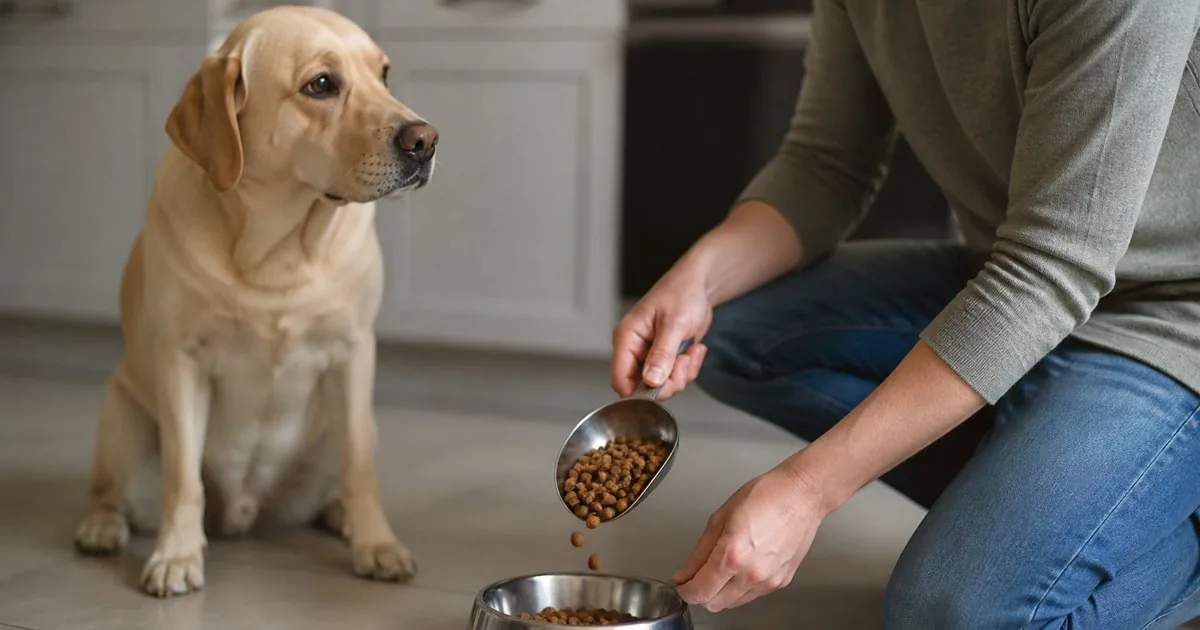
Short home visits cover specific needs, such as feeding, changing the water, an outing and giving medication that has already been prescribed.
Short visits suit situations where the dog can be left alone between them but needs food, fresh water, an outing to toilet, a check on its general condition, or a prescribed treatment. The duration has to be chosen realistically. A visit of a few minutes can be enough to top up the water, but not necessarily for a dog that needs a walk, interaction and time to settle in the person's presence.
The instructions have to be written down clearly. The food is portioned according to the family's plan, and treats are not added without agreement. With treatments, the person has to be able to give the product without a struggle and without putting the dog at risk. If the animal refuses, vomits, spits the medicine out or reacts defensively, this is reported immediately. The dose is not doubled and nothing is improvised.
A responsible visit also includes a quick check: the dog is there and responding normally, the water has not been spilled, the temperature in the home is suitable, and there is no sign of blood, vomit, diarrhoea or damage that might suggest something has been swallowed. Any significant change is photographed or described and sent to the owner.
It is most useful in contexts such as animals that can be left alone between visits, situations with a simple, stable routine, and families away for limited periods.
A short visit is not the same as continuous supervision and is not enough for a dog that panics, self-harms or needs medical monitoring.
written instructions and a demonstration of the procedure; confirming the identity of the product and the dose prescribed.
a visit with a check on the general condition; recording the dose given and reporting any problems.
Signs such as refusing food or water, vomiting or diarrhoea, hiding and defensive reactions when the treatment is brought near can show how the animal is experiencing the situation.
The owner's preparation includes labelled portions, the product in its original packaging, the times and route of administration, and the contact details of the vet and of a back-up person.
More useful criteria are a record of every visit, exact compliance with the instructions, the ability to stop the procedure where there is a risk, a detailed initial conversation, and a protocol for keys, access, the leash and emergencies.
Training for handling and for accepting procedures voluntarily can reduce stress, but it does not justify forcing the dog when it is in pain or reacting strongly.
it does not allow the dose to be changed without the vet; it is not suitable for treatments that require medical competence or monitoring. Among the risks to be discussed are a missed or doubled dose, a bite while giving medication, and a delay in spotting an adverse reaction.
The routine does not have to be copied mechanically, but the main reference points help: roughly the same feeding times, access to water, walks, rest, and the way the dog is called or has its equipment put on. Many changes made at once make it hard to work out what is causing any discomfort. When the schedule has to change, it is safer for the change to be predictable and communicated.
How a service is organised responsibly, how to recognise quality, where the limits are and what to ask before you pay - explained once, for all services.
This page explains the service, it does not sell it. Some of these we run ourselves, others happen at a veterinary practice, a grooming salon, or with people we work alongside.
Frequently asked questions
It can make sense above all for animals that can be left alone between visits, situations with a simple, stable routine, and families away for limited periods.
Useful information includes labelled portions, the product in its original packaging, the times and route of administration, and the contact details of the vet and of a back-up person.
You watch for refusing food or water, vomiting or diarrhoea, hiding, defensive reactions when the treatment is brought near, the appetite and water intake, and the quality of the rest.
it does not allow the dose to be changed without the vet; it is not suitable for treatments that require medical competence or monitoring.
Training for handling and for accepting procedures voluntarily can reduce stress, but it does not justify forcing the dog when it is in pain or reacting strongly.
Care and supervision
More than a car journey: the dog has to be loaded and unloaded safely, secured inside the car and protected from heat. L...
Someone comes to your dog’s home and keeps its routine going while you are away. The big advantage: nothing around...
It looks like the simplest service on the list and it is actually the one with the most variables: traffic, bikes, child...
Temporary accommodation for when your dog cannot come with you. For some dogs it is an interesting experience; for other...
Boarding plus training sessions. It sounds good, but it only means something once it can be put into numbers: how many s...
Supervision during the day, without staying overnight. Good daycare is not eight hours of uninterrupted play: there is a...
Write to us about what is actually happening with your dog. We will tell you which kind of service would help - and, if that is the case, that you need none of them.