Puppy starter packs
Puppy packs bring together the things you need at the start, such as equipment, hygiene products, toys and information m...

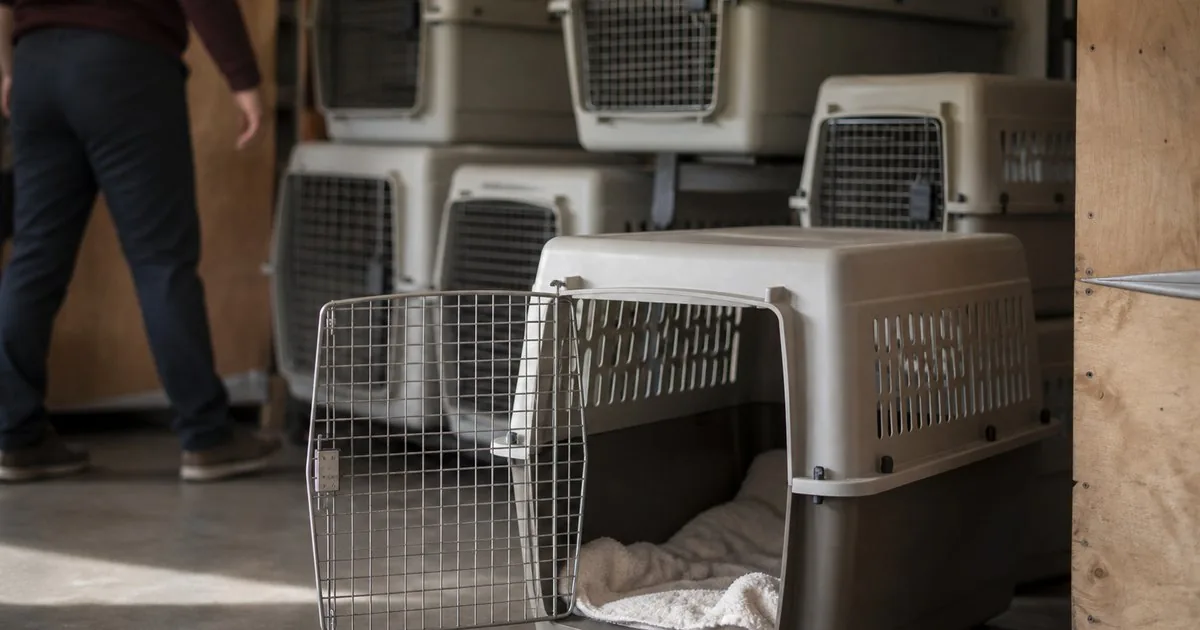
Renting lets you use a crate temporarily for the car, a flight, recovery or boarding, without buying one straight away.
Renting a crate can be useful for an occasional trip, recovery, a move, a visit, or a trial period before buying. The service has to give clear dimensions, terms of use, cleaning and a check on the crate's integrity.
The crate is chosen so that the dog can stand, turn round and lie down in a natural position, taking into account the carrier's rules where it is used for air travel or another regulated system. A crate that is too big is not automatically better for every kind of transport, and one that is too small can cause discomfort and risk.
Before handover, the door, the locking mechanisms, the joints, the ventilation, the base and any wheels or handles are checked. Damaged parts are not improvised. For international transport, the owner has to confirm that the model meets the requirements of the carrier and the destination; the rental service cannot guarantee acceptance without these checks.
Cleaning between users is compulsory. It has to be explained which products were used and whether there is enough time for drying and airing. Textile accessories can be individual or washed at suitable temperatures and by suitable procedures.
The dog is got used to the crate before the day of departure. Renting for a period that allows the dog to get used to it is more useful than picking it up at the last minute. A guide to a positive introduction is provided: the door open, food inside, voluntary entries, closing the door gradually and short sessions.
The contract has to set out the period, the deposit, liability, cleaning, damage and what happens if the crate has to be swapped. Photographs at handover and on return protect both sides.
It is most useful in contexts such as occasional trips, testing a size before buying, and temporary situations where a carrier is needed.
A crate that is available is not automatically accepted by every carrier, nor suited to the dog's build or behaviour.
measuring the dog and checking the rules; inspecting the crate.
getting the dog used to it before use; cleaning and returning it according to the terms.
Signs such as refusing to go in, panting or scratching, an uncomfortable posture and trying to chew the door can show how the animal is experiencing the situation.
A preparation sheet should cover the exact dimensions, the purpose and duration, the carrier's requirements, and time for training.
More useful criteria are a structure with no cracks, a working door and locks, cleaning between uses, assembly instructions, a transparent description of the product or activity, and safety rules that are easy to find.
Getting used to the crate is a training process separate from the rental and has to be started before the day of travel.
renting does not guarantee compliance with a transport company's rules; the crate is not used as a punishment. Among the risks to be discussed are escape through faulty parts, injury in the wrong size, the spread of pathogens and being refused boarding.
A good decision about transport crate rental does not start from the idea that the same format has to work for everyone.
How a service is organised responsibly, how to recognise quality, where the limits are and what to ask before you pay - explained once, for all services.
This page explains the service, it does not sell it. Some of these we run ourselves, others happen at a veterinary practice, a grooming salon, or with people we work alongside.
Frequently asked questions
It can make sense above all for occasional trips, testing a size before buying, and temporary situations where a carrier is needed.
Useful information includes the exact dimensions, the purpose and duration, the carrier's requirements, and time for training.
You watch for refusing to go in, panting or scratching, an uncomfortable posture, trying to chew the door, whether the dog can withdraw, and the level of arousal and the ability to take breaks.
renting does not guarantee compliance with a transport company's rules; the crate is not used as a punishment.
Getting used to the crate is a training process separate from the rental and has to be started before the day of travel.
Retail and events
Puppy packs bring together the things you need at the start, such as equipment, hygiene products, toys and information m...
Professional photography aims for good-quality images of the animal alone or together with the family, in a studio or ou...
Photographing during training documents the relationship, the technique and the progress without turning the exercise in...
A dog birthday can be a get-together, a special activity or a quiet experience chosen to suit the dog's preferences.
Dog events can include walks, demonstrations, activities, educational meet-ups or recreational competitions.
A pet taxi is a booked transport service to the vet, the salon, a boarding kennel, training or another destination.
Write to us about what is actually happening with your dog. We will tell you which kind of service would help - and, if that is the case, that you need none of them.