Transport crate rental
Renting a crate lets you use one for a while, for the car, a flight, recovery or boarding, without having to buy one str...

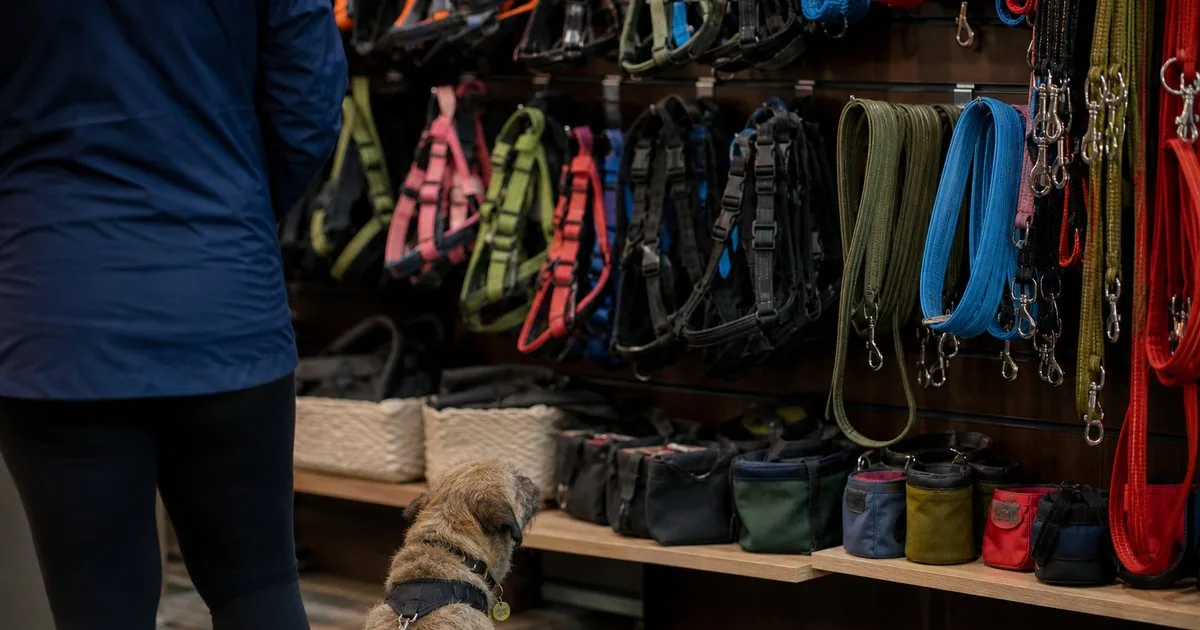
A specialist shop stocks leashes, long lines, harnesses, muzzles, treats, toys and plenty of other gear you use to train your dog or do activities together.
A shop built around training should help you pick the right thing. Full shelves are no use if you go home with a harness that rubs. Gear has to fit your dog and what you do with it. The size on the packet is just a starting point. Body shape, chest girth, strap width, where the buckles sit and the way the dog moves all matter as much.
What you might find there: leashes in different lengths, long lines, walking harnesses, harnesses for scent work or pulling sports, collars, basket muzzles, treats, toys, coats, reflective kit, bowls, targets, clickers, treat pouches, transport gear. Each product description should tell you what it's for and where it stops working, not only sell you the upsides.
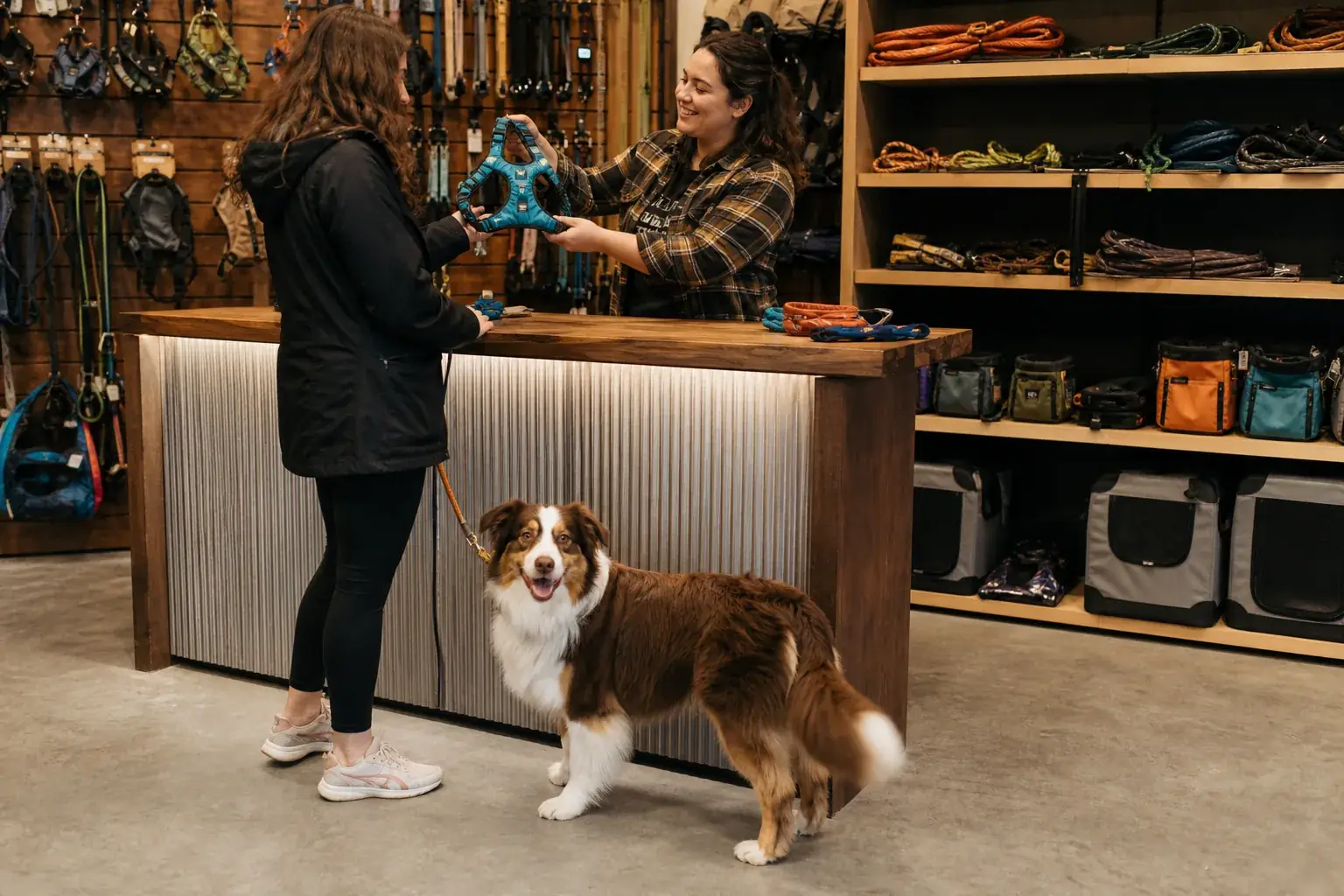
Try things on and adjust them before you pay. A harness can look fine while the dog stands still, then rub under the armpit or shorten his stride once he moves. A muzzle has to let him open his mouth wide enough to pant and take a treat. A really thin leash cuts into your hand with a strong dog. A heavy one weighs down a small dog.
Products that work through pain, fear or heavy pressure aren't shortcuts, and a shop shouldn't sell them as if they were. Even an ordinary leash can be used badly. Good staff will show you on the spot how to fit the gear, how to look after it and what to check before you put it on the dog.
With treats and anything edible, read the ingredients and check the piece size. Look at the best-before date and the storage instructions too. You're the one who knows what your dog eats, what he's allergic to, how much he weighs and what your vet has told you. A shop doesn't prescribe treatments, and it shouldn't push supplements as a fix for everything.
It helps a lot when a shop lets you swap sizes on items tried on in clean conditions, and has measuring sheets and advice for each activity. You want to walk out with the item that suits your dog, even if it isn't the priciest one on the shelf.
It's most useful when you need suitable gear and don't know where to start, when you and your dog are taking up a specific activity, or when you have a dog whose size and materials need careful checking.
A huge range doesn't mean good advice. Labels like “anti-pull” or “corrects behaviour” set up expectations no piece of kit can meet.
First you say what you need the gear for. Then you measure the dog and compare the options side by side.
You try it on the dog and adjust it. You get instructions for use, and after you buy, you check it again at home after a few walks.
Watch your dog. Rubbing or restricted movement, trying to wriggle out of the gear, fear when you put it on, or discomfort after wearing it all tell you how he's experiencing it.
Come prepared: the dog's measurements and a few useful photos, a description of the activity you're buying for, any history of escaping (has he ever backed out of a harness or collar?), and a clear idea of your budget and what you really need for this dog.
Things worth looking for: accurate information about materials and limits, a clear policy for the wrong size, no medical claims that can't be backed up, a straightforward description of the product or activity, and safety rules that are easy to find.
A good shop can back up your training with the right tools and clear explanations. You still build the behaviour you want with your dog, because no object produces it on its own.
Products don't replace training, and safety gear needs checking regularly. Risks worth talking through with the staff: gear that breaks, a poor fit, use as punishment, and parts or toys the dog could swallow.
How a service is organised responsibly, how to recognise quality, where the limits are and what to ask before you pay - explained once, for all services.
This page explains the service, it does not sell it. Some of these we run ourselves, others happen at a veterinary practice, a grooming salon, or with people we work alongside.
Frequently asked questions
Mostly when you need suitable gear, when you're starting a specific activity with your dog, or when your dog's size and materials need careful checking.
Bring the dog's measurements and a few useful photos, a description of the activity, any history of escaping, your budget and what you really need for this dog.
Watch the dog: rubbing or restricted movement, trying to get the gear off, fear when it goes on, discomfort after use. It also matters whether he can move away, how wound up he gets and whether he can still take breaks.
Products don't replace training, and you have to check safety gear regularly yourself.
The shop can back you up with the right tools and clear explanations, but you build the behaviour with your dog. No object produces it on its own.
Retail and events
Renting a crate lets you use one for a while, for the car, a flight, recovery or boarding, without having to buy one str...
Puppy packs put the things you need at the start in one place: equipment, hygiene products, toys, plus some reading for...
A professional shoot gets you good-quality pictures of your dog, on his own or with the family, in a studio or outdoors.
Photos taken during training capture your relationship with the dog, your technique and how far you've come, without the...
A dog's birthday can be a get-together with friends, a special outing or a quiet day in. Pick what suits him.
A dog event might be a group walk, a demo, an activity, an educational meet-up or a fun competition.
Write to us about what is actually happening with your dog. We will tell you which kind of service would help - and, if that is the case, that you need none of them.