Advice for families with several dogs
The advice helps the family organise the resources, the spaces, the walks and the interactions so that each dog has safe...

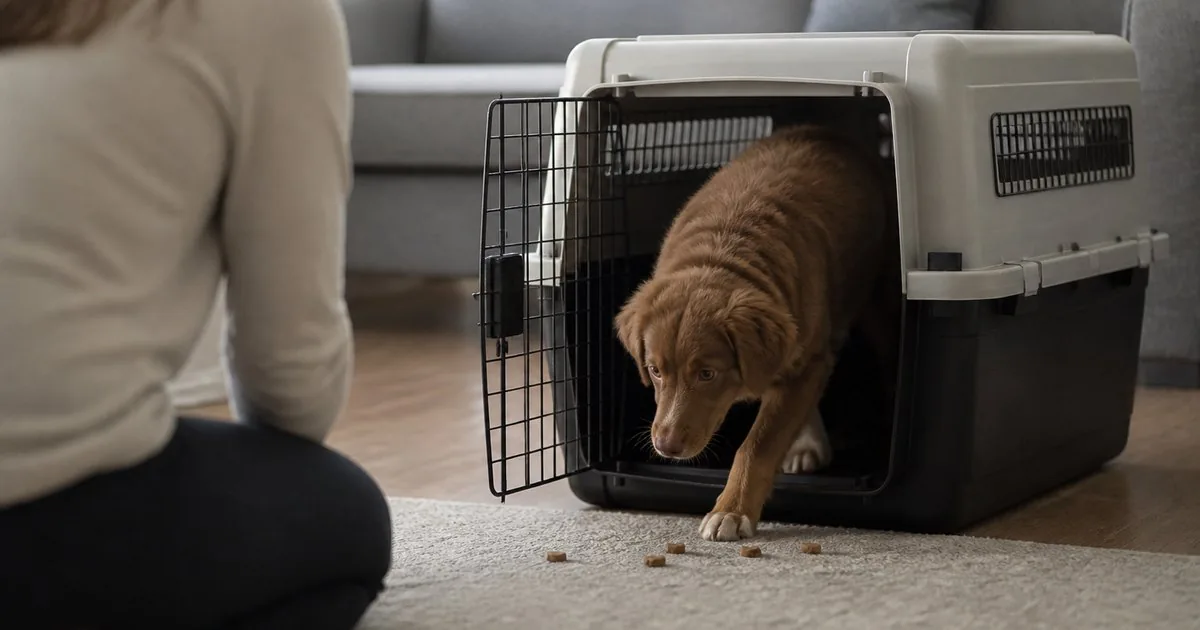
The aim is to build the dog's association with the crate, the vehicle, movement and short safe periods of waiting, step by step.
A crate can become a safe space if it is introduced gradually. It is left open, food and rewards are offered inside, and the dog chooses to go in. The door is closed for very short intervals only once the animal is comfortable. The duration, and the owner's distance, increase gradually.
The crate is not used as punishment and does not make up for a lack of exercise or supervision. The size has to let the dog stand, turn round and lie down comfortably, taking into account any specific transport rules that apply.
For the car, training can start with approaching the vehicle, getting in with the engine off, then the engine running, short journeys and pleasant destinations. The dog is secured before you set off. Getting in and out is done with the leash attached, to prevent bolting.
If the animal drools, vomits, trembles, vocalises or refuses the car, the cause may be travel sickness, fear or both. The exercises are combined with the vet's advice, without forcing long journeys.
It can be considered above all for puppies before their first journeys, for dogs that refuse the car and for animals that will travel or go to the vet and to boarding.
Shutting a dog in for a long journey straight away can cause panic, and a crate used as punishment becomes much harder to accept.
voluntary exploration of the crate; closing the door for short intervals.
getting used to the car with the engine off and then running; short journeys, increasing gradually.
Signs such as drooling and nausea, scratching at the door, trembling and refusing to approach the vehicle can show how the animal is experiencing the situation.
A preparation sheet should cover a crate of the right size, a securing system, rewards and a conversation with the vet about travel sickness.
More useful criteria are progression in small steps, neutral or pleasant destinations, never leaving the dog unattended in the vehicle, clear goals with usable materials, and examples adapted to everyday life.
This is a training intervention based on desensitisation and positive association, in which the pace is set by the dog's response, not by the departure date.
sedation is never given without a vet; a crate does not make up for a lack of exercise or rest. Among the risks to be discussed are escaping when the door opens, overheating, injury in an unsecured crate and intense panic.
How a service is organised responsibly, how to recognise quality, where the limits are and what to ask before you pay - explained once, for all services.
This page explains the service, it does not sell it. Some of these we run ourselves, others happen at a veterinary practice, a grooming salon, or with people we work alongside.
Frequently asked questions
It can make sense above all for puppies before their first journeys, for dogs that refuse the car and for animals that will travel or go to the vet and to boarding.
Useful information includes a crate of the right size, a securing system, rewards and a conversation with the vet about travel sickness.
When the recommendations concern a particular dog, you watch for drooling and nausea, scratching at the door, trembling, refusing to approach the vehicle, fewer situations in which the dog has to be forced, and more predictable responses from the family.
sedation is never given without a vet; a crate does not make up for a lack of exercise or rest.
This is a training intervention based on desensitisation and positive association, in which the pace is set by the dog's response, not by the departure date.
Services for owners
The advice helps the family organise the resources, the spaces, the walks and the interactions so that each dog has safe...
Online support offers clarification and feedback between sessions, usually based on a plan already agreed and on video r...
A monthly subscription can include regular sessions, activities, a review of progress and an updated plan once a basic c...
Courses for future owners set out the responsibilities, the costs, the stages of development and the decisions that need...
First aid workshops teach owners to recognise an emergency, reduce the risks and get the dog to veterinary services.
These courses help people notice the posture, the movement, the gaze, the tension and the subtle changes through which a...

Write to us about what is actually happening with your dog. We will tell you which kind of service would help - and, if that is the case, that you need none of them.