Advice on choosing equipment
Advice on equipment looks at the purpose, the build, the behaviour and the environment in order to choose the right harn...

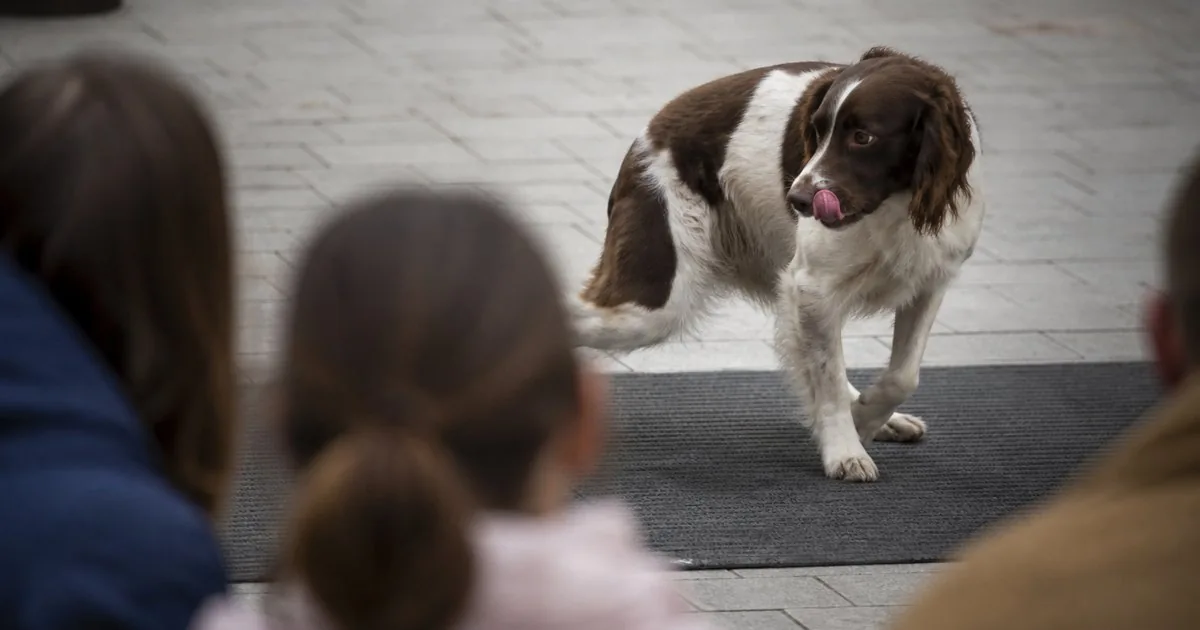
These courses help people notice the posture, the movement, the gaze, the tension and the subtle changes through which a dog communicates.
Dogs communicate through body posture, movement, gaze, the position of the ears and tail, tension, breathing, orientation and distance. No signal is interpreted in isolation. A wagging tail does not automatically mean happiness. A dog standing still may be relaxed, or may be frozen with fear. The context and the sequence of signals are essential.
A body language course helps owners notice the early signs, before the barking, the lunging or the bite. Turning the head away, avoidance, lip licking, tensing up, slowing down, yawning, lifting a paw, a change in breathing and seeking distance can all indicate discomfort. Not all of them appear only under stress; that is why you look at the situation and at the behaviour of the whole body.
Participants can learn to compare photographs and video, to identify the start of an escalation and to watch the recovery after a stimulus. The difference between mutual play and one-sided interaction matters. In healthy play there are pauses, a swap of roles and the option of withdrawing. Persistent chasing, blocking, stiffness and ignoring the other dog's signals all call for intervention.
Knowing body language changes the way you train. The owner sees when an exercise is too hard, when the reward is no longer enough, or when the distance has to be increased. They learn not to punish the growl and not to force a greeting. That way, the dog no longer has to raise the intensity in order to be heard.
For families with children, the course has to include simple rules: the dog is not disturbed while it eats or sleeps, it is not followed, not ridden and not hugged. The adults supervise the interaction actively.
Among the situations where it can make sense are owners at the very beginning, families with children, and people taking part in training, socialisation or group activities.
No signal is interpreted in isolation. A wagging tail, a yawn or a low posture only make sense in context and within the sequence of behaviours.
presenting the parts of the body; analysing photographs and video.
observing the escalation and the recovery; applying it in everyday situations.
Signs such as tension and freezing, turning the head away, lip licking or avoidance, and a change in breathing and in distance can show how the animal is experiencing the situation.
To reduce improvisation, ethically recorded examples, situations the participants have met, questions about children and other dogs, and a willingness to revise interpretations all have to be prepared.
More useful criteria are the context explained, simplistic labels avoided, a distinction between observation and assumption, clear goals and usable materials, and examples adapted to everyday life.
In training, reading the body shows when the criterion is too hard, when the distance has to be increased, and whether the animal can still learn at that moment.
a course cannot diagnose from a single image; cases involving risk need an individual assessment. Among the risks to be discussed are mistaking fear for guilt, punishing the growl and forcing a greeting.
How a service is organised responsibly, how to recognise quality, where the limits are and what to ask before you pay - explained once, for all services.
This page explains the service, it does not sell it. Some of these we run ourselves, others happen at a veterinary practice, a grooming salon, or with people we work alongside.
Frequently asked questions
It can make sense above all for owners at the very beginning, families with children, and people taking part in training, socialisation or group activities.
Useful information includes ethically recorded examples, situations the participants have met, questions about children and other dogs, and a willingness to revise interpretations.
When the recommendations concern one particular dog, you watch for tension and freezing, turning the head away, lip licking or avoidance, a change in breathing and in distance, fewer situations in which the dog has to be forced, and more predictable responses from the family.
a course cannot diagnose from a single image; cases involving risk need an individual assessment.
In training, reading the body shows when the criterion is too hard, when the distance has to be increased, and whether the animal can still learn at that moment.
Services for owners
Advice on equipment looks at the purpose, the build, the behaviour and the environment in order to choose the right harn...
A personalised plan spreads exercise, scent work, training, play and rest across the week according to the dog and the f...
Travel advice organises the documents, the transport, the accommodation, the health matters, the equipment and the behav...
The aim is to build the dog's association with the crate, the vehicle, movement and short safe periods of waiting, step...
The advice helps the family organise the resources, the spaces, the walks and the interactions so that each dog has safe...
Online support offers clarification and feedback between sessions, usually based on a plan already agreed and on video r...
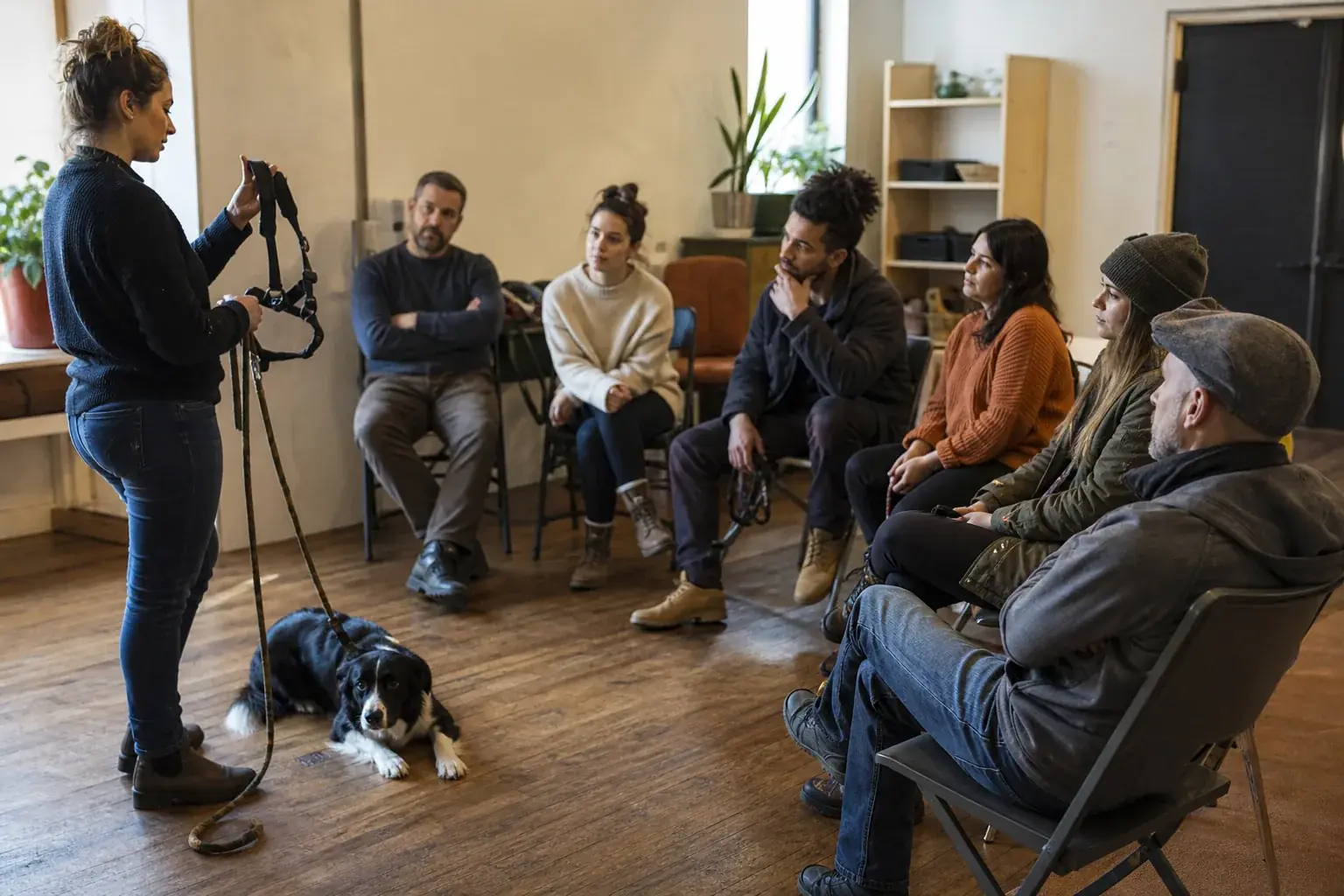
Write to us about what is actually happening with your dog. We will tell you which kind of service would help - and, if that is the case, that you need none of them.