Canine first aid workshops
A canine first aid workshop teaches you to recognise an emergency, cut down the risks until help is reached, and get you...


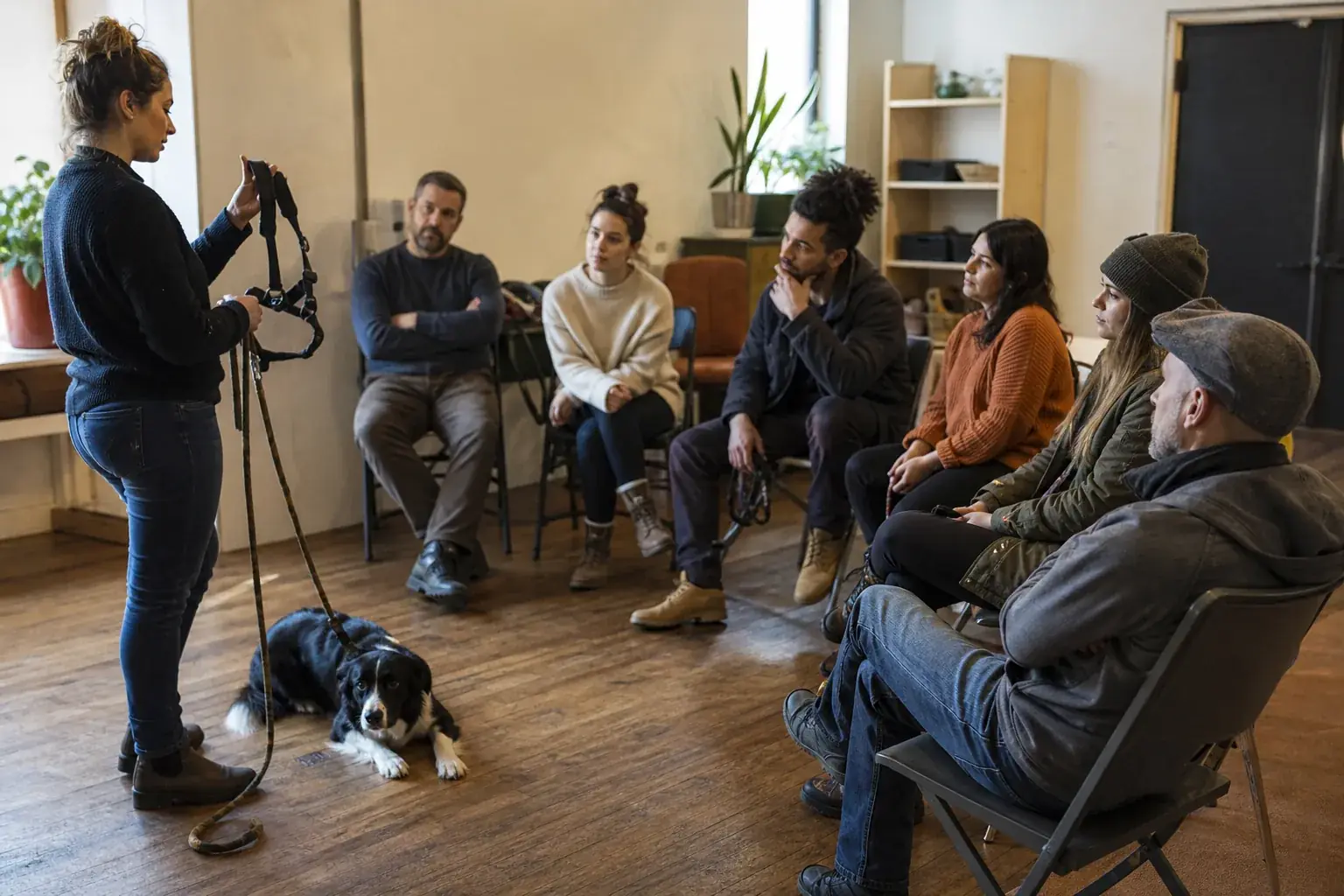
A course for future owners walks you through what you're signing up for before the dog comes home: the responsibilities and the costs, the stages a dog grows through, and the decisions worth making in advance.
A bit of preparation before the dog arrives heads off a lot of trouble in the first months. Nobody on a course like this is trying to talk you out of adopting or buying. The point is to help you choose realistically and get your home ready. Loving dogs is a good start. It won't free up time in your week, though, and it won't pay the vet. The dog still needs exercise. There will be noise and muddy paw prints, a settling-in period, and maybe some behavioural problems along the way.
You start with your own life. What does a normal day look like? How much space do you have, who lives with you, are there children or other animals? Then there's the budget, what happens when you go on holiday, and whether you've had dogs before. After that you look at how a puppy differs from an adolescent, an adult or a senior. A puppy needs watching a lot of the time, and socialisation and education start on day one. With an adult dog it's easier to see what you're getting, but he arrives with his own history and habits. A senior may be calm and easy, yet need medical care and a few changes around the house.
A good course tells you where to find information on the dog's health and origin, what to ask before you decide, and which warning signs to look out for. Colour, size or a glowing breed description won't tell you enough about the dog in front of you. His individual temperament matters, so do his early experiences and the family he's moving into.
Get the house sorted early. He needs a place to rest, with barriers where you need them and anything dangerous put away. Pick the equipment and agree the house rules between the adults. Decide beforehand where the dog sleeps and who feeds him, who takes him out, and how you'll get through the first few days. When every adult in the house does things the same way, the dog gets confused far less.
Expectations deserve a whole module. The dog won't know his name on day one, and he won't pick up the schedule or the rules straight away. The first weeks are about keeping him safe and building a routine. It's too early to drag him everywhere so he sees everything. As a future owner you learn to watch how he's settling in, and to ask for help early, while the problem is still small.
It helps most if this is your first dog, if the family is still torn between a puppy and an adult, or if you want to get your home and your schedule ready before the dog arrives.
Loving animals counts for a lot. It doesn't stand in for time or money, access to a vet, or being willing to change your routine for years to come.
The work starts with your lifestyle: your schedule, who can help, what can realistically change. From there you go through the stages a dog grows through and what he needs at each one.
Then comes the practical side. You prepare the house and the equipment, put together a plan for the first days and work out who to call if things get difficult.
The dog isn't home yet, but the course teaches you what to watch once he is: how he's settling in, his sleep and toileting, the signs of fear, and whether he can take himself off somewhere quiet when it gets too much. That's how you read how he's coping with the move.
Before the course, pull together a few things: the family's schedule, a rough budget, whether there are children or other animals at home, and your plan for holidays and emergencies.
Check that the information is balanced and nobody is pushing one particular breed or source of dogs on you. You should be able to use the planning exercises at home. Look for clear goals and materials worth keeping, with examples that look like your everyday life.
The course lays the groundwork for the dog's education. The family settles the rules and the rewards, sorts out the spaces and agrees on expectations before the first problems show up, so training starts on prepared ground.
The course can't make the decision for the family, and it can't guarantee that a particular dog will be a good match. Talk openly about the risks as well: choosing on impulse, expectations that don't match reality, buying the wrong equipment, and underestimating how long the settling-in period takes.
How a service is organised responsibly, how to recognise quality, where the limits are and what to ask before you pay - explained once, for all services.
This page explains the service, it does not sell it. Some of these we run ourselves, others happen at a veterinary practice, a grooming salon, or with people we work alongside.
Frequently asked questions
Mostly when it's your first dog, when the family is still choosing between a puppy and an adult, or when you want to get your home and schedule ready before he arrives.
You'll be asked about the family's schedule, a rough budget, whether there are children or other animals at home, and your plan for holidays and emergencies. In return you learn about the stages a dog goes through, what he needs, and how to prepare your home for the first days.
When the advice concerns one specific dog, watch whether participants learn to notice how he's settling in, his sleep and toileting, signs of fear and his ability to take himself away. Also look for fewer situations where the dog has to be forced, and a family that responds more predictably.
The course can't decide for the family, and it doesn't guarantee that a particular dog will be a good match.
It lays the groundwork for education: the family sets rules and rewards, spaces and expectations before difficulties appear.
Services for owners
A canine first aid workshop teaches you to recognise an emergency, cut down the risks until help is reached, and get you...
A body language course teaches you to see what your dog is telling you through posture and movement, through where he lo...
Picking the right harness, collar, leash, muzzle or crate comes down to what you want to do with your dog and how he's b...
An activity plan tells you when your dog gets exercise and when he gets to work his nose, where training and play fit in...
Travel advice helps you sort out the paperwork and transport well ahead, along with accommodation and the dog's health....
You get your dog used to the crate and the car one small step at a time, including the movement of the drive and the sho...
Write to us about what is actually happening with your dog. We will tell you which kind of service would help - and, if that is the case, that you need none of them.