Courses on canine body language
These courses help people notice the posture, the movement, the gaze, the tension and the subtle changes through which a...

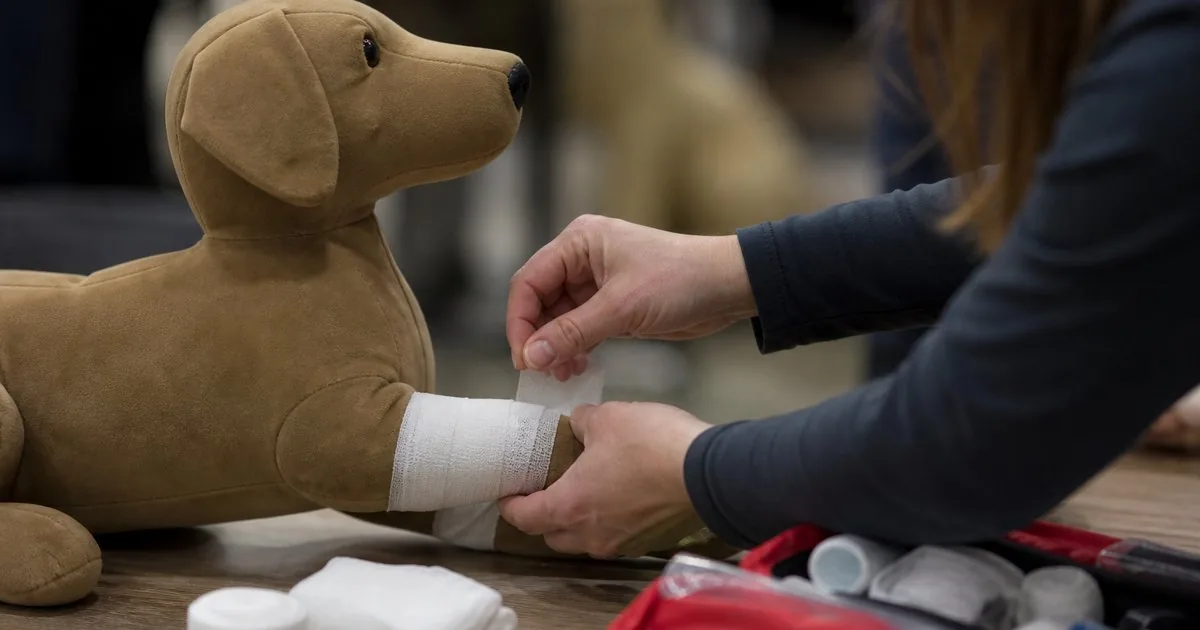
First aid workshops teach owners to recognise an emergency, reduce the risks and get the dog to veterinary services.
First aid does not replace the vet. Its role is to help the owner recognise an emergency, avoid actions that could make things worse, stabilise the animal as far as it is safe to do so, and get it quickly to veterinary services. A good workshop stresses the limits and calling for help, not improvised treatments.
Participants can learn how to assess the safety of the scene, how to approach an injured dog, how to reduce the risk of being bitten, how to observe breathing, consciousness and bleeding, and how to communicate clearly with the clinic. Even a gentle dog can bite when it is in pain or frightened.
Emergency bandaging, carrying the dog on an improvised surface, controlled handling and the contents of a kit can all be practised. The manoeuvres are taught on mannequins or in safe conditions, without causing discomfort to the dogs taking part. Information about resuscitation, obstructions, poisoning, trauma, heatstroke or seizures has to be presented by competent people and kept up to date.
The workshop has to discourage giving human medicines, inducing vomiting without instruction, and using remedies found online. Doses, antidotes and treatment are medical decisions. The owner can prepare in advance the numbers of their usual clinic and of the emergency service, the address, the route and the dog's documents.
The value of the course also lies in prevention: safety in the car, avoiding toxic foods and substances, protection in extreme temperatures, checking the paws and handling the leash. First aid starts before the accident, by reducing the risk.
Among the situations where it can make sense are owners of active dogs, people who travel with their animal and families who want to put together a kit and an emergency plan.
Taking part in a workshop does not turn the owner into a vet and does not justify treating a serious situation at home.
covering the safety of the scene and how to approach; a basic assessment of the dog's condition.
practising some manoeuvres on a mannequin; a plan for contacting the clinic and getting there.
Signs such as difficulty breathing, altered consciousness, pain and a defensive reaction, and bleeding or rapid deterioration can show how the animal is experiencing the situation.
A preparation sheet should cover the clinic numbers, a first aid kit, information about the dog's illnesses, and the route and means of transport.
More useful criteria are content presented by competent people, an emphasis on the limits, up-to-date materials, practice that does not cause the animals discomfort, clear goals and usable materials, and examples adapted to everyday life.
Training for the muzzle, for handling and for transport can make the intervention safer, but a medical emergency takes priority over performing an exercise perfectly.
it does not provide a diagnosis or treatment; advanced manoeuvres have to be learnt and refreshed competently. Among the risks to be discussed are giving human medicines, inducing vomiting without instruction and delaying the trip to the vet.
How a service is organised responsibly, how to recognise quality, where the limits are and what to ask before you pay - explained once, for all services.
This page explains the service, it does not sell it. Some of these we run ourselves, others happen at a veterinary practice, a grooming salon, or with people we work alongside.
Frequently asked questions
It can make sense above all for owners of active dogs, people who travel with their animal and families who want to put together a kit and an emergency plan.
Useful information includes the clinic numbers, a first aid kit, information about the dog's illnesses, and the route and means of transport.
When the recommendations concern one particular dog, you watch for difficulty breathing, altered consciousness, pain and a defensive reaction, bleeding or rapid deterioration, fewer situations in which the dog has to be forced, and more predictable responses from the family.
it does not provide a diagnosis or treatment; advanced manoeuvres have to be learnt and refreshed competently.
Training for the muzzle, for handling and for transport can make the intervention safer, but a medical emergency takes priority over performing an exercise perfectly.
Services for owners
These courses help people notice the posture, the movement, the gaze, the tension and the subtle changes through which a...
Advice on equipment looks at the purpose, the build, the behaviour and the environment in order to choose the right harn...
A personalised plan spreads exercise, scent work, training, play and rest across the week according to the dog and the f...
Travel advice organises the documents, the transport, the accommodation, the health matters, the equipment and the behav...
The aim is to build the dog's association with the crate, the vehicle, movement and short safe periods of waiting, step...
The advice helps the family organise the resources, the spaces, the walks and the interactions so that each dog has safe...
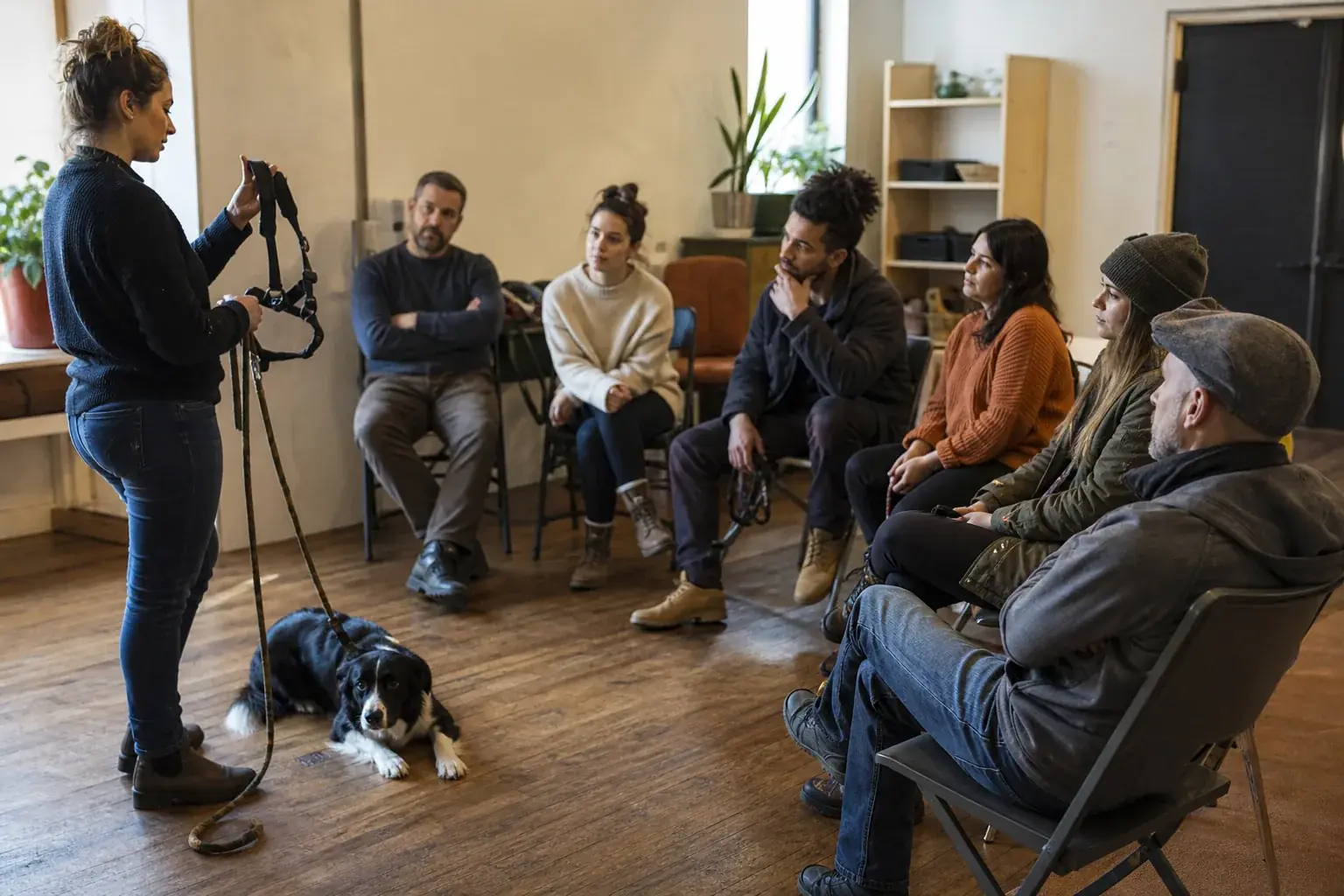
Write to us about what is actually happening with your dog. We will tell you which kind of service would help - and, if that is the case, that you need none of them.