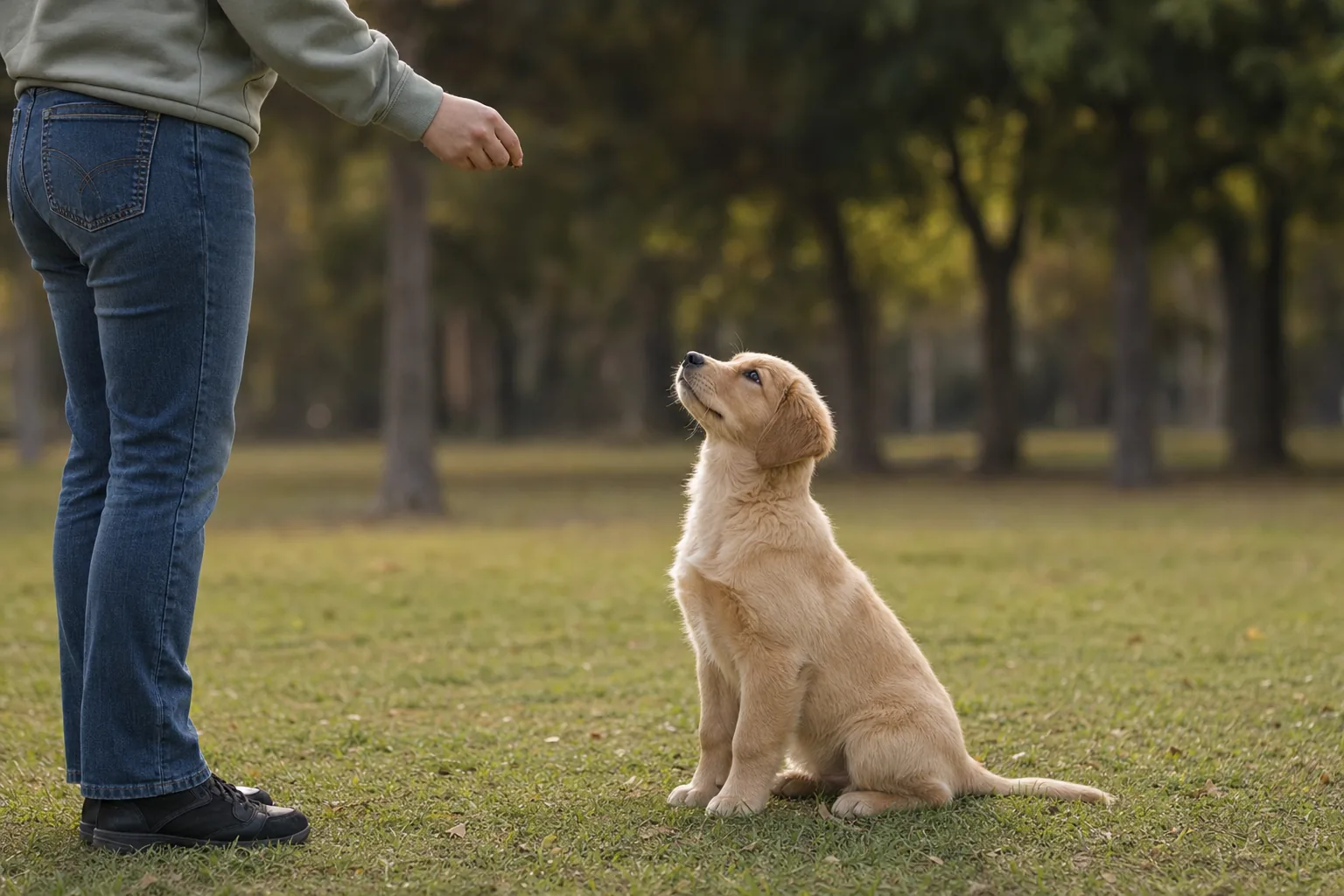
Tick, tick, tick on the kitchen tiles, every step he takes. Three months ago you bought a pair of clippers, managed one nail, it bled a little, the dog yelped, and ever since then the sound of that drawer opening sends him under the bed. Or you have a four-month-old puppy and want to get him used to it now, so you never end up there. Nail trimming is one of the few things a dog has to put up with all his life, dozens of times a year. It's worth teaching him to stay calm for it. That can be done at any age, with good treats and some patience.
How to get him used to it, step by step
First, know what you're cutting. Inside every nail is a living part with a blood vessel and a nerve, called the quick. On white nails it shows as a pink area inside. On black nails you can't see it from the side, but you can find it by looking at the nail end-on after each thin slice: when a darker, moist dot appears in the middle of the cut, stop. You only take off the tip, the dead part that curves downwards.
The tools matter less than people think. You need sharp scissor-type clippers that suit your dog's size and, if you like, a nail grinder made for pets, which files the nail down instead of cutting it. Keep some styptic powder from the pet shop to hand in case you nick the quick, and a bag of really good treats cut up small.
For a few days you just handle his paws. When he's relaxed on the sofa, touch one paw for a second, take your hand away and give him a treat. Then two seconds. Once he's calm with that, hold his paw in your palm. Later on, press gently on a pad so the toe extends. Repeat each step a few times a day, with a treat after every touch. If he pulls his paw away, don't hold on. You've gone too fast, so go back to the previous step.
Put the clippers on the floor next to him, and when he looks at them, he gets a treat. Pick them up: treat. Touch a nail with the closed clippers: treat. Squeeze the clippers on nothing next to his paw so he hears the click, and treat again. With a grinder it's the same idea, but you're working on the noise: switch it on in another room first, then two metres away, then next to him, then touch it to a nail for a second while it's off. He needs to link the tool with something nice. If he links it with being held down, you've lost the ground you gained.
3. The first nail, and only one
Once he's happy with the clippers resting against a nail, take off a tiny tip from one nail. Then celebrate straight away: three or four treats one after the other, a happy voice, and you're done for the day. Tomorrow, another nail. No rule says all the nails have to be done on the same day. One nail a day gets you through a paw a week and all four paws in about a month, without any drama.
4. Let him tell you when he's ready
A lot of cooperative care guides (handling with the dog's agreement) use a simple signal the dog gives to show he's ready. The easiest one to teach is a chin rest: he puts his chin on a cushion or in your palm and keeps it there. While the chin stays down, you work. When he lifts it, you stop at once, no telling off. It may feel like giving him too much say. It works the other way round, because a dog who knows he can stop at any moment has no reason to struggle. We've been surprised ourselves by how often a dog puts his chin back down on his own after a two-second pause.
5. The scratch board
For dogs who really can't bear having their paws touched, a scratch board is a good option: a wooden board with sandpaper stuck on it, propped at an angle. Teach him to scrape it with his front paws, like a game, and give him a treat for every scrape. He files his own front nails that way. You'll still need clippers or a grinder for the back ones, but they're usually shorter.
If you've hit the quick
It happens to everyone, vets and groomers included. Press styptic powder onto the end of the nail for a few tens of seconds, stay calm, give him something really good and stop for the day. Next day, start again from step 2, with clicks on nothing, so the memory of the pain doesn't stick.
From puppy to old dog
Puppies, 8 weeks to 6 months. The best age there is. Puppy nails are thin and easy to cut, and the quick is short. Handle his paws every day, during play and at mealtimes, and take a tiny tip off once a week even when it isn't needed, purely as practice. A puppy who has done this twenty times by six months won't have any trouble as an adult.
Adolescents, 6 to 18 months. The puppy who used to accept everything suddenly starts objecting. That's normal. Keep sessions shorter, bring out even better treats, and don't try to "get it over with" by force. A battle at this age can turn into a lifelong fear.
Adults. With an adult who has already had bad experiences, start lower than you think, sometimes with nothing more than taking the clippers out of the drawer. It takes longer, but adult dogs learn just as well. With big dogs, lying on their side on a mat is the comfiest position for both of you.
Seniors. Older dogs move less, wear their nails down less, and the nails grow long and thick. Be careful with his joints: don't lift his leg high or out to the side; work with the paw close to his body and as low as you can. If the nails are thick, use a grinder instead of clippers. And check the dewclaw, the nail on the inside of the leg. It never touches the ground and can curl round until it grows into the pad.
The mistakes we see most often
Holding him down. Two people: one holds, the other cuts as fast as possible. It might work once. The second time he knows what's coming and fights harder, and by the third time he growls. Plenty of dogs who bite at the vet's started out like that.
All the nails in one go, to "get it done". For the dog, the last few nails come long after his patience ran out.
Too much in one cut. On long nails the quick grows out with the nail. Cut a lot at once and you hit the quick and the nail bleeds. Take a little, often, once a week, and the quick gradually recedes.
Long nails left for years. The noise is the least of it. Long nails change the way he puts his foot down, the toes twist, and on tiles he slips. For old dogs that means falls.
Telling him off when he pulls away. All he learns is that nail trimming is even worse than he thought.
Saving the treats for the end. The reward comes after every little step. If it only arrives "if he's been good all the way through", he can't connect the treat with what he did.
How long it takes and how you know it's working
With a puppy, two or three weeks of short sessions. With an adult who bolts at the sight of the clippers, usually between one and three months, a few minutes a day.
It's working if he comes over on his own when you get the clippers out, lets his paw go soft in your hand and eats his treats happily, without snatching them or turning them down. You're going too fast if he licks his lips, turns his head away, goes stiff, yawns, tries to leave or stops taking treats. Then you go back a step.
Trim when the nails start touching the ground while he's standing, which is when you hear them on the tiles. For most dogs who live indoors, every two to four weeks. Dogs who walk a lot on tarmac and gravel wear some of it down by themselves.
| Week |
What you do, a few minutes a day |
| 1 |
Touch his paws, hold a paw in your palm, press the pads, a treat after each |
| 2 |
The clippers or grinder appear, make their noise and touch a nail, no cutting |
| 3 |
One nail a day, a tiny tip, a celebration after each |
| 4 |
Two or three nails a day if he's relaxed; the dewclaws |
| After that |
Upkeep: one nail tip, once a week |
When to call a trainer
- he growls, shows his teeth or has bitten during grooming;
- he panics at the mere sight of the clippers, even after weeks of work;
- the nails are so long they curl or grow into the pads; see your vet first, who will shorten them, sometimes under sedation;
- he's limping, licking a toe, or has a nail that's broken, swollen or oozing pus (that's a job for the vet, not a trainer).
A trainer who works with rewards can put together a plan with you so he gets used to having his paws handled, being brushed and having his ears cleaned, and that plan helps at the vet's too. For very frightened dogs, also talk to your own vet about ways to make visits less stressful.