The tail
A tail carried high communicates confidence; a lowered tail or one tucked between the legs signals fear, anxiety or appeasement, because it makes the silhouette smaller. A loose side-to-side wag goes with friendliness and enthusiasm; a low tail wagging fast is associated with anxiety, nervousness or inner conflict.
Asymmetry: Quaranta, Siniscalchi and Vallortigara (2007) filmed 30 dogs in front of their owner, a stranger, a cat and an unfamiliar dog with agonistic behavior. With positively charged stimuli, the tail wagged more widely to the right; with the agonistic dog, to the left. The authors link the asymmetry to the specialization of the brain hemispheres. In 2013 the same group showed that other dogs perceive the difference: watching recordings of a tail wagging to the left, they had a higher heart rate and more anxious behavior than with recordings of right-sided wagging.
Ears and eyes
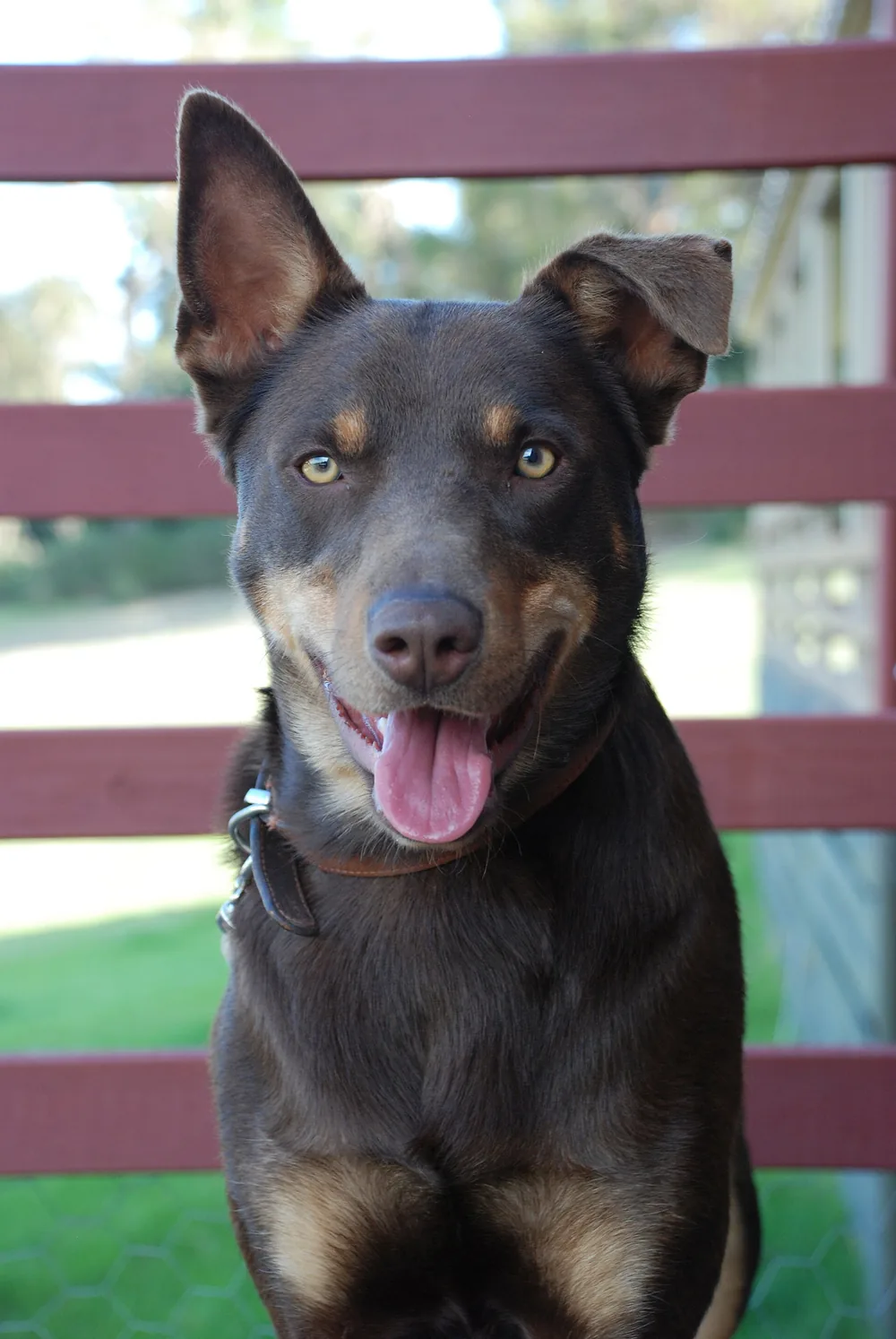
The ears are drawn back in degrees: “back” for an intent to appease, “flattened” or “pinned back” in frightened dogs or in agonistic interactions. The “relaxed” position has to be defined with the ear morphology of each breed in mind, and how far it can move them.
In agonistic or stressful situations, the dog may open its eyes wide, showing the whites (“whale eye”). The term comes from a practitioners' manual, taken up by a peer-reviewed review; it is not an experimental finding.
Posture: big or small
The dog makes itself big (maximum height, tense muscles) to communicate confidence or threat, and small (body and tail lowered, ears back) to avoid conflict or in stressful interactions. Lip licking, turning the head away and lifting a front paw are described as signals of appeasement or insecurity.
The experimental evidence: Beerda et al. (1998) exposed 10 dogs to six kinds of unpleasant stimuli and measured behavior, salivary cortisol and heart rate. Unpredictable stimuli (sudden noises, shocks, a falling bag) produced rises in cortisol and a very low posture; stimuli visibly applied by a person produced restlessness, a moderately lowered posture, body shaking, oral behaviors and, more rarely, yawning. In the study's definitions, a “low” posture means tail lowered, ears back and legs bent; “very low” adds the tail tucked forward, between the hind legs.
The signs of acute stress
Beerda's conclusion: body shaking, crouching, oral behaviors (tongue out, licking the muzzle along the upper lip, swallowing, smacking), yawning, restlessness and a low posture are behavioral indicators of acute stress; a very low posture may indicate intense acute stress. Paw lifting and trembling appeared in some dogs, without statistical significance; vocalizing and panting did not signal acute stress. The authors warn that these signs can be misread.
Raised hackles
Piloerection on the withers and croup enlarges the silhouette. The reflex appears in several contexts linked to rising arousal, for example fear or surprise, or to communicate aggression or stress; it is not a specific sign of aggressiveness. Whether the place where the hair rises says something more remains to be researched. The long or thick coat of some breeds hides the signal.
The play bow
Forequarters down, hindquarters up. Bekoff (1995) found bows placed non-randomly around actions “borrowed” from other contexts, especially the bite with a rapid head shake, and interpreted them as a way of keeping the play going. Byosiere et al. (2016) found something else in adult pet dogs and then in puppies: the bow most often appears after a short pause and restarts the play, rather than clarifying ambiguous actions. In wolf puppies, bows failed to restart the partner's play. The popular wording “the bow announces that the bite is in play” is therefore only partly supported.
How to read the signals
A single behavior is read in the context of all the other signals at that moment. Breed morphology changes the repertoire: dogs with permanently erect ears or very short tails lose part of the signals of those structures, and a long coat hides piloerection. This page is not a guide to behavioral diagnosis; for real problems, see a veterinarian or a behavior specialist.